Chapter 7 bankruptcy offers Florida residents a path to eliminate unsecured debts and start fresh. The process of bankruptcy Chapter 7 can feel overwhelming without clear guidance on what to expect at each stage.
We at Harnage Law, PLLC have helped countless Floridians understand their options and move forward with confidence. This guide walks you through the filing requirements, asset protections, and steps to rebuild your financial life.
Understanding Chapter 7 Bankruptcy in Florida
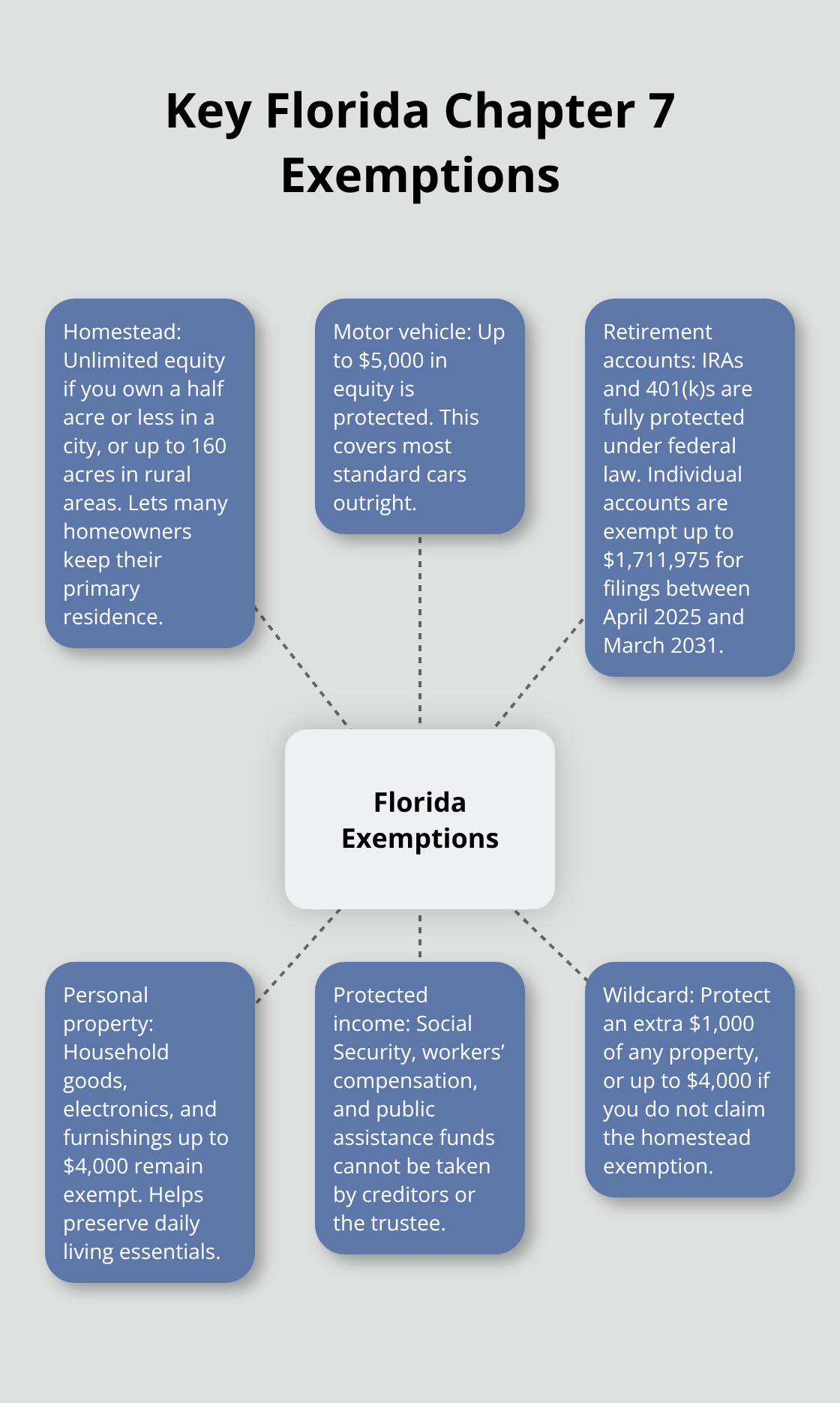
Chapter 7 bankruptcy eliminates most unsecured debts, including credit card balances, medical bills, personal loans, and certain utility bills. When you file, an automatic stay takes effect almost immediately, stopping wage garnishments, repossessions, foreclosures, and creditor calls. This relief alone makes the filing worthwhile for many Floridians drowning in debt. The process typically concludes within three to six months, making it faster than alternatives like Chapter 13, which requires a three- to five-year repayment plan. Most Chapter 7 filers keep their homes, cars, and retirement accounts because Florida exemptions protect these assets aggressively. The homestead exemption shields unlimited home equity if you own half an acre or less in a city, or up to 160 acres elsewhere. Your primary vehicle receives protection up to $5,000 in equity, and retirement accounts like IRAs and 401(k)s remain untouched. Personal property up to $4,000 also stays protected.
The discharge you receive at the end is permanent and legally erases the debts covered by it.
How Income Limits Determine Your Eligibility
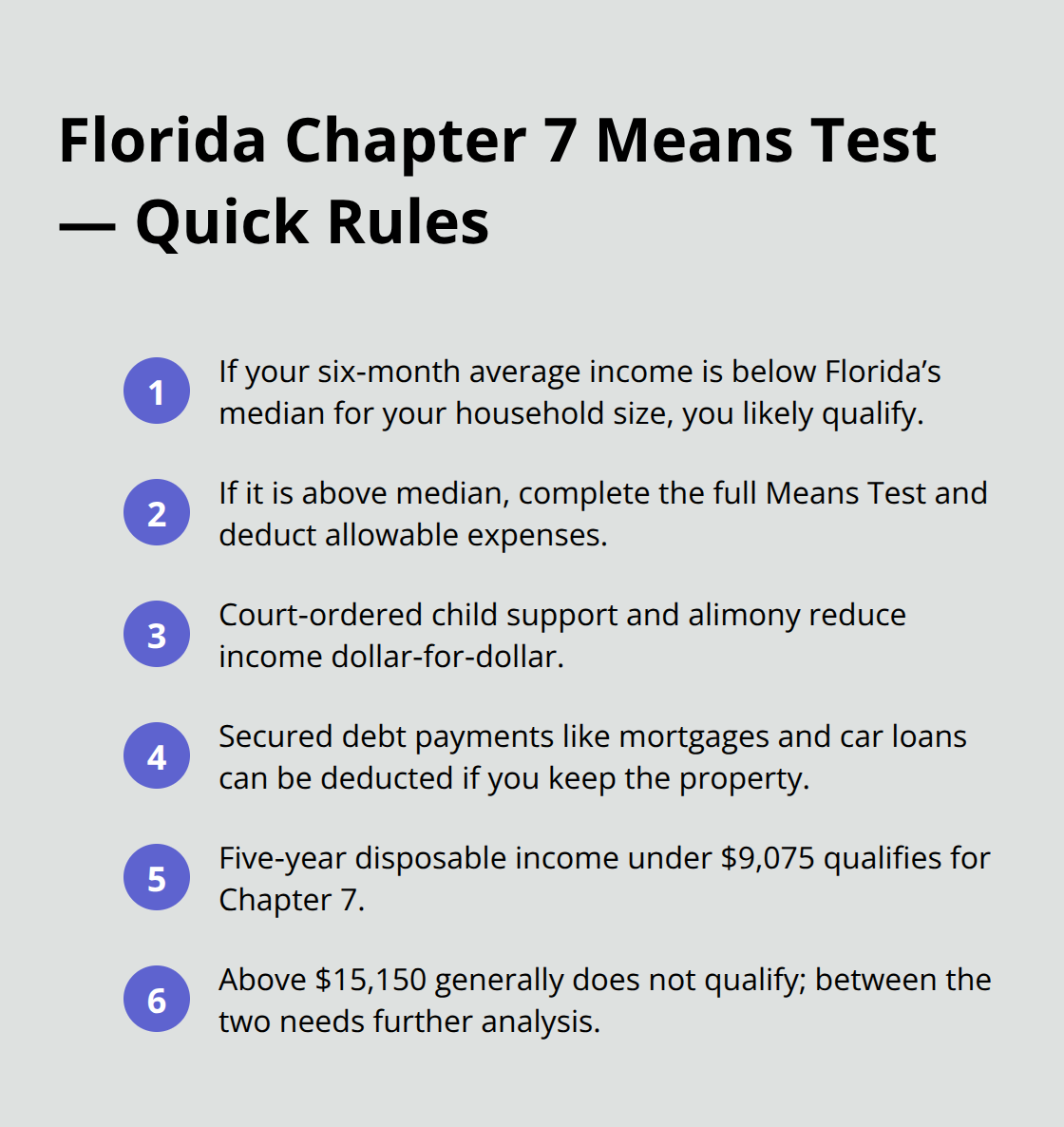
Your eligibility for Chapter 7 hinges on the Means Test, which compares your income to Florida’s median household income. As of April 2024, the median income for a one-person household in Florida stands at $62,973 annually, increasing to $153,569 for a nine-person household. If your average monthly income over the past six months falls below the median for your household size, you likely qualify immediately. If it exceeds the median, you must complete a detailed Means Test calculation that subtracts allowable expenses from your income. Court-ordered child support and alimony payments reduce your income dollar-for-dollar on the Means Test. Health insurance premiums, childcare expenses, and caregiver costs for elderly or disabled family members are deductible. Secured debt payments like mortgages and car loans can also be deducted if you keep the property. Your five-year disposable income is calculated by multiplying your adjusted monthly income by 60. If this number is less than $9,075, you qualify for Chapter 7. If it exceeds $15,150, you generally do not qualify. Numbers between these thresholds require additional analysis.
Debts That Survive Bankruptcy
Student loans, child support, alimony, and most tax debts survive bankruptcy and remain your obligation after discharge. Recent tax debts filed within three years of bankruptcy are typically nondischargeable, though older tax debt may qualify for elimination. Court fines, restitution orders, and certain penalties also cannot be wiped away. This distinction matters because filing Chapter 7 eliminates qualifying debts but leaves these obligations intact. Understanding which debts disappear and which remain helps you make an informed decision about filing. Your specific debt situation determines what will be discharged in your case, so you know precisely what financial obligations continue after bankruptcy concludes. With this foundation in place, the next step involves preparing the financial documents and information required to move forward with your filing.
Filing Your Chapter 7 Petition in Florida
Gathering Documents Before You File
Preparing to file Chapter 7 requires you to gather specific financial documents and information before submitting anything to the court. The U.S. Trustee mandates that you complete a credit counseling course from an approved agency before filing, so handle this first. Collect six months of pay stubs to calculate your average monthly income accurately, then gather bank statements, tax returns from the past two years, and a complete list of all creditors with their addresses. The Florida Middle District Court, where most filings occur, accepts official bankruptcy forms only-outdated forms will be rejected and delay your case.
Completing the Required Forms and Schedules
You’ll need Form B101 (the voluntary petition), current monthly income form B122A-1, means test calculation form B122A-2, and schedules A through J covering your property, exemptions, debts, income, and expenses. A statement about your social security numbers, your certificate of credit counseling, and a creditor matrix listing only names and addresses are mandatory. Accuracy when preparing schedules is critical-mistakes in listing property, income, or exemptions can cost you assets or delay your discharge. If your income situation changes after filing or you discover you omitted a creditor, you can file an amended schedule, but this adds time and complexity.
Understanding Filing Fees and Payment Options
The Chapter 7 filing fee is $338 as of 2025. If you cannot pay it upfront, you can request installments through Form B103A, with at least half due at filing. If you qualify financially, file Form B103B to request a fee waiver based on poverty guidelines. Pay fees only by cashier’s check or money order made payable to Clerk, U.S. Court-cash cannot be mailed. The clerk’s office operates Monday through Friday from 8:30 am to 4:00 pm, excluding federal holidays.
What Happens at the Courthouse
Bring a valid government-issued photo ID when filing in person; the clerk’s office enforces this requirement under Amended Administrative Order 2015-4. Electronic devices are typically prohibited in federal buildings, so prepare for security screening when you arrive. Once your petition is filed, you must complete a debtor education course within 60 days after your 341 Meeting of Creditors to receive your discharge. This is the meeting where the trustee assigned to your case reviews your documents and may ask questions about your financial situation; most meetings last only a few minutes and creditors rarely attend.
Timeline and Next Steps
The entire Chapter 7 process from filing to discharge typically takes three to six months if everything is accurate and no complications arise. After the trustee reviews your case and you complete the required education course, the court issues your discharge order, which legally erases the debts covered by your filing. With your discharge in hand, you can then focus on protecting the assets you’ve kept through Florida’s exemptions and rebuilding your financial foundation.
Protecting Your Assets and Starting Fresh in Florida Bankruptcy
Florida’s exemption laws stand out nationally for their aggressive protection of homeowners and debtors. Your primary residence enjoys unlimited homestead protection if you own a half acre or less in a city, or up to 160 acres in rural areas, with no cap on equity value. This means you can keep your home even if it has significant equity, which is why many Florida residents file Chapter 7 without losing their primary residence. Your motor vehicle receives protection up to $5,000 in equity, covering most people’s cars outright since the average vehicle value in Florida sits well below this threshold. Retirement accounts including IRAs and 401(k)s remain completely protected under federal law, with individual accounts exempt up to $1,711,975 per person for filings between April 2025 and March 2031. Personal property such as furniture, electronics, and household items up to $4,000 stays in your possession. Social Security benefits, workers compensation payments, and public assistance funds cannot be touched by creditors or the bankruptcy trustee. If you own life insurance with a named beneficiary, those proceeds are protected. Florida also shields annuities from creditors, though lottery winnings placed in annuities lose this protection. The wildcard exemption adds another layer by letting you protect an additional $1,000 of any property type, or up to $4,000 if you skip the homestead exemption entirely.
How the Discharge Order Protects You
Your discharge order arrives typically four to six months after filing, assuming no complications. This document legally erases all debts listed in your petition that qualify for discharge, including credit card balances, medical debt, personal loans, and utility arrears. The discharged debts cannot be collected through lawsuits, wage garnishments, or creditor calls ever again. Creditors who attempt collection after discharge violate the bankruptcy discharge injunction and face potential sanctions. Nondischargeable debts like student loans, child support, and recent tax obligations remain your responsibility after discharge, so you must continue paying these. The discharge is permanent and final once the court grants it. You receive a physical discharge order document that you should keep indefinitely as proof that debts were eliminated. Some creditors will continue sending bills after discharge out of habit or error, but you have the right to ignore these demands and can report violations to the court if harassment continues.
Rebuilding Your Credit Score After Discharge
Your credit score drops significantly at filing, typically falling 130 to 200 points depending on your pre-bankruptcy score. However, this decline is temporary compared to the damage caused by collections, charge-offs, and wage garnishments that led you to file. Secured credit cards designed for people rebuilding credit require a cash deposit that becomes your credit limit, usually starting at $300 to $500. Capital One and Discover both offer secured cards actively marketed to bankruptcy filers. Using a secured card for small purchases and paying the balance in full monthly builds positive payment history immediately. After twelve to eighteen months of perfect payments, you can graduate to an unsecured card with better terms. Your mortgage or auto loan payments made on time after bankruptcy demonstrate responsible borrowing and improve your score substantially. Within two years of discharge, many former bankruptcy filers achieve credit scores above 650, which qualifies them for reasonable interest rates on auto loans and refinancing.
Protecting Your Credit Report Accuracy
Checking your credit report annually through AnnualCreditReport.com ensures errors are corrected, and bankruptcy-related errors do appear occasionally. Utility payments, rent payments, and phone bills do not show on credit reports but demonstrate responsibility to creditors evaluating your application. Avoid applying for multiple credit accounts within a short period because each application generates a hard inquiry that temporarily lowers your score. The Fair Debt Collection Practices Act protects you from harassment regarding discharged debts, so report any creditor attempting collection to the Consumer Financial Protection Bureau. Your credit report will show the bankruptcy for ten years, but the discharged debts themselves will show as resolved, which actually helps your credit profile over time.
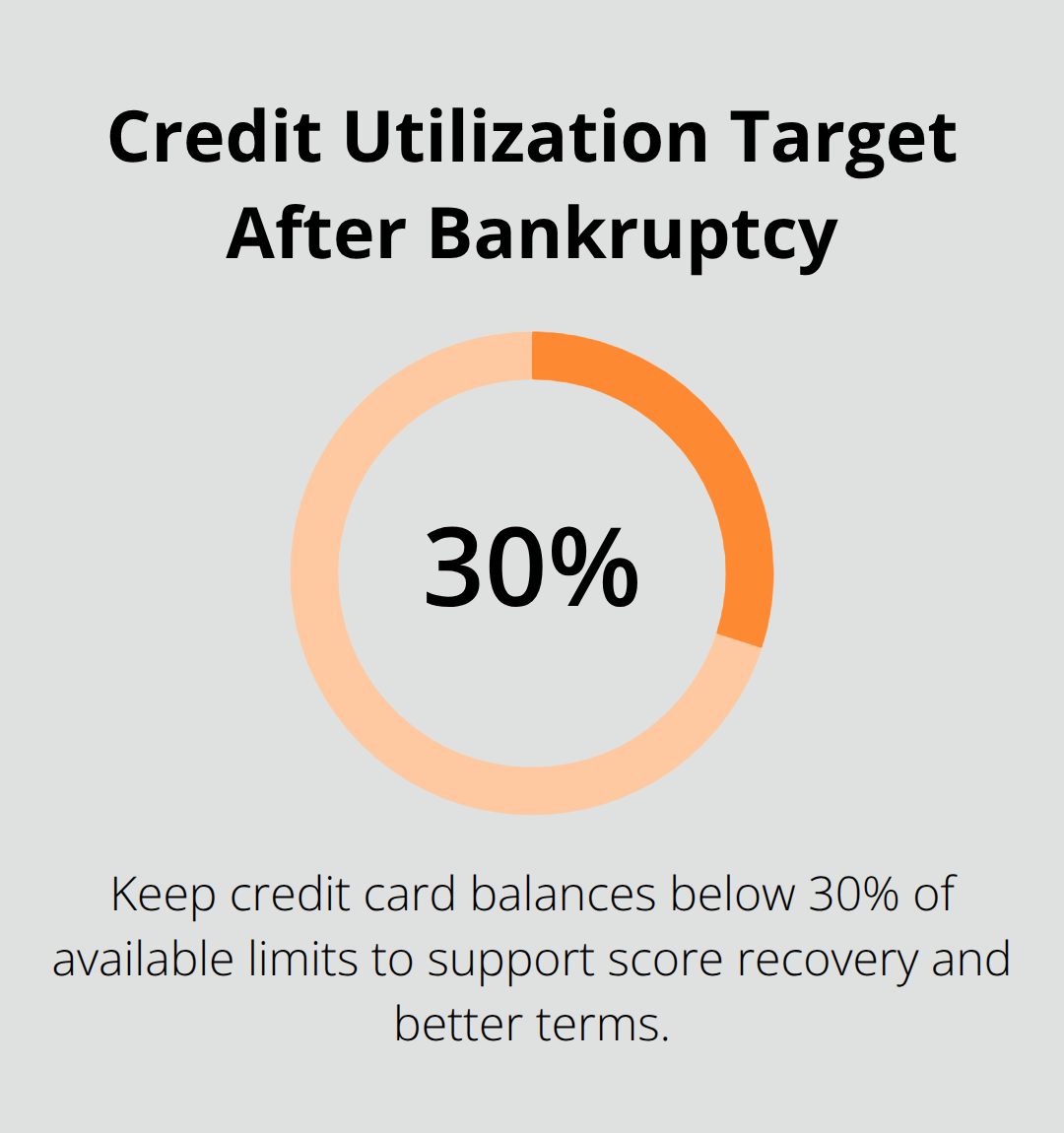
Within weeks of discharge, you can apply for new credit, though interest rates will be higher initially. Many credit card companies actively solicit discharged debtors because bankruptcy protection prevents you from filing again for eight years, making you a lower-risk customer than someone who has never filed. Three to four years post-discharge, your credit score can reach 700 or higher if you maintain perfect payment history and keep credit card balances below 30 percent of available credit limits.
Final Thoughts
Chapter 7 bankruptcy in Florida offers a legitimate path to eliminate unsecured debt and rebuild your financial life. The process of Chapter 7 bankruptcy moves quickly compared to other options, typically concluding within three to six months. Florida’s exemption laws protect your home, vehicle, retirement accounts, and personal property aggressively, meaning most filers keep the assets that matter most.
Your specific financial situation, asset values, and debt composition determine whether this chapter offers the best outcome for your circumstances. Some cases involve complications like nonexempt property or creditor objections that require professional navigation. Others proceed smoothly because the filer prepared thoroughly and understood the requirements beforehand.
We at Harnage Law, PLLC guide Florida residents through every stage of the bankruptcy process with personalized attention and clear explanations. Contact us at 386-252-3061 in Daytona Beach to discuss how we can support your journey toward financial recovery.