Bankruptcy can feel overwhelming, especially when you’re trying to figure out which path makes sense for your situation. Chapter 7 versus Chapter 11 bankruptcy serve different purposes, and understanding those differences is the first step toward making an informed decision.
We at Harnage Law, PLLC help Florida residents navigate these options every day. This guide breaks down how each chapter works so you can see which one aligns with your financial goals.
How Chapter 7 Works in Florida
Chapter 7 bankruptcy operates as a straightforward liquidation process where a court-appointed trustee sells your non-exempt assets and distributes the proceeds to creditors. Most of your debts get discharged, meaning creditors cannot pursue further collection after the discharge is granted. This differs fundamentally from Chapter 11, which involves reorganization and ongoing payment obligations. In Florida, Chapter 7 represents the most common bankruptcy choice because it offers a faster path to a fresh start. The process typically takes three to six months from filing to discharge, though your specific situation and any complications that arise during the case affect this timeline.
What Actually Gets Discharged
Most unsecured debts disappear under Chapter 7 discharge, including credit card balances, personal loans, medical bills, and payday loans. However, certain debts remain non-dischargeable regardless of the bankruptcy filing. Child support and alimony obligations cannot be eliminated. Student loans typically cannot be discharged unless you can prove undue hardship, which Florida courts interpret strictly. Recent taxes, criminal fines, and debts you incur after filing do not get discharged. If you have a co-signer on a debt, that person remains liable even after your discharge-informing co-signers about your filing matters. Understanding which debts survive Chapter 7 helps you plan your financial recovery accurately.
Assets You Keep Versus Assets Sold
Florida exemption laws protect significant property in Chapter 7. You can keep your primary residence if you own it, though the homestead exemption has important requirements. You must have owned the property for at least 1,215 days before filing to claim unlimited equity protection; if you haven’t met this requirement, a federal cap of $214,000 applies. One vehicle with up to $5,000 in equity stays with you, along with retirement accounts that are largely protected (including IRAs up to $1,711,975 per person for cases filed between April 1, 2025, and March 31, 2028). Social Security benefits, disability income, and most pension benefits remain exempt from creditors. Non-exempt assets like second homes, valuable jewelry, collections, or a second vehicle get sold by the trustee to pay creditors.
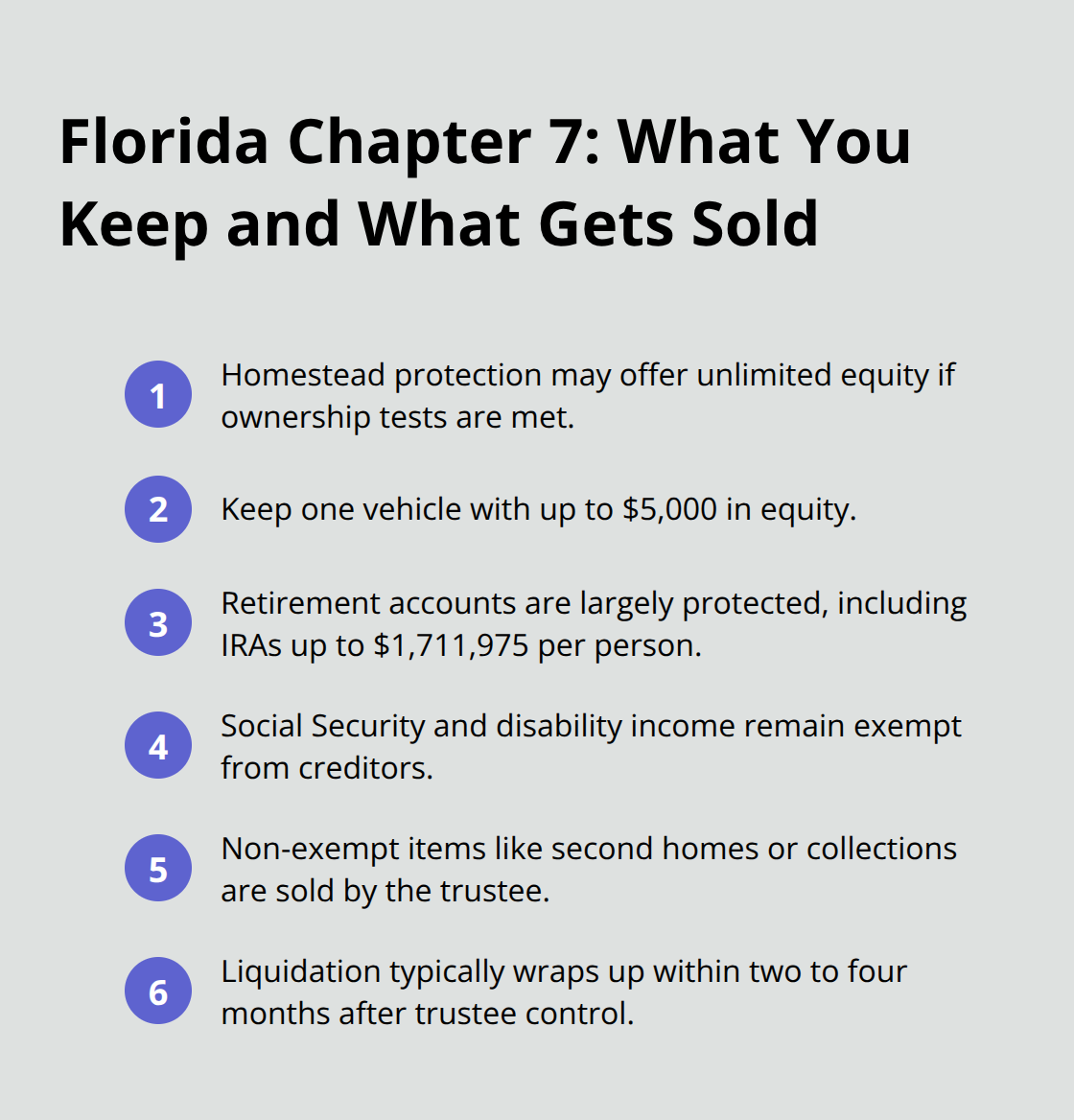
The liquidation process typically takes two to four months once the trustee takes control of your assets.
How Chapter 11 Differs in Asset Treatment
Chapter 11 takes a completely different approach to your property. Instead of liquidating non-exempt assets immediately, Chapter 11 allows you to keep operating your business or managing your affairs while you develop a reorganization plan. You propose how you’ll repay creditors over time, and the court evaluates whether your plan is feasible. This means your assets remain under your control rather than being sold off, which makes Chapter 11 attractive for business owners or individuals with significant equity in property. The trade-off is that Chapter 11 requires you to commit future income to a repayment plan, whereas Chapter 7 offers a clean discharge once the process concludes. Understanding this fundamental difference helps clarify which chapter aligns with your financial situation and goals.
How Chapter 11 Restructures Your Debts in Florida
The Reorganization Plan Framework
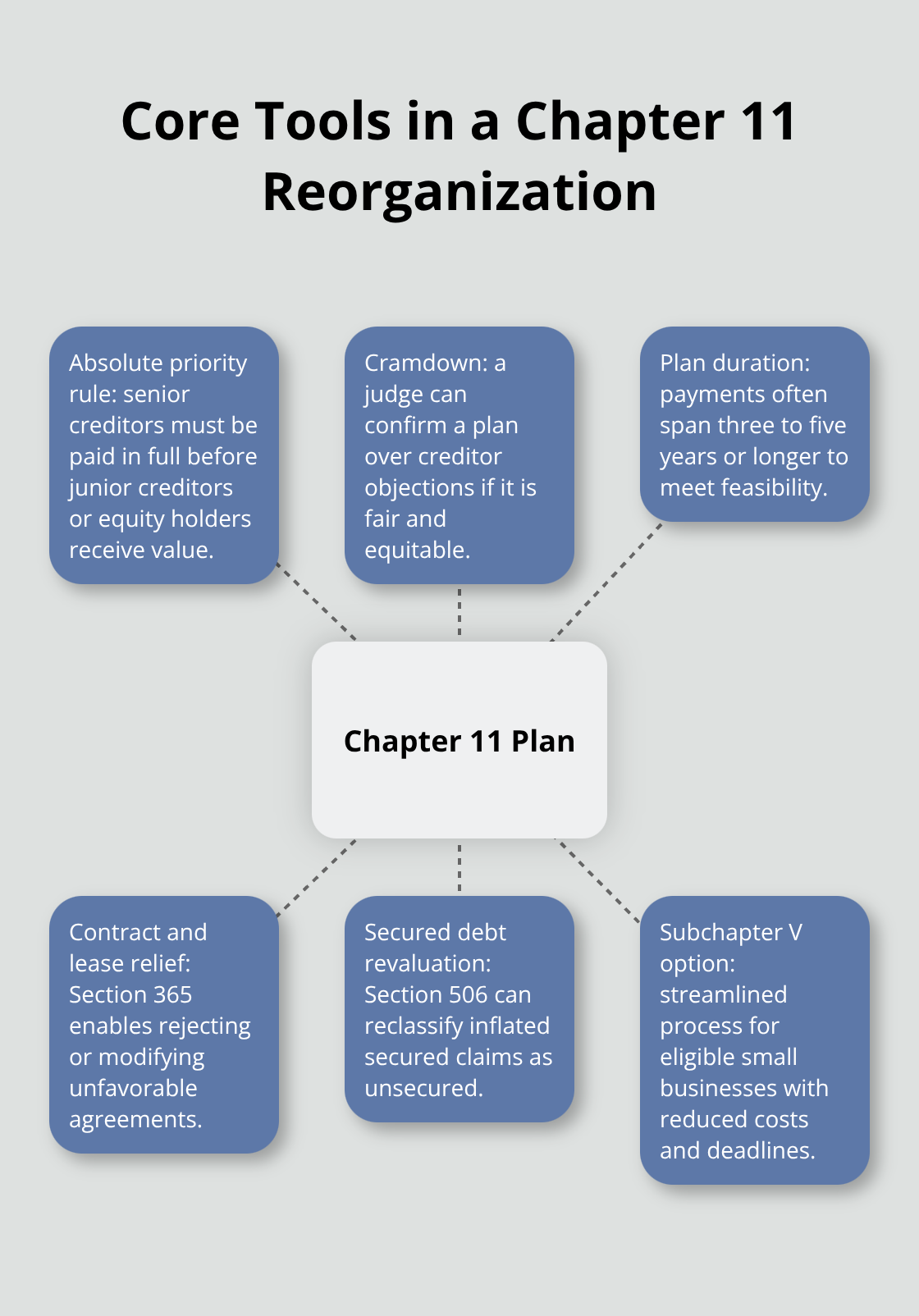
Chapter 11 bankruptcy operates fundamentally differently from Chapter 7 because it keeps you in control while you reorganize your financial obligations. Instead of liquidating assets, you propose a reorganization plan that outlines how you’ll repay creditors over time, typically three to five years or longer. The court evaluates your plan based on whether it’s feasible and treats creditors fairly according to the absolute priority rule, which requires senior creditors to receive full payment before junior creditors or equity holders receive anything. If creditors reject your plan but the court finds it fair and equitable, the judge can confirm it anyway through a process called cramdown. This flexibility makes Chapter 11 attractive for business owners who want to continue operating while restructuring debt, but it also means you commit future income to a repayment obligation rather than receiving a clean discharge like Chapter 7 offers.
Understanding the True Cost of Chapter 11
Chapter 11 carries substantial financial weight compared to Chapter 7. The median Chapter 11 case costs between $15,000 and $30,000 in professional fees alone, according to the American Bankruptcy Institute, making it substantially more expensive than Chapter 7 for most individual filers. These costs reflect the complexity of developing a viable plan, managing ongoing operations, and navigating creditor negotiations. Business owners must weigh whether the ability to restructure and continue operations justifies these significant expenses against the faster, less costly liquidation path that Chapter 7 provides.
Renegotiating Contracts and Leases
One critical advantage Chapter 11 provides is the ability to renegotiate contracts and leases through Section 365 of the bankruptcy code. You can reject unfavorable commercial real estate leases, supplier contracts, or service agreements, and counterparties typically prefer ongoing performance under modified terms to accepting an unsecured claim for damages. For example, if you pay $10,000 monthly rent on a lease with five years remaining, rejecting that lease and negotiating a lower rate could save tens of thousands of dollars over the plan period. Commercial real estate leases must be assumed or rejected within 120 days of filing, though courts can extend this deadline by 90 days for cause.
Revaluing Secured Debt
Section 506 of the bankruptcy code allows courts to revalue secured collateral, potentially reducing your debt obligations by reclassifying inflated secured claims as unsecured debt. This tool can significantly alter the economics of your reorganization plan and improve your ability to confirm a feasible repayment structure.
Subchapter V for Small Business Owners
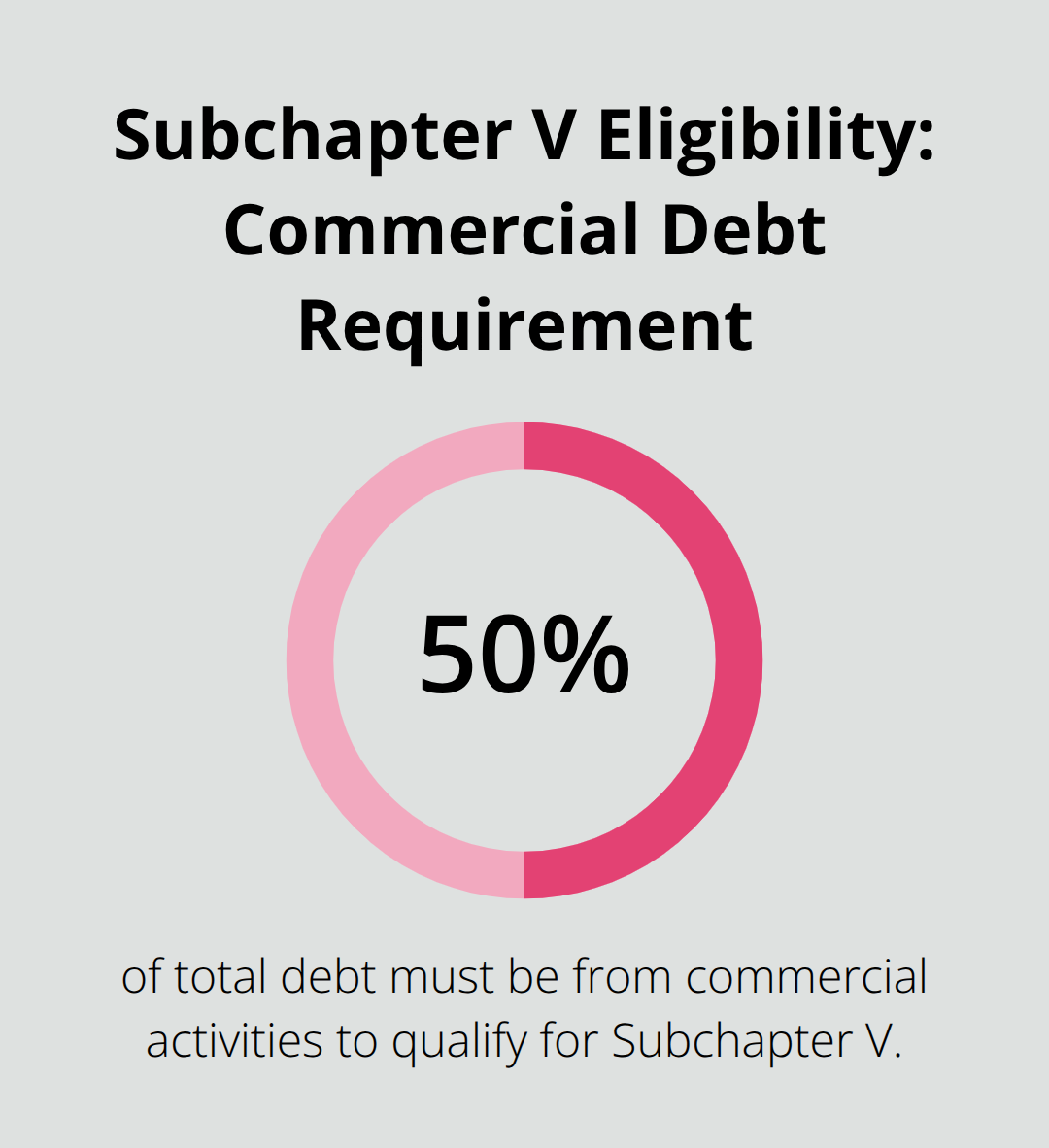
Subchapter V, created by the Small Business Reorganization Act of 2019, streamlines Chapter 11 for eligible small businesses with total debts under $3,424,000 (adjusted every three years for inflation) and at least 50 percent of debt from commercial activities. Subchapter V eliminates the unsecured creditor committee, requires plan filing within 90 days, and avoids quarterly U.S. Trustee fees, making reorganization faster and less adversarial than traditional Chapter 11.
However, Subchapter V excludes single-asset real estate ventures and publicly traded companies, so eligibility depends on your specific business structure and debt composition. Understanding whether you qualify for Subchapter V versus traditional Chapter 11 shapes your entire reorganization strategy and timeline.
Chapter 7 vs Chapter 11 Bankruptcy in Florida: Cost and Asset Impact
Filing Costs Reveal the True Financial Burden
Chapter 7 and Chapter 11 operate on completely different financial scales, and this difference alone eliminates one option for most Florida residents. Chapter 7 costs between $1,500 and $3,500 in total filing fees and attorney fees combined, making it accessible for individuals drowning in debt with limited resources. Chapter 11, by contrast, demands $15,000 to $30,000 in professional fees according to the American Bankruptcy Institute, and many cases exceed this range significantly. These costs reflect the complexity of developing a reorganization plan, managing ongoing operations through bankruptcy, and negotiating with multiple creditor classes.
Why Chapter 11’s Expense Creates a Practical Problem
If you’re an individual considering bankruptcy, Chapter 11’s expense creates an obvious problem: you’re already financially distressed, and Chapter 11 requires you to pay substantial fees upfront while committing future income to a three to five year repayment plan. Chapter 7 offers discharge in three to six months without ongoing payment obligations, meaning your post-bankruptcy income stays in your pocket. The income limits also differ dramatically between chapters. Chapter 7 requires passing a means test if your household income exceeds Florida’s median for your family size, which ranges from $62,973 for a single person to $153,569 for nine people as of April 2024. Chapter 11 has no income ceiling, making it theoretically available to anyone, but the financial burden of Chapter 11 makes it impractical for low-income individuals regardless of eligibility.
How Asset Protection Works Differently
Chapter 7 liquidates non-exempt assets, but Florida’s exemption laws protect most of what matters: your primary home with unlimited equity if you’ve owned it for 1,215 days, one vehicle up to $5,000 in equity, retirement accounts up to $1,711,975 per person, and all Social Security and disability benefits. Non-exempt property like second homes or valuable collections gets sold, but this happens quickly and conclusively. Chapter 11 keeps your assets under your control, which sounds appealing until you realize you’re committing future income to repay creditors instead of receiving a clean discharge.
Asset Control Versus Financial Freedom
A business owner with significant equipment or inventory might choose Chapter 11 to continue operations, but an individual with modest assets benefits far more from Chapter 7’s speed and finality. The psychological and financial burden matters too: Chapter 7 frees you from collection calls, wage garnishments, and lawsuits within months, while Chapter 11 extends your financial obligations for years. Florida residents filing Chapter 7 can move forward with confidence that most debts disappear permanently, whereas Chapter 11 filers remain entangled with creditors throughout the entire repayment period.
The Practical Reality for Most Individuals
For individuals, this distinction between liquidation and reorganization makes Chapter 7 the overwhelmingly practical choice in nearly all circumstances. The combination of lower costs, faster resolution, and permanent debt discharge creates a clear advantage over Chapter 11’s extended timeline and substantial financial commitment.
Final Thoughts
Chapter 7 versus Chapter 11 bankruptcy represents a fundamental choice between liquidation and reorganization, and for most Florida residents, the answer becomes clear once you understand the financial and practical differences. Chapter 7 offers speed, affordability, and permanent debt discharge within months, while Chapter 11 demands substantial fees, years of repayment obligations, and ongoing creditor involvement. Unless you own a viable business that requires restructuring to survive, Chapter 7 provides the faster path to financial recovery.
Your situation determines which chapter makes sense for your circumstances. If you’re an individual or family with debts you cannot repay and income below Florida’s median for your household size, Chapter 7 likely fits your needs. If your income exceeds the median, you may still qualify through the means test, which accounts for legitimate expenses like child support, taxes, and childcare. Business owners with viable operations and significant debt loads might benefit from Chapter 11’s ability to renegotiate contracts and continue operations, but only if they can afford the substantial professional fees involved.
Contact Harnage Law, PLLC for a consultation to discuss your options and next steps. We help Florida residents navigate Chapter 7 bankruptcy, stopping creditor harassment, preventing wage garnishments, and halting lawsuits while you discharge qualifying debts and protect your assets. If you’re uncertain whether Chapter 7 fits your situation, our team can review your finances and guide you toward the right path forward.