Filing for Chapter 7 bankruptcy in Florida requires submitting specific paperwork to the court. The forms you file directly impact whether your case moves forward smoothly or gets delayed.
We at Harnage Law, PLLC help clients navigate these Chapter 7 bankruptcy forms every day. This guide walks you through what you need to submit and how to avoid costly mistakes.
Chapter 7 Bankruptcy Forms You Need to File in Florida
The Core Petition and Schedules
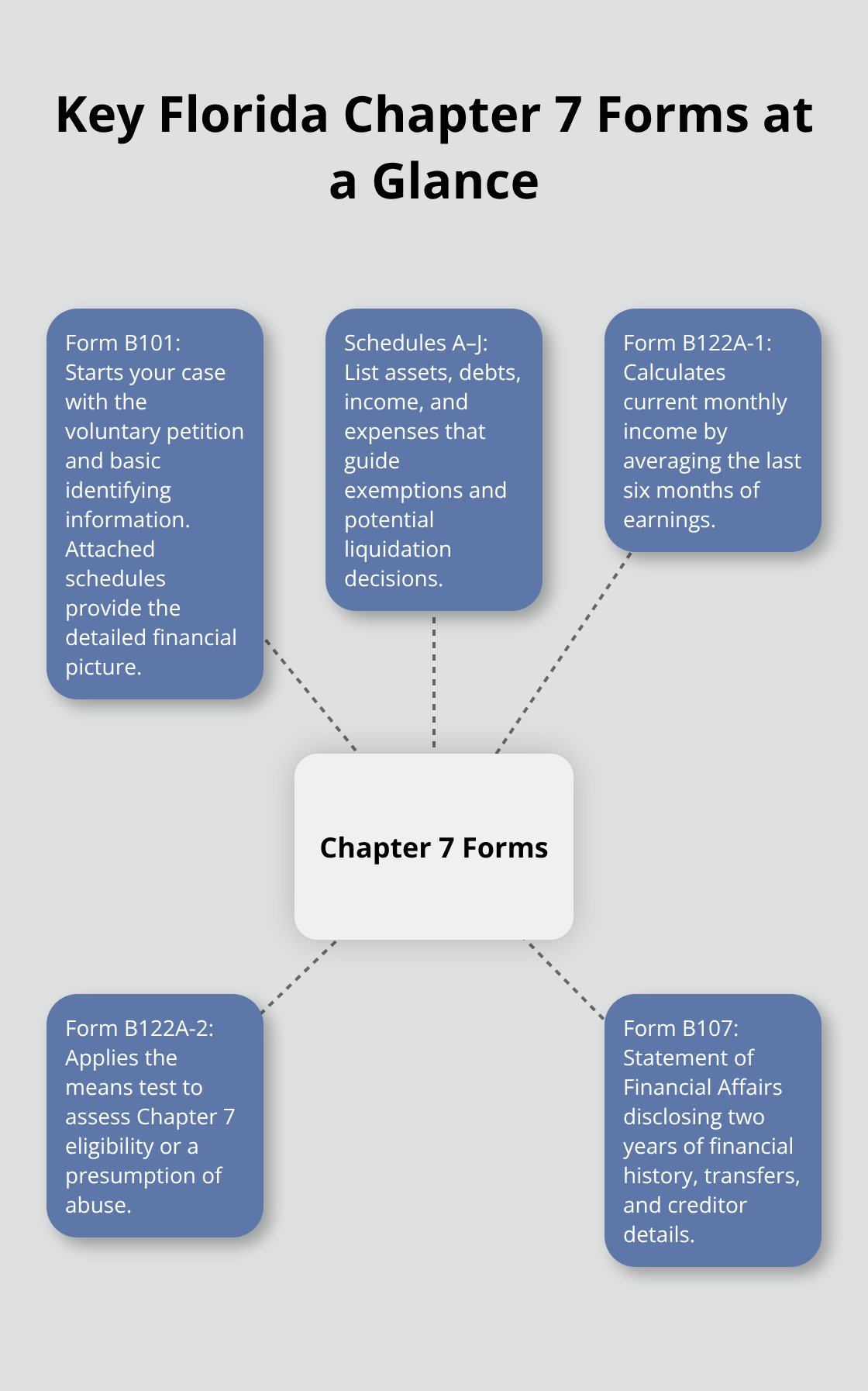
Form B101, the Voluntary Petition, launches your Florida Chapter 7 filing. You’ll attach Schedules A through J, which document your property, liabilities, income, and monthly expenses in detail. The U.S. Courts bankruptcy forms system standardizes these documents across all federal districts, so your Florida filing follows the same structure as every other jurisdiction. Accuracy matters because incomplete or vague entries create delays and trigger trustee scrutiny. The trustee assigned to your case will examine these forms to identify which assets are nonexempt and available for liquidation.
Schedule C lists the exemptions you claim under Florida law-protecting certain assets like a portion of your home equity and vehicle equity. Claiming exemptions correctly prevents the trustee from liquidating property you’re legally entitled to keep.
Income and Financial Affairs Documentation
Form B122A-1 captures your current monthly income over the previous six months, feeding into the means test calculation on Form B122A-2. This determines whether your income level qualifies you for Chapter 7 relief or triggers a presumption of abuse. Form B107, your Statement of Financial Affairs, requires you to disclose income sources, property transfers, and creditor information for the past two years. Many filers underestimate how far back this form reaches, resulting in incomplete submissions. You must list every creditor, collection agency, and entity holding a claim against you, regardless of amount. Omitting creditors can result in debts that survive your discharge, defeating the purpose of filing.
Gathering Supporting Documentation
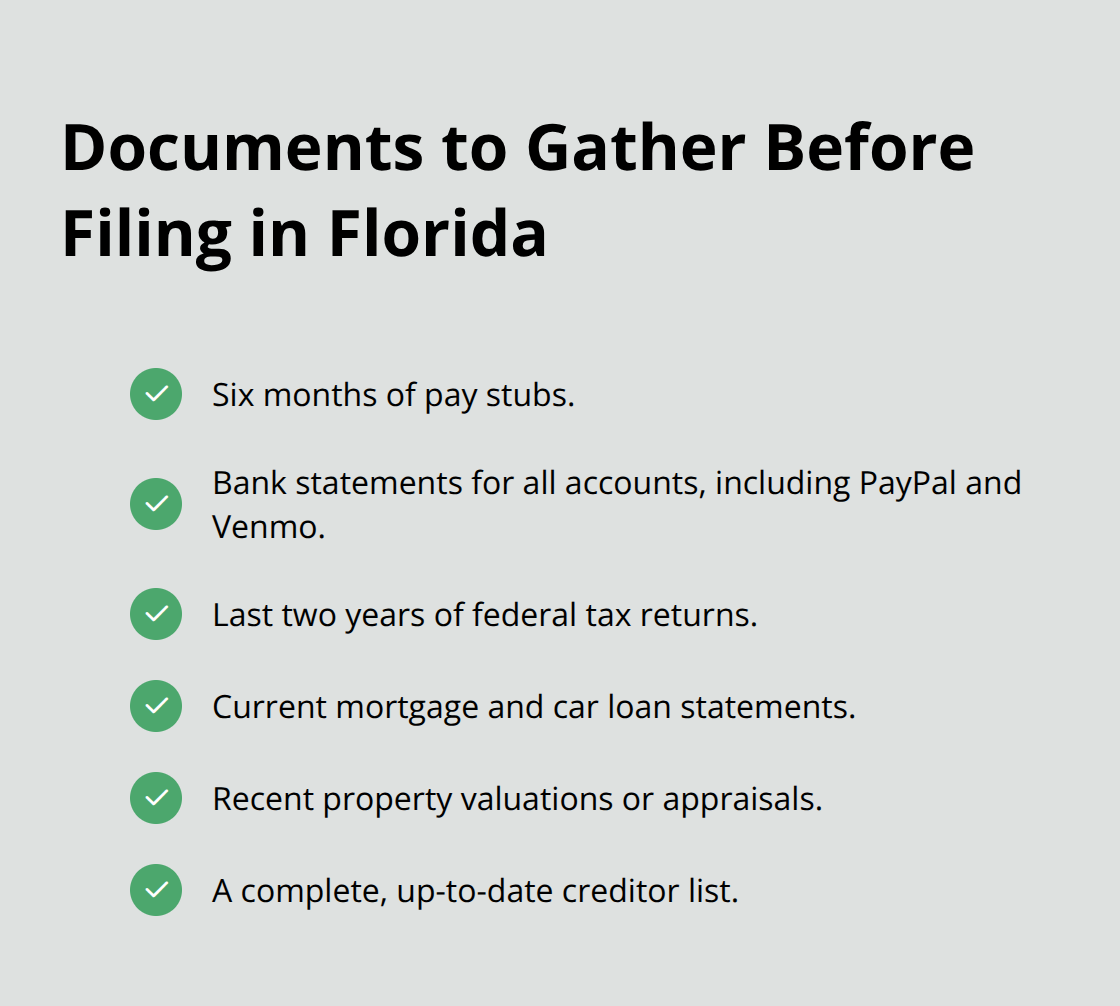
The forms demand six months of pay stubs, bank statements from all accounts (including online wallets like PayPal and Venmo), and your last two years of tax returns to verify the information you report. You’ll also need current mortgage and car loan statements, property valuations, and a complete list of all creditors with outstanding balances. Collecting these documents before meeting with an attorney accelerates the process and reduces continuances at your 341 meeting with the trustee.
The trustee may request additional documents later-such as business financials, liability insurance valuations, or divorce decrees-depending on your specific circumstances. Preparing a thorough inventory of assets and liabilities upfront prevents delays and ensures your case moves forward without unnecessary complications. Understanding what information each form requires helps you avoid the common mistakes that plague many Florida filers.
What Information Goes Into Each Bankruptcy Form in Florida
Personal Details and Asset Documentation
Form B101 and its attached schedules demand precision because they become the official record of your financial situation. Your personal identification appears on the petition itself, but Schedule A/B requires you to list every asset you own with estimated values. This includes obvious items like your home and car, but also smaller property that filers often forget: jewelry, collectibles, tools, electronics, and clothing. Bankrate research emphasizes that overdisclosure is safer than under-disclosure because the court uses this data to determine exemptions and liquidation impact. If you own a business, you must list it as an intangible asset. If you have patents or copyrights, those count too. The trustee will scrutinize gaps between what you claim as exempt and what you actually own, so completeness prevents unnecessary examination.
Income Documentation and Monthly Expenses
Schedule I captures your income from all sources for the past six months, and Schedule J lists your monthly expenses in categories like housing, utilities, food, transportation, and insurance. Form B122A-1 calculates your current monthly income by averaging six months of earnings, which feeds directly into the means test on Form B122A-2. This number determines whether your income qualifies you for Chapter 7 or triggers a presumption of abuse. You must provide six months of pay stubs, bank statements from every account (including PayPal and Venmo), and your last two tax returns to verify the information you report.
Creditor Information and Debt Disclosure
Form B107, the Statement of Financial Affairs, reaches back two years and requires you to disclose every transfer, sale, or movement of property. Many filers miss this requirement because they think only recent transactions matter. You must also list every creditor on Schedule D for secured debts and Schedule E/F for unsecured debts, including collection agencies, medical providers, and utility companies. If you have a co-debtor, Schedule H requires their information too. Omitting creditors can result in debts that survive your discharge, defeating the purpose of filing.
Supporting Documentation Requirements
Current mortgage and car loan statements verify secured debt amounts. Property valuations from online sources establish asset values. Gathering this documentation before your initial consultation with an attorney prevents delays that extend your timeline to discharge. The trustee assigned to your case will examine these forms to identify which assets are nonexempt and available for liquidation, and may request additional documents later (such as business financials, liability insurance valuations, or divorce decrees) depending on your specific circumstances. Preparing a thorough inventory of assets and liabilities upfront ensures your case moves forward without unnecessary complications and positions you to address the next critical step: avoiding the mistakes that commonly derail Florida Chapter 7 filers.
Common Mistakes That Sink Florida Chapter 7 Filings
Inaccurate Property Valuations and Income Reporting
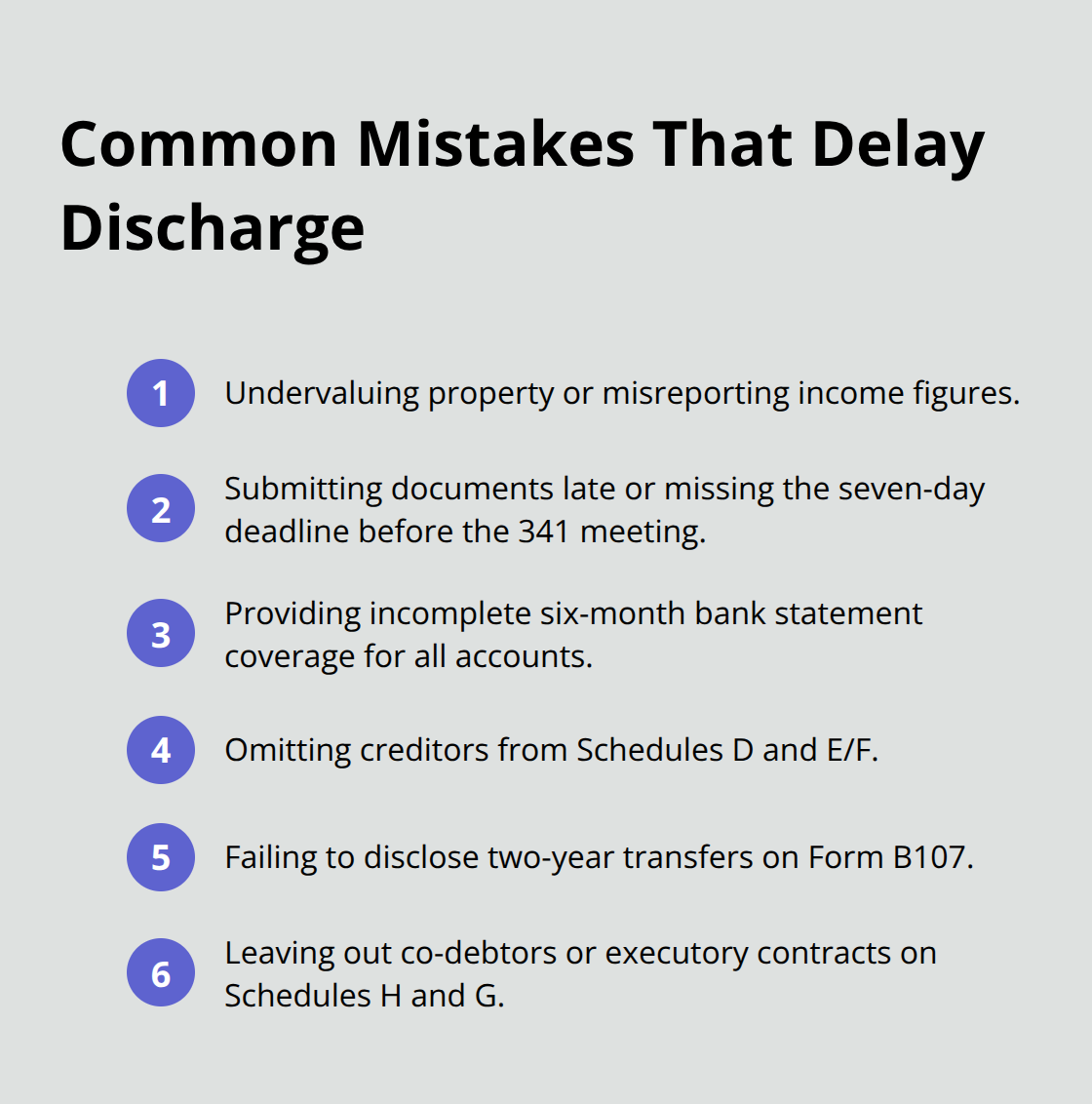
Incomplete or inaccurate information on your bankruptcy forms is the fastest way to derail your case. The trustee assigned to your Chapter 7 filing will compare what you report on Schedule A/B against public records, credit reports, and the documents you submit. If your home valuation is off by thousands of dollars or you list income amounts that don’t match your pay stubs, the trustee flags your case for further examination. A six-month review that should take weeks stretches into months. The 341 meeting gets continued, meaning you return to court again to answer additional questions under oath.
Bankrate research shows that overdisclosure is safer than under-disclosure because the court uses asset data to determine exemptions and liquidation impact. If you own a vehicle worth $15,000 but list it as $8,000, the trustee will demand clarification and potentially challenge your exemption claim. Property valuations should come from current online sources or recent appraisals, not guesses. Your income figures on Form B122A-1 must match the average of your last six months of pay stubs exactly-not rounded, not estimated.
Missing Documentation Deadlines
The U.S. Courts bankruptcy system requires you to submit six months of pay stubs and bank statements, plus your last two tax returns, at least seven days before your 341 meeting. Courts in Florida districts do not grant extensions casually. If you miss this deadline, the trustee continues your meeting, pushing your discharge date backward by weeks or months.
Bank statements from all accounts, including PayPal and Venmo, must cover the full six months you’re reporting. Missing even one month creates inconsistencies that invite trustee scrutiny.
Incomplete Creditor and Asset Disclosure
The Statement of Financial Affairs on Form B107 reaches back two years, and many filers think recent transactions are all that matter. You must disclose every property transfer, sale, or significant financial movement from the past 24 months. If you sold a vehicle or transferred property to a family member and fail to list it, the trustee will discover it anyway through bank records and title searches, then challenge whether the transfer was fraudulent or a preference.
Omitting creditors from Schedule D and Schedule E/F is catastrophic because debts not listed survive your discharge. If you forget to include a medical collection agency or an old credit card account, that debt remains your legal obligation after your bankruptcy closes. The cost of correcting an omitted creditor after discharge is far higher than the effort required to create a comprehensive creditor list before filing. Gather your credit report from annualcreditreport.com and use it as your baseline to ensure every creditor appears on your schedules.
Co-Debtors and Executory Contracts
If you have a co-debtor, Schedule H must include their information. If you have executory contracts or lease obligations, Schedule G requires full disclosure. Courts view incomplete filings as deliberate concealment, not innocent mistakes, and that distinction can bar your bankruptcy eligibility or trigger criminal penalties. The trustee will examine these forms to identify which assets are nonexempt and available for liquidation, and may request additional documents later (such as business financials, liability insurance valuations, or divorce decrees) depending on your specific circumstances. Preparing a thorough inventory of assets and liabilities upfront prevents delays that extend your timeline to discharge.
Final Thoughts
Filing Chapter 7 bankruptcy forms in Florida demands accuracy, completeness, and strict adherence to deadlines. The forms you submit become the official record of your financial situation, and errors on Schedule A/B, Schedule D, Schedule E/F, or Form B122A-1 can delay your discharge by months or trigger trustee scrutiny that extends your case unnecessarily. Omitting creditors, undervaluing assets, or missing documentation deadlines are the three mistakes that most commonly derail Florida filers.
Navigating Chapter 7 bankruptcy forms without guidance is risky because Florida’s exemption laws and local court procedures require knowledge that most filers don’t possess. An attorney who handles Chapter 7 cases regularly knows which assets Florida law protects, how to value property correctly, and how to structure your schedules to withstand trustee examination. We at Harnage Law, PLLC help clients navigate this process and protect their assets while pursuing financial relief.
Your next step is scheduling a consultation to review your specific situation and assess your eligibility for Chapter 7 bankruptcy forms. Bring the documentation you’ve gathered-pay stubs, bank statements, tax returns, creditor statements, and property valuations-so an attorney can evaluate your timeline to discharge. Contact Harnage Law, PLLC today to discuss how we can help you move toward financial relief.