Chapter 7 bankruptcy offers a fresh financial start for those drowning in debt, but qualifying requires navigating specific legal requirements and financial thresholds.
At Harnage Law, PLLC, we help Florida residents understand whether they can qualify for Chapter 7 bankruptcy and what steps come next. This guide walks you through the means test, eligibility rules, and the filing process so you know exactly where you stand.
Does Your Income Actually Disqualify You from Chapter 7?
The First Income Test: Florida’s Median Threshold
The means test intimidates most people, but the reality is far simpler than the name suggests. This test measures whether your income is high enough that you should repay debt through a five-year Chapter 13 plan instead. Florida sets specific income thresholds by household size, and if you fall below them, you skip the means test entirely.
A single person in Florida needs to earn less than $41,334 annually to pass the first threshold, while a household of four must stay under $63,196. These figures come directly from the U.S. Trustee’s office and update regularly. The critical move is calculating your average monthly income over the last six months, then multiplying by twelve to compare against your household size threshold. If you’re below that number, you qualify for Chapter 7 without any further calculations. Most people stop here and never see the complicated math that follows.
What Happens When Your Income Exceeds the Median
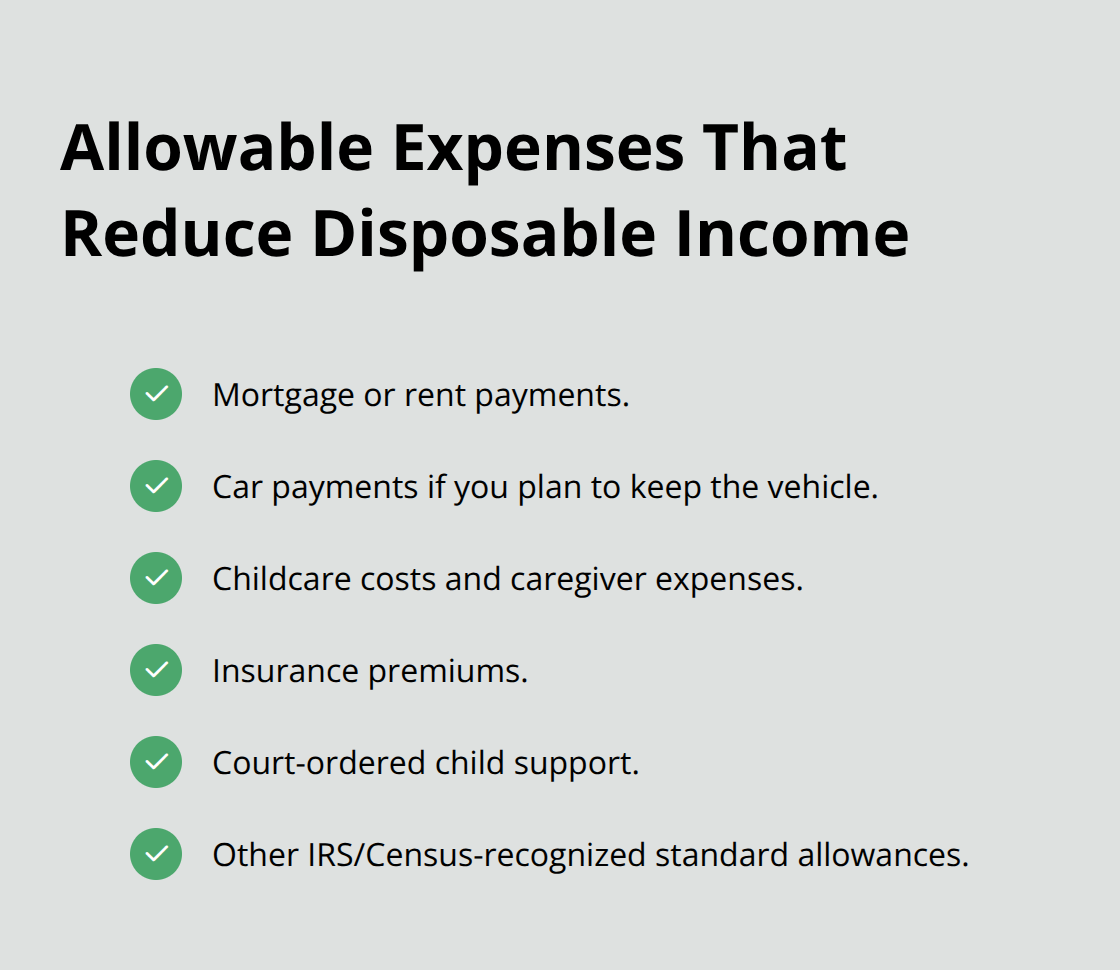
If your income exceeds Florida’s median, the means test kicks in, and this is where many clients make mistakes. You don’t subtract every expense-only allowable ones that the IRS and Census Bureau recognize. Mortgage or rent, car payments (if you’re keeping the vehicle), childcare costs, insurance premiums, court-ordered child support, and caregiver expenses all reduce your disposable income.
Multiply your adjusted monthly income by 60 to get your five-year disposable income figure. If that number falls below $7,475, you pass and can file Chapter 7. Between $7,475 and $12,475 requires additional calculations, but above $12,475 means Chapter 7 is off the table unless you qualify for an exception.
Exceptions That Bypass the Means Test Entirely
Disabled veterans with at least 30 percent disability who incurred debt during active duty or homeland defense activities bypass the means test entirely. Business owners whose debt came primarily from business operations rather than consumer spending also avoid this test. The means test isn’t designed to trap you-it identifies who genuinely cannot afford Chapter 7’s liquidation process and should pursue Chapter 13 instead.
Understanding whether you pass these thresholds determines your next move. Once you know your income qualifies, you’ll need to gather the financial documents that prove it.
What Disqualifies You from Chapter 7
Credit Counseling: A Mandatory First Step
Passing the income and means test opens the door to Chapter 7, but three additional barriers stand between you and filing. The first is a mandatory credit counseling requirement that catches many people off guard because they assume they can file immediately after deciding bankruptcy is their path. You must complete a credit counseling course from an agency approved by the U.S. Trustee within 180 days before filing your petition. The U.S. Trustee maintains the complete list of approved agencies on their website, and using an unapproved provider wastes your time and money while delaying your case.
Many approved agencies offer free or low-cost courses, and some provide emergency exceptions if you face immediate foreclosure or wage garnishment (though documentation proving the emergency is required). This requirement isn’t busywork-the course forces you to examine whether Chapter 7 actually fits your situation or whether alternatives like debt consolidation make more sense.
Debts That Bankruptcy Cannot Erase
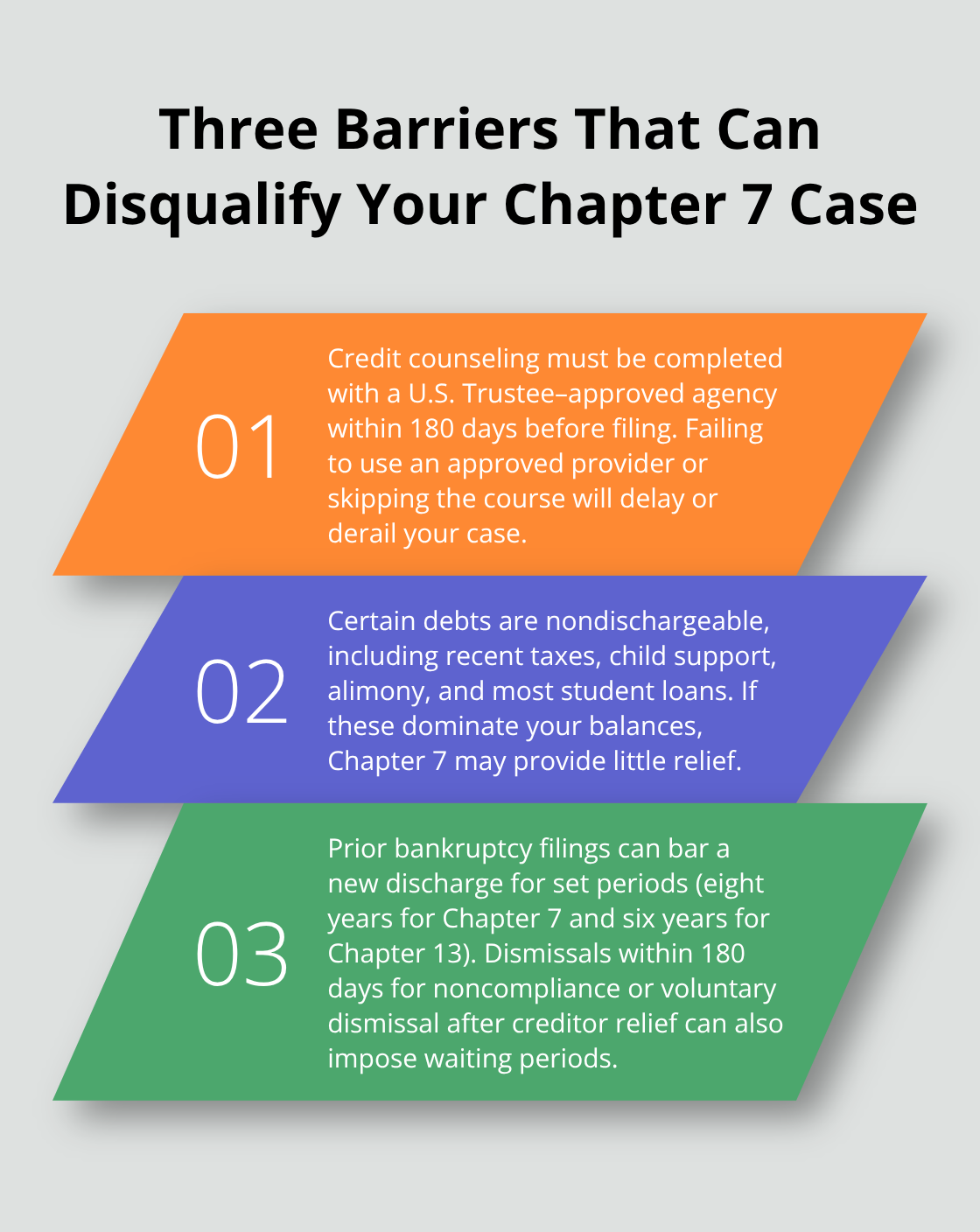
The second disqualifier involves debts that bankruptcy cannot touch, which matters far more than most people realize. If your primary debts are recent taxes, child support, alimony, or student loans, Chapter 7 may leave you owing nearly everything you owed before filing. The U.S. bankruptcy code explicitly excludes these from discharge, meaning the bankruptcy court cannot erase them.
Student loans present the harshest reality-you can only discharge them in rare cases involving undue hardship, a standard federal courts interpret extremely narrowly. If 80 percent of your debt falls into non-dischargeable categories, Chapter 7 becomes pointless, and Chapter 13’s repayment plan might serve you better.
Previous Bankruptcy Filings and Timing Restrictions
The third barrier is your bankruptcy history. If you filed Chapter 7 within the last eight years or Chapter 13 within the last six years, federal law bars you from receiving a discharge. Additionally, if a previous bankruptcy petition was dismissed within 180 days because you failed to appear in court, failed to comply with filing requirements, or voluntarily dismissed the case after creditors requested relief, you face a waiting period before filing again.
These restrictions exist to prevent abuse, but they also mean timing your filing strategically matters enormously. Once you understand these three disqualifiers, you can move forward with confidence about your eligibility. The next step involves gathering the financial documents that support your petition and prove your income and expenses to the court.
Filing Your Chapter 7 Petition in Florida
Required Documents and Forms
Filing a Chapter 7 petition requires submitting specific documents to the federal bankruptcy court, and using outdated forms or missing required paperwork will delay your case or trigger dismissal. The U.S. Bankruptcy Court for the Middle District of Florida requires original wet signatures on your Voluntary Petition for Individuals Filing for Bankruptcy under Chapter 7, not digital signatures or photocopies. You’ll also need to file Schedule A/B listing all your assets, Schedule C identifying which property you’re exempting under Florida law, Schedule D for secured debts like mortgages or car loans, and Schedule E/F for unsecured debts like credit cards and personal loans. Schedule I captures your current monthly income while Schedule J details your monthly expenses. The Chapter 7 Statement of Your Current Monthly Income and the Means Test Calculation form must accompany your petition if your income exceeds Florida’s median. You cannot use bankruptcy forms from other courts or outdated versions-download the official forms directly from the court’s website to avoid rejection.
Filing Fees and Payment Options
The filing fee totals $338, though you can request a waiver using Official Form 103B if your household income falls below the poverty guidelines, or pay in installments with a minimum initial payment of $169. Within 14 days of filing, you must submit payment by cashier’s check or money order payable to the Clerk, U.S. Court (cash by mail is not accepted), along with copies of your pay stubs from the last 60 days, a legible government-issued photo ID, your Creditor Matrix showing only names and addresses of each creditor, and any Initial Eviction Judgment documents if you’re facing foreclosure.
The 341 Meeting and Trustee Review
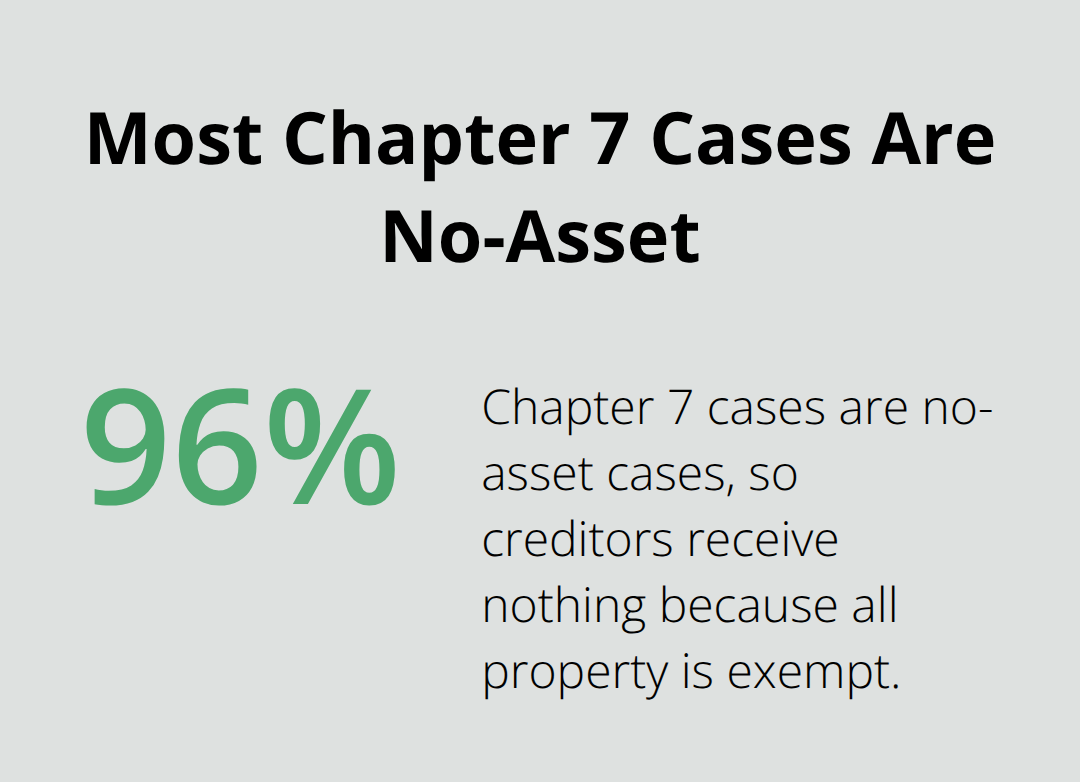
After filing, the court assigns a Chapter 7 trustee who will contact you to schedule your 341 meeting of creditors, typically held 21 to 40 days after your petition is filed. This meeting requires your attendance and sworn testimony about your financial situation, assets, and debts-missing it results in automatic dismissal of your case. The trustee reviews your schedules for nonexempt assets that could be liquidated to pay creditors, though roughly 96 percent of Chapter 7 cases are no-asset cases where creditors receive nothing because all your property qualifies for exemption under Florida law.
Asset Protection Under Florida Law
Your homestead property receives unlimited protection up to half an acre in a municipality or 160 acres elsewhere if you’ve owned it for at least 1,215 days before filing. Motor vehicles are protected up to $5,000 in equity per vehicle, and retirement accounts like 401(k)s and IRAs receive substantial protection with a cap of $1,711,975 per person for cases filed between April 1, 2025 and March 31, 2028. Social Security benefits, disability income, and life insurance proceeds payable to a named beneficiary are fully exempt.
Discharge and Post-Filing Requirements
A discharge order typically issues 60 to 90 days after your 341 meeting, releasing you from most debts permanently, though you must complete a Personal Financial Management Course and file the certificate within 60 days of your first 341 meeting date to receive the discharge. Liens on property survive the discharge, meaning a creditor can still foreclose on a home or repossess a car even after bankruptcy unless you address the lien separately through a reaffirmation agreement if you plan to keep the secured property.
Final Thoughts
Your income relative to Florida’s median threshold determines whether you can chapter 7 bankruptcy qualify, and the means test refines that answer if your earnings exceed the state’s limits. Three additional barriers-credit counseling completion, debt type verification, and prior bankruptcy history-stand between you and filing, but understanding these requirements prevents wasted time pursuing a path that won’t work. The filing process demands precision with original signatures, accurate schedules, and timely fee payment, yet Florida’s exemption laws protect your homestead, vehicles, retirement accounts, and Social Security benefits through the entire process.
After your 341 meeting with the trustee and completion of a financial management course, a discharge order typically arrives within 90 days and releases you from most debts permanently. Liens on property survive the discharge, so you may need to address secured debts separately if you plan to keep a home or vehicle. The path forward requires careful attention to multiple legal requirements and strategic timing to maximize your fresh financial start.
We at Harnage Law, PLLC help Florida residents navigate each stage of Chapter 7 bankruptcy, from determining your eligibility to protecting your assets and obtaining your discharge. Contact us at https://chapter7florida.com to discuss your case and take the first step toward financial relief.