Filing Chapter 7 bankruptcy in Florida raises a pressing question: can you keep your tax refund? The answer depends on when you file, what exemptions apply, and how the bankruptcy trustee handles your case.
We at Harnage Law, PLLC know that tax refunds often represent money you’ve already earned-and you may have legitimate reasons to protect it. This guide walks you through exactly what happens to your refund during Chapter 7 bankruptcy and how to preserve it.
How Tax Refunds Become Property of the Bankruptcy Estate in Florida Chapter 7
What the Bankruptcy Trustee Can Claim
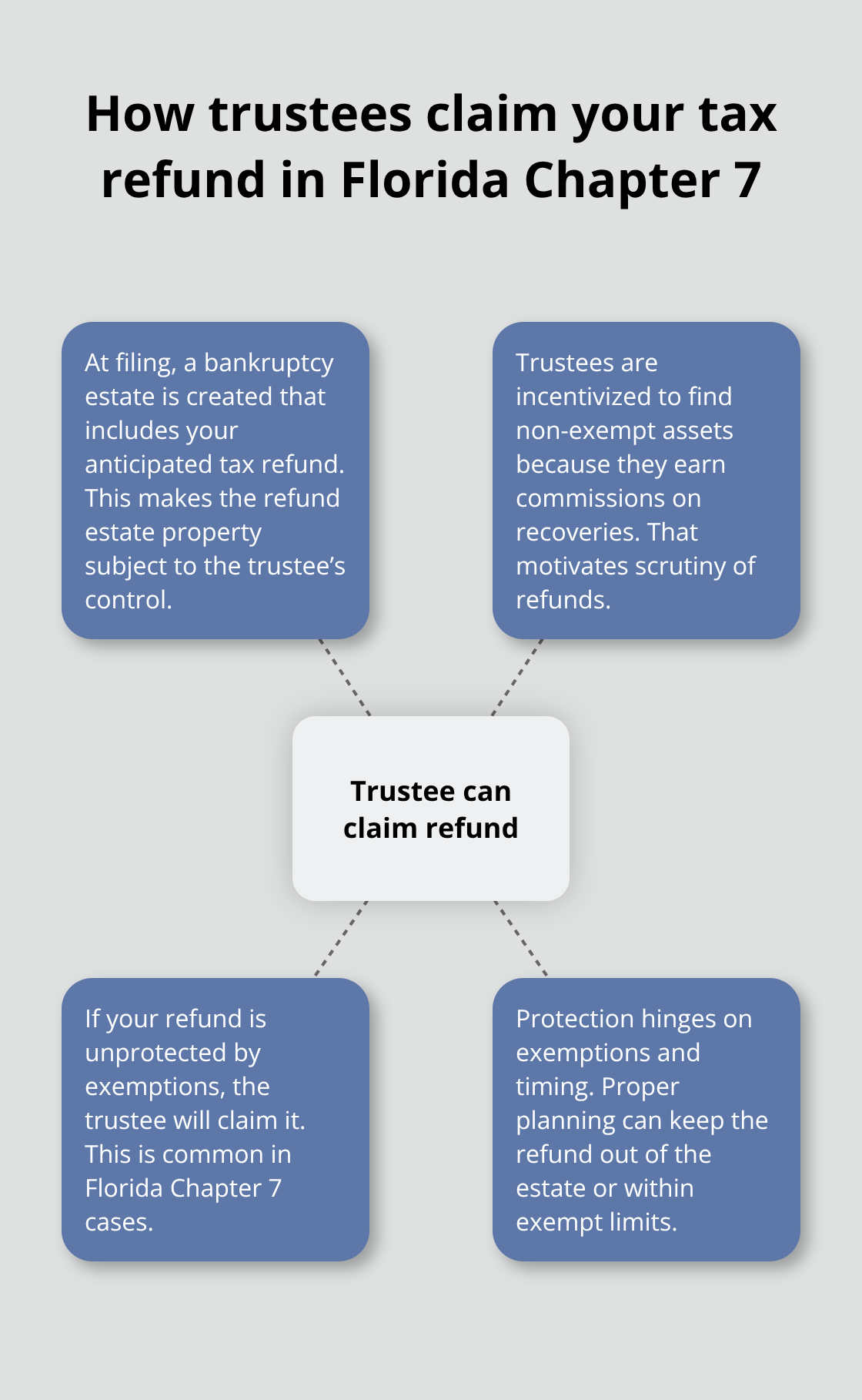
When you file Chapter 7 in Florida, the moment your petition is submitted, a bankruptcy estate is created that includes virtually all your property-and that includes any tax refund you’re entitled to receive. The trustee appointed to your case has a direct financial incentive to locate and liquidate non-exempt assets because they earn a commission based on what they recover for creditors. If your tax refund sits in the bankruptcy estate without protection, the trustee will claim it. This happens regularly in Florida Chapter 7 cases.
Why Florida State Exemptions Matter More Than Federal Ones
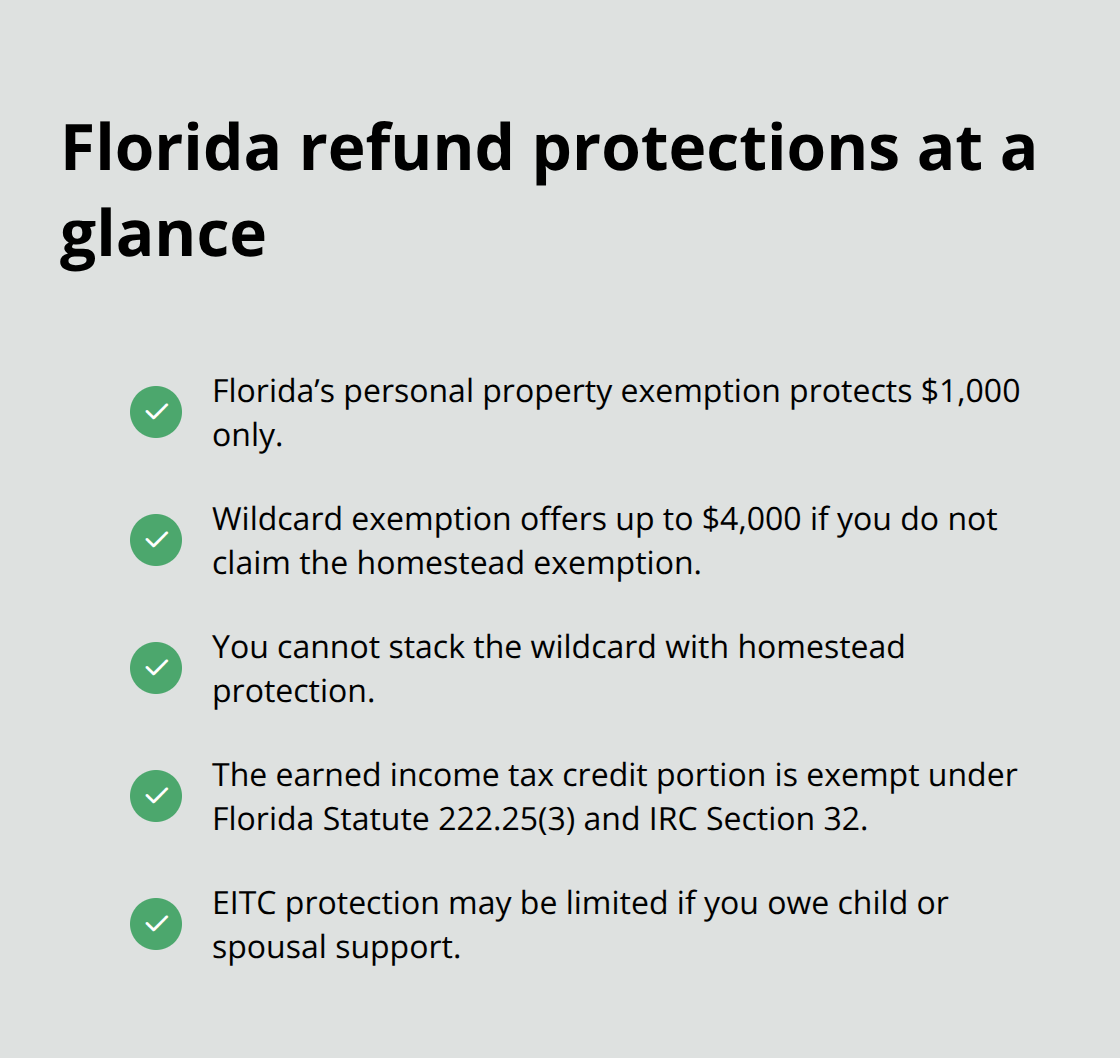
The critical factor is whether your refund qualifies for an exemption under Florida law. Florida does not permit filers to use federal exemptions in Chapter 7 bankruptcy; you must rely entirely on state exemptions, which are more limited. Your personal property exemption in Florida allows you to protect $1,000 of unencumbered personal property, but most tax refunds exceed this amount significantly. The Earned Income Tax Credit portion of your refund receives special protection under IRC Section 32 and Florida Statute 222.25(3), meaning that portion is always exempt regardless of when you file-but only if you don’t owe child support or spousal support obligations.
How Filing Timing Affects Your Refund Protection
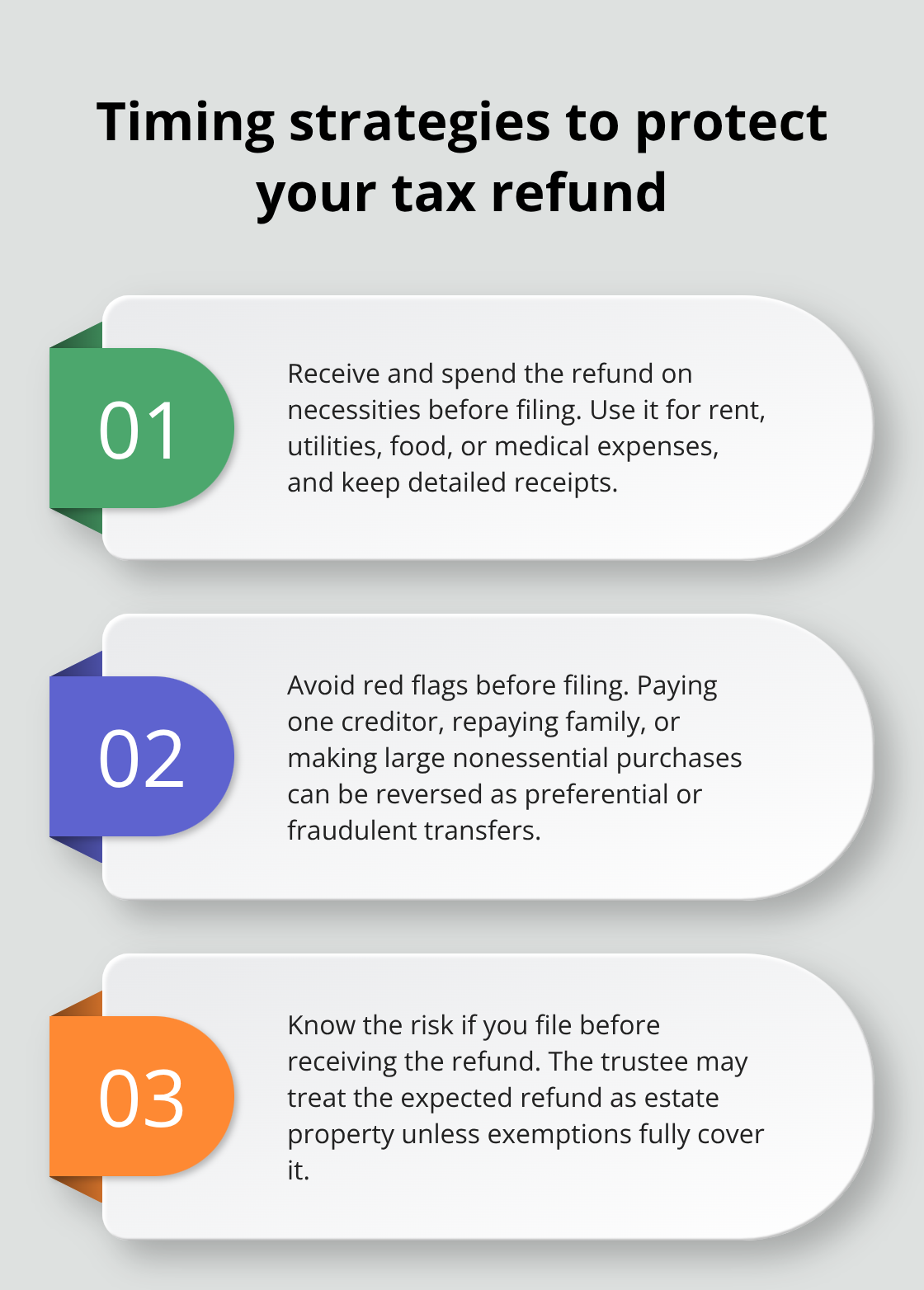
The timing of your bankruptcy filing relative to when you receive your refund dramatically affects what the trustee can take. If you file your Chapter 7 petition before receiving your refund for the year, the trustee will examine your tax return and calculate the expected refund amount as estate property. If you file after you’ve already received and spent the refund on necessities like rent, utilities, food, or medical bills, the trustee cannot take back money you no longer possess-though you must be prepared to document exactly how you spent it.
Spending Your Refund: What Works and What Doesn’t
Many filers make the mistake of assuming they can simply spend a refund to protect it, but the trustee scrutinizes large expenditures made right before filing. Spending your refund to pay down one specific creditor or to repay loans to family members can be challenged as a preferential payment or fraudulent transfer. Conversely, if your refund arrives after you’ve already filed your bankruptcy petition and received your discharge, that refund belongs entirely to you because it represents income earned after the bankruptcy estate was created.
The Wildcard Exemption as a Secondary Shield
The Florida wildcard exemption provides up to $4,000 of protection for personal property if you don’t own a home, but this exemption cannot be stacked with the homestead exemption, forcing homeowners to choose which protection matters most for their situation. Understanding these exemption limits and how they interact with your specific assets determines whether you can shield your refund or whether the trustee will claim it. The next section explores the specific exemption strategies available to you and how to structure your filing to maximize what you keep.
Exemptions That Actually Protect Your Refund in Florida
How Florida’s Exemption System Limits Your Refund Protection
Florida’s exemption system restricts what you can protect far more than most filers anticipate. The state’s $1,000 personal property exemption covers almost nothing when your tax refund typically ranges from $1,500 to $3,000 or higher. The wildcard exemption provides up to $4,000 of additional protection, but only if you do not own a home and are not claiming the homestead exemption simultaneously. This either/or choice matters enormously. A homeowner with $15,000 in home equity will always choose the homestead exemption over wildcard protection, leaving the tax refund vulnerable. If you rent and have no homestead exemption to claim, the wildcard exemption becomes your strongest defense, potentially shielding your entire refund if it falls within the $4,000 limit.
The Earned Income Tax Credit Exception
The earned income tax credit portion of your refund receives absolute protection under Florida Statute 222.25(3) and IRC Section 32 regardless of exemption space, but only if you do not owe child support or spousal support. A filer earning $40,000 annually with two qualifying children might receive an earned income credit of $3,500 to $3,600, meaning that portion stays with you even if the remainder of the refund is claimed by the trustee. Many filers do not realize they have this protection and unnecessarily spend refunds thinking the trustee will take the entire amount.
Timing Your Filing to Eliminate the Refund from the Estate
Your filing timing directly determines whether exemptions matter at all. If you file your Chapter 7 petition after receiving your refund and spending it on rent, utilities, food, or medical expenses, the trustee has nothing to claim because the money no longer exists in your estate. The key is documentation-keep receipts showing exactly how you spent the refund, and avoid spending patterns that raise red flags. Paying down one specific creditor immediately before filing, transferring funds to family members, or making large purchases unrelated to living expenses can be reversed by the trustee as preferential transfers or fraudulent conveyances.
Reducing Future Refunds Through Tax Withholding Adjustments
If you anticipate a large refund and have not yet received it, adjusting your tax withholding through your employer reduces the refund amount for future tax years. Deferring salary into a 401(k) or traditional IRA lowers your taxable income and shrinks your refund accordingly. A filer who would normally receive a $4,000 refund can reduce it to $2,000 by increasing 401(k) contributions by approximately $2,500, keeping more money in your hands and outside the bankruptcy estate entirely.
Why Florida Filers Cannot Use Federal Exemptions
Federal exemptions are simply not available in Florida Chapter 7, making state exemptions your only option. This limitation means filers in Florida have significantly fewer protections than those in bankruptcy-friendly states like Texas or Georgia. Analyzing your specific refund amount, your available exemptions, and your filing timeline together before you take any action with the refund itself determines your best path forward. The next section examines what happens to your refund after the court grants your discharge and how post-bankruptcy income flows to you free from the trustee’s reach.
Your Refund After Discharge in Florida Chapter 7
What Happens to Refunds Earned After Your Discharge
The discharge order you receive from the bankruptcy court marks a clear dividing line for your tax refund. Any refund tied to income earned after your bankruptcy petition was filed belongs entirely to you, free from the trustee’s reach. The bankruptcy estate exists only from the filing date backward, meaning refunds for tax years after your case closes remain yours completely. If you filed Chapter 7 in March 2025 and received a refund in April 2026 for the 2025 tax year, that entire refund stays with you because it represents income earned after the estate was created. This protection applies regardless of exemption space, wildcard exemptions, or any other limitation discussed earlier in this guide.
How the Trustee’s Authority Ends at Discharge
The trustee’s authority ends with your discharge, and any income generated after that date falls completely outside their jurisdiction. Many filers unnecessarily worry about refunds they will receive years after discharge, when in reality those future refunds carry zero risk from the trustee. This is one of the most misunderstood protections in Florida Chapter 7 bankruptcy, and it directly affects your financial recovery timeline.
Protecting Refunds You Already Received Before Filing
If you received your refund before filing and spent it on rent, food, utilities, or medical bills, the trustee cannot pursue it because those funds no longer exist in your possession. Document those expenditures carefully with receipts or bank statements showing the dates and amounts. If your refund arrives while your case is pending but before discharge, the trustee may claim it unless exemptions shield it completely. This is why many filers strategically time their filings to occur after receiving and spending their refunds on necessary living expenses.
Using Exemptions to Protect Refunds During Your Case
If your refund amount falls within Florida’s wildcard exemption of up to $4,000 and you do not own a home, you can protect the entire amount without spending it at all. The earned income tax credit portion remains exempt regardless of timing or exemption space if you have no child support or spousal support obligations. Understanding these specific protections allows you to make informed decisions about when to file rather than filing reactively when financial pressure peaks.
Strategic Timing for Maximum Refund Protection
The trustee’s claim on your refund during the case itself depends entirely on whether the refund qualifies as estate property at the time you file. Alternatively, you can structure your filing to eliminate the refund from the estate entirely. A filer who receives a refund in February, spends it on necessary living expenses, and then files in March leaves the trustee with nothing to claim. This approach requires careful planning and documentation, but it provides absolute protection for your refund without relying on exemption space or hoping the trustee overlooks the funds.
Final Thoughts
The answer to whether you can keep your tax refund if you file Chapter 7 in Florida depends on three factors: when you file, what exemptions apply to your situation, and how much of your refund qualifies for protection. The earned income tax credit portion remains exempt regardless of timing if you have no child support obligations. The wildcard exemption shields up to $4,000 of personal property if you rent and do not claim homestead protection.
Timing your bankruptcy filing matters more than most filers realize. Filing after you receive and spend your refund on rent, utilities, food, or medical bills eliminates it from the trustee’s reach entirely. Filing before receiving your refund forces you to rely on exemptions that may not fully protect it. Adjusting your tax withholding through your employer or deferring salary into a 401(k) reduces future refund amounts before they ever become estate property.
The trustee has a financial incentive to claim non-exempt assets, and your refund represents money they can liquidate quickly. Spending patterns matter enormously-using your refund to pay down one specific creditor or repay family loans can be reversed as preferential transfers. Contact us at https://chapter7florida.com to discuss your situation and develop a strategy that protects your financial recovery.