
Filing for Chapter 7 bankruptcy in Florida is a major financial decision, and one mistake can derail your case or cost you thousands in assets you could have protected.
We at Harnage Law, PLLC see people make preventable errors every week-from failing to disclose assets to missing court deadlines to choosing the wrong attorney. The good news is that most chapter 7 bankruptcy mistakes to avoid in Florida are entirely preventable with the right information and guidance.
1. Failing the Means Test in Florida
The means test determines whether you qualify for Chapter 7 bankruptcy in Florida, and most people who fail it do so because of calculation errors, not actual ineligibility. The test compares your household income over the last six months to Florida’s median income for your household size-if you earn below the median, you generally qualify immediately. If your income exceeds the median, the court calculates your disposable income after allowed expenses to determine eligibility. Incorrect income reporting causes the most common mistake, and you must include overtime, bonuses, child support received, rental income, gig work, and even contributions from roommates. Many filers underreport income or miscount household members, which skews the entire calculation and triggers trustee objections that delay or deny discharge.
Timing your filing matters significantly because the means test looks at the last six months of earnings-delaying your filing by one or two months can shift whether you pass or fail. Another frequent error occurs when filers overstate expenses; the court uses IRS standard expense allowances rather than your actual spending, and claiming expenses higher than the standards damages your credibility and invites scrutiny. Special circumstances like recent job loss, divorce, or ongoing medical conditions can override a failing means test result when properly presented.
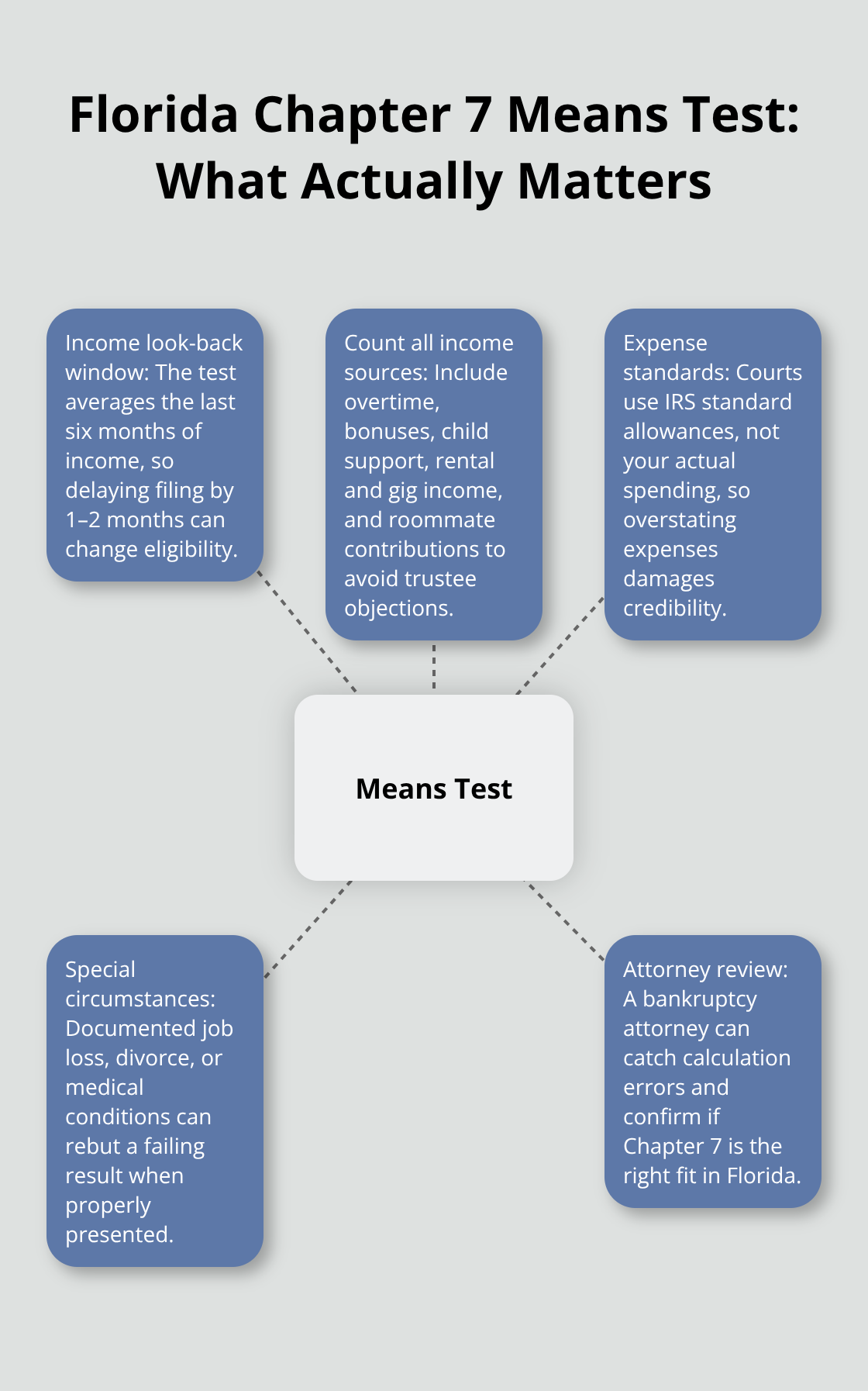
If you suspect calculation errors or worry about eligibility, a bankruptcy attorney can prevent costly mistakes and clarify whether Chapter 7 truly fits your situation in Florida-and that clarity matters before you move forward with the next critical step in your filing process.
2. Mandatory Credit Counseling Before Filing
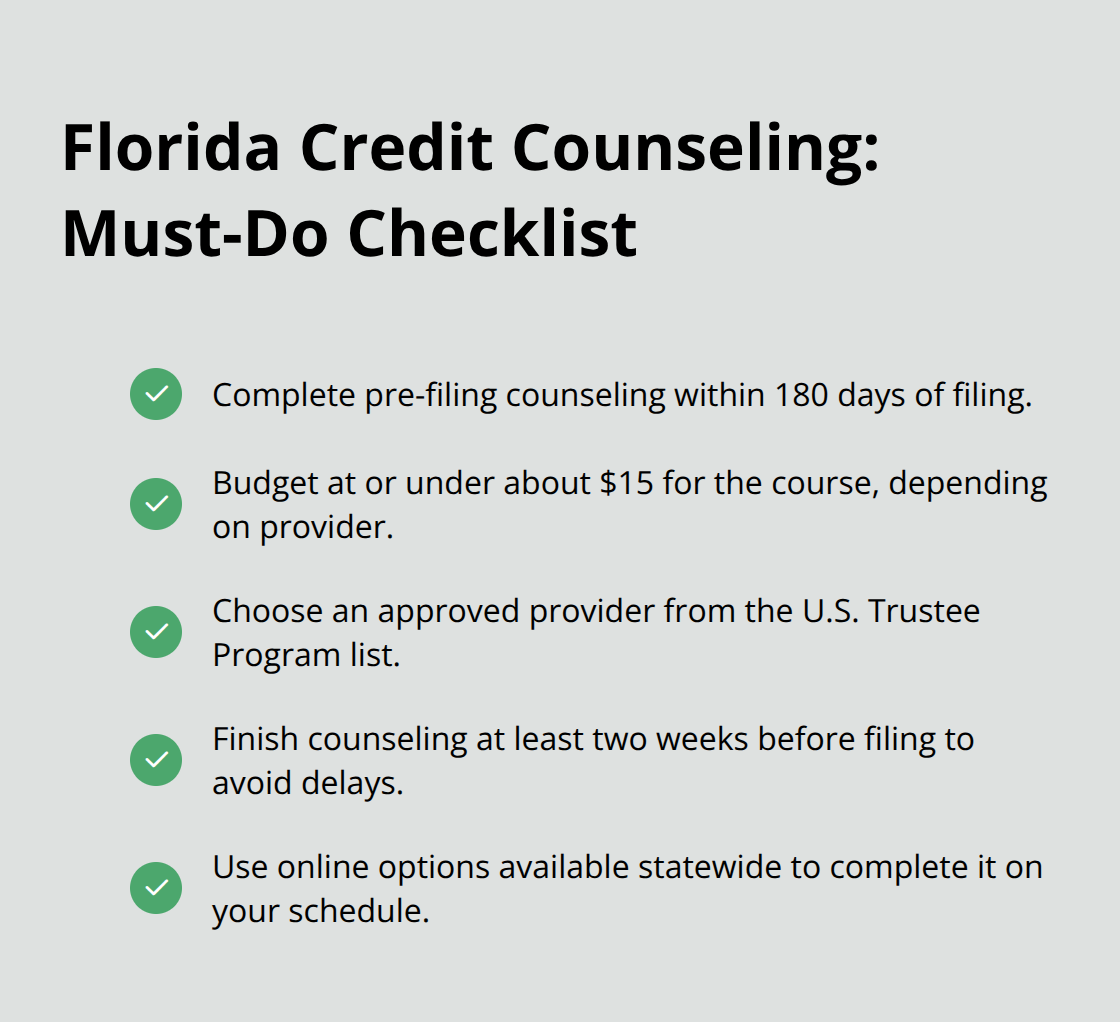
Credit counseling is not optional in Florida Chapter 7 cases-the court requires you to complete an approved pre-filing counseling course before you can file your petition. This counseling must happen within 180 days before you file, and skipping this step means the court will dismiss your case outright, wasting time and money. The counseling typically costs under $15, depending on the provider you choose. The course covers budgeting basics, debt management alternatives, and whether Chapter 7 truly fits your situation, which means some people discover during counseling that they should pursue Chapter 13 instead. Finding an approved provider in Florida is straightforward-the U.S. Trustee Program maintains an official list of credit counseling agencies authorized to serve Florida residents, and you can search by county on their website to locate providers near you.
Timing your counseling matters because filing before you complete the course triggers automatic dismissal, and you cannot simply refile without restarting the entire process. Many people schedule counseling too close to their intended filing date and discover the provider has a waiting list or limited availability, which delays everything. Try completing your counseling at least two weeks before you plan to file so you have the certificate in hand and no last-minute scrambling. Online counseling options are available throughout Florida, which eliminates travel time and lets you complete the requirement on your schedule.
After discharge, you must also complete a financial management course within 45 days, so understanding these two separate requirements upfront prevents confusion and keeps your case moving forward without delays-and this second course requirement is where many filers stumble after they think their obligations have ended.
3. Full Asset and Debt Disclosure in Florida Chapter 7
Incomplete financial disclosure destroys your bankruptcy case or triggers federal fraud charges that carry prison time and fines. The court requires you to list every debt, every asset, and every financial transaction from the past two years on your bankruptcy schedules-and every means exactly that, including items you think are worthless or forgot you owned. The FBI prosecutes bankruptcy fraud cases involving intentional concealment of assets, and the consequences extend far beyond losing your discharge; you face criminal penalties that dwarf your original debt. Courts uncover hidden assets through bank record analysis, property searches, and cross-referencing your spending patterns against reported income. If you spent $50,000 in the past year but only reported $40,000 in income, the trustee will ask where the missing money went, and vague answers invite investigation.
Co-ownership of property, inheritance, tax refunds, or settlement money you forgot to mention can resurface years after discharge and pull assets back into the bankruptcy estate. Florida’s state exemptions outside bankruptcy protect certain property-your homestead receives unlimited protection up to the property’s value, retirement accounts stay shielded, and personal property up to specific limits remains safe-but only if you properly disclose and claim these exemptions on your schedules. The federal exemptions offer different protections, and your attorney must determine which set of exemptions works best for your situation in Florida. Transferring assets to family members or hiding money in accounts before filing looks like fraud to any trustee, and these transfers can be reversed and distributed to creditors instead.
List every asset at its current fair market value, disclose all debts no matter how small or embarrassing, and report co-signed obligations that could affect your case. Honesty protects your discharge and prevents the costly reopening of your case months or years later. The next critical mistake many filers make involves asset protection planning-and understanding how to shield your property legally before filing can mean the difference between losing assets you could have kept and walking away with maximum protection.
4. Asset Protection Strategy Timing
Asset protection in Florida Chapter 7 only works if you plan before filing, and the timing of your moves determines whether the court views them as legitimate or fraudulent. Florida’s unlimited homestead exemption shields your primary residence outside bankruptcy, meaning your home receives protection that doesn’t exist in most other states-but this protection weakens significantly once you file Chapter 7, so maximizing homestead benefits before filing makes financial sense. Transferring property to family members within two years before filing triggers fraudulent conveyance laws, and the trustee will reverse these transfers to distribute assets to creditors instead-this happens frequently, and courts view such transfers as obvious fraud regardless of your intent.
Retirement accounts remain protected in both state court and bankruptcy, which means depleting retirement savings to pay down debt before filing wastes a valuable shield that the law already provides. The court scrutinizes any asset movement in the 90 days immediately before filing with heightened suspicion, so moving money or property during this window creates problems that a qualified attorney can help you avoid. Identify which assets qualify for Chapter 7 bankruptcy now, before you file, so you understand what protection already exists under state law and whether Chapter 7 actually improves your situation.
Personal property exemptions vary by asset type-vehicles up to $1,000 in equity, household goods up to $500 per item, tools of trade up to $1,000-and these limits differ from federal exemptions, which is why choosing the right exemption set matters enormously. Many filers discover after filing that they could have protected far more assets by staying in state court and using Florida’s exemptions rather than filing bankruptcy. The decision to file should follow a clear understanding of what you’ll lose and what you’ll keep, and that clarity comes from professional guidance that maps out your actual options in Florida before you miss the next critical deadline that could affect your case.
5. Missing Deadlines That Derail Your Case
The 341 meeting of creditors occurs roughly 21 to 40 days after you file, and skipping it guarantees dismissal of your entire case. The trustee assigned to your bankruptcy will send you notice of this meeting date, and you must bring government-issued photo identification and your Social Security number for verification. The trustee will request original documents showing your income, assets, and debts during the meeting. Federal law requires your physical presence at the courthouse in your district-no exceptions exist for remote attendance or attorney representation alone. Missing the 341 meeting destroys your case and wastes filing fees that typically run between $300 and $400.
Document submission deadlines in Florida Chapter 7 cases are equally unforgiving. You have 14 days after filing to submit your tax returns and other financial documents to the trustee, and late submission triggers case dismissal or trustee objections that delay discharge by months. The court also requires you to complete a financial management course within 45 days after your 341 meeting, and failing to submit proof of completion prevents the judge from granting your discharge. Court-ordered deadlines for responding to trustee requests or creditor objections typically allow 10 to 14 days, and missing these windows gives the other side permission to move forward without your input.
Set phone reminders, write dates on your calendar, and ask your attorney for a complete deadline schedule in writing before your 341 meeting arrives. Late filing fees, amended schedules that require new fees, and extended case timelines compound the damage when you miss even one deadline. Taking on new debt before discharge presents another serious risk that many filers overlook until it’s too late.
6. New Debt Before Discharge Sinks Your Case
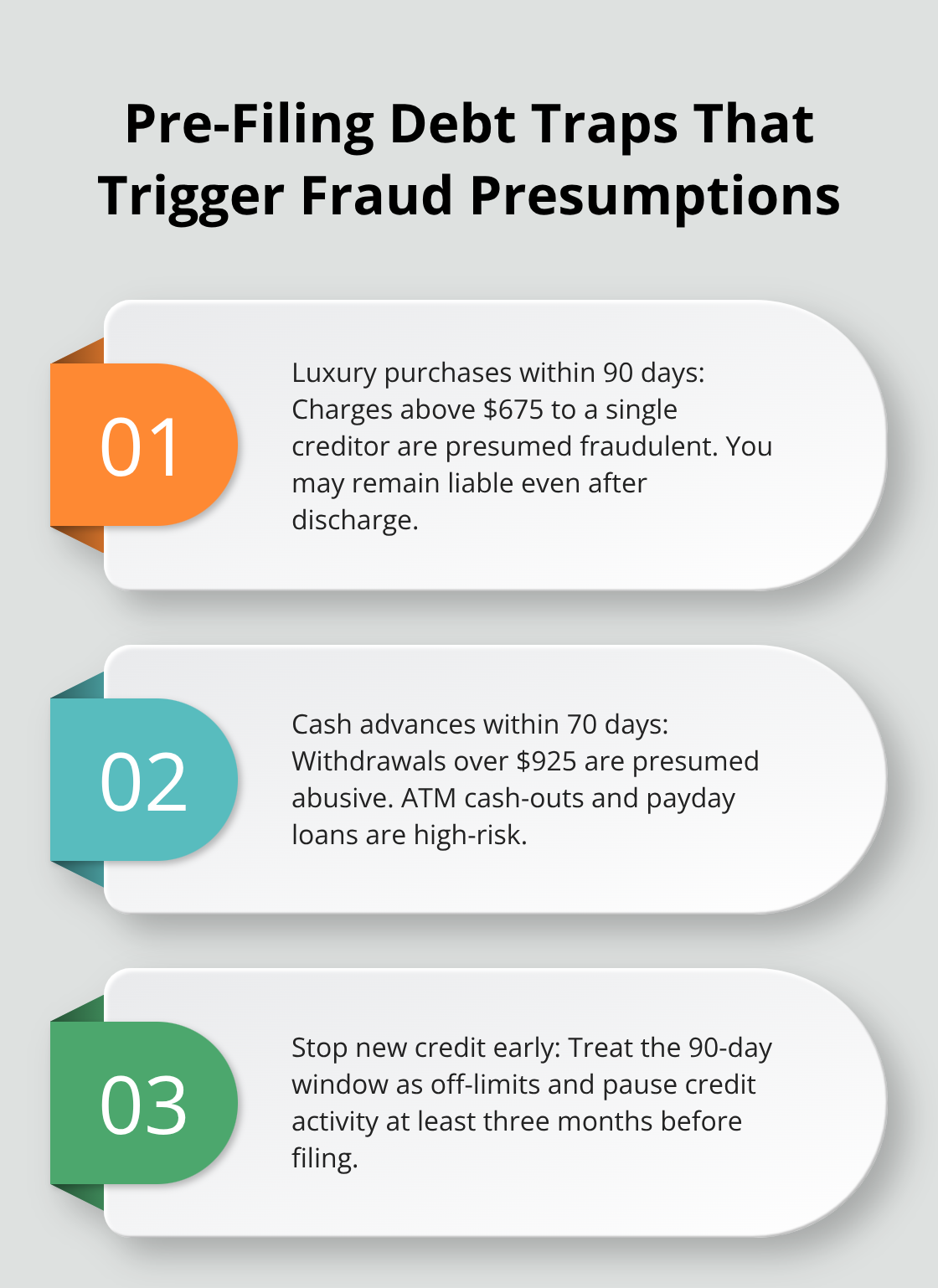
Taking on new debt within 90 days before filing Chapter 7 triggers a presumption of abuse that the court treats as fraud, and the Bankruptcy Code views this window as the danger zone for any credit activity. Luxury purchases above $675 from a single creditor within 90 days before filing are presumed fraudulent, meaning the court assumes you had no intent to repay them when you charged them, and you’ll remain liable for that debt even after discharge. Cash advances over $925 within 70 days before filing face the same presumption, which means you cannot use a credit card to pull cash from an ATM or take a payday loan to cover expenses right before filing.
The court sees these actions as deliberate attempts to accumulate funds you never planned to repay, and judges take a dim view of filers who game the system this way. If the trustee challenges your discharge based on presumed fraud, you’ll need to prove you intended to repay the debt, which is nearly impossible when you file weeks later.
Co-signed loans create serious liability problems because co-signers remain on the hook for the full debt after your discharge, and many filers don’t realize they’ve damaged a family member’s credit or financial security by filing without warning. New credit for necessities like groceries, gas, or emergency car repairs within 90 days faces less scrutiny than luxury spending, but you should still avoid opening new accounts or making large charges right before filing. Stop all credit activity at least three months before you plan to file, use cash for essential purchases, and discuss any unavoidable expenses with your attorney so the timing doesn’t torpedo your case. Courts in Florida take a hard line on pre-filing debt abuse, so treating the 90-day window as off-limits protects your discharge and prevents the judge from denying relief that you otherwise qualified for. Choosing the wrong legal representation compounds these risks and leaves you vulnerable to costly mistakes that proper guidance could have prevented.
7. Hiring the Right Bankruptcy Attorney
Most Florida bankruptcy filers who regret their choice of attorney point to one mistake: hiring based on price alone rather than qualifications and track record. The cheapest option often comes from non-attorney bankruptcy petition preparers who charge $500 to $1,500 but cannot represent you in court, answer trustee questions, or handle creditor objections-you’ll end up paying more when problems arise and you need real legal help anyway. When evaluating attorneys, ask specifically how many Chapter 7 cases they’ve handled in your county and what percentage resulted in discharge; attorneys familiar with your local trustee and judge understand how cases actually move through the system rather than following generic templates. Request references from recent clients and ask whether the attorney’s fee covers the full process including the 341 meeting, trustee negotiations, and the financial management course completion, or whether additional charges appear later. Red flags include attorneys who guarantee discharge (the court decides, not them), pressure you to file immediately without reviewing your finances thoroughly, or charge significantly less than the market rate in your area-Florida Chapter 7 cases typically run $1,200 to $3,000 in attorney fees depending on complexity and local market rates.
Payment structures matter because flat fees upfront protect you from surprise bills, while hourly billing can spiral if complications arise. Ask whether the firm offers a payment plan so you can spread costs over several months rather than paying everything before filing. The cheapest attorney may cost you thousands in unprotected assets or a dismissed case that requires refiling-spending appropriately on qualified legal representation in Florida saves money and protects your discharge. Choosing the wrong attorney leaves you vulnerable to the final mistake many filers make: misunderstanding what happens after the court grants your discharge.
Final Thoughts
Your Chapter 7 discharge eliminates most unsecured debts like credit cards and personal loans, but certain obligations survive the process-child support, alimony, recent tax debt, and student loans remain your responsibility after discharge. Your bankruptcy stays on your credit report for ten years, but your score can improve significantly within two to three years if you manage new credit responsibly. Secured credit cards with small deposits help you establish positive payment history without requiring a traditional credit application.
Post-bankruptcy scams target people who’ve just received discharge, offering to remove the bankruptcy from your credit report or promising guaranteed credit approval. No legitimate service can erase a bankruptcy before the ten-year period ends, and anyone claiming otherwise commits fraud. Protect yourself by working only with licensed financial advisors and credit counselors, and ignore unsolicited calls or emails promising credit miracles.
We at Harnage Law, PLLC understand that avoiding chapter 7 bankruptcy mistakes to avoid Florida requires guidance at every stage, from pre-filing planning through post-discharge recovery. If you’re facing financial challenges or want to understand whether Chapter 7 fits your situation, contact us for a consultation to map out your path forward with confidence.
