Chapter 7 bankruptcy wipes your debts clean, but the real work starts after discharge. Life after Chapter 7 bankruptcy in Florida means rebuilding from the ground up-and it’s absolutely possible.
We at Harnage Law, PLLC know that many clients feel lost once their case closes. This guide walks you through the practical steps to restore your credit, build healthy financial habits, and protect the fresh start you’ve earned.
How Chapter 7 Affects Your Credit and What You Can Do About It
Understanding the Initial Credit Impact
Chapter 7 bankruptcy typically causes a 100–200 point drop in your credit score, depending on your starting score, debt level, and prior payment history. The filing stays on your credit report for up to 10 years, but that timeline shouldn’t discourage you-your score can begin recovering immediately after discharge. Bankruptcy clears eligible debts while retaining records of pre-filing missed payments and account closures. This means your credit report still shows the damage from before you filed, but now you have the opportunity to build positive history going forward.
Taking Action in Your First Month
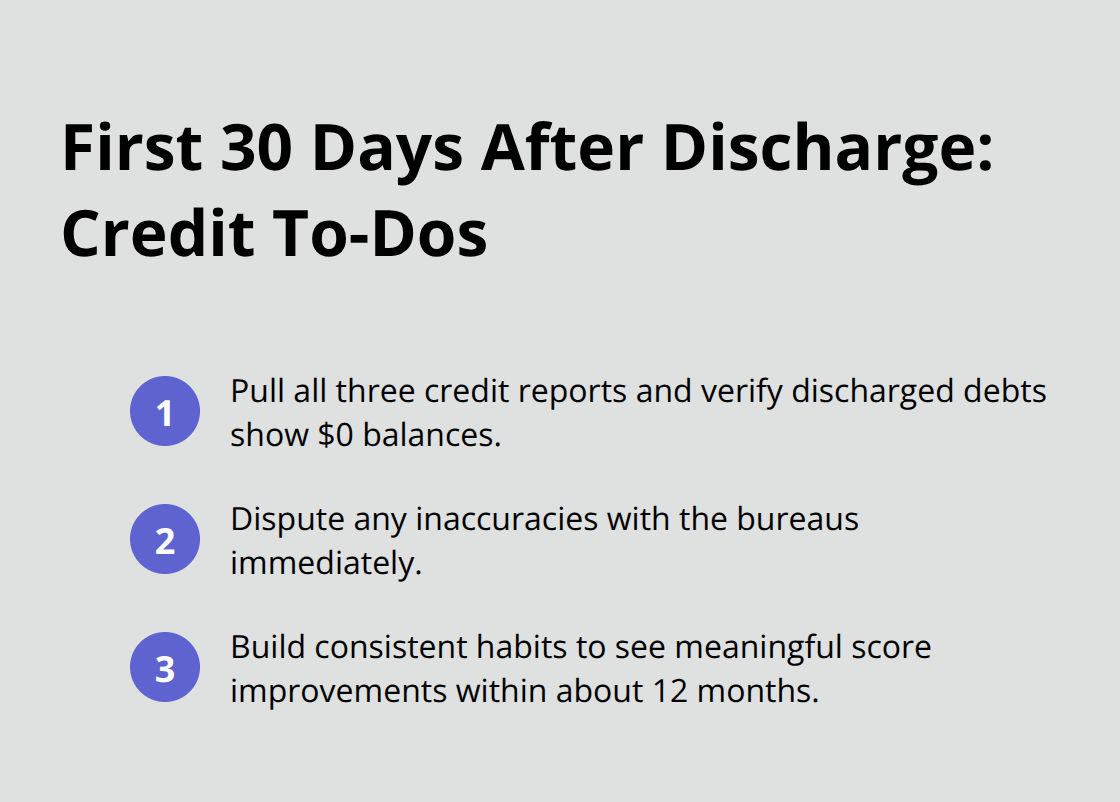
Start by pulling your credit reports from all three bureaus within the first month after discharge and confirm that all discharged debts show a zero balance. Dispute any errors you find, as inaccuracies can unnecessarily tank your score. Many people see meaningful credit improvements within about 12 months when they follow disciplined habits, so recovery is far from impossible.
Building Credit With Secured Cards
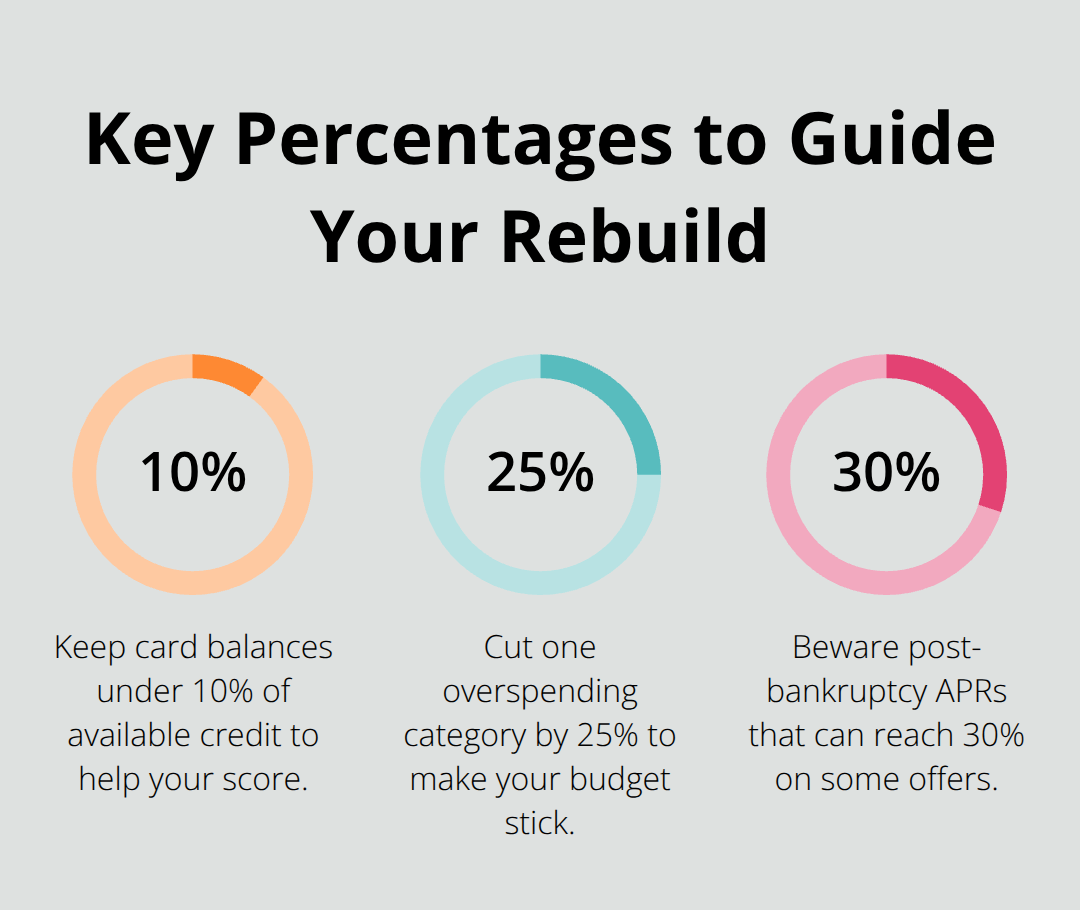
Open a secured credit card within the first few months after discharge-this is your most direct path to rebuilding. Secured cards require a cash deposit (typically between $300 and $2,500), which becomes your credit limit. Choose an issuer that reports to all three major credit bureaus so your on-time payments actually count toward your score. Keep your balance below 10 percent of your available credit and pay every bill on time, without exception. Timely payments are the single largest factor in credit rebuilding, so set up autopay if you struggle with deadlines.
Advancing Your Credit Profile
After several months of perfect payment history, request a credit limit increase on your secured card to lower your utilization ratio further. Some lenders may approve a car loan soon after discharge, but expect higher interest rates until your score recovers-shop rates carefully before committing. Avoid payday loans and high-risk lending at all costs; these trap you in debt and don’t meaningfully improve your credit profile. Within 10–12 months of consistent, responsible credit use, you’ll likely qualify for unsecured credit cards with better terms.
The Foundation of Lasting Recovery
The foundation of this entire process rests on three principles: spend less than you earn, pay every obligation on time, and resist the urge to open too many new accounts too quickly. This disciplined approach sets the stage for establishing the financial habits that protect your fresh start long-term.
Building Money Habits That Stick After Discharge
Track Your Spending Before You Budget
Your credit recovery means nothing if you slide back into the same spending patterns that created your debt in the first place. The financial habits you establish now directly determine whether you stay stable or find yourself drowning again. Start with a written budget that accounts for every dollar you earn. Most people underestimate their spending by 20–30 percent until they actually track it, so write down what you spend on groceries, utilities, transportation, and entertainment for a full month before you create your budget. This isn’t about deprivation-it’s about knowing exactly where your money goes and making intentional decisions.
Prioritize Essentials and Cut One Category
Your budget should prioritize your non-negotiable expenses first: housing, food, insurance, and minimum debt payments. Everything else comes after. Many people fail at budgeting because they try to cut too much at once; instead, identify one category where you overspend and reduce it by 25 percent. If you’re spending $200 monthly on dining out, cut it to $150. Small, sustainable changes work far better than dramatic overhauls that you’ll abandon within weeks.
Start Your Emergency Fund With Small Amounts
Building an emergency fund terrifies people who just finished bankruptcy, but it’s the single best protection against returning to debt. Start absurdly small-even $25 per week adds up to $1,300 annually, enough to cover most unexpected car repairs or medical costs that would otherwise force you back to credit cards. Keep this money in a separate savings account you don’t see on your regular checking statement; out of sight makes it harder to raid when you want something. Your goal is three months of essential expenses, but don’t obsess over reaching that number immediately. Focus on consistency instead-set up an automatic transfer on payday so you never have to think about it.
Use New Credit as a Tool, Not a Reward
Managing new credit responsibly means treating it like a tool, not a reward. You’ve qualified for new credit cards or a car loan, yes, but that doesn’t mean you should accept every offer. Read the terms carefully; many post-bankruptcy offers carry 20–30 percent interest rates that make purchases far more expensive than you realize. Use new credit only for small, planned purchases you can pay off within 30 days. If you can’t afford to buy it with cash within the next month, you can’t afford it on credit either.
Protect Your Stability by Setting Boundaries
Avoid co-signing loans for anyone during your rebuilding phase-if they miss a payment, your credit suffers and you’re legally responsible for the full debt. This isn’t about being selfish; it’s about protecting the financial stability you’ve worked hard to restore. The goal isn’t perfection; it’s progress measured in consistent, boring decisions that compound over time. These habits form the foundation for what comes next: understanding what your discharge actually protects and how to defend it against common pitfalls.
Protecting Your Fresh Start in Florida
What Your Discharge Actually Covers
Your Chapter 7 discharge eliminates qualifying debts, but it doesn’t erase the legal world around you. Understanding exactly what your discharge protects is the difference between maintaining stability and stumbling backward. Discharged debts are gone permanently-creditors cannot pursue them, wage garnishments stop, and collection calls end immediately. However, certain debts survive discharge, including student loans (with rare exceptions), child support, alimony, most tax debts, and any debt you incurred through fraud. Your discharge also doesn’t affect secured debts like mortgages or car loans if you want to keep the property.
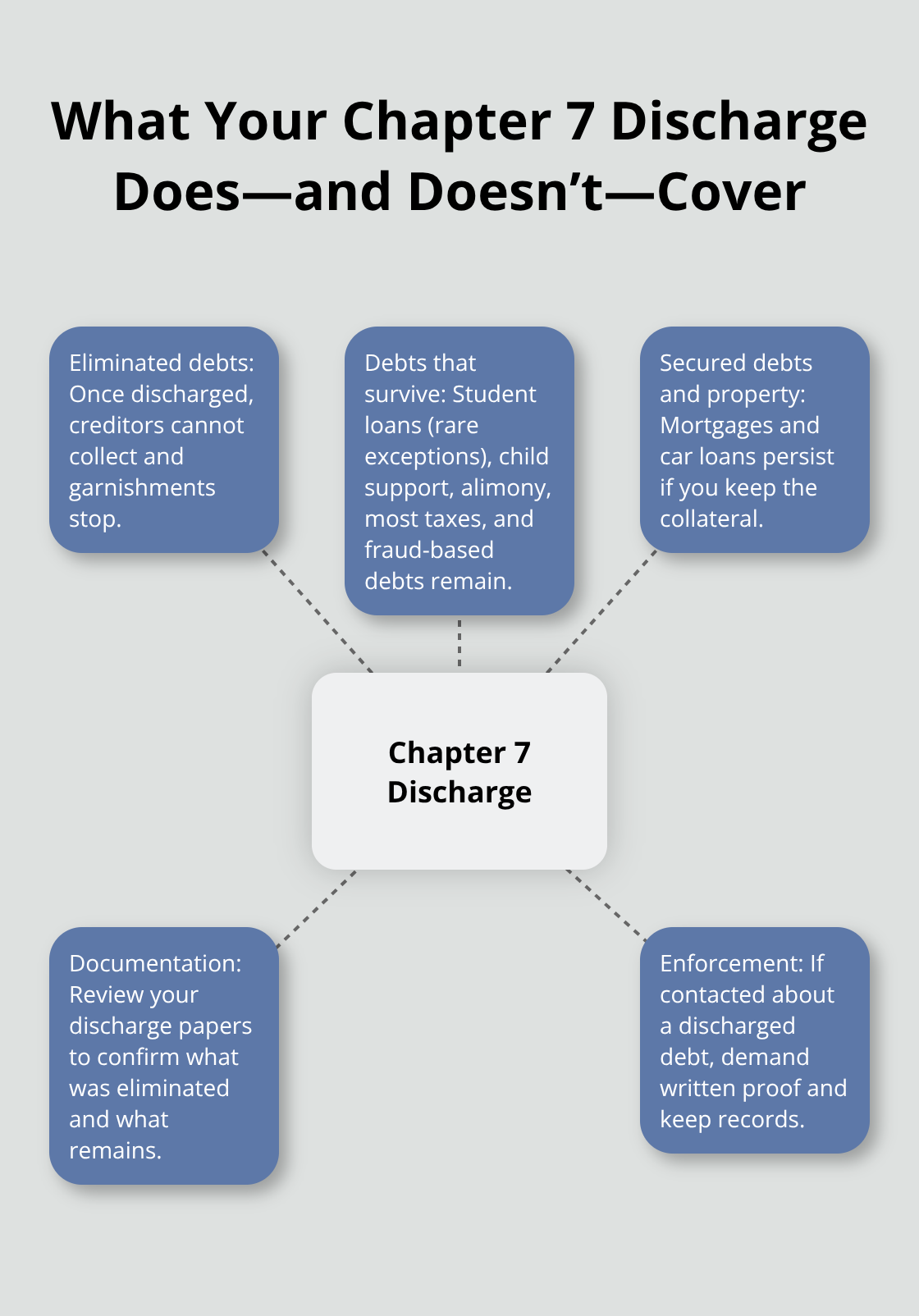
This distinction matters because many people assume all debt vanished, then face shock when a student loan servicer contacts them or a tax lien remains on their property. Pull your discharge paperwork and read it carefully-it lists exactly which debts were eliminated and which remain your responsibility. If you’re unsure whether a specific debt was discharged, contact the bankruptcy trustee’s office for clarification before you assume anything.
Responding to Creditor Contact After Discharge
Never ignore court documents or creditor contact after your case closes. Occasionally a creditor will violate the discharge injunction by attempting collection on an eliminated debt, and you need to respond quickly. If someone claims you owe a discharged debt, request written proof and document everything in writing. Do not make payments on debts listed in your discharge, no matter how the creditor pressures you; paying a discharged debt can revive your legal obligation to repay the entire amount.
Avoiding Post-Discharge Traps
Reject credit offers that seem too good to be true, because they usually are. Post-bankruptcy offers often include hidden fees, prepayment penalties, or rates exceeding 25 percent. Many people also fail by ignoring their credit report after discharge; errors appear frequently, and you have the right to dispute them with the credit bureaus at no cost. Consumer.gov provides free tools for disputing inaccuracies and monitoring your report without paying credit monitoring services.
Avoid the temptation to co-sign for anyone or take on new debt to help someone else. Your fresh start is fragile during the first two years, and taking on obligations you didn’t plan for undermines everything you’ve rebuilt. The mistakes people make after discharge fall into predictable patterns, and avoiding them requires vigilance rather than perfection.
Final Thoughts
Life after Chapter 7 bankruptcy in Florida isn’t about returning to where you started-it’s about building something better. Your discharge acts as a legal shield, but only if you use it correctly. Never pay a discharged debt, even if a creditor pressures you, and respond promptly to any court documents or collection attempts.
The real stability comes from the habits you’ve built during your recovery. Your budget, your emergency fund, and your disciplined approach to new credit aren’t temporary measures-they’re the foundation of financial security for the rest of your life. People who maintain these practices don’t return to bankruptcy, while those who abandon them often do.
If you’re navigating life after Chapter 7 bankruptcy in Florida and need clarity on your discharge, creditor rights, or next steps, contact Harnage Law, PLLC for a consultation. Your fresh start is real, and you don’t have to protect it alone.