
Filing for Chapter 7 bankruptcy in Florida is a significant financial decision, and understanding the timeline helps you prepare for what’s ahead.
Most Chapter 7 cases in Florida take between three to five months from filing to discharge, though individual circumstances vary. We at Harnage Law, PLLC walk clients through each stage so there are no surprises along the way.
How Long Does Chapter 7 Bankruptcy Actually Take in Florida
[The three to five month timeline from filing to discharge represents the fastest path through bankruptcy for most Florida residents. This estimate assumes you file all documents correctly, meet every deadline, and encounter no complications with your case. According to the U.S. Department of Justice, the 341 meeting of creditors occurs about 20 to 40 days after filing, and you must complete your post-petition financial management course within 60 days after that meeting to qualify for discharge. If your case involves no assets to liquidate, you move through these stages quickly. If you own non-exempt property, the trustee must sell those assets and distribute proceeds to creditors, which stretches your timeline to six months or longer.
Critical Deadlines You Cannot Miss
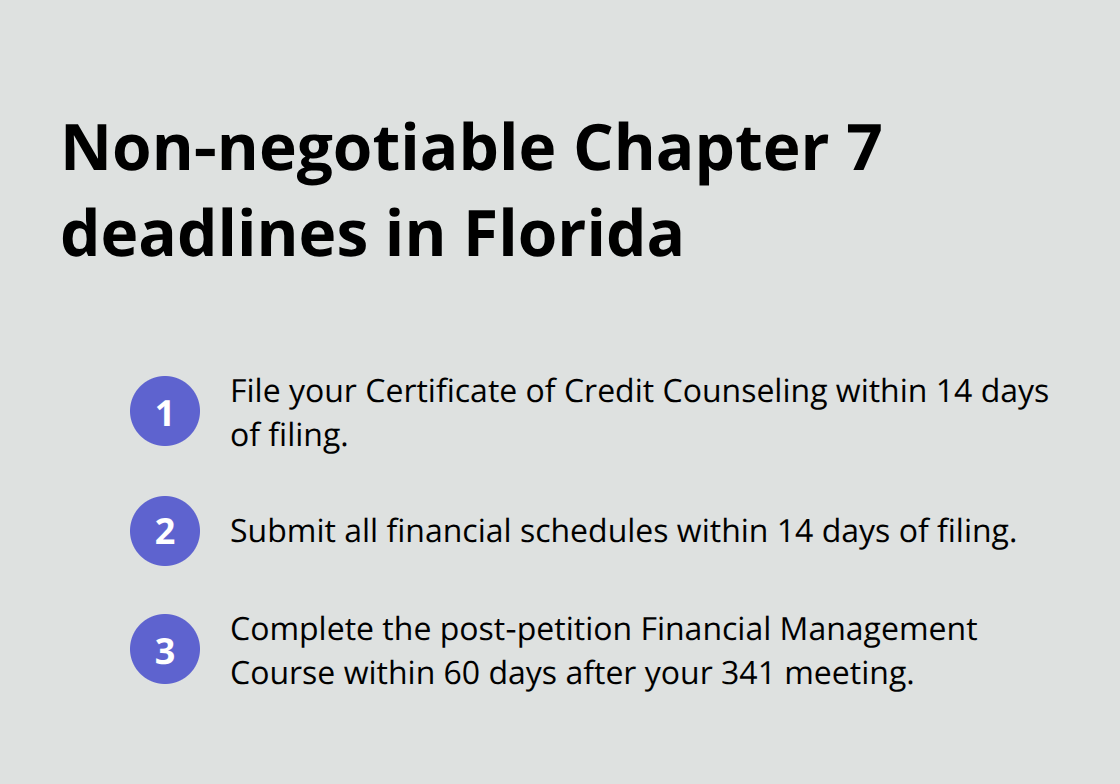
The absolute deadlines that control your case are filing your Certificate of Credit Counseling within 14 days of filing, submitting your financial schedules within 14 days, and completing the post-petition financial management course within 60 days after your 341 meeting. Missing even one deadline delays your discharge significantly or results in case dismissal. The court enforces these dates without exception, so calendar them immediately after you file your petition.
Why Asset Status Determines Your Real Timeline
No-asset cases close much faster than asset cases. A no-asset case means the trustee determines your property is fully protected under Florida exemptions, so nothing requires sale and distribution. These cases typically discharge within three to four months.
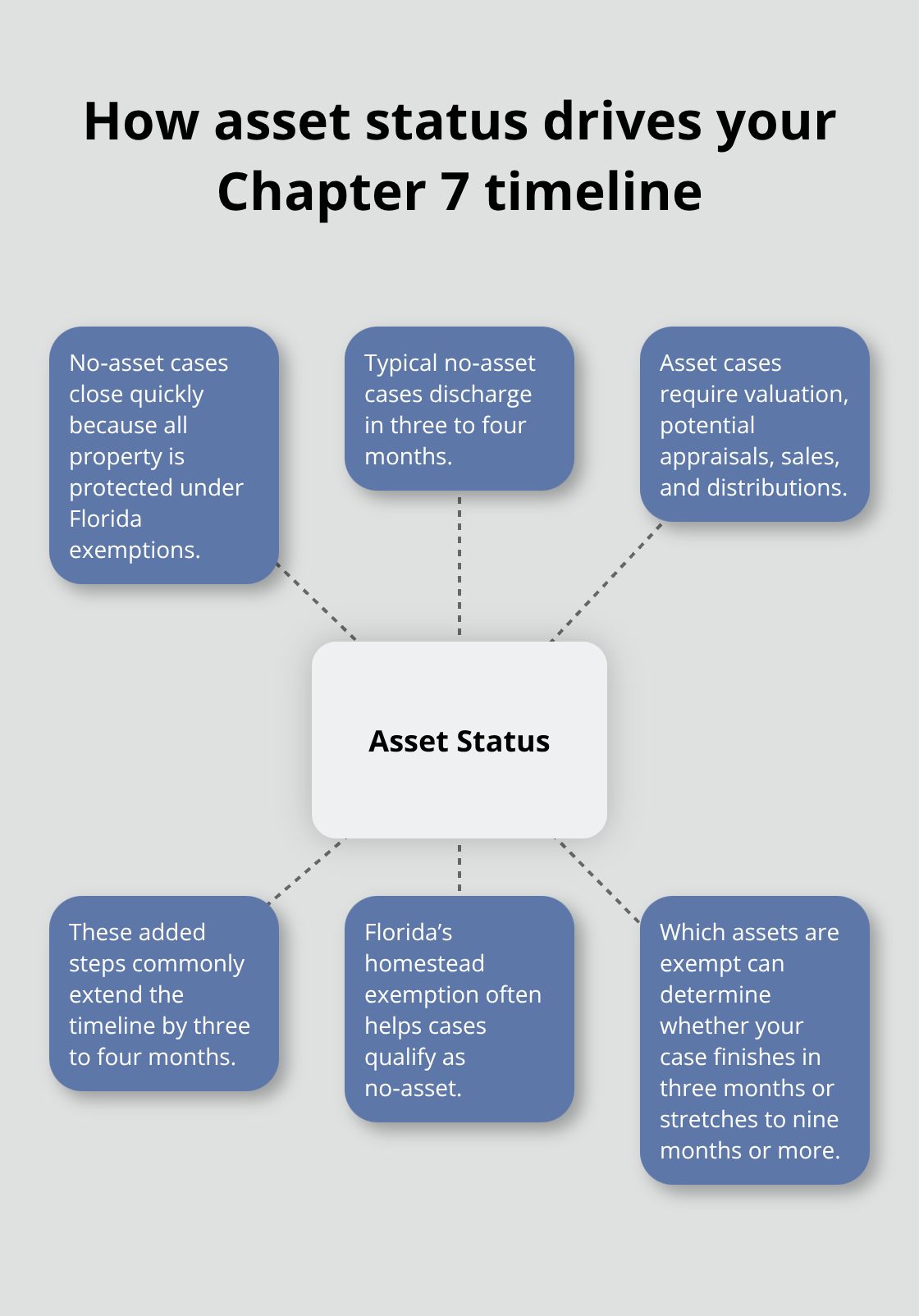
Asset cases require the trustee to value your property, potentially hire an appraiser, sell the assets, and distribute funds to creditors-a process that alone adds three to four months to your timeline.
Florida’s homestead exemption is one of the most generous in the nation, protecting unlimited equity in your primary residence if you meet residency requirements. This means many Florida Chapter 7 cases become no-asset cases. Your vehicle equity receives protection up to a certain amount, retirement accounts typically shield from creditors, and personal property receives protection up to specific values. Understanding which of your assets qualify for exemption directly impacts whether your case finishes in three months or stretches to nine months or longer.
What Actually Delays Chapter 7 Cases in Florida
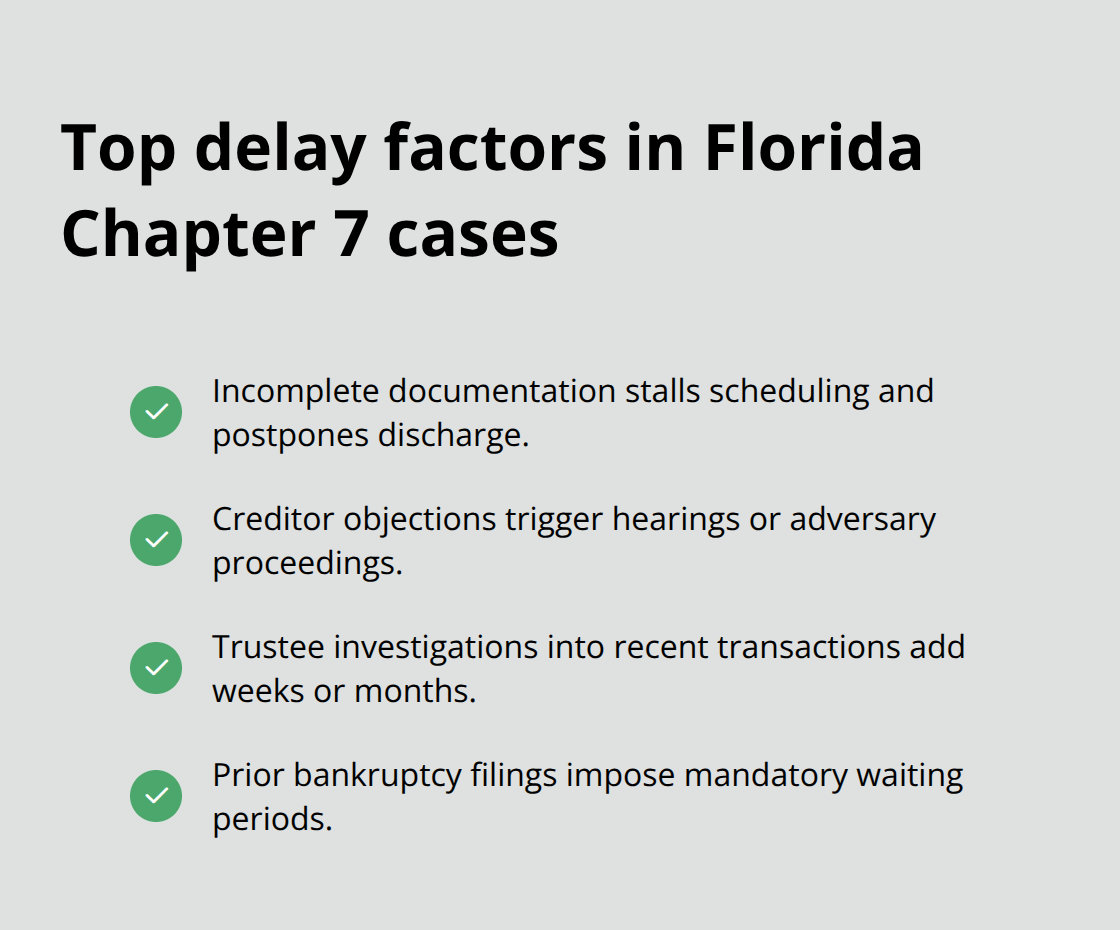
Incomplete documentation is the leading cause of delays. The court requires your most recent federal tax return, the last 60 days of pay stubs, a detailed creditor matrix with correct addresses, and accurate financial schedules. If your trustee cannot verify your income or locate creditors due to missing information, your 341 meeting gets rescheduled and your discharge is postponed.
Creditor objections create another delay point. A creditor may object to your discharge if they believe you committed fraud or failed to disclose assets, forcing you into additional hearings and negotiations. Trustee investigations into your financial affairs-especially if you sold property or received inheritances in the past year-can extend your case by several months.
Prior bankruptcy filings also affect timing. If you previously filed Chapter 7 and received a discharge less than eight years ago, you cannot file again. If you had a prior case dismissed within 180 days of your current filing, you must wait the full 180 days and complete another credit counseling briefing before refiling. These restrictions exist to prevent abuse of the bankruptcy system and protect creditors from repeat filers.
Understanding these delay factors helps you prepare your documents thoroughly and avoid the common mistakes that extend your case unnecessarily. The next section walks through what happens during each stage of your Chapter 7 case and what you can expect at the 341 meeting.
What Happens During the 341 Meeting and Beyond
The 341 Meeting: What to Expect
The 341 meeting of creditors occurs approximately 20 to 40 days after you file your petition, according to the U.S. Department of Justice. This meeting is not a courtroom hearing with a judge present. Instead, the Chapter 7 trustee appointed to your case conducts the meeting, and creditors receive invitations to attend, though most do not show up. You will be under oath, so every answer you provide must be accurate. The trustee will ask detailed questions about your income, debts, assets, and financial decisions. Bring a photo ID and your supporting financial schedules to this meeting.
The trustee uses this time to verify the information in your bankruptcy petition and determine whether your assets qualify for exemption or require liquidation. If you cannot answer a question, do not guess-tell the trustee you need to verify the information and provide it later. Creditors who do attend may ask about secured debts like mortgages or car loans, especially if you plan to keep the property. Your attorney will sit beside you and can object to improper questions, but the trustee controls the meeting.
Most 341 meetings last fewer than ten minutes because straightforward cases move quickly. If the trustee has concerns about missing documents or inconsistencies in your petition, the meeting may be rescheduled, which delays your discharge date by several weeks.
Secured Debts and Reaffirmation Agreements
Before your 341 meeting, you must file your Statement of Intention within 30 days of filing or by the date set for the meeting, whichever comes first. This form tells the trustee and court whether you plan to reaffirm secured debts, surrender collateral, or make other arrangements. If you own a car with a loan and want to keep it, you may sign a Reaffirmation Agreement, which you must complete within 60 days after the first date set for your 341 meeting. The court will not require a judge’s signature on the Reaffirmation Agreement if you have an attorney representing you, streamlining this process significantly.
The Financial Management Course and Discharge
After your 341 meeting concludes, you have 60 days to complete the post-petition Financial Management Course through an approved provider and file your Certificate of Completion with the court. This course covers budgeting, credit management, and financial planning and typically takes two to three hours. You can complete it online, by phone, or in person, making it accessible regardless of your schedule.
Once the trustee confirms you have completed all required steps and your case has no unresolved objections or disputes, the court issues your discharge order, which legally eliminates your qualifying debts. The discharge order marks the moment when your financial obligations end and your creditors lose the legal right to collect. What happens after discharge-and how to protect your fresh start-requires attention to several important post-bankruptcy considerations that we address in the next section.
What Derails Your Florida Chapter 7 Case
Missing Documents Destroy Your Timeline
Missing documents destroy more Chapter 7 timelines than any other factor. The U.S. Department of Justice requires your most recent federal tax return at least seven days before your 341 meeting, and the trustee will reschedule if you cannot produce it. The last 60 days of pay stubs must accompany your initial filing, along with a creditor matrix listing every creditor’s name and address exactly as it appears on your accounts. A single misspelled name or wrong address triggers mail delays, and creditors who do not receive proper notice can file objections months later, extending your case indefinitely.
Clients lose three to four months when they submit incomplete financial schedules or fail to list all debts. Your schedules must reconcile perfectly-assets listed on Schedule A must match the values you report on your means test, and your monthly income on Schedule I must align with your tax return. Inconsistencies signal fraud to the trustee and invite deeper investigation. Gather these documents before you file, not after.
Creditor Objections and Adversary Proceedings
A creditor objection occurs when someone you owe money to contests your right to discharge that debt, claiming you committed fraud or hid assets. This is rare in straightforward cases but devastating when it occurs. A creditor might object because you failed to disclose a recent inheritance, sold property within the past year, or transferred assets to family members before filing.
The objection forces you into an adversary proceeding, essentially a lawsuit within your bankruptcy case, which adds two to four months to your timeline. Some creditors object to discharge itself, arguing you acted in bad faith or concealed income. The court then holds a hearing where you must prove your financial situation and intentions.
Trustee Investigations Into Your Asset History
Trustee investigations into your asset history represent a third delay mechanism that many filers underestimate. If you sold a vehicle, real estate, or other valuable property in the year before filing, the trustee investigates whether you received fair market value or gave away assets to hide them from creditors. The trustee may hire an appraiser to evaluate your current property, interview you about financial transactions, and request bank statements going back 12 months.
These investigations routinely extend cases by six to eight weeks while the trustee verifies asset values and ownership transfers. Transparency about all financial transactions accelerates this process significantly.
Prior Bankruptcy Filings and Waiting Periods
Prior bankruptcy filings create automatic delays you cannot negotiate around. If you filed Chapter 7 and received a discharge within the past eight years, you are ineligible to file Chapter 7 again until that eight-year window closes. If a previous bankruptcy case was dismissed within 180 days before your current filing, federal law imposes a mandatory 180-day waiting period before you can refile, and you must complete another credit counseling briefing first.
These restrictions exist by statute and override any argument about your current financial hardship. The path to discharge accelerates when you submit complete, accurate documents on the first attempt and maintain transparent communication with your trustee about your finances and assets. Disclose everything voluntarily rather than forcing the trustee to discover inconsistencies through investigation.
Final Thoughts
Chapter 7 bankruptcy in Florida typically takes three to five months from filing to discharge when you file complete documents, meet every deadlines, and encounter no complications. The timeline depends heavily on whether your case qualifies as a no-asset case, where Florida’s generous exemptions protect your property, or an asset case that requires trustee liquidation. Missing documents, creditor objections, and trustee investigations into your financial history extend your case beyond the standard timeframe, while prior bankruptcy filings create mandatory waiting periods you cannot avoid.
Understanding how long Chapter 7 bankruptcy takes in Florida empowers you to prepare mentally and financially for the process ahead. You now know which deadlines are non-negotiable, what happens at your 341 meeting, and which mistakes derail cases most frequently. The path to discharge becomes straightforward when you gather your tax returns, pay stubs, and creditor information before filing and maintain complete transparency with your trustee about your assets and financial transactions.
We at Harnage Law, PLLC guide clients through every stage of Chapter 7 bankruptcy, stopping creditor harassment, preventing wage garnishments, and halting lawsuits while you work toward discharge. Contact us for a consultation about your financial situation and whether Chapter 7 bankruptcy makes sense for your circumstances by visiting our website. The sooner you take action, the sooner you can move toward the financial relief you deserve.