Florida residents facing overwhelming debt often struggle with choosing between Chapter 7 vs 13 bankruptcy options. Each path offers distinct advantages depending on your income, assets, and financial goals.
We at Harnage Law, PLLC see clients daily who need clarity on which bankruptcy chapter fits their situation. The decision impacts everything from debt elimination to asset protection.
How Do Chapter 7 and 13 Differ in Florida
Debt Elimination vs Payment Plans
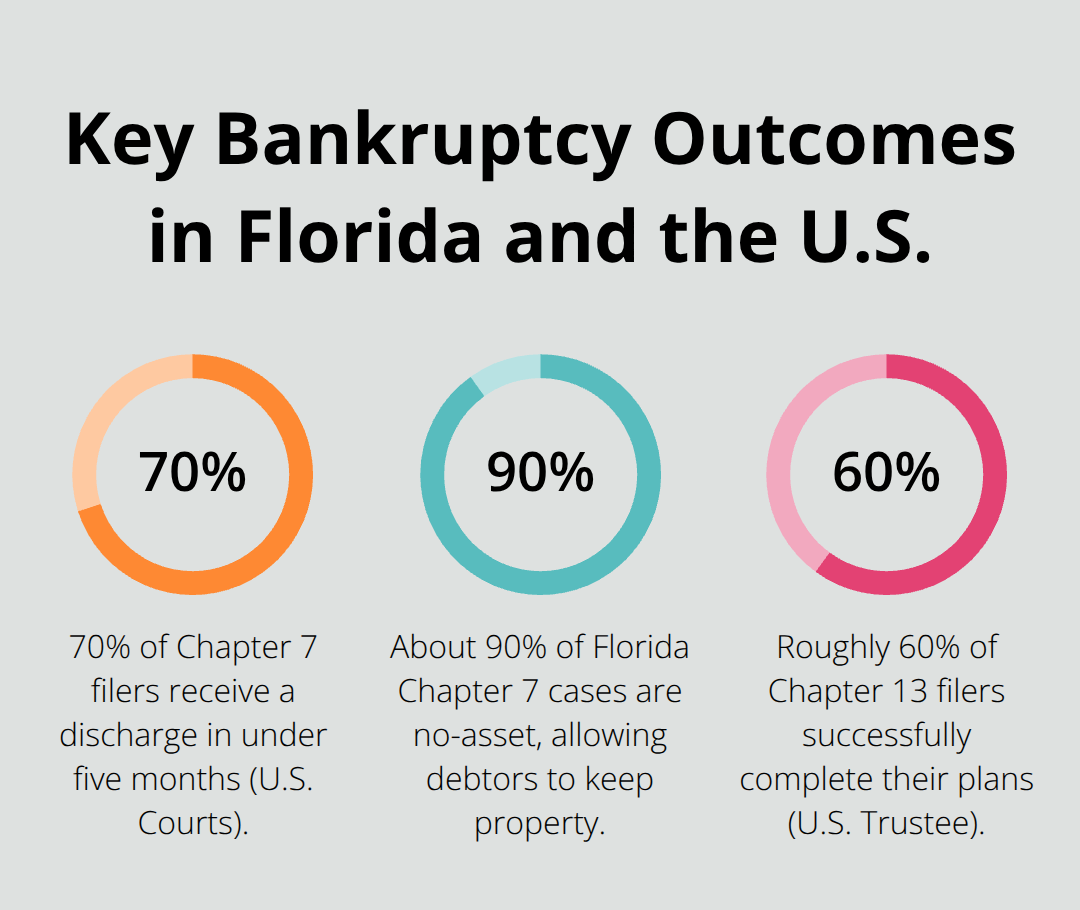
Chapter 7 bankruptcy eliminates most unsecured debts like credit cards and medical bills within three to six months, while Chapter 13 creates a three to five-year repayment plan. The U.S. Courts report that approximately 70% of Chapter 7 filers receive debt discharge in less than five months. In Florida, about 90% of Chapter 7 cases are no-asset cases, which means debtors keep their property while they eliminate debt.
Chapter 13 allows you to keep all assets but requires steady income to fund monthly payments to creditors.
Income Limits Shape Your Options
Florida’s median income determines bankruptcy eligibility through the means test. For a single person household, the current median income sits at approximately $3,493 monthly. If your income exceeds $12,475 monthly, Chapter 7 becomes unavailable and pushes you toward Chapter 13. The means test calculates disposable income after allowed expenses, and high earners must demonstrate inability to pay creditors through a repayment plan. Chapter 13 has no income ceiling but requires sufficient regular income to propose a feasible repayment plan.
Timeline and Completion Requirements
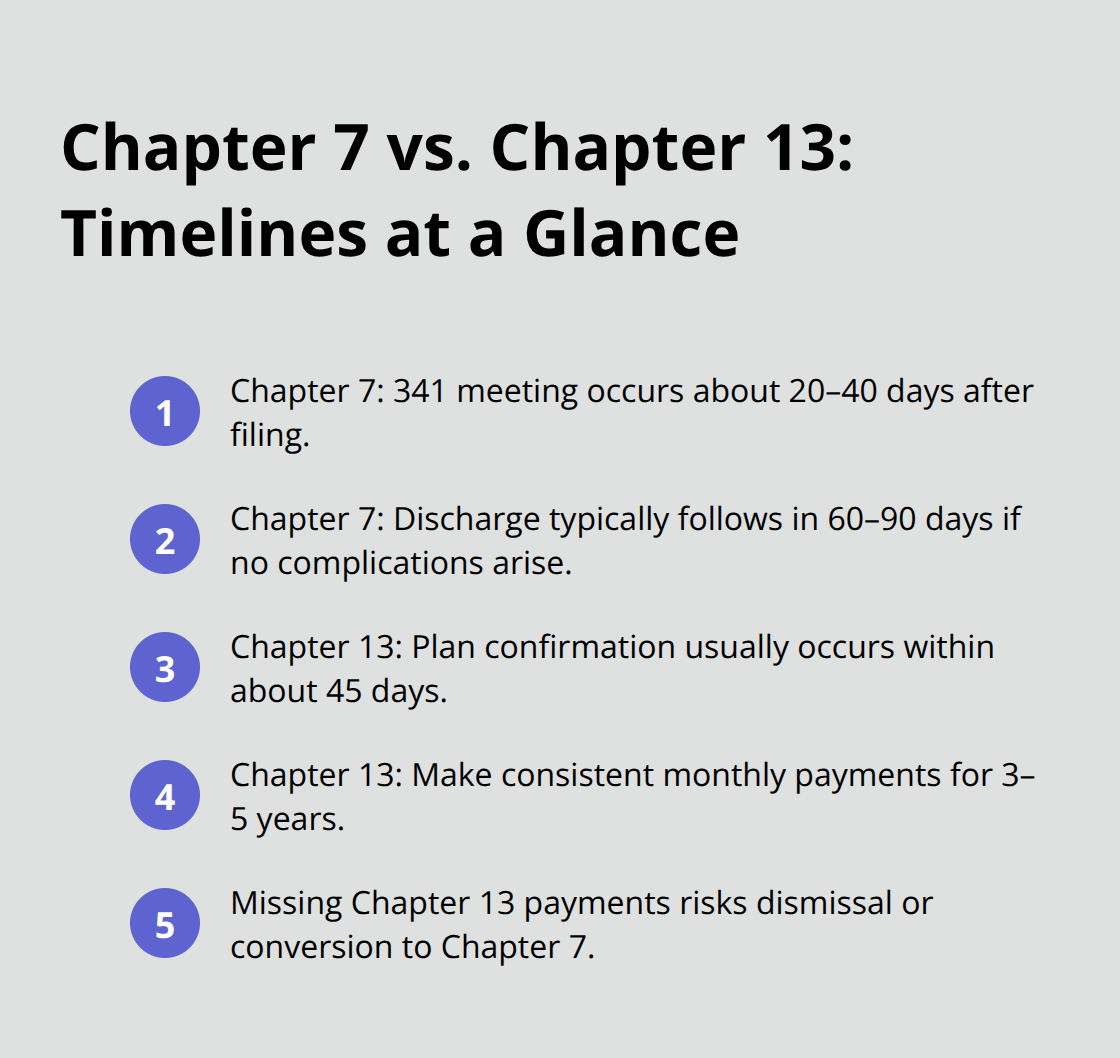
Chapter 7 moves quickly with a 341 meeting of creditors typically scheduled 20-40 days after filing, followed by debt discharge within 60-90 days if no complications arise. Chapter 13 demands a longer commitment with court approval of your repayment plan within 45 days of filing, then three to five years of consistent monthly payments. Missing Chapter 13 payments can result in case dismissal and force you to restart the process or convert to Chapter 7 if eligible.
Florida bankruptcy courts process Chapter 7 cases faster due to their straightforward liquidation structure compared to Chapter 13’s ongoing supervision requirements.
Understanding these fundamental differences helps you evaluate which option aligns with your financial situation, but income alone doesn’t determine eligibility for Chapter 7 bankruptcy in Florida.
Can You Qualify for Chapter 7 in Florida
Income Thresholds Determine Your Path
Florida’s median income for a single person household sits at $3,493 monthly or $41,916 annually according to current U.S. Census data. Married couples face a median threshold of approximately $6,986 monthly when they file jointly. Your six-month average income below these figures automatically qualifies you for Chapter 7 without additional scrutiny. Income above the median triggers the means test, which examines your disposable income after allowed deductions like housing, transportation, and food costs. Monthly disposable income that exceeds $12,475 disqualifies you from Chapter 7 and forces you into Chapter 13. The means test calculation includes all income sources except Social Security benefits (which remain protected under federal law).
Florida’s Generous Asset Protection
Florida residents benefit from some of the nation’s most protective bankruptcy exemptions. The homestead exemption protects unlimited home equity if you owned the property for at least 1,215 days before you file. Motor vehicles receive protection up to $5,000 in equity for a single car. Personal property exemptions cover $1,000 in miscellaneous items, which increases to $4,000 if you don’t claim the homestead exemption.
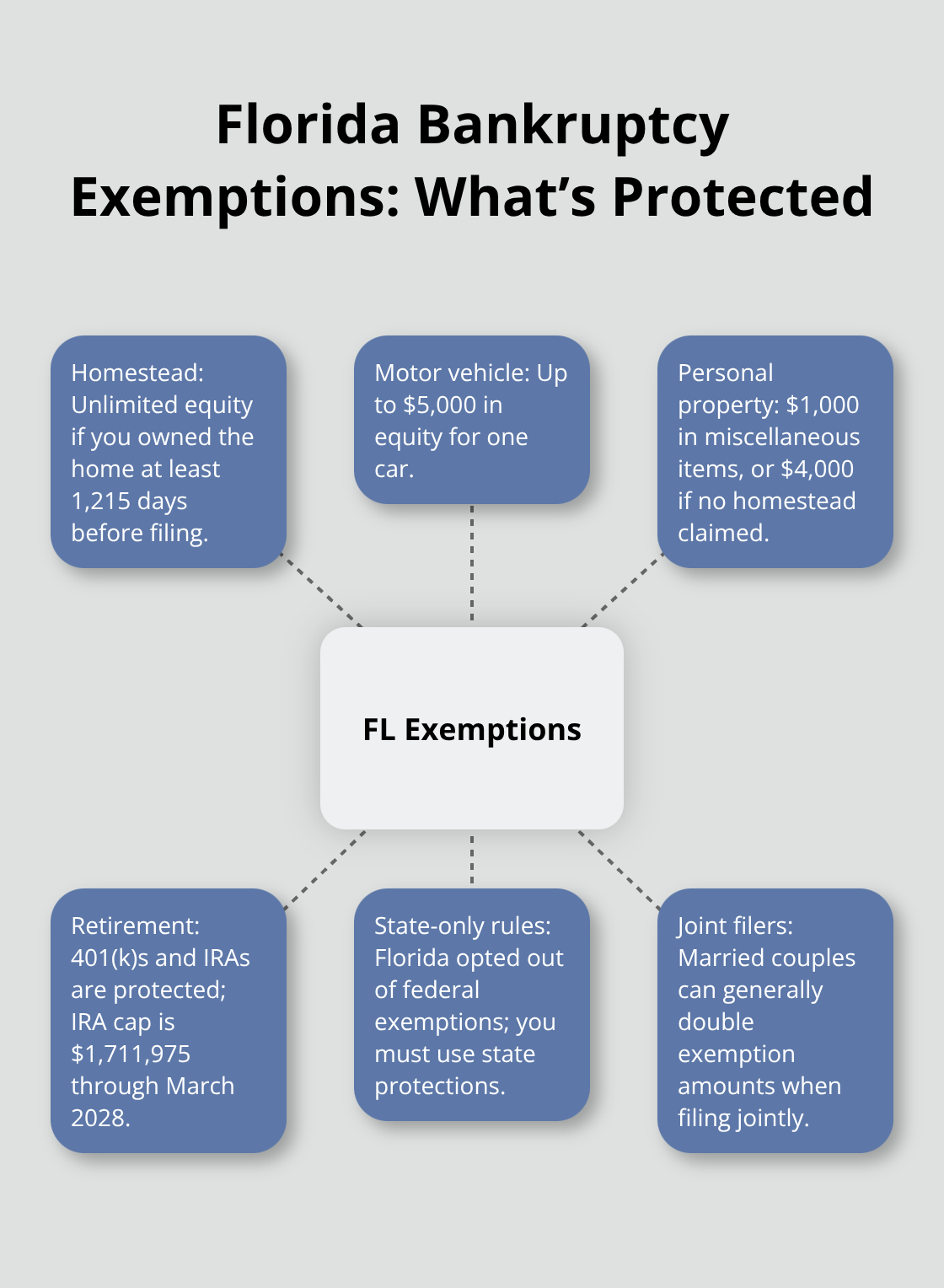
Retirement accounts like 401k plans and IRAs remain fully protected, with IRA limits set at $1,711,975 through March 2028. Florida opted out of federal exemptions and requires all filers to use state protections exclusively. Married couples can double these exemption amounts when they file jointly, which significantly expands asset protection.
Common Disqualifiers Block Chapter 7 Access
Previous bankruptcy cases create wait periods that block Chapter 7 eligibility. You must wait eight years between Chapter 7 discharges or four years between a Chapter 13 discharge and new Chapter 7 case. Fraudulent transfers of assets within two years before you file can result in case dismissal and potential criminal charges. High luxury spending on non-necessities within 90 days before you file raises red flags with trustees and courts. Missing required credit counseling from approved agencies prevents case filing entirely.
These restrictions often redirect candidates toward Chapter 13, but many people qualify for Chapter 7 more than they realize. Eligibility is based on your income and expenses, and you don’t have to be completely out of money to be eligible.
When Should You Choose Chapter 13
Protect Assets That Exceed Exemption Limits
Chapter 13 becomes the smart choice when your property value exceeds Florida’s exemption limits and you want to keep everything. If your car has $8,000 in equity but Florida only protects $5,000, Chapter 7 forces you to surrender the vehicle or pay the trustee the $3,000 difference. Chapter 13 lets you keep the car by including that $3,000 in your repayment plan spread over three to five years. The same principle applies to business equipment, valuable collections, or second homes that don’t qualify for homestead protection. Florida residents with significant non-exempt assets often pay far less through Chapter 13 than they would lose in Chapter 7 liquidation.
Stop Foreclosure and Repossession Actions
Chapter 13 provides powerful tools that Chapter 7 cannot match for catching up on secured debt payments. The automatic stay immediately stops foreclosure proceedings when you file, and Chapter 13 allows you to cure mortgage arrearages over the life of your plan while you maintain current payments. If you owe $12,000 in back mortgage payments, Chapter 13 spreads this amount over 36 to 60 months instead of requiring immediate payment. Car loans receive similar treatment, and Chapter 13 can even reduce the principal balance through cramdowns if you bought the vehicle more than 910 days ago. The U.S. Trustee reports that Chapter 13 filers successfully complete their plans about 60% of the time (with most failures occurring in the first year due to unrealistic payment proposals).
Handle Non-Dischargeable Obligations
Chapter 13 handles debts that survive Chapter 7 discharge by creating structured payment plans with built-in protection from collection actions. Priority tax debts, domestic support obligations, and student loans require payment regardless of bankruptcy chapter, but Chapter 13 stops wage garnishments and bank levies while you pay them off. Recent tax debts that don’t qualify for discharge in Chapter 7 can be paid over five years in Chapter 13 without penalties and interest continuing to accrue. Child support arrearages receive priority treatment in Chapter 13 plans, and the automatic stay prevents contempt proceedings while you catch up on payments (making it an effective tool for managing these obligations). When you are struggling to make ends meet and feeling the weight of credit card or medical debt, bankruptcy can offer a way to get a fresh start.
Final Thoughts
Your choice between Chapter 7 vs 13 bankruptcy depends on your income level, asset values, and financial objectives. Monthly income determines initial eligibility through the means test, but asset protection needs often influence the final decision. Florida residents with valuable non-exempt property benefit from Chapter 13’s protection features, while those who want quick debt elimination prefer Chapter 7’s faster timeline.
Bankruptcy law complexity makes professional guidance valuable for most filers. Filing errors can result in case dismissal, lost exemptions, or fraud allegations that harm your financial recovery. We at Harnage Law, PLLC help Florida families navigate the Chapter 7 process from start to finish.
If overwhelming debt controls your life, don’t wait for conditions to deteriorate further. Contact our bankruptcy attorneys to evaluate your situation and determine which bankruptcy chapter fits your circumstances (taking action now can stop creditor harassment and provide the fresh financial start you need).