Chapter 7 bankruptcy offers Florida residents a path to eliminate overwhelming debt, but meeting the requirements for Chapter 7 bankruptcy can be complex. The process involves strict income limits, detailed documentation, and mandatory counseling.
We at Harnage Law, PLLC see many applicants struggle with the means test and paperwork requirements. Understanding these steps upfront prevents costly delays and rejections.
What Income Requirements Must You Meet for Chapter 7 in Florida
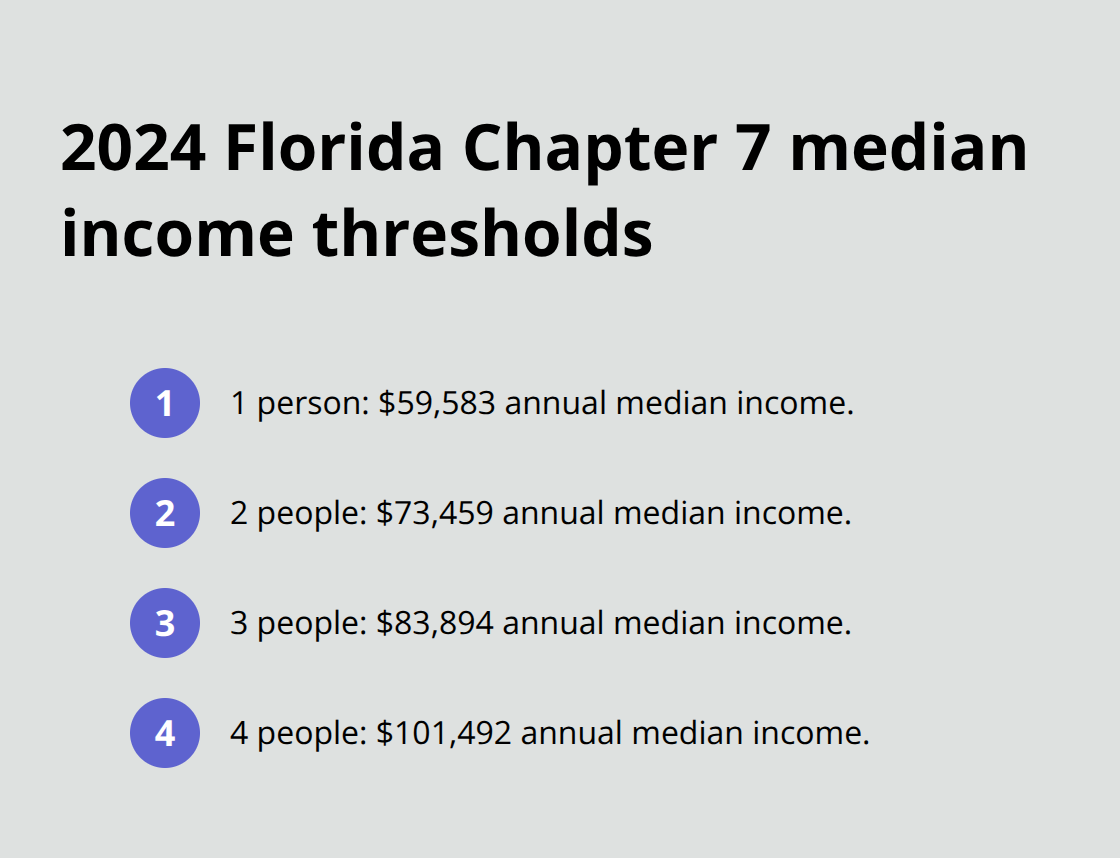
Florida’s Chapter 7 bankruptcy income requirements center on the means test, which compares your current monthly income to the state median for your household size. For 2024, Florida’s median income thresholds are $59,583 for one person, $73,459 for two people, $83,894 for three people, and $101,492 for four people according to the U.S. Trustee Program. Your current monthly income calculation uses the six months prior to filing, not your current earnings, which catches many applicants off guard.
The Means Test Formula Creates Barriers for Higher Earners
The means test uses Form B122A-1 to calculate your average monthly income from the previous six months. If this figure exceeds Florida’s median income for your household size, you face the presumption of abuse test on Form B122A-2. This second calculation deducts allowable expenses that include IRS standards for housing, transportation, and other necessities. The IRS National Standards for 2024 allow $785 monthly for food for a family of four and $393 for miscellaneous expenses. Most debtors who fail this test get pushed into Chapter 13 repayment plans instead of debt discharge.
Income Documentation Requires Precision and Completeness
Florida bankruptcy courts require pay stubs that cover 60 days before filing, tax returns for the previous two years, and bank statements that show all deposits. Self-employed applicants must provide profit and loss statements and business tax returns. Social Security statements, unemployment benefits documentation, and rental income records complete the income picture. Missing any income source (including irregular payments like bonuses or side work) can result in case dismissal.
Seasonal Income Fluctuations Complicate the Six-Month Average
Workers in Florida’s tourism and agriculture industries often face seasonal income variations that affect their means test calculations. The six-month lookback period may capture high-earning months that don’t reflect current financial reality. Construction workers, restaurant staff, and retail employees frequently earn more during peak seasons, which can push their calculated income above median thresholds even when they currently struggle financially. Courts don’t adjust for these fluctuations automatically, making proper documentation of income changes essential for your case success.
The next step involves gathering the extensive financial records and documentation that Florida courts demand for Chapter 7 filing approval.
Required Documentation for Chapter 7 Filing in Florida
Florida bankruptcy courts demand comprehensive financial documentation that extends far beyond basic tax returns and pay stubs. The filing package must include two years of complete tax returns, not just the summary pages that many applicants initially provide. Bank statements that cover the previous six months must show every deposit and withdrawal, including transfers between accounts. The U.S. Trustee Program requires profit and loss statements for any business activity, even side hustles that generate minimal income.
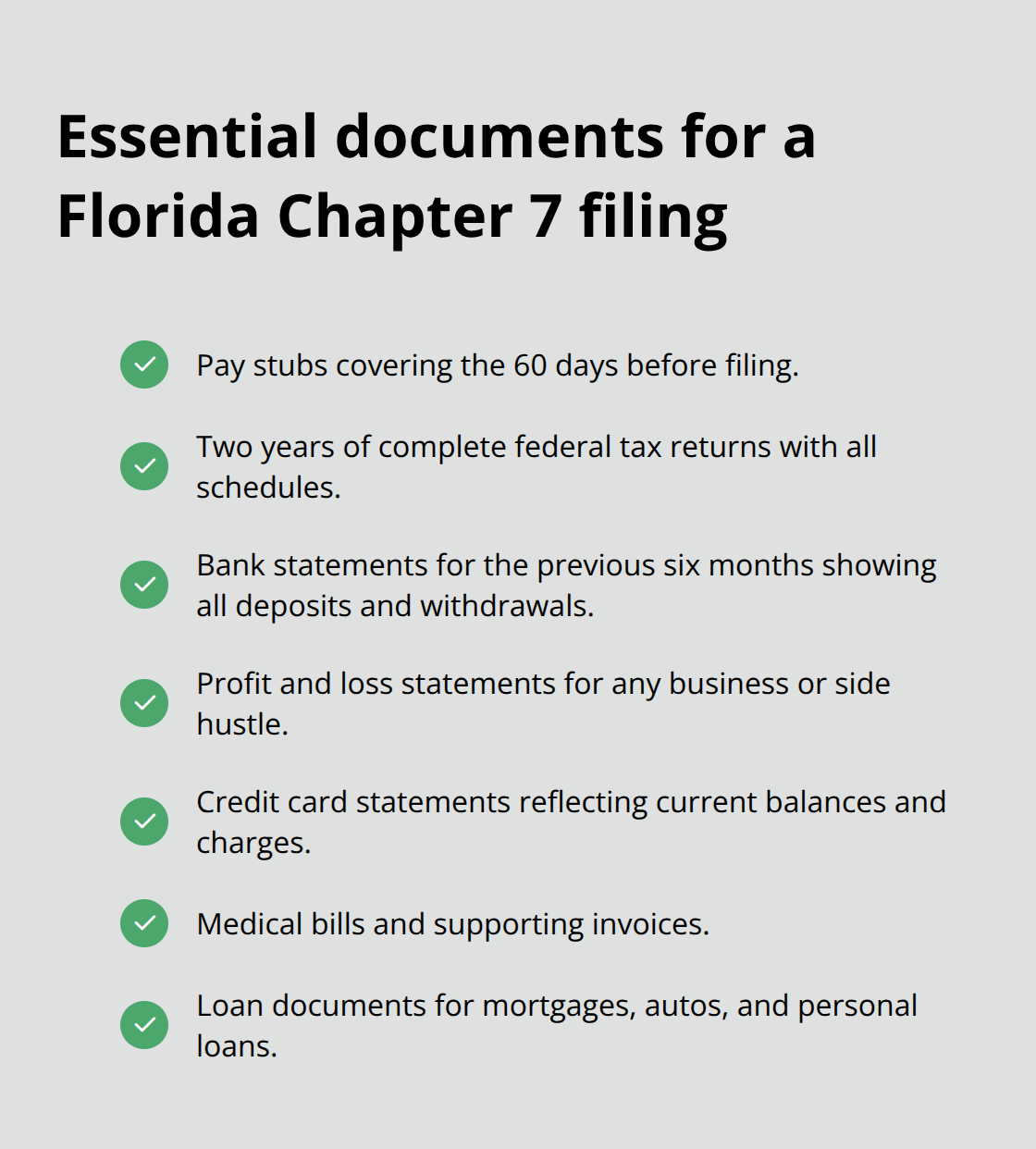
Credit card statements, medical bills, and loan documents establish your complete debt picture that trustees use to verify your financial situation.
Tax Returns Must Include All Supporting Schedules
Florida courts reject incomplete tax filings that omit supporting schedules like Schedule C for business income or Schedule E for rental properties. Self-employed debtors must provide business bank statements, accounts receivable reports, and inventory valuations if applicable. The IRS Form 4506-T allows trustees to request tax transcripts directly from the IRS to verify your submitted returns. Missing W-2s, 1099s, or other income reporting forms trigger automatic requests for additional documentation that delay your case processing (and can cost you valuable time when creditors continue their collection efforts).
Asset Valuations Require Current Market Evidence
Property appraisals, vehicle valuations from Kelley Blue Book, and retirement account statements must reflect values within 60 days of filing. Investment accounts need detailed statements that show current balances and transaction history. Life insurance policies require cash value statements from the insurance company, not policy declarations that omit surrender values. Personal property inventories must include jewelry appraisals, collectibles valuations, and household goods estimates that reflect actual resale value rather than replacement cost.
Credit Counseling Certificates Have Strict Timing Requirements
The mandatory credit counseling course must occur within 180 days before filing, and the certificate expires if you delay your filing beyond this window. Only agencies approved by the U.S. Trustee qualify for this requirement, and certificates from non-approved providers result in automatic case dismissal. Joint filers need separate certificates even when they complete counseling together (which saves money but still requires individual documentation). The debtor education course required post-filing must be completed within 60 days of your meeting of creditors to receive your discharge, and late completion prevents debt elimination regardless of case approval.
Even perfect documentation won’t guarantee approval if you meet the requirements for Chapter 7 application in Florida.
Common Mistakes That Disqualify Chapter 7 Applications in Florida
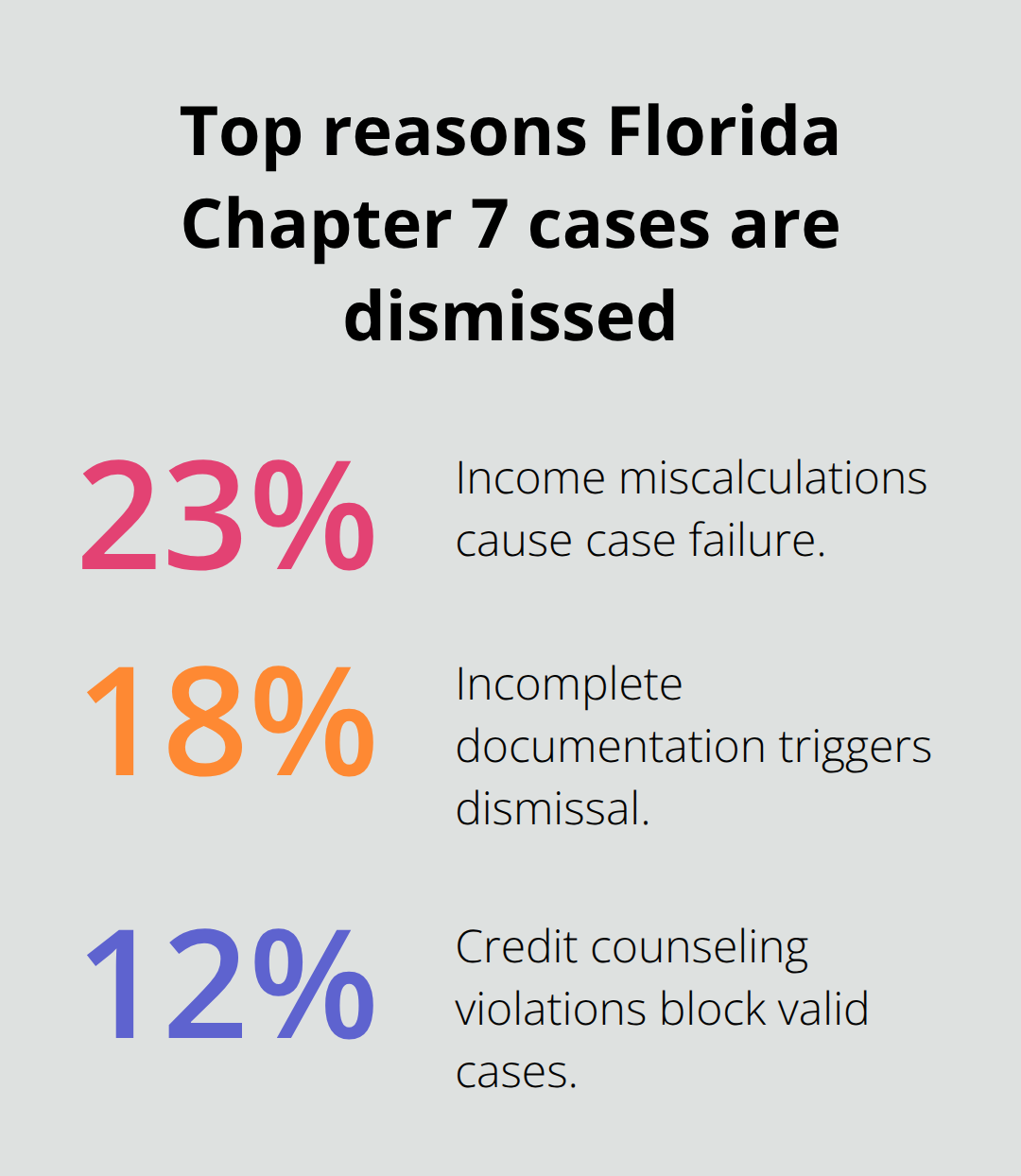
Florida courts dismiss thousands of Chapter 7 cases annually due to preventable errors that applicants make during the process. Income miscalculations represent the most frequent disqualification, affecting 23% of failed applications according to the Administrative Office of the U.S. Courts. Debtors often misunderstand the six-month lookback period for income calculations and report current earnings instead of the required historical average.
This error becomes costly when seasonal workers report low winter income while their spring and summer earnings push them above median thresholds.
Income Calculation Errors Lead to Automatic Rejections
The means test calculation trips up applicants who fail to include all income sources from the six-month period before filing. Bonuses, overtime pay, and irregular income must appear in calculations even when these payments don’t reflect current financial reality. Self-employed debtors frequently omit business income or fail to account for seasonal fluctuations that affect their average monthly earnings. Courts don’t accept explanations about temporary income spikes (such as one-time consulting payments or insurance settlements) that push calculated income above Florida’s median thresholds.
Documentation Gaps Create Immediate Case Dismissals
Incomplete financial records trigger automatic rejections in 18% of Florida Chapter 7 cases based on U.S. Trustee Program data. Missing bank statements, unsigned tax returns, and outdated property valuations force courts to dismiss applications before review. Self-employed debtors frequently submit personal tax returns without business schedules, which creates gaps that trustees cannot overlook. Investment account statements older than 60 days fail court requirements, even when balances remain stable. Joint filers who submit individual certificates instead of separate credit counseling documentation face immediate dismissal regardless of their financial qualifications.
Credit Counseling Violations Block Valid Cases
The 180-day credit counseling requirement trips up 12% of Chapter 7 applicants who complete counseling too early or use non-approved agencies. Certificates from online providers not listed on the U.S. Trustee website result in automatic case rejection, which wastes filing fees and delays debt relief. Married couples who file jointly need individual certificates even when they attend the same counseling session, and this requirement prevents case processing when missed. Post-filing debtor education courses must occur within 60 days of the creditors meeting, and late completion blocks discharge regardless of case approval.
Final Thoughts
Chapter 7 bankruptcy requirements in Florida demand precise preparation and complete documentation. You must calculate your six-month income average with all sources, collect two years of tax returns with schedules, and obtain current asset valuations. Credit counseling from an approved U.S. Trustee agency must occur within 180 days before you file (with separate certificates for joint filers).
Incomplete documentation causes 18% of case dismissals in Florida courts, which makes accuracy essential for approval. Professional legal guidance protects you from costly mistakes and improves your approval chances significantly. We at Harnage Law, PLLC help Florida residents navigate the requirements for Chapter 7 bankruptcy while we stop creditor harassment and prevent wage garnishments.
Your financial fresh start begins with proper preparation and qualified legal representation. Our Florida bankruptcy attorneys provide personalized guidance through every step of the process while we protect your assets and maximize debt discharge opportunities.