
Chapter 7 bankruptcy offers Florida residents a fresh financial start, but understanding the costs upfront helps you plan effectively. The total expense to file for bankruptcy Chapter 7 cost varies based on several factors.
We at Harnage Law, PLLC see clients spend between $1,500 to $4,000 for most cases. Court fees, attorney costs, and mandatory education requirements make up the bulk of these expenses.
What Are the Required Costs for Chapter 7 Bankruptcy in Florida
Court Filing Fees You Cannot Avoid
The court filing fee for Chapter 7 bankruptcy in Florida stands at $338. This amount breaks down into a $245 filing fee, $78 administrative fee, and $15 trustee surcharge. You must pay this amount immediately when you file your case.
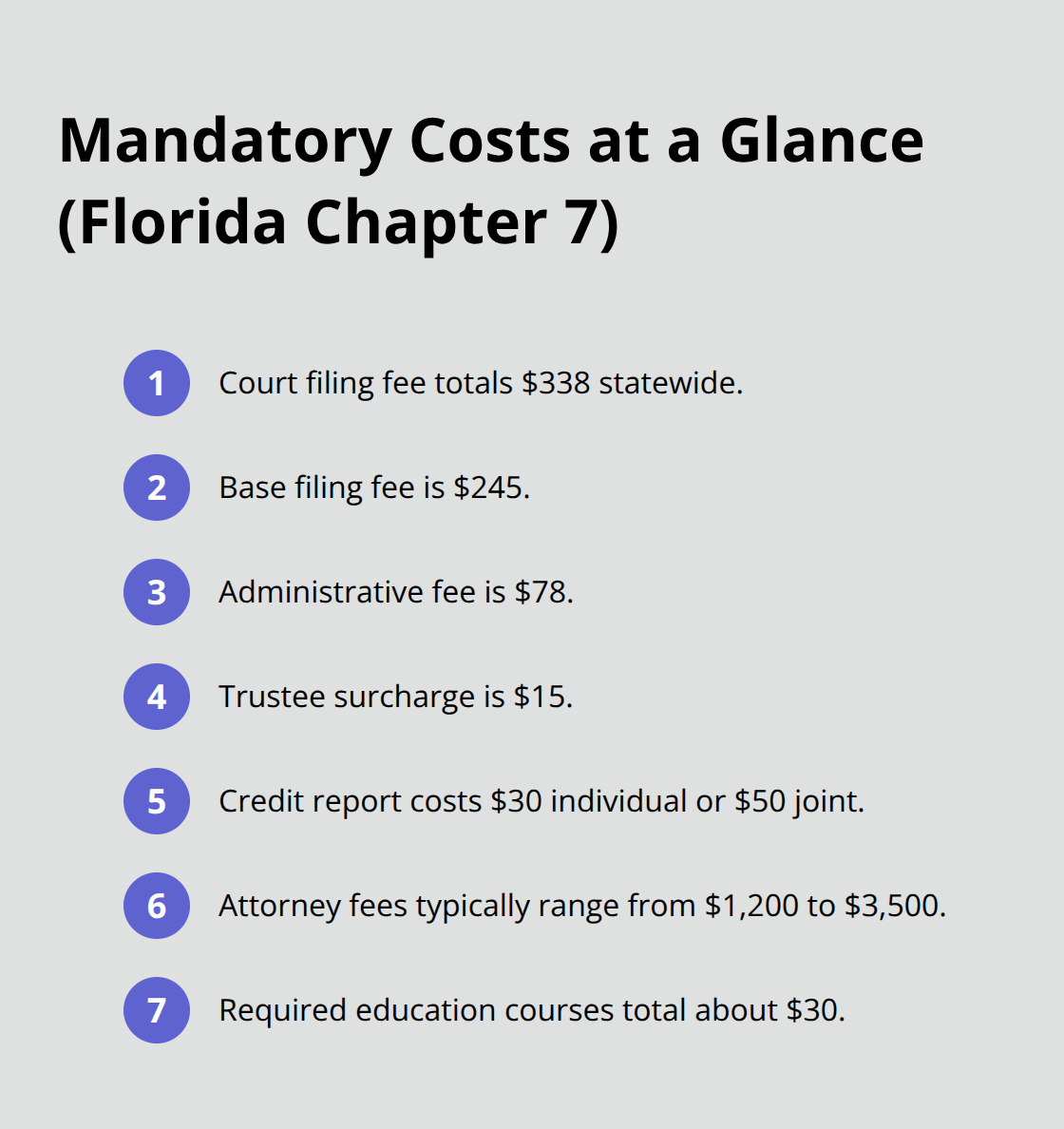
The U.S. Courts accepts payment through money orders or cashier’s checks only – personal checks and credit cards are not accepted from debtors.
You can request a fee waiver if your income falls below 150% of federal poverty guidelines. A single filer qualifies with monthly income under $2,265. Florida bankruptcy courts also allow installment payments, but you face case dismissal without refund if you miss a payment. Additional court costs include $30 for an individual credit report or $50 for joint filers (which provides debt information from all three credit bureaus).
Attorney Fees Vary Based on Case Complexity
Attorney fees for Chapter 7 bankruptcy in Florida typically range from $1,200 to $3,500. In major cities like Jacksonville, Miami, and Orlando, you can expect to pay between $1,800 to $2,500. Most attorneys require full payment before they file your case and offer flat fee structures that cover all aspects from preparation to court appearances.
Payment methods are limited to cash, checks, or money orders – attorneys do not accept credit cards and debit cards for attorney fees. Many firms provide free consultations, which allows you to understand costs upfront without commitment.
Mandatory Education Courses Add Minimal Expense
Credit counseling before you file costs under $15, while the post-filing debtor education course runs about $15. Both courses are available online, which reduces travel expenses. These requirements are non-negotiable – you cannot receive a discharge without you complete both courses from approved providers.
The total education cost of $30 represents a small fraction of your overall bankruptcy expenses but remains absolutely necessary for case completion. Understanding these mandatory costs helps you prepare for the additional factors that can influence your total bankruptcy expenses.
What Drives Your Chapter 7 Bankruptcy Costs Higher
Your financial situation complexity directly impacts your total bankruptcy costs. Simple cases with basic income sources, minimal assets, and straightforward debts cost less than complex situations that involve business ownership, multiple income streams, or unusual assets.
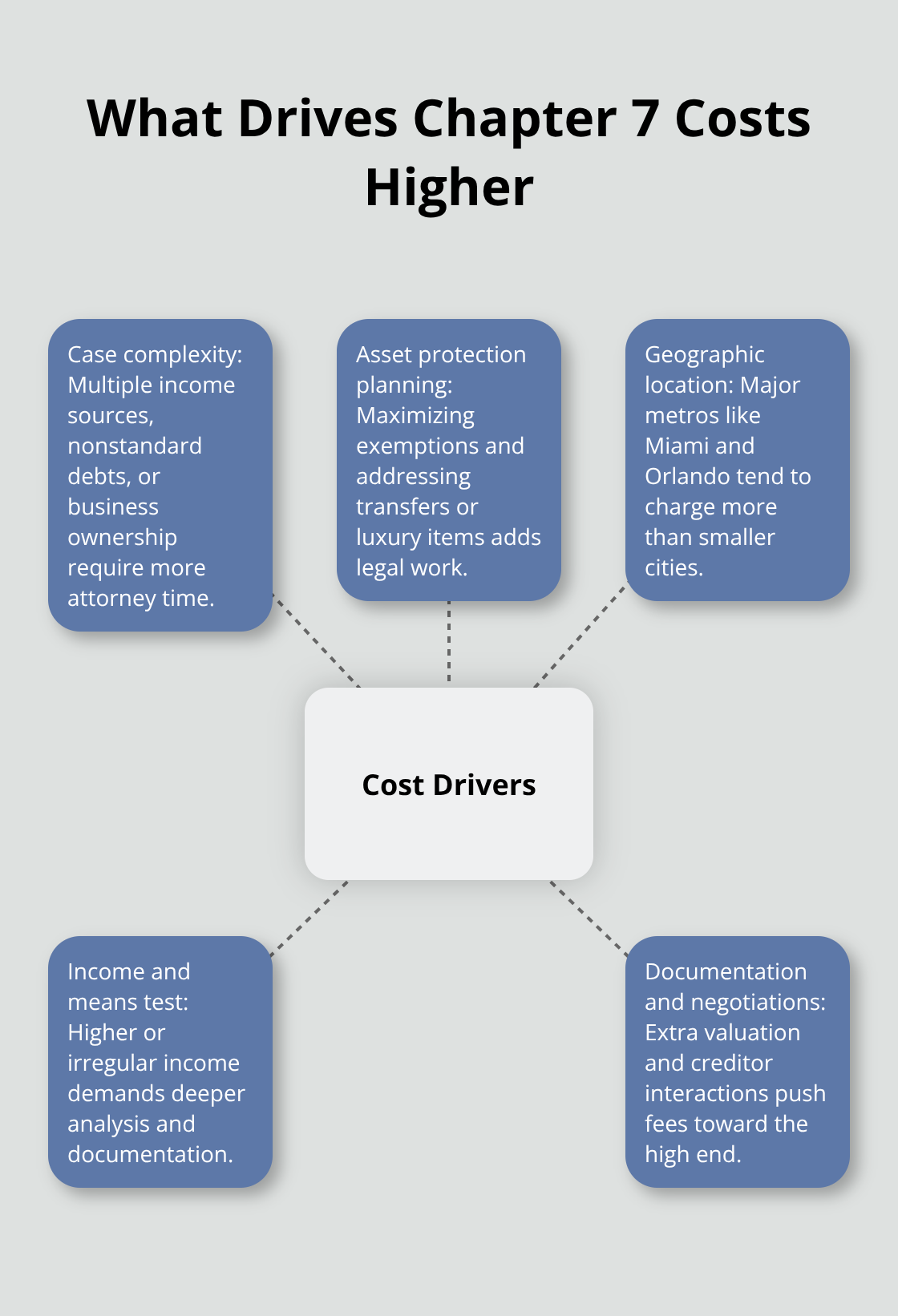
Cases that require extensive documentation, asset valuation, or creditor negotiations push attorney fees toward the higher end of the $1,200 to $3,500 range. Attorneys spend more time on cases with intricate financial structures or disputed debts.
Asset Protection Strategy Affects Legal Costs
Florida offers generous property exemptions, but you need strategic planning to maximize these protections. This planning increases legal fees but protects more of your assets. Your homestead exemption has no dollar limit and protects your primary residence regardless of value.
Cases that involve asset transfers within two years of filing require additional legal work. Luxury items that exceed exemption limits or business assets also demand more attorney time. Attorney fees climb when you need to restructure ownership, evaluate asset transfers for potential fraud issues, or navigate complex exemption planning.
The $338 court filing fee remains constant, but legal representation costs vary significantly based on your asset protection needs.
Geographic Location Creates Fee Variations
Miami and Orlando bankruptcy attorneys charge 25-40% more than smaller Florida cities due to higher operating costs and market demand. Rural areas often offer lower attorney fees, but fewer attorneys handle bankruptcy cases (which potentially limits your options).
Tampa Bay area attorneys typically charge middle-range fees between $1,800 to $2,200 for standard Chapter 7 cases. Court locations remain consistent statewide at $338, but travel costs for hearings outside your immediate area add to total expenses.
Local representation minimizes travel-related costs while maintaining access to attorneys familiar with local court procedures and trustee preferences. Distance from major metropolitan areas often correlates with lower legal fees but may reduce attorney availability.
Income Level and Means Test Complexity
Your income level determines whether you qualify for Chapter 7 bankruptcy through the means test. Higher incomes require more detailed calculations and documentation (which increases preparation time and costs). Attorneys spend additional hours on cases where income fluctuates or includes irregular sources like bonuses, commissions, or seasonal work.
Self-employed individuals face higher legal costs due to business income analysis requirements. Multiple income sources from different employers or investment properties also increase case complexity and attorney fees.
These cost factors combine differently for each case, but understanding them helps you budget for your specific situation and explore ways to manage these expenses effectively.
How Can You Reduce Chapter 7 Bankruptcy Costs in Florida
Attorney Payment Plans Make Legal Help Accessible
Most Florida bankruptcy attorneys accept payment plans to spread costs over several months before you file. These arrangements typically require 25-50% down with the remaining balance due in 2-4 monthly installments. Attorneys cannot file your case until you pay fees in full, but payment plans prevent you from delaying necessary legal protection while you save money.
Some attorneys offer reduced rates for cases filed within specific timeframes or during slower business periods. Shop around and compare at least three attorneys since fees vary significantly even within the same city. The $1,200 to $3,500 attorney fee range gives you substantial room to negotiate (especially for straightforward cases without complex asset issues).
Legal Aid Provides Free Representation for Low-Income Individuals
Florida legal aid organizations provide free bankruptcy representation for individuals who earn less than 125% of federal poverty guidelines. A single person qualifies with annual income under $18,310, while a family of four qualifies under $37,650. These programs handle thousands of Chapter 7 cases annually and maintain experienced bankruptcy attorneys.
Pro bono programs through local bar associations also connect low-income individuals with volunteer attorneys. Wait times for legal aid services can extend 2-6 months, but the cost savings justify the delay for individuals who qualify. Contact your local legal aid office immediately since demand exceeds available resources.
Self-Representation Carries Significant Risks Despite Cost Savings
You can file Chapter 7 bankruptcy without an attorney and save $1,200 to $3,500 in legal fees, but this approach creates substantial risks. The U.S. Courts report that pro se filers face dismissal rates 3-5 times higher than represented debtors.
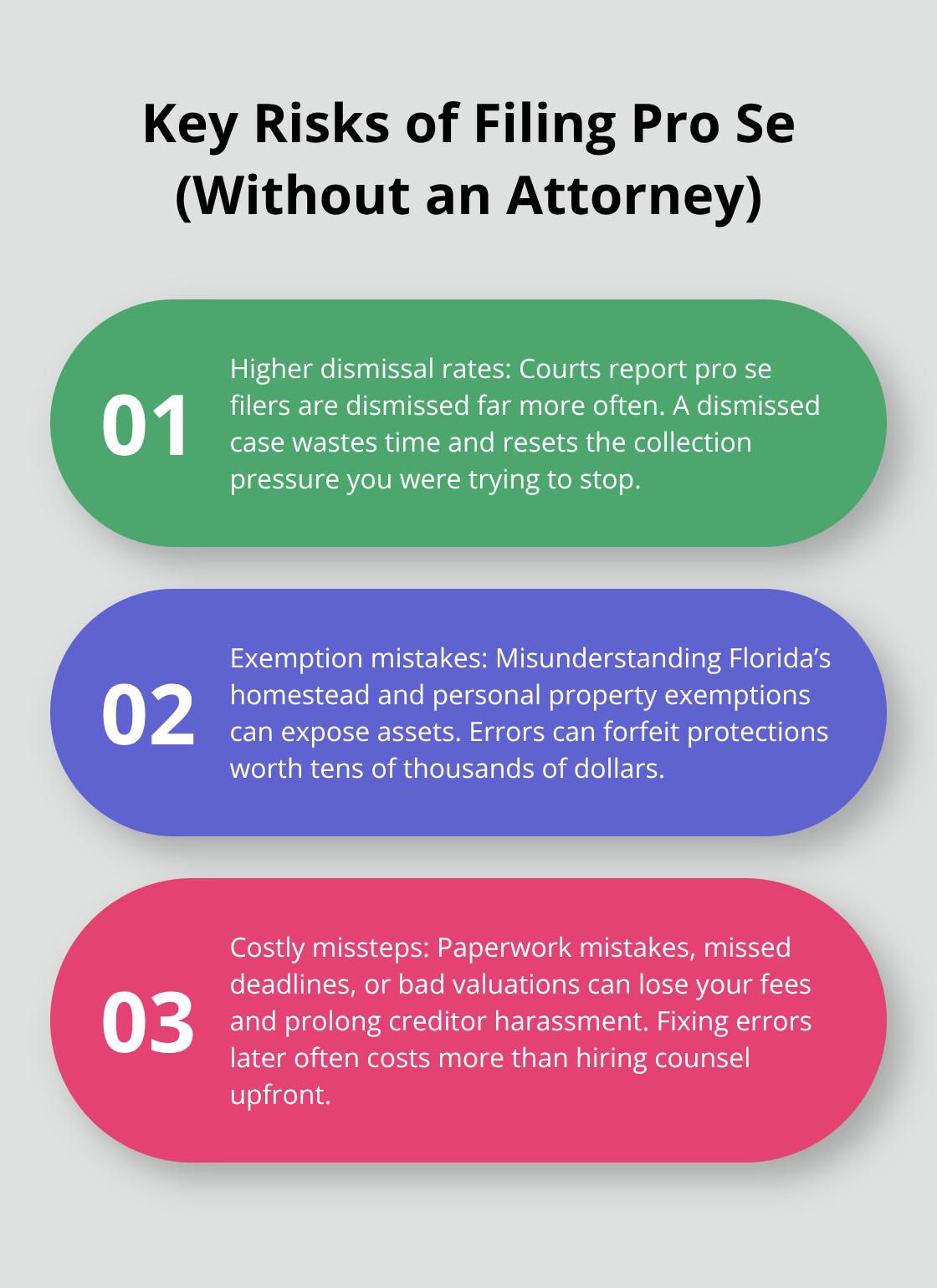
Mistakes in paperwork, missed deadlines, or improper asset valuations can result in case dismissal, lost fees, and continued creditor harassment.
Complex exemption planning requires legal knowledge that most individuals lack. Florida homestead exemptions have specific requirements that self-represented filers frequently misunderstand (potentially costing tens of thousands in lost asset protection). The $338 court filing fee becomes wasted money when courts dismiss cases due to procedural errors or incomplete documentation.
Final Thoughts
Most Florida residents pay between $1,500 to $4,000 when they file for bankruptcy Chapter 7 cost. The $338 court filing fee stays constant, while attorney fees from $1,200 to $3,500 depend on case complexity and location. Mandatory credit counseling adds just $30 to your total expenses.
These upfront costs pale compared to the financial relief Chapter 7 provides. Chapter 7 discharges $20,000 to $50,000 in credit card debt, medical bills, and personal loans (which creates immediate monthly savings of $500 to $1,500). The automatic stay stops wage garnishments, collection calls, and lawsuits within days of your case submission.
We at Harnage Law, PLLC help Florida families navigate this process while we protect their assets and stop creditor harassment. Most clients complete their cases within four months and emerge debt-free with protected property intact. Start by collecting your financial documents, then schedule consultations with multiple attorneys to compare fees and approaches.