
If you file bankruptcy what happens to your car depends largely on Florida’s exemption laws and your vehicle’s equity. Most Florida residents can protect their primary vehicle through state exemptions.
We at Harnage Law, PLLC see many clients worried about losing their transportation during Chapter 7 bankruptcy. The good news is that Florida offers several protection strategies for your vehicle.
How Does Chapter 7 Bankruptcy Affect Your Car in Florida
Florida’s New $5,000 Vehicle Exemption
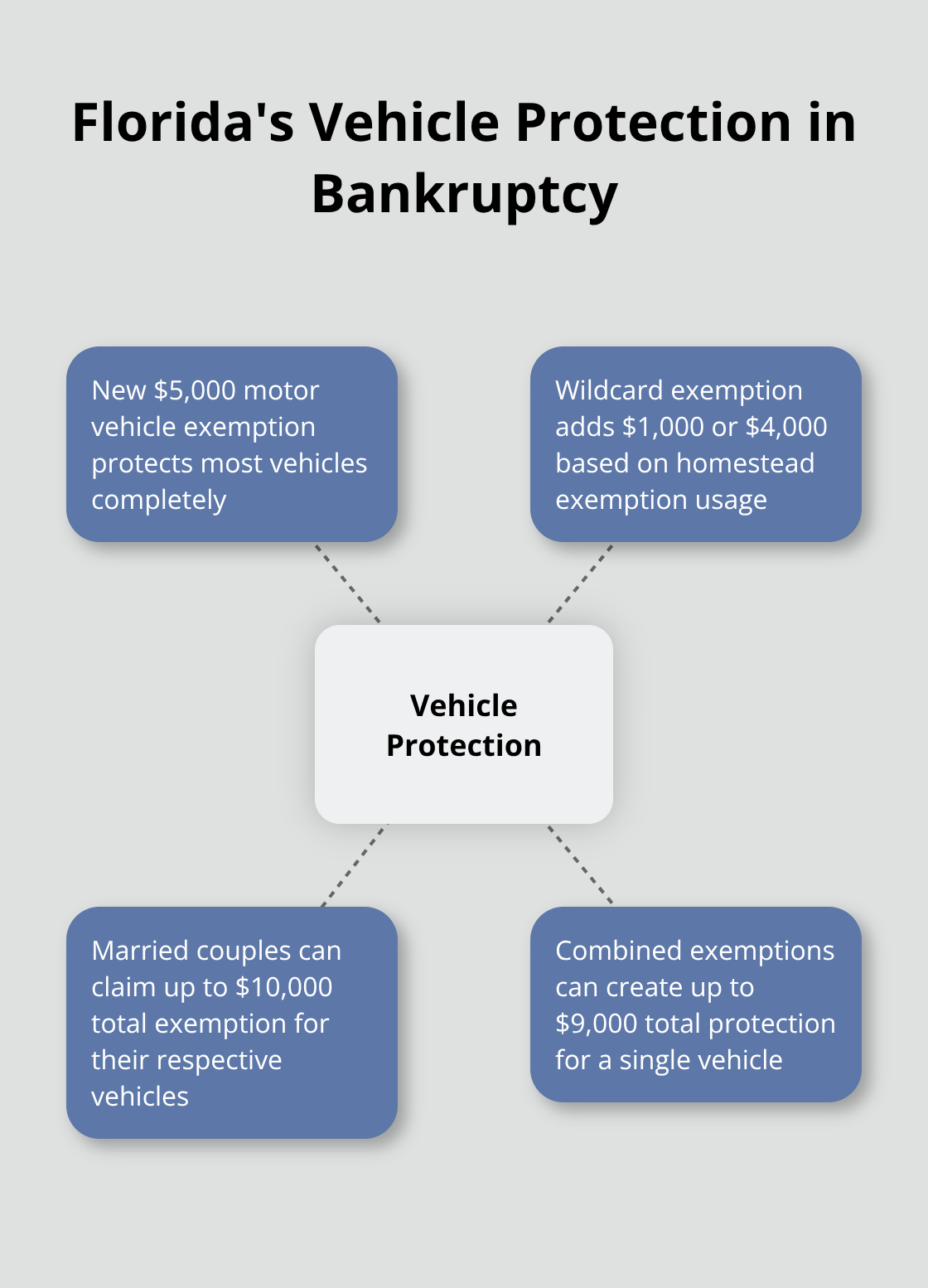
Florida’s Senate Bill 158 raised the motor vehicle exemption from $1,000 to $5,000 effective July 1, 2024. You can now protect up to $5,000 in vehicle equity during Chapter 7 bankruptcy cases. The previous $1,000 limit remained unchanged since 1993, which makes this update significant for Florida residents who face financial hardship.
Florida residents who have lived in the state for at least 730 days before they file must use state exemptions rather than federal options. This requirement works in your favor because Florida’s vehicle exemption now exceeds the federal alternative. Most vehicles qualify for protection since cars depreciate rapidly and many people owe more on their loans than the vehicle’s current market value.
How Vehicle Equity Affects Your Case
Your vehicle’s equity determines whether you can keep it through exemptions. Equity equals your car’s current market value minus any outstanding loan balance. If you owe $15,000 on a car worth $12,000, you have negative equity and face no risk of losing the vehicle. However, if you own a $7,000 car outright, you can protect $5,000 through the exemption but might need to pay the trustee $2,000 to keep it.
Why Car Loans Often Protect Your Vehicle
Car loans front-load interest payments, which keeps your equity low during the first few years of ownership. This structure often protects vehicles naturally since you typically owe close to the car’s depreciated value. The trustee won’t pursue vehicles where liquidation costs exceed potential recovery amounts (administrative expenses often make small equity amounts uneconomical to pursue).
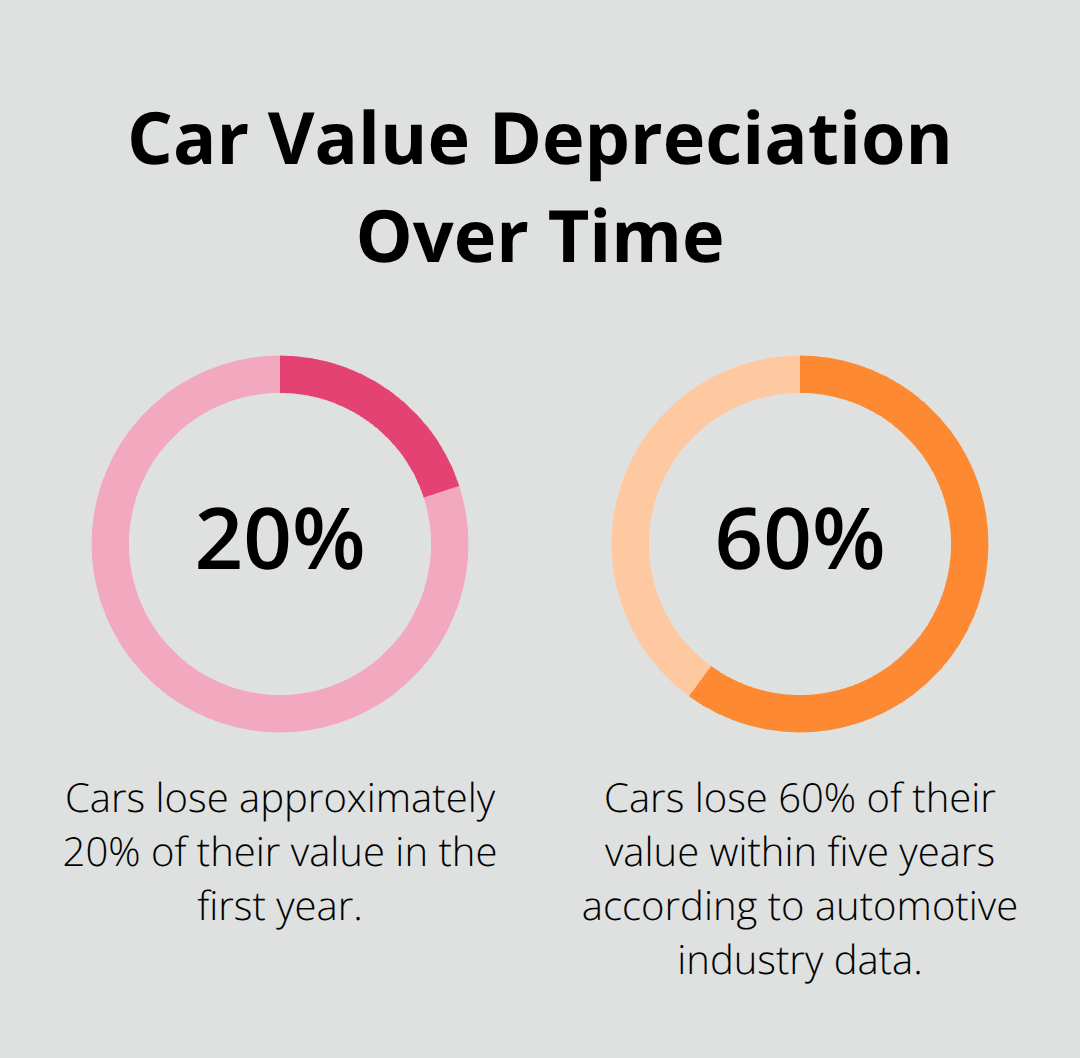
The rapid depreciation of most vehicles works in your favor during bankruptcy proceedings. New cars lose approximately 20% of their value in the first year and continue to depreciate significantly thereafter.
These protection mechanisms lead directly to additional strategies you can use when your vehicle’s value exceeds the standard exemption limits.
How Can You Maximize Florida Exemptions for Your Car
Strategic Use of the $5,000 Motor Vehicle Exemption
Florida’s $5,000 motor vehicle exemption protects most vehicles completely since the average used car value falls within this range. Cars lose 60% of their value within five years according to automotive industry data. A $25,000 vehicle purchased new typically holds $10,000 value after five years. Your equity calculation becomes even more favorable when you factor in loan balances.
Most car buyers finance 80-90% of their purchase price. This creates situations where loan balances exceed vehicle values for the first 2-3 years of ownership. The exemption applies per person, not per household. Married couples can each claim the $5,000 exemption for their respective vehicles (doubling protection to $10,000 total if both spouses own cars).
Florida courts require that each vehicle serves a legitimate transportation need, such as work commutes or family obligations. You cannot simply transfer ownership between spouses to maximize exemptions artificially.
Wildcard Exemption Adds Extra Protection
Florida provides a wildcard exemption worth either $1,000 or $4,000 based on your homestead exemption usage. If you don’t own a home or choose not to use the unlimited homestead exemption, you can claim the full $4,000 wildcard for any personal property. This creates potential $9,000 total protection for a single vehicle when combined with the motor vehicle exemption.
The wildcard exemption works particularly well for vehicles worth $6,000-$9,000 that exceed the standard motor vehicle limit. You must choose between the wildcard for your car versus other personal property like tools, furniture, or jewelry. Florida law requires you to list all assets and apply exemptions strategically across your entire estate.
When Vehicle Value Exceeds All Exemptions
Vehicles worth more than your available exemptions create immediate decisions about retention versus surrender. A $15,000 car with $12,000 in available exemptions leaves $3,000 in unprotected equity. The bankruptcy trustee will liquidate this vehicle unless you take specific action.
You have three primary options: pay the trustee the unprotected equity amount, negotiate a payment plan, or surrender the vehicle voluntarily. Payment arrangements with trustees vary based on case specifics and trustee preferences. Some trustees accept immediate lump sum payments while others allow installment plans over 3-6 months.
The trustee’s administrative costs and liquidation expenses often reduce the actual amount you need to pay below the calculated equity difference. These situations require careful evaluation of your options and their long-term financial impact.
How Do You Keep Your Car When Equity Exceeds Exemptions
Reaffirmation Agreements Lock You Into Payments
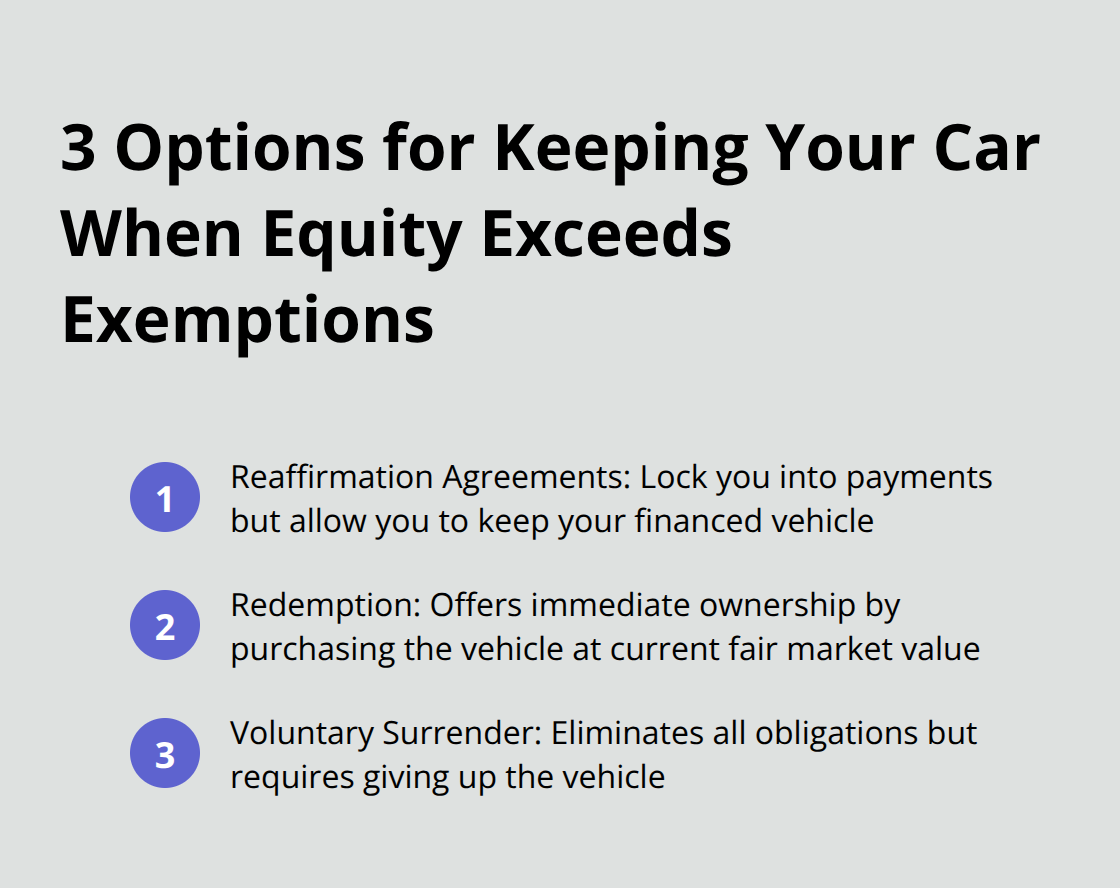
Reaffirmation agreements allow you to keep your financed vehicle when you formally agree to remain personally liable for the debt after bankruptcy discharge. This option works best when your car loan balance exceeds or closely matches your vehicle’s current value. The agreement recreates your original payment obligation, which means missed payments after bankruptcy can result in repossession and personal liability for any deficiency balance.
Federal bankruptcy courts require reaffirmation agreements to pass a presumption of undue hardship test if your monthly expenses exceed income. The court will reject agreements that appear to create financial strain. Florida bankruptcy judges typically approve reaffirmations when debtors demonstrate stable income and the vehicle serves necessary transportation needs. You must sign the reaffirmation agreement before your discharge enters (usually within 60 days of your 341 meeting).
Redemption Offers Immediate Ownership
Redemption allows you to purchase your vehicle from the lender at its current fair market value rather than the loan balance. This option works particularly well when you owe significantly more than the car’s worth. A vehicle worth $8,000 with a $12,000 loan balance can be redeemed for $8,000, which eliminates $4,000 in debt immediately.
The challenge with redemption lies in securing the lump sum payment within the tight bankruptcy timeline. Most debtors lack available cash for redemption purchases. Personal loans from family members or specialized redemption financing companies provide funding options, though redemption lenders typically charge higher interest rates than traditional auto loans. The Federal Trade Commission reports that redemption financing often carries annual percentage rates between 15-25%.
Voluntary Surrender Eliminates All Obligations
You can surrender your vehicle to the bankruptcy trustee to eliminate all personal liability for the debt while you discharge any deficiency balance through bankruptcy. This strategy works best when your vehicle requires expensive repairs or when monthly payments strain your post-bankruptcy budget. The trustee sells surrendered vehicles and applies proceeds toward your unsecured debts.
Voluntary surrender gives you control over timing and vehicle condition compared to involuntary repossession. You can remove personal items and avoid repossession fees that typically range from $300-$1,000 according to Consumer Financial Protection Bureau data. The discharged debt creates no tax consequences since bankruptcy eliminates the income recognition that normally accompanies forgiven debt.
Final Thoughts
Florida’s updated $5,000 vehicle exemption provides strong protection for most cars during Chapter 7 bankruptcy. Combined with wildcard exemptions and strategic planning, you can often retain your primary transportation while you discharge overwhelming debt. If you file bankruptcy what happens to your car depends on your vehicle’s equity, loan balance, and how you apply available exemptions.
Reaffirmation agreements work well for financed vehicles with manageable payments. Redemption offers immediate ownership at fair market value when you owe more than the car’s worth. Voluntary surrender eliminates all debt obligations when the vehicle creates financial strain (particularly when repair costs exceed the car’s value).
These decisions require careful analysis of your specific financial situation and long-term goals.
We at Harnage Law, PLLC guide Florida residents through every step of the Chapter 7 process. Contact us at Harnage Law, PLLC to discuss how Florida’s bankruptcy exemptions can protect your vehicle while you rebuild your financial future.