Filing for Chapter 7 bankruptcy in Florida without legal representation is legally possible, but comes with significant risks that can derail your case.
Many Florida residents consider the pro se route to save money on attorney fees. However, bankruptcy law contains complex procedures and strict deadlines that trip up most self-filers.
We at Harnage Law, PLLC see the costly mistakes that occur when people file for bankruptcy without a lawyer.
Legal Requirements for Filing Chapter 7 Bankruptcy Without a Lawyer in Florida
Filing Chapter 7 bankruptcy pro se in Florida requires you to complete over 20 official forms from the U.S. Bankruptcy Court. The Voluntary Petition form serves as your primary document, but you must also submit detailed schedules that list all assets, debts, income, and expenses. The filing fee stands at $338, which you must pay with a certified check or money order within 14 days of electronic submission. Florida courts reject outdated forms, so download current versions directly from the court website before you start your case.
Pre-Filing Credit Counseling Requirements
Federal law requires credit counseling from an approved provider within 180 days before you file your petition. The U.S. Trustee website lists authorized providers who offer phone and online sessions that typically cost $25-50. You must file the completion certificate with your petition or face immediate dismissal. After your 341 meeting of creditors, you have 60 days to complete a financial management course and file that certificate to receive your discharge. Missing either educational requirement blocks your debt relief entirely.
Income Limits and Means Test Calculations
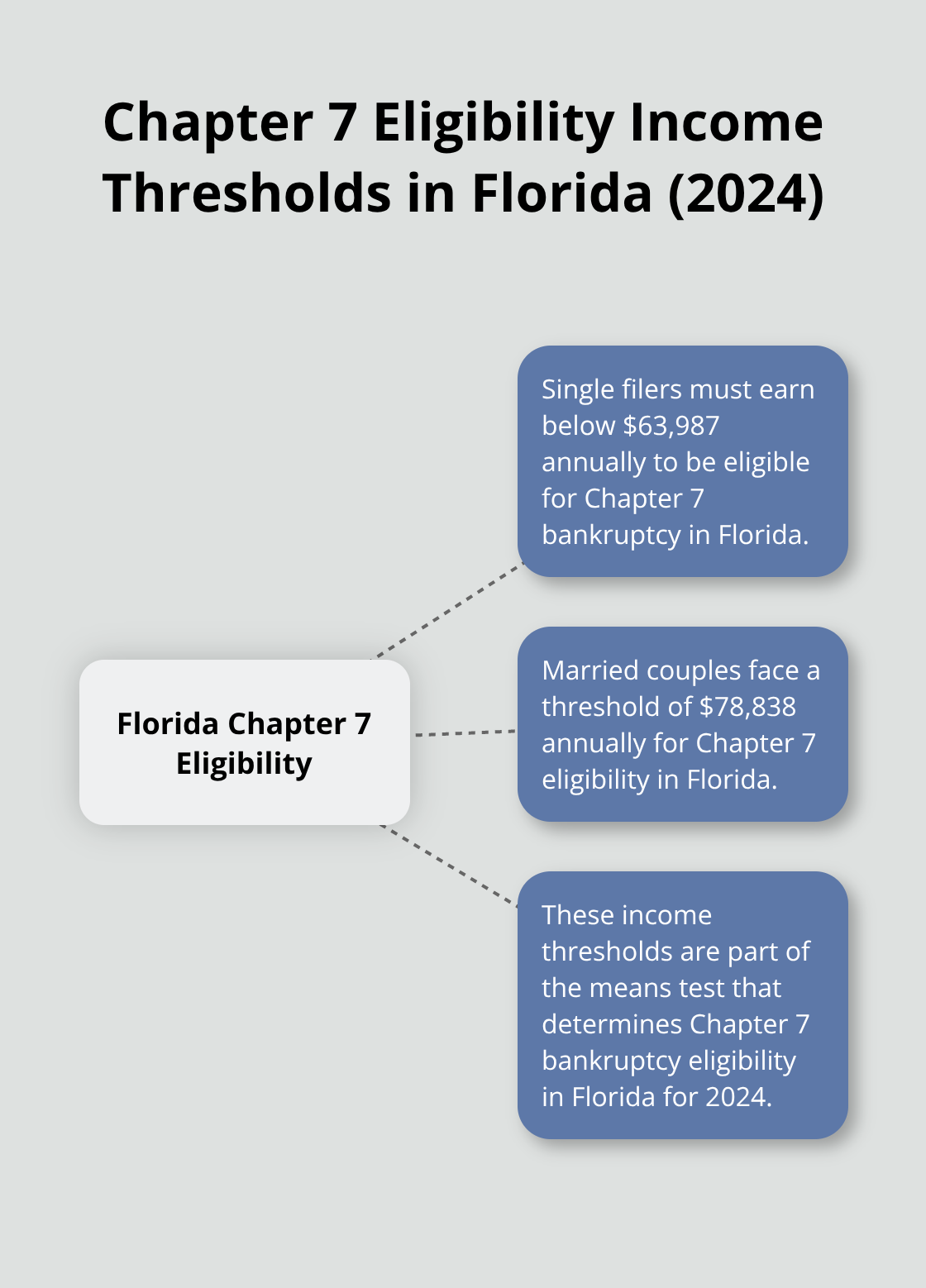
The means test determines Chapter 7 eligibility when it compares your average monthly income from the six months before you file to Florida’s median income levels. For 2024, single filers must earn below $63,987 annually, while married couples face a $78,838 threshold. Income above these limits triggers additional calculations that involve allowed expenses and disposable income formulas. The U.S. Census Bureau data shows Florida’s median household income reached approximately $66,000 in 2023 (making many residents eligible for Chapter 7 relief when properly calculated).
Document Preparation and Submission Standards
You must provide wet signatures on all documents as required under Administrative Order 2020-07. Courts demand a current government-issued photo ID at the time you file. Your petition must include a summary of assets and liabilities, plus detailed schedules that cover property, creditors, and income sources. Individual debtors can apply to pay the filing fee in installments (with a minimum half-payment required upfront) or request a complete waiver if they meet specific financial conditions outlined in Official Bankruptcy Form 103B.
These technical requirements create the foundation for your case, but navigating them without legal guidance often leads to costly errors that can jeopardize your entire bankruptcy proceeding.
Risks and Challenges of Self-Representation in Florida Bankruptcy Cases
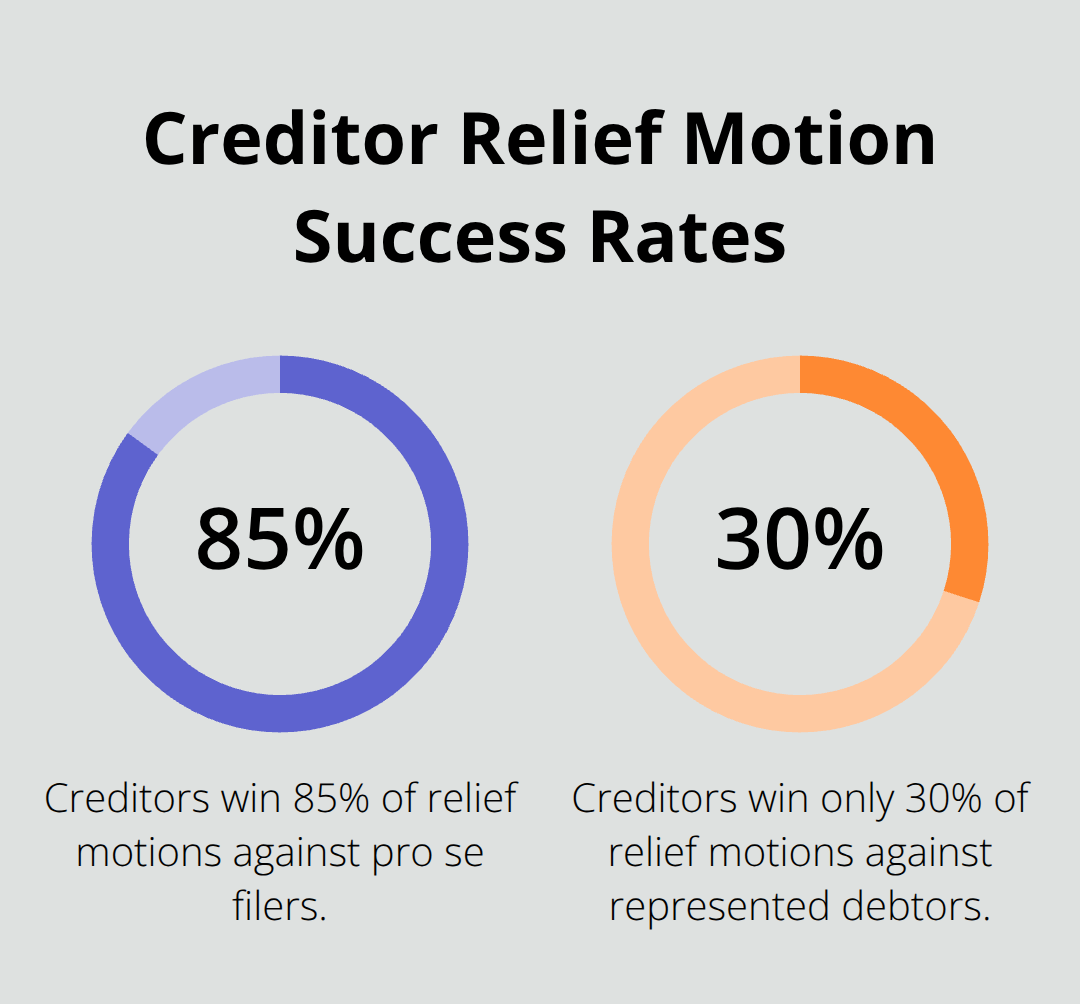
Pro se filers face a 90% higher dismissal rate compared to those with legal representation according to federal court statistics. The most devastating error involves incomplete or incorrect schedules that list your assets and debts. Missing a single creditor or understating asset values can result in fraud allegations that permanently bar you from future bankruptcy relief. Florida courts dismiss approximately 40% of pro se Chapter 7 cases within the first 60 days due to procedural errors, missing documents, or failure to attend mandatory hearings.
Trustee Scrutiny Intensifies for Self-Represented Debtors
The 341 meeting of creditors becomes particularly treacherous when trustees ask detailed questions about your financial history without legal counsel present to guide your responses. Trustees increase their oversight on pro se cases and often request additional documentation to verify financial information. This heightened scrutiny can prolong your case significantly.
The trustee actively searches for assets to liquidate in pro se cases, knowing that self-represented debtors often make mistakes that create opportunities for asset recovery.
Creditor Objections Target Unrepresented Filers
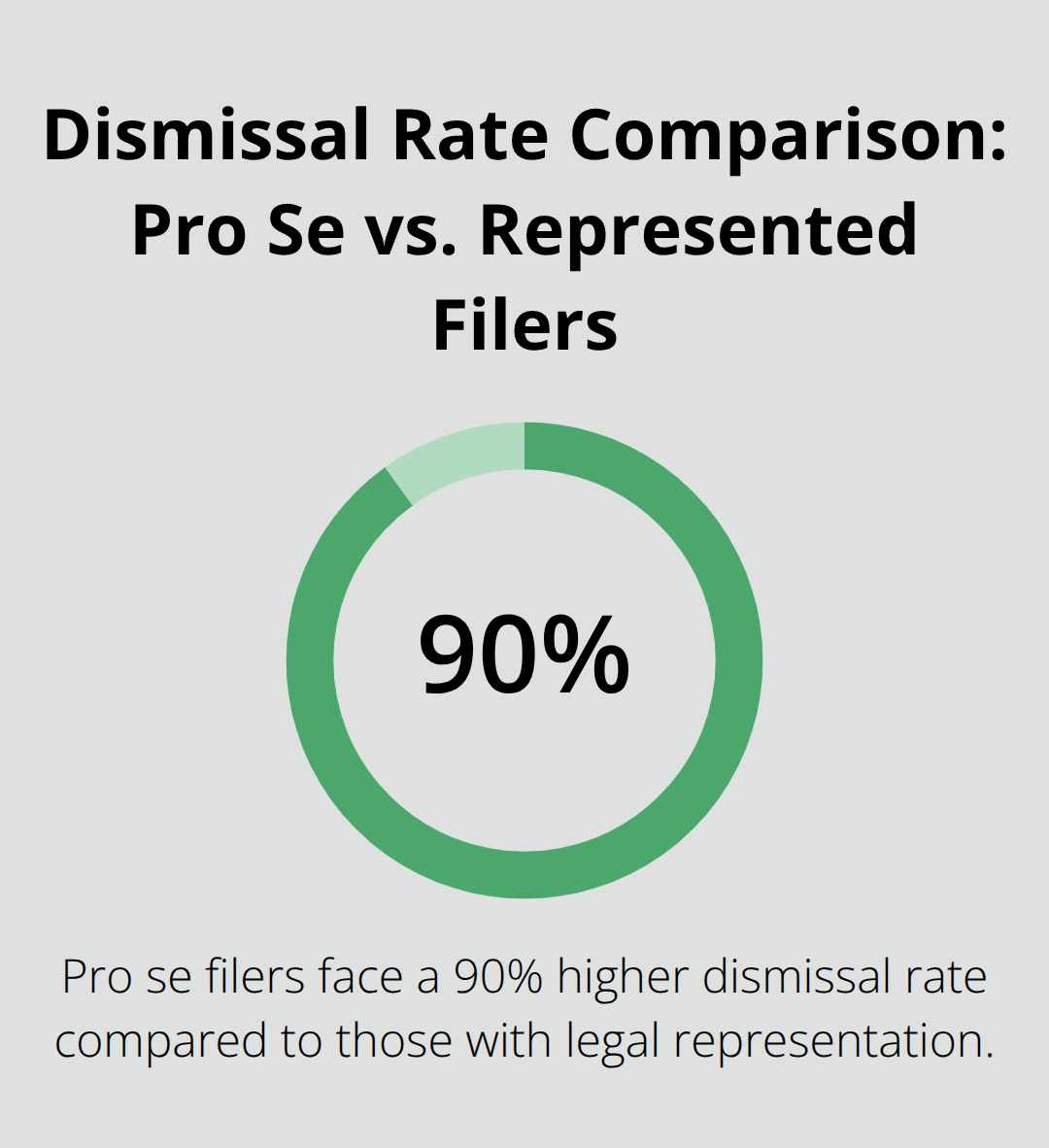
Creditors routinely file objections to discharge in pro se cases because they know self-represented debtors struggle to respond properly. Credit card companies and collection agencies employ attorneys who understand bankruptcy law inside and out, while you face them alone in federal court. The U.S. Trustee Program reports that creditor objections succeed 70% more often against pro se filers compared to represented debtors. When creditors file motions for relief from stay to repossess property, pro se filers lose their assets 85% of the time because they cannot mount effective legal defenses.
Florida Exemption Mistakes Cost Protected Assets
Florida offers generous homestead exemptions that protect unlimited equity in your primary residence, but you must claim these protections with precise legal language and proper documentation. Pro se filers commonly lose exempt property when they fail to properly claim Florida’s $4,000 personal property exemption or the $1,000 vehicle exemption per person. Secured creditors frequently challenge your exemption claims on vehicles and real estate (forcing you to prove Florida law protects these assets). Retirement accounts like 401(k)s and IRAs receive federal protection, but pro se filers frequently fail to properly schedule these assets or claim appropriate exemptions, risking their entire nest egg.
These procedural pitfalls and legal challenges highlight why many Florida residents ultimately need professional guidance to navigate the bankruptcy process successfully.
When Professional Legal Help Becomes Necessary in Florida
Complex financial situations demand professional legal guidance that goes far beyond basic form completion. Multiple income sources from rental properties, business ownership, or recent large asset transfers within two years before you file create complications that pro se filers cannot navigate safely. The U.S. Trustee Program scrutinizes cases that involve business debt, luxury purchases over $800 within 90 days of your petition, or cash advances exceeding $1,000 taken within 70 days before you file. These situations trigger presumptions of fraud that require sophisticated legal defenses to overcome.
Business Debts and Non-Dischargeable Obligations Create Legal Traps
Business owners face unique challenges when personal guarantees tie them to corporate debt obligations. Tax debts less than three years old, student loans, child support, and recent credit card purchases for luxury goods remain non-dischargeable regardless of your Chapter 7 petition. The Internal Revenue Service reports that 95% of pro se filers with tax debt fail to properly navigate the complex rules that govern which tax obligations receive discharge protection. Recent luxury purchases that total $800 or more within 90 days of your petition create presumptions of fraud that require legal arguments most self-represented debtors cannot make effectively.
Active Lawsuits and Wage Garnishments Require Immediate Legal Strategy
Pending lawsuits, active wage garnishments, or foreclosure proceedings demand immediate legal responses that pro se filers cannot provide adequately. Florida law allows creditors to garnish up to 25% of your disposable income, but legal representation can often negotiate payment plans or challenge improper garnishment procedures before you file bankruptcy. The automatic stay halts collection actions upon your petition, but creditors frequently file motions for relief from stay in cases that involve mortgage defaults or secured vehicle loans.
Complex Asset Protection Scenarios Need Professional Navigation
High-value assets, recent property transfers, or ownership interests in businesses require careful legal analysis to protect your wealth through the bankruptcy process. Florida’s homestead exemption protects unlimited equity in your primary residence (but only when you properly claim this protection with precise legal language). Retirement accounts like 401(k)s and IRAs receive federal protection, but complex rules govern how you must schedule and claim these exemptions to avoid trustee challenges.
Federal court statistics show that creditors win 85% of relief motions against pro se filers compared to just 30% success rates against represented debtors. We at Harnage Law, PLLC stop creditor harassment, prevent wage garnishments, and halt lawsuits while we guide clients through every step of the bankruptcy process to protect their assets and rebuild their financial future.
Final Thoughts
The decision to file for bankruptcy without a lawyer in Florida carries substantial financial risks that often outweigh the initial attorney fee savings. Federal court data reveals that pro se filers face dismissal rates 90% higher than represented debtors, while creditors win relief motions against self-represented filers 85% of the time compared to just 30% against those with legal counsel. The $338 filing fee represents only a fraction of potential losses when procedural errors result in case dismissal, asset forfeiture, or fraud allegations.
Missed deadlines, incomplete schedules, or improper exemption claims can cost you your home, vehicle, or retirement savings. Complex bankruptcy law creates traps that catch most people who attempt to navigate the process alone. Florida’s generous exemptions protect significant assets, but only when you claim them with precise legal language and proper documentation.
We at Harnage Law, PLLC help Florida residents navigate Chapter 7 bankruptcy successfully by stopping creditor harassment and protecting assets through proper legal procedures. Our guidance through every step of the bankruptcy process helps clients discharge qualifying debts while avoiding the costly mistakes that derail pro se cases. Your financial fresh start deserves professional protection that maximizes debt relief while preserving your future stability.