Filing Chapter 7 bankruptcy without an attorney can save thousands in legal fees, but one mistake could cost you your case. Florida residents face specific requirements and deadlines that must be met precisely.
We at Harnage Law, PLLC see many people ask “how to file for bankruptcy on my own” – and while it’s possible, success depends on understanding Florida’s unique rules and following each step correctly.
What Do You Need to Qualify for Chapter 7 in Florida?
Income Requirements and Means Test Calculations
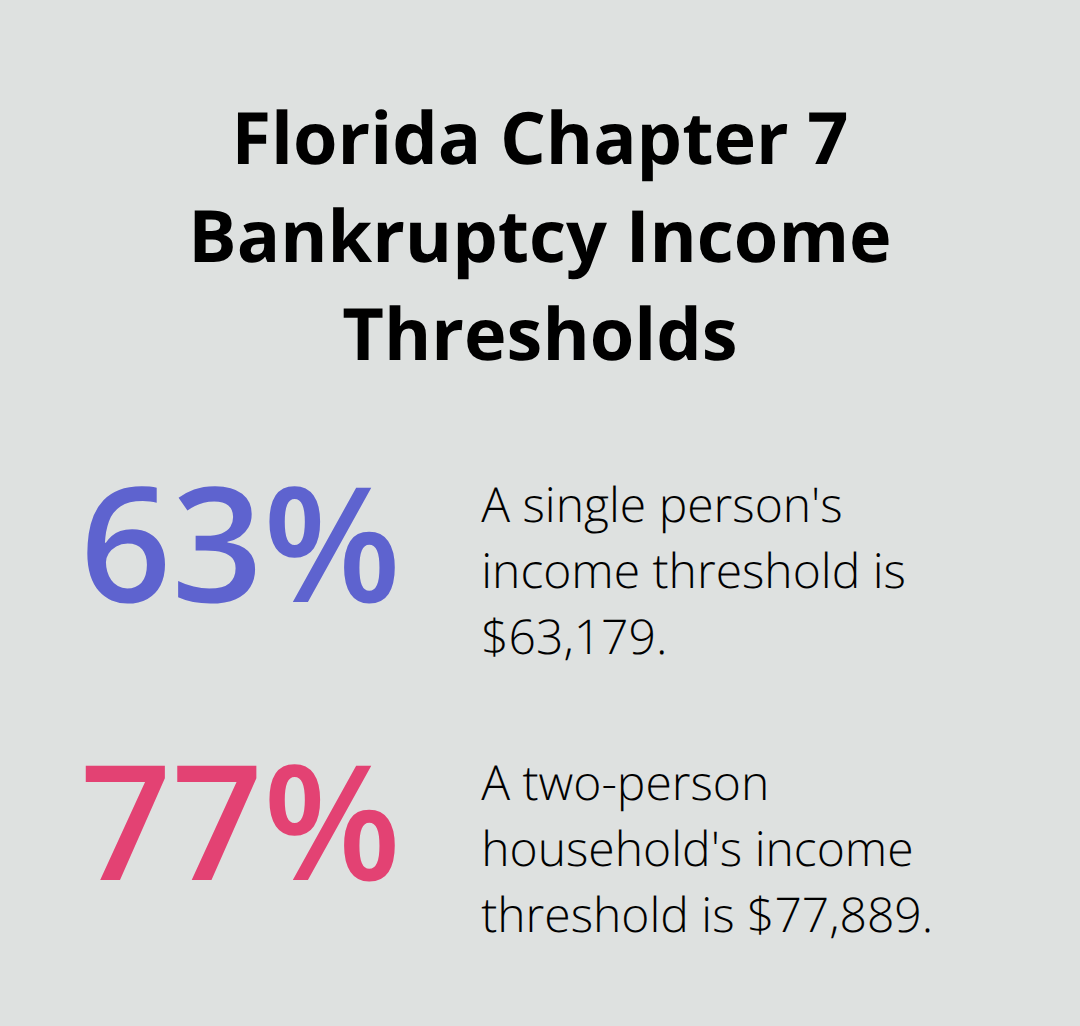
Florida residents must pass the means test to qualify for Chapter 7 bankruptcy. Your household income must fall below the state median income, which currently stands at $63,179 for a single person and $77,889 for a two-person household according to the U.S. Census Bureau data. If your income exceeds these thresholds, you’ll need to complete Form 22A-1 to calculate your disposable income after allowed expenses. The calculation includes mortgage payments, vehicle loans, taxes, and basic expenses for daily life. If you fail this test, the court will push you into Chapter 13 bankruptcy instead, which requires a 3-5 year repayment plan.
Financial Documentation Requirements
Florida bankruptcy courts demand extensive financial records that span the past six months. You must provide pay stubs, bank statements, tax returns for the previous two years, and a complete list of all creditors with exact balances. The court requires Schedule A/B that lists every asset you own, which includes household items valued over $600. Documents that are incomplete lead to case dismissal – the Middle District of Florida dismissed 847 cases in 2023 due to incomplete paperwork. You’ll also need proof that shows you completed credit counseling within 180 days before you file, plus your Certificate of Completion from an approved agency.
Florida Asset Protection Rules
Florida offers generous asset exemptions that protect your property from liquidation. The homestead exemption provides unlimited protection for your primary residence, but you must be a Florida resident for at least 730 days before you file. Your wages receive protection up to $750 per week if you’re head of household, while retirement accounts like 401(k)s and IRAs remain completely protected. The $4,000 wildcard exemption covers personal property like jewelry or electronics. Vehicle exemptions protect up to $1,000 in equity (though many filers use the wildcard exemption for cars worth more than this amount).
Court Filing Fees and Payment Options
The total cost to file Chapter 7 bankruptcy in Florida reaches $338, which breaks down into a $245 case fee, $75 administrative fee, and $15 trustee surcharge. You can request to pay these fees in installments if you cannot pay upfront, but you must pay at least half when you file. The court may waive fees entirely for debtors who meet specific financial hardship criteria using Official Bankruptcy Form 103B. These payment options help make bankruptcy accessible even when money is extremely tight.
Once you understand these qualification requirements, the next step involves navigating the actual process of submitting your petition and required documents to the Florida bankruptcy court system.
How Do You File Your Bankruptcy Paperwork in Florida?
Credit Counseling Must Come First
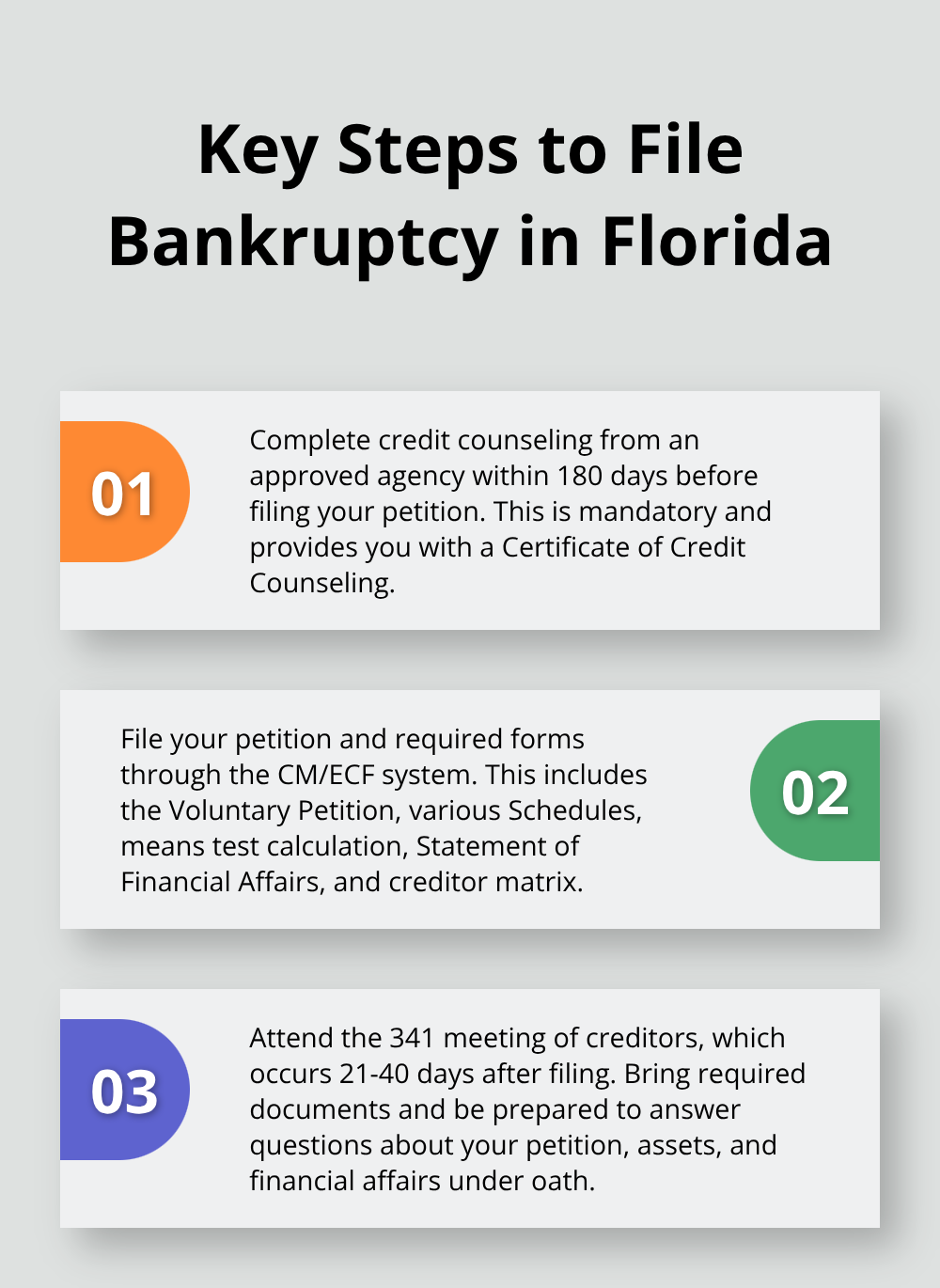
Florida law requires you to complete credit counseling from an approved agency within 180 days before you file your petition. The U.S. Trustee maintains a list of approved agencies, and the counseling session costs between $25-$50. You receive a Certificate of Credit Counseling that must be filed with your petition – without this certificate, the court will reject your entire filing. The counseling session takes about 60-90 minutes and covers budget analysis and alternatives to bankruptcy. Some agencies offer phone or online sessions, but you must use an agency approved for Florida residents specifically.
Filing Your Petition and Required Forms
The Florida bankruptcy court system requires precise completion of multiple forms that must be filed electronically through the CM/ECF system. Your Voluntary Petition for Individuals Filing for Bankruptcy serves as the foundation document, followed by Schedule A/B that lists all property, Schedule C that claims exemptions, and Schedule D, E/F, and G that detail different types of debts. Form 22A-1 calculates your means test results, while the Statement of Financial Affairs provides a comprehensive overview of your recent financial transactions. You must also submit a creditor matrix that contains the name and complete address of every creditor, plus a legible photocopy of your government-issued photo ID. The Middle District of Florida processes over 15,000 bankruptcy cases annually, and incomplete filings face immediate dismissal.
Meeting of Creditors and Trustee Process
Your 341 meeting occurs 21-40 days after you file and lasts approximately 5-10 minutes if properly prepared. The appointed trustee will ask standard questions about your petition, assets, and financial affairs under oath. Creditors rarely attend these meetings – less than 5% of cases see creditor participation (according to court statistics). You must bring your driver’s license, Social Security card, and proof of current income to this meeting. The trustee may request additional documentation if they identify discrepancies in your filing. After this meeting, you have 60 days to complete your financial management course and file the completion certificate to receive your discharge.
While the paperwork and court procedures seem straightforward, many self-filers make costly errors that can destroy their cases entirely.
What Filing Errors Destroy Florida Bankruptcy Cases
Documentation Mistakes That Trigger Case Dismissal
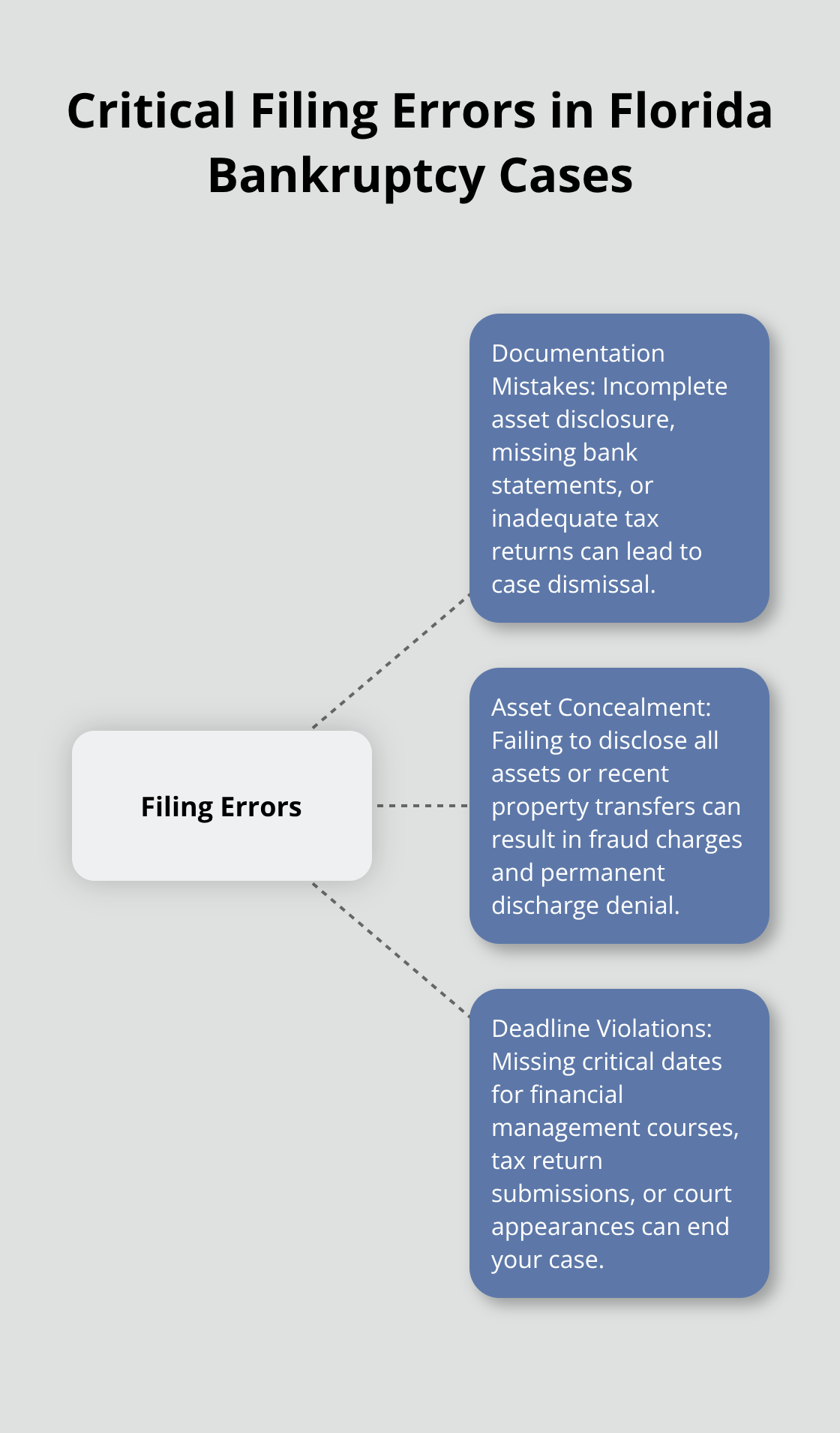
The Middle District of Florida dismissed 1,247 bankruptcy cases in 2023 due to paperwork errors, with incomplete asset disclosure as the leading cause. Self-filers consistently underestimate the court’s documentation requirements and leave out bank accounts they consider insignificant or fail to report cash gifts from family members. Your Schedule A/B must list every single asset, including that old laptop worth $200 or the wedding ring you never wear. The court demands bank statements for all accounts that were open during the six months before you file, even if you closed them. Missing even one statement can result in immediate dismissal.
Tax returns must cover the full two years prior to your petition – partial year returns or amended returns without proper explanation will halt your case. The trustee will cross-reference your stated income against your tax returns, and any discrepancies trigger intensive scrutiny that often reveals other documentation problems. Courts show no mercy for incomplete financial records.
Asset Concealment and Disclosure Failures
Florida bankruptcy trustees recovered $23.7 million in hidden assets during 2023, which proves that attempted concealment rarely succeeds and always backfires. Debtors who transfer property to relatives face fraud charges and permanent discharge denial when they think they can hide assets. The court requires disclosure of all property transfers made within two years of your petition, including informal arrangements where you gave your car to a family member.
Your Statement of Financial Affairs asks specific questions about recent financial transactions, business closures, and payments to creditors – incomplete answers here destroy cases faster than any other error. Trustees use sophisticated software to cross-reference your reported assets against public records, social media, and financial databases. When they find undisclosed assets, the penalties extend beyond case dismissal to potential criminal prosecution for bankruptcy fraud.
Deadline Violations That End Your Case
Florida bankruptcy courts operate under strict deadlines that offer no flexibility for self-filers who miss critical dates. Your financial management course must be completed within 60 days after your creditors meeting, and late completion means no discharge regardless of how perfect your paperwork was. The court requires your tax returns to be filed with the trustee at least seven days before your 341 meeting – missing this deadline postpones your meeting and extends your case timeline.
Amendment deadlines are equally unforgiving (you have 14 days to correct errors in your petition after the trustee identifies them). Court appearance requirements are absolute – failing to attend your creditors meeting results in automatic case dismissal with no opportunity for rescheduling. The administrative costs of reopening a dismissed case often exceed the original filing fees, which makes deadline compliance the difference between financial relief and continued debt burden.
Final Thoughts
Self-filing Chapter 7 bankruptcy in Florida works best for straightforward cases with minimal assets and clear-cut financial situations. The 82.1% success rate for represented debtors versus 48.2% for self-filers demonstrates the value of professional guidance when cases involve business ownership, complex asset structures, or potential fraud allegations. Most people who ask “how to file for bankruptcy on my own” discover the complexity exceeds their initial expectations.
You must verify that all required documents are complete and accurate before you submit your petition. Double-check your asset listings, confirm all creditors appear in your matrix, and validate that your means test calculations are correct (your credit counseling certificate must remain current throughout the process). Attend your creditors meeting with proper identification and income documentation ready for review.
Complete your financial management course within 60 days of your creditors meeting to receive your discharge. The automatic stay protects you from collection efforts immediately upon filing your petition. We at Harnage Law, PLLC help Florida residents navigate Chapter 7 bankruptcy while we protect their assets and secure debt discharge through our personalized legal services.