
Filing for bankruptcy doesn’t automatically mean losing your vehicle. Many Florida residents can keep their cars through various legal protections and strategic options.
We at Harnage Law, PLLC see clients regularly ask: can you keep your car if you file bankruptcy? The answer depends on your car’s value, loan status, and Florida’s exemption laws.
Understanding your options before filing helps protect your transportation needs during this financial fresh start.
How Much Car Value Can You Protect in Florida Bankruptcy?
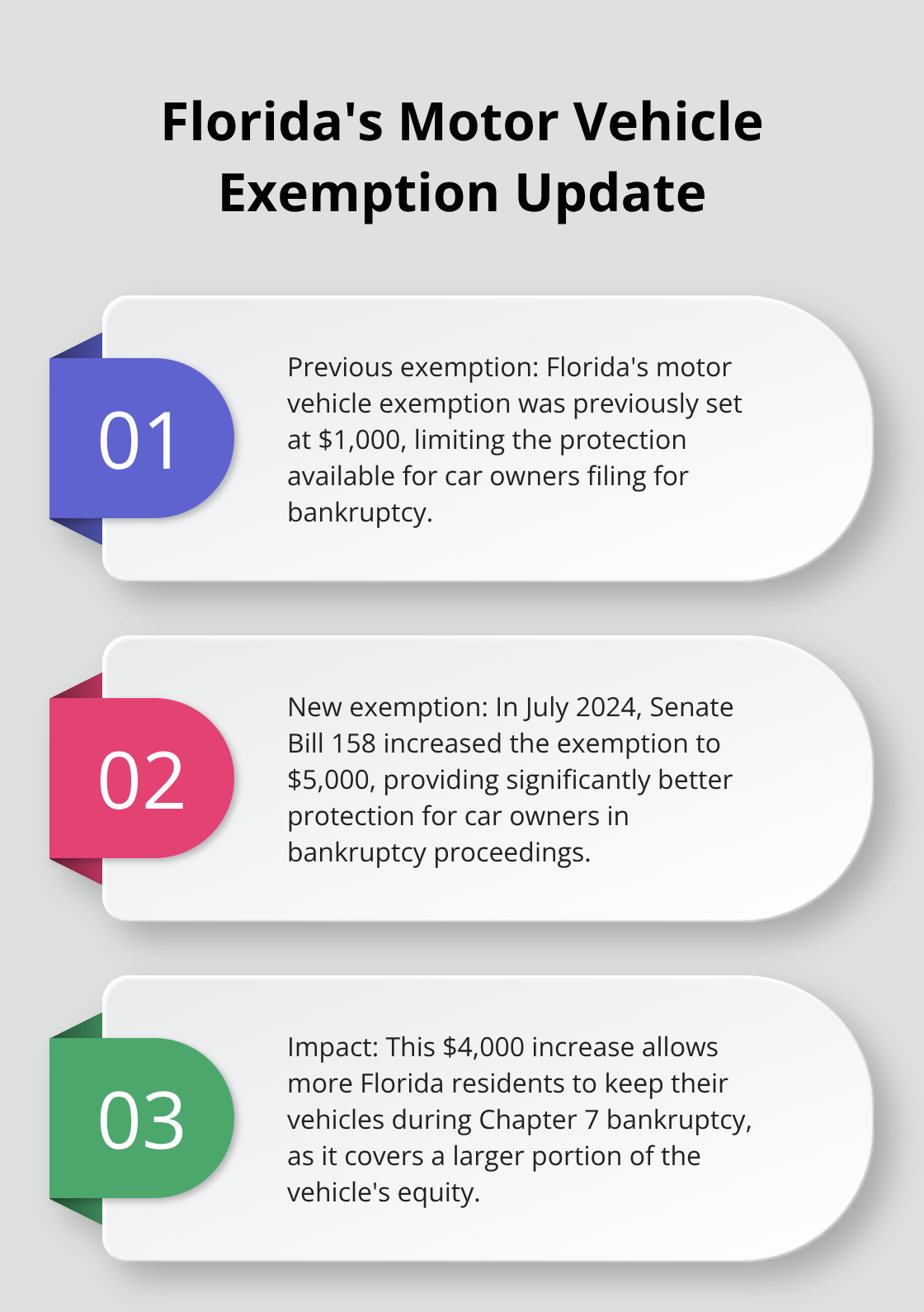
Florida’s motor vehicle exemption increased from $1,000 to $5,000 in July 2024 under Senate Bill 158. This change provides significantly better protection for car owners who file Chapter 7 bankruptcy. The exemption applies to your vehicle’s equity, which equals the market value minus any outstanding loan balance.
If your car has a value of $8,000 and you owe $4,000 on the loan, your equity totals $4,000 and falls within the protected range. The exemption covers one vehicle per person, though multiple vehicles may qualify if each serves an essential purpose for work or daily life (with proper documentation).
How to Calculate Your Vehicle Equity
Your vehicle’s equity determines whether you can keep it during bankruptcy. If you own a car worth $6,000 with no loan, you have $6,000 in equity. This means $1,000 exceeds the exemption and could face risk. However, if you owe $3,000 on that same car, your equity drops to $3,000 and remains fully protected.
Vehicles with negative equity pose no risk since creditors hold priority on the asset. When the loan exceeds the vehicle’s value, the bank maintains first claim on the car.
Secured Debt Creates Different Rules
Secured vehicle loans create different dynamics than unsecured debts like credit cards. With secured debt, the lender can repossess your car regardless of bankruptcy status if you stop payments. This makes current car payments more important than the exemption amount.
Unsecured debts get discharged in bankruptcy without affecting your vehicle. Secured auto loans require active decisions about reaffirmation or redemption to maintain ownership while staying within Florida’s exemption limits.
What Happens When Equity Exceeds Limits
When your vehicle equity exceeds the $5,000 exemption, you face several options rather than automatic loss. The trustee may allow you to pay the excess amount to keep the car (called “buying back” the equity). Chapter 13 bankruptcy offers another path where you can retain the vehicle by including the excess value in your repayment plan.
These alternatives help protect your transportation needs while addressing the trustee’s obligation to maximize creditor recovery.
What Are Your Vehicle Protection Options in Chapter 7?
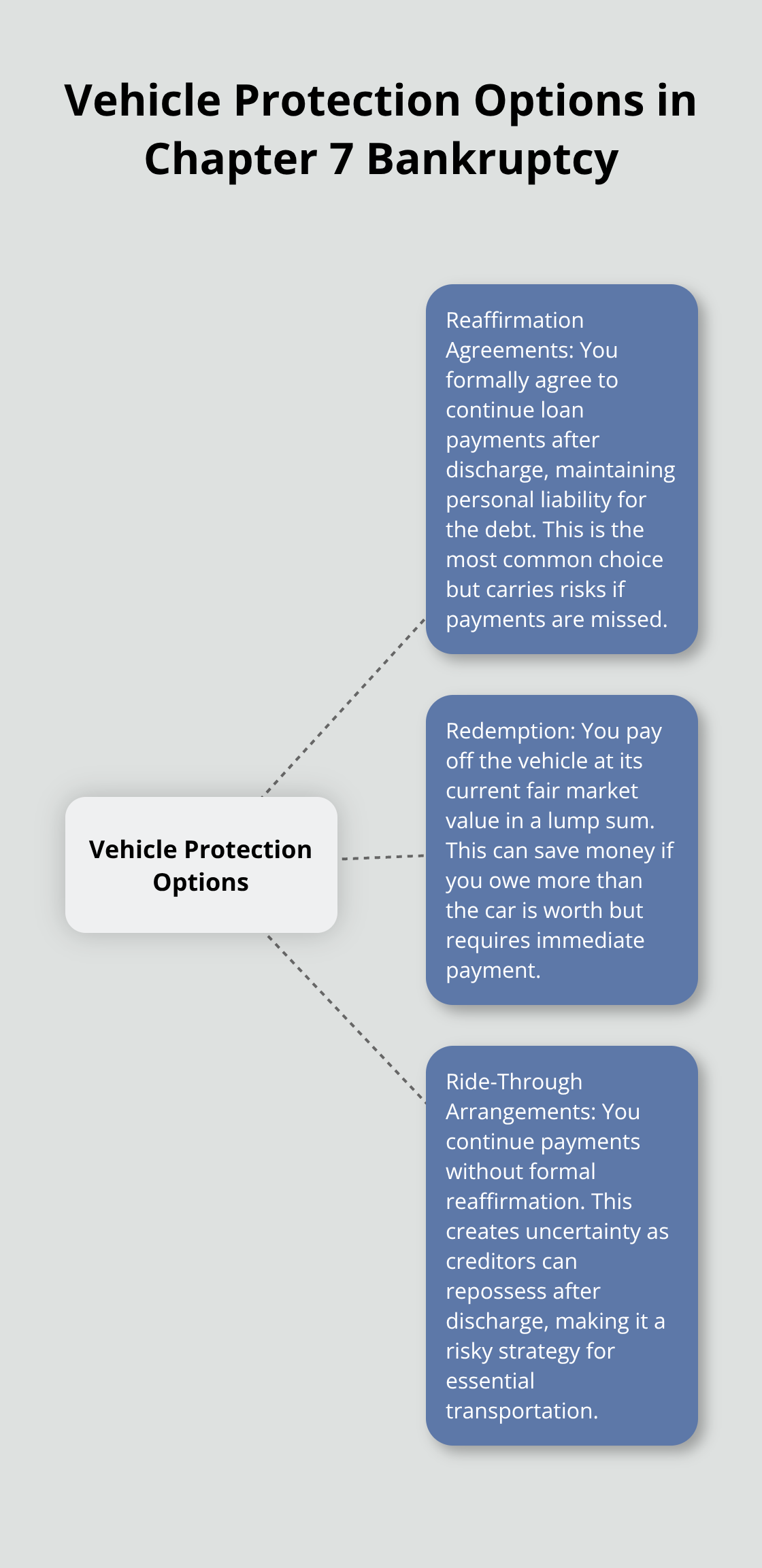
Florida bankruptcy law provides three main paths to keep your vehicle during Chapter 7 proceedings. Each option carries distinct advantages and risks that affect your long-term financial recovery.
Reaffirmation Agreements Lock You Into Continued Payments
Reaffirmation agreements represent the most common choice for vehicle retention. You formally agree to continue loan payments after discharge, which creates ongoing personal liability for the debt. The U.S. Bankruptcy Court for the Southern District of Florida requires original signatures from all parties and attorney approval for represented debtors.
Pro se debtors must attend hearings to demonstrate they understand the continued liability risks. These agreements typically maintain existing payment terms, though modifications may occur if you fall behind on payments. Missing reaffirmed payments leads to repossession and wage garnishment without future bankruptcy protection for seven years.
Redemption Pays Off Vehicles at Current Market Value
Redemption allows you to pay the vehicle’s current fair market value rather than the full loan balance. This option works best when you owe significantly more than the car’s worth. If your car has a $12,000 loan but only $7,000 market value, redemption saves $5,000 immediately.
You must pay the redemption amount as a lump sum within the bankruptcy timeframe (typically 30-45 days after filing). Most debtors struggle with this cash requirement, which makes redemption less practical despite potential savings.
Ride-Through Arrangements Create Legal Uncertainty
Ride-through arrangements involve continued payments without formal reaffirmation, though Florida courts rarely approve this approach. The automatic stay protects you during bankruptcy, but creditors can repossess immediately after discharge without reaffirmation.
This creates uncertainty about long-term vehicle retention since you lack legal protection after case closure. Some debtors prefer ride-through to avoid personal liability, but the unpredictable nature makes this strategy risky for essential transportation.
However, certain circumstances can jeopardize your ability to keep your vehicle regardless of which protection method you choose.
When Could You Lose Your Car in Bankruptcy?
Despite Florida’s protective exemptions and retention strategies, certain circumstances dramatically increase your risk of vehicle loss during Chapter 7 proceedings. High-equity vehicles present the greatest threat to retention since trustees actively pursue assets that exceed exemption limits.
Vehicle Equity Above $5,000 Creates Liquidation Risk
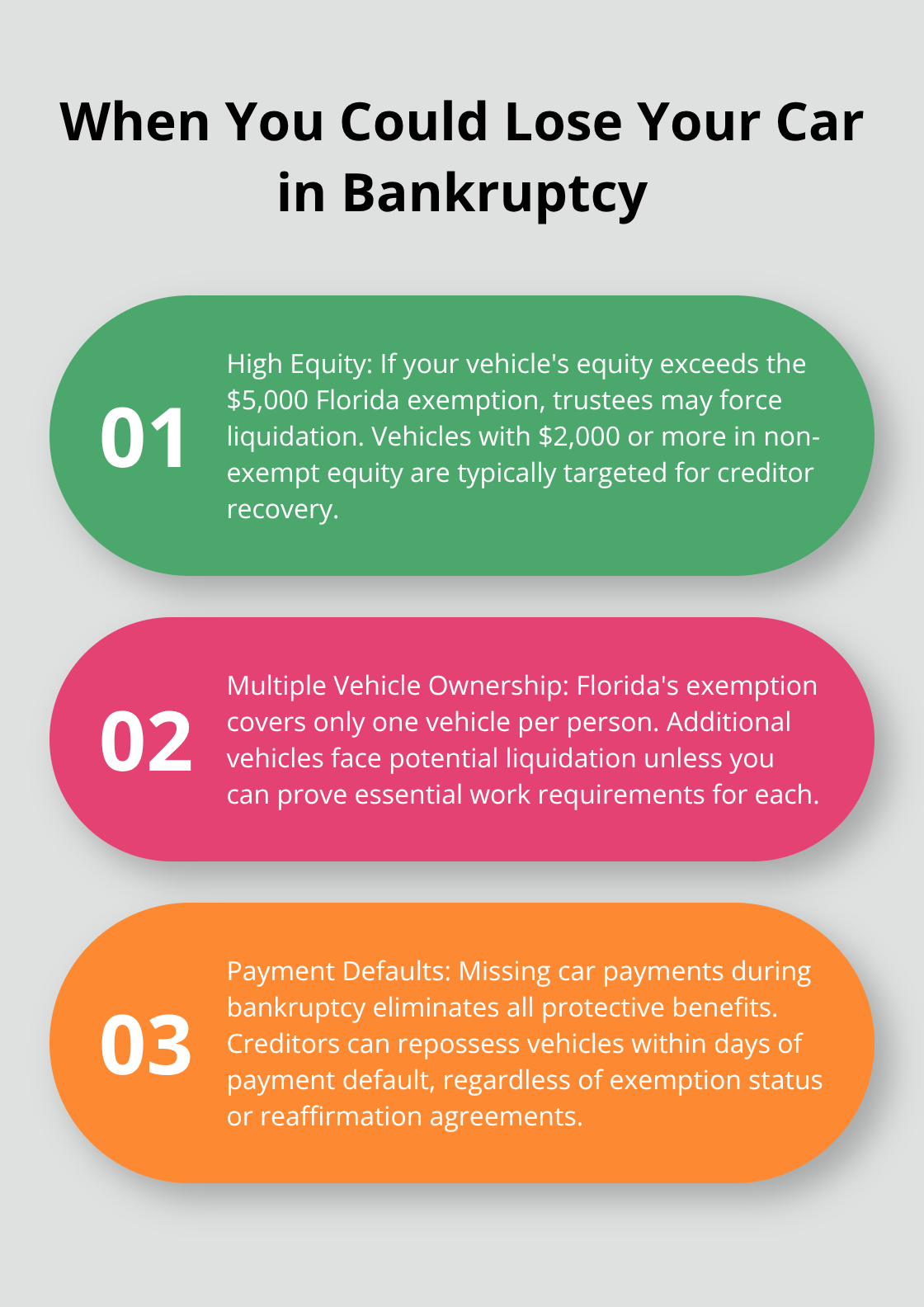
When your car’s equity surpasses the $5,000 Florida exemption, trustees may force liquidation to maximize creditor recovery. Vehicles worth $15,000 with minimal loans create substantial non-exempt equity that trustees rarely overlook. Trustees focus on vehicles with significant equity because they generate meaningful creditor distributions.
Classic cars, luxury vehicles, or fully-paid mainstream cars often exceed exemption limits and face forced sale. The trustee calculates whether liquidation costs justify the effort and typically pursues vehicles with $2,000 or more in non-exempt equity.
Multiple Vehicle Ownership Compounds Risk
Multiple vehicle ownership compounds this risk since Florida’s exemption covers only one vehicle per person without compelling work-related justification. Each additional vehicle faces potential liquidation unless you can prove essential work requirements (such as commercial use or spouse employment needs).
Payment Defaults End Protection Immediately
Missing car payments during bankruptcy eliminates all protective benefits regardless of exemption status or reaffirmation agreements. Creditors can repossess vehicles within days of payment default once the automatic stay lifts or with court permission.
Late payments on reaffirmed debts create personal liability that survives bankruptcy discharge and leads to potential wage garnishment and credit damage. This liability continues for the full loan term even after your other debts receive discharge.
High-Maintenance Vehicles Face Abandonment
Trustees may abandon high-maintenance vehicles or those that require extensive repairs since liquidation becomes economically unfeasible. Vehicles with mechanical problems, accident damage, or specialized modifications often cost more to sell than they generate in creditor distributions.
Final Thoughts
Florida’s updated $5,000 vehicle exemption provides strong protection for most car owners who face Chapter 7 bankruptcy. The answer to “can you keep your car if you file bankruptcy” depends on your vehicle’s equity, loan status, and chosen retention strategy. Reaffirmation agreements offer the most reliable path for financed vehicles, while redemption works best for underwater loans.
Payment consistency remains vital throughout the bankruptcy process since missed payments eliminate all protective benefits. High-equity vehicles above exemption limits face liquidation risk, but trustees often allow buyback options or Chapter 13 alternatives. Trustees calculate whether liquidation costs justify the effort (typically pursuing vehicles with $2,000 or more in non-exempt equity).
We at Harnage Law, PLLC help Florida residents navigate these complex vehicle protection decisions while we stop creditor harassment and prevent wage garnishments. Our firm guides clients through every step of the Chapter 7 process and protects assets while we provide fresh financial starts. Professional bankruptcy guidance helps you evaluate your specific situation and choose the best vehicle retention strategy for your circumstances.