Many Florida homeowners worry about losing their primary residence when considering Chapter 7 bankruptcy. The fear of homelessness often prevents people from seeking the debt relief they desperately need.
At Harnage Law, PLLC, we see clients ask daily: if you file for bankruptcy do you lose your house? The answer depends on several key factors, including Florida’s homestead exemption laws and your specific financial situation.
How Does Florida’s Homestead Exemption Protect Your Home
Florida provides the strongest homestead protection in the United States through its unlimited exemption law. Under Florida Statute 222.01, homeowners can protect unlimited equity in their primary residence from Chapter 7 bankruptcy liquidation when they meet specific requirements. The property must serve as your primary residence and you must have owned it for at least 1,215 days before you file. This 1,215-day rule prevents people from moving to Florida solely to take advantage of the generous homestead laws.
Geographic Boundaries That Determine Protection Levels
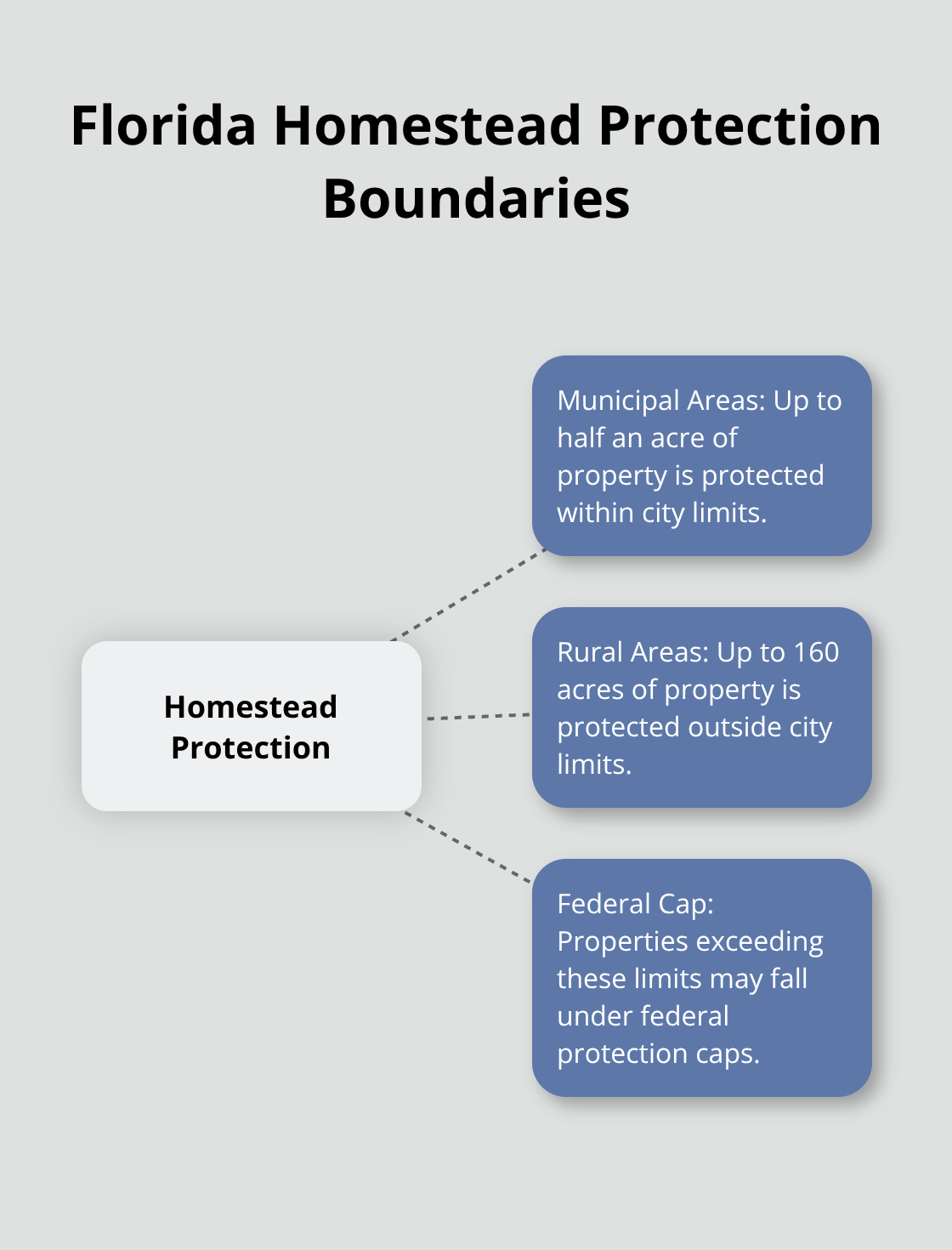
The unlimited protection applies to properties up to half an acre within municipal boundaries or 160 acres in rural areas. Properties that exceed these limits lose the unlimited protection and fall under federal caps (currently around $170,350 for recent residents). Municipal boundaries change frequently, so you should verify your property’s classification before you file. Rural homeowners enjoy significantly more protection with the 160-acre limit, which makes Florida particularly attractive for agricultural property owners who face financial difficulties.
Primary Residence Requirements You Must Meet
The homestead must function as your primary residence, not a vacation home or investment property. Florida courts examine factors like voter registration, driver’s license address, tax returns, and where children attend school to verify primary residence status. Married couples can only claim one homestead exemption together, regardless of how many properties they own. The protection extends to mobile homes permanently attached to land you own, but excludes rental properties or homes you purchased primarily for investment purposes.
Timing Requirements That Affect Your Protection
The 1,215-day ownership requirement creates a waiting period that you cannot circumvent. Courts calculate this period from the date you acquired title to your property, not from when you moved to Florida. If you owned your home for less than 1,215 days, federal bankruptcy law caps your homestead exemption at $170,350, regardless of Florida’s unlimited protection. This timing requirement becomes particularly important when you consider that Chapter 7 cases typically resolve within four months, making advance planning essential for maximum protection.
Chapter 7 Bankruptcy and Your Home in Florida
Chapter 7 bankruptcy treats homes differently based on your equity position and mortgage status when you file. Florida homeowners with significant equity benefit from the state’s unlimited homestead exemption, which protects their property from liquidation regardless of value. The Chapter 7 trustee cannot sell your home to pay creditors when you qualify for this protection, which makes Florida one of the most homeowner-friendly bankruptcy states in the nation.
Current Mortgage Payments Determine Your Options
You must stay current on mortgage payments during Chapter 7 proceedings. The automatic stay halts foreclosure actions temporarily, but mortgage companies can request relief from stay if payments fall behind. Most Florida homeowners who maintain current payments keep their homes without complications, as the homestead exemption shields their equity from creditors. However, when you fall behind on payments during bankruptcy, foreclosure often occurs within 60 to 90 days after the trustee abandons the property.
The Four Month Timeline That Protects Your Assets
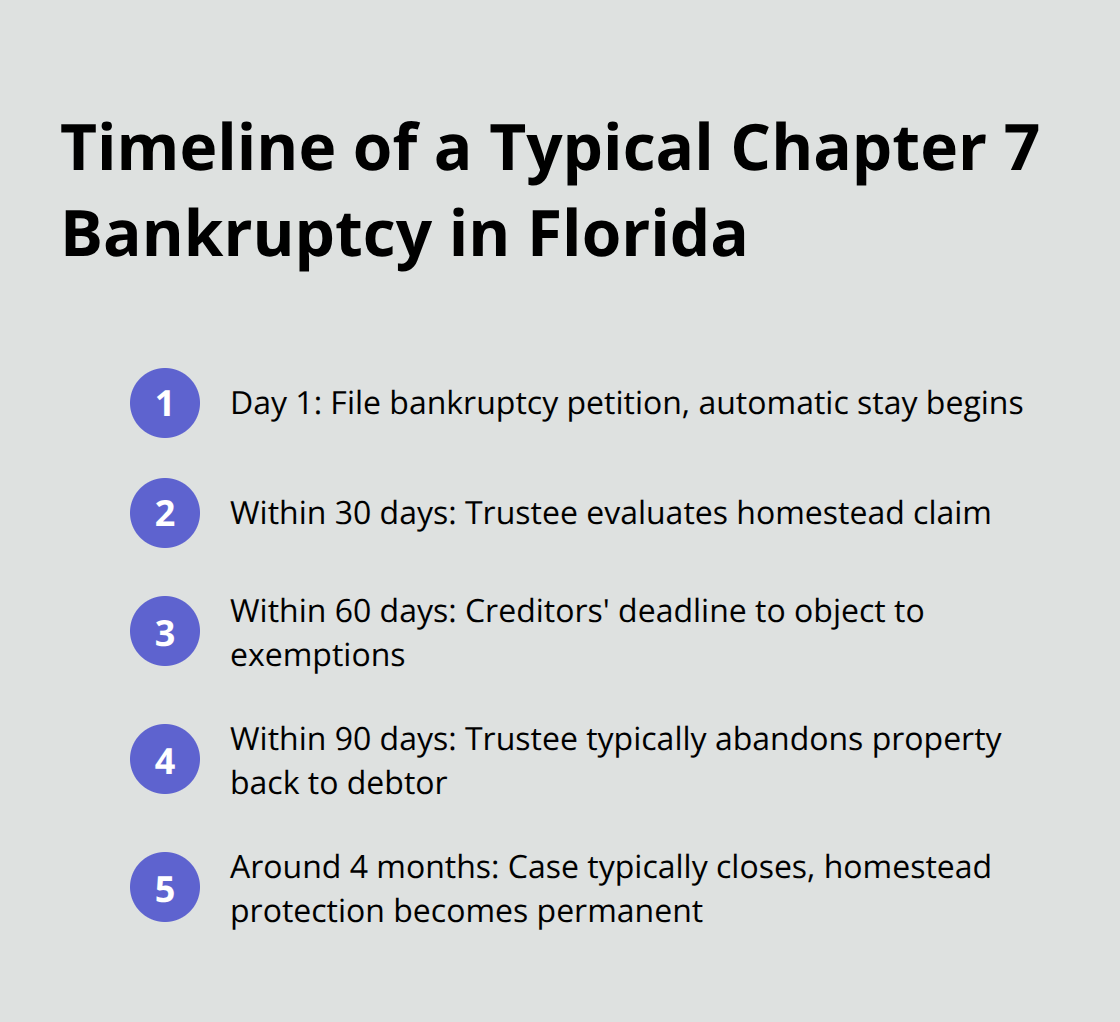
Chapter 7 cases in Florida typically close within four months, which creates a specific timeline for asset protection. The trustee evaluates your homestead claim within 30 days of your petition, and creditors have 60 days to object to your exemptions. Once the trustee abandons your property back to you (usually within 90 days), the homestead protection becomes permanent for that case. This rapid timeline works in your favor, as you need to maintain mortgage payments for only four months compared to years of debt struggles.
Reaffirmation Agreements Lock In Your Mortgage Terms
Mortgage companies often request reaffirmation agreements during Chapter 7, which legally bind you to continue payments after discharge. When you sign these agreements, you prevent future modification options and remain personally liable for any deficiency after foreclosure. Most attorneys recommend against reaffirmation, as you can keep your home by simply continuing payments without the legal obligation. This strategy preserves your right to walk away from an underwater mortgage without personal liability for the remaining balance.
While Chapter 7 offers strong protection for Florida homeowners, certain circumstances can still put your property at risk despite the homestead exemption.
What Threatens Your Home Despite Florida’s Protection
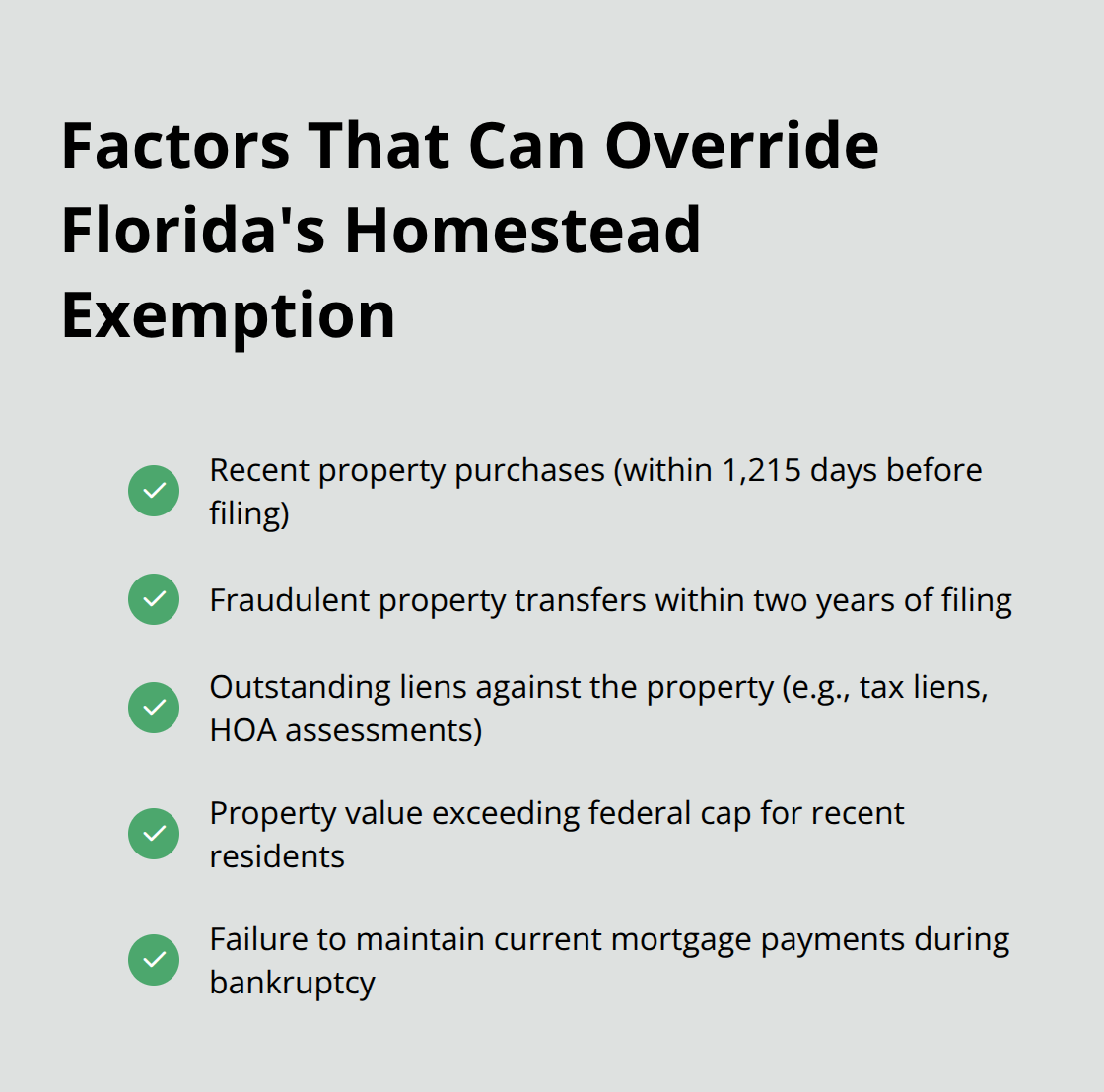
Several factors can override Florida’s generous homestead exemption and put your primary residence at risk during Chapter 7 proceedings. Recent property purchases create the most common vulnerability through the 1,215-day ownership requirement. When you purchased your home within 1,215 days before you file, federal bankruptcy law caps your homestead protection at $170,350 regardless of your actual equity. This restriction catches many Florida residents who relocated or upgraded homes recently, particularly those who moved from other states and sought better homestead protection.
Property Transfer Rules Create Federal Caps
The 1,215-day rule applies strictly from your deed record date, not your move-in date or mortgage start date. Florida courts reject attempts to count lease-to-own periods or contract-for-deed arrangements toward this timeframe. When you fall short of the 1,215-day requirement, trustees examine whether your home equity exceeds the federal cap of approximately $170,350. Properties worth more than this amount face potential liquidation, with proceeds above the cap distributed to creditors. This creates particular problems for homeowners in Miami-Dade, Broward, and other high-value markets where average home prices exceed $400,000.
Fraudulent Transfers Void Homestead Protection
Courts scrutinize property transfers made within two years before bankruptcy for fraudulent intent. When you add family members to your deed, transfer property to relatives, or restructure ownership to maximize exemptions, trustees launch detailed investigations. The Uniform Fraudulent Transfer Act allows trustees to reverse these transactions and recover property for creditor payment. Even legitimate transfers face challenges when the court views the time frame as suspicious, which requires expensive legal defense that often costs more than the protection you gain.
Liens Override Homestead Exemptions
Outstanding liens against your property survive Chapter 7 discharge and can force home sales regardless of homestead protection. Property tax liens, HOA assessments, construction liens, and IRS tax liens attach to real estate and remain enforceable after bankruptcy. Florida counties sold approximately 3,000 properties for unpaid taxes in 2023, with many homeowners who lost homes worth hundreds of thousands for tax debts under $10,000. Second mortgages and home equity lines of credit also survive discharge as secured debts, which creates payment obligations that can lead to foreclosure when you cannot maintain payments after bankruptcy.
Final Thoughts
Florida homeowners can protect their primary residence through Chapter 7 bankruptcy when they follow specific requirements and maintain current mortgage payments. Document your primary residence status through voter registration, driver’s license, and tax returns at your current address. Calculate your 1,215-day ownership period from your deed date to determine whether you qualify for unlimited homestead protection or face federal caps around $170,350.
Address outstanding liens before you file, as property taxes, HOA fees, and construction liens survive bankruptcy discharge. Pay current amounts and negotiate payment plans for delinquent balances to prevent forced sales. Avoid property transfers or ownership changes within two years of filing, as courts scrutinize these moves for fraudulent intent.
When you ask if you file for bankruptcy do you lose your house, the answer depends largely on following these protective steps and understanding Florida’s specific requirements. We at Harnage Law, PLLC guide Florida families through Chapter 7 proceedings while maximizing homestead protection. With proper legal guidance, most Florida homeowners retain their primary residence and achieve the fresh financial start they need to rebuild their future.