Filing for Chapter 7 bankruptcy without an attorney can save thousands in legal fees, but the process requires careful attention to Florida’s specific requirements and procedures.
We at Harnage Law, PLLC understand that many people wonder how to file Chapter 7 bankruptcy myself while avoiding costly mistakes that could derail their case.
The paperwork is complex, but with proper preparation and knowledge of Florida exemptions, self-filing becomes manageable for straightforward cases.
What Are Florida’s Chapter 7 Requirements
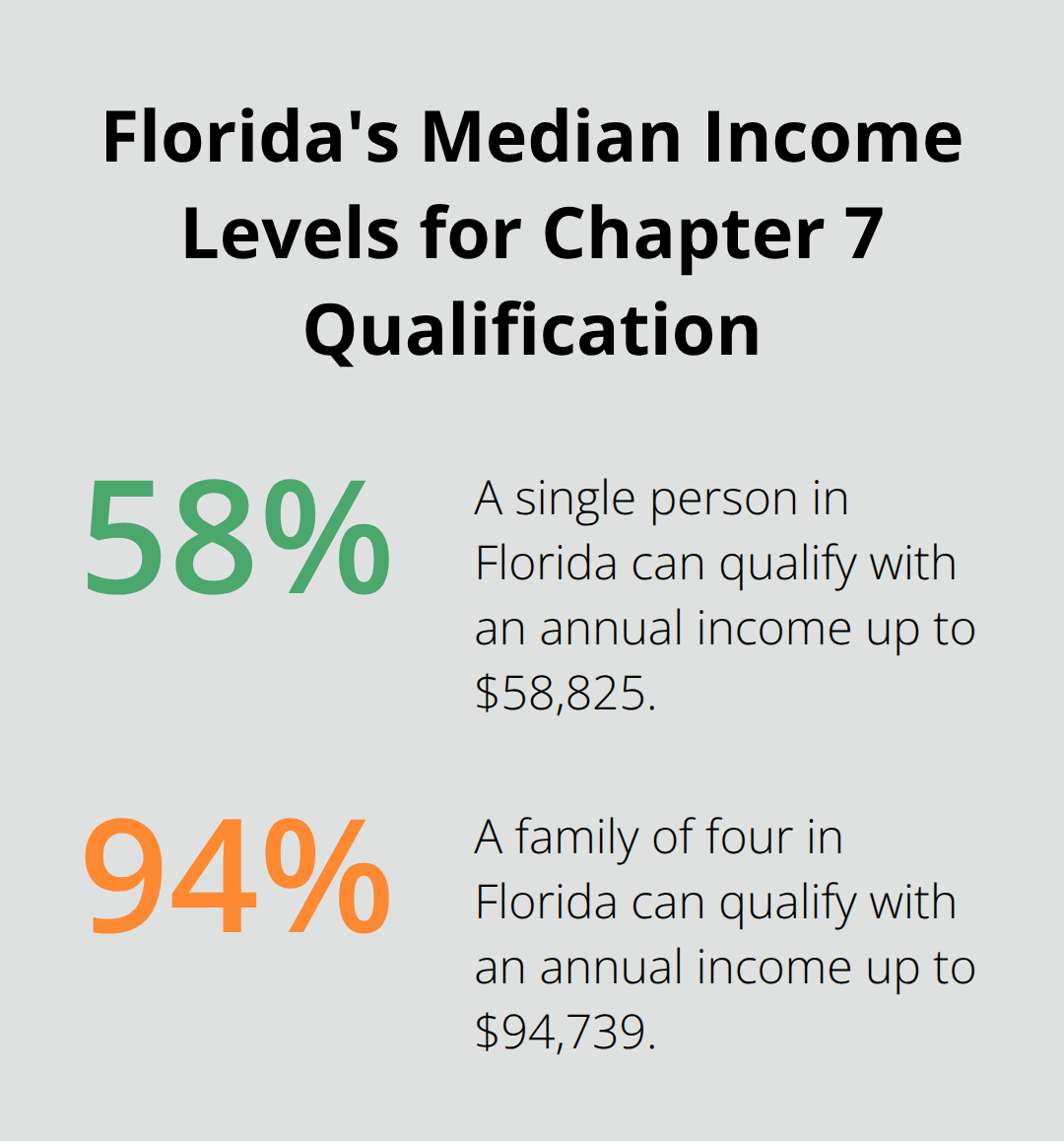
Your household income must fall below Florida’s median income levels to qualify for Chapter 7 bankruptcy. The current median income for a single person in Florida reaches $58,825, while a family of four cannot exceed $94,739 annually according to Census Bureau data. If your income surpasses these thresholds, you must pass Florida’s means test calculation with Form B122A-2, which deducts allowed expenses from your monthly income. The calculation considers your average monthly income over the six months before you file, not your current earnings.
Income Documentation and Financial Records
Florida bankruptcy courts require extensive financial documentation that spans the past six months to two years. You must provide tax returns, pay stubs, bank statements, and records of all income sources (including Social Security benefits, unemployment compensation, and rental income). The court also demands a complete list of monthly expenses, asset valuations, and debt statements. Property deeds, vehicle titles, and retirement account statements are mandatory. Courts dismiss cases when required documents are missing, which makes thorough preparation essential before you file your petition.
Florida Asset Protection Exemptions
Florida offers some of the most generous bankruptcy exemptions in the United States, but you must live in the state for at least 730 days before you file to claim them. The homestead exemption protects unlimited home equity if you owned the property for 1,215 days prior to filing (provided the home sits on less than half an acre in a municipality or 160 acres elsewhere). You can protect up to $5,000 in vehicle equity and claim a $4,000 wildcard exemption for personal property if you don’t use the homestead exemption. Individual retirement accounts receive protection up to $1,711,975 for cases filed between April 2025 and March 2028, while Social Security benefits and most pension plans remain completely exempt from creditor claims.
Pre-Filing Credit Counseling Requirements
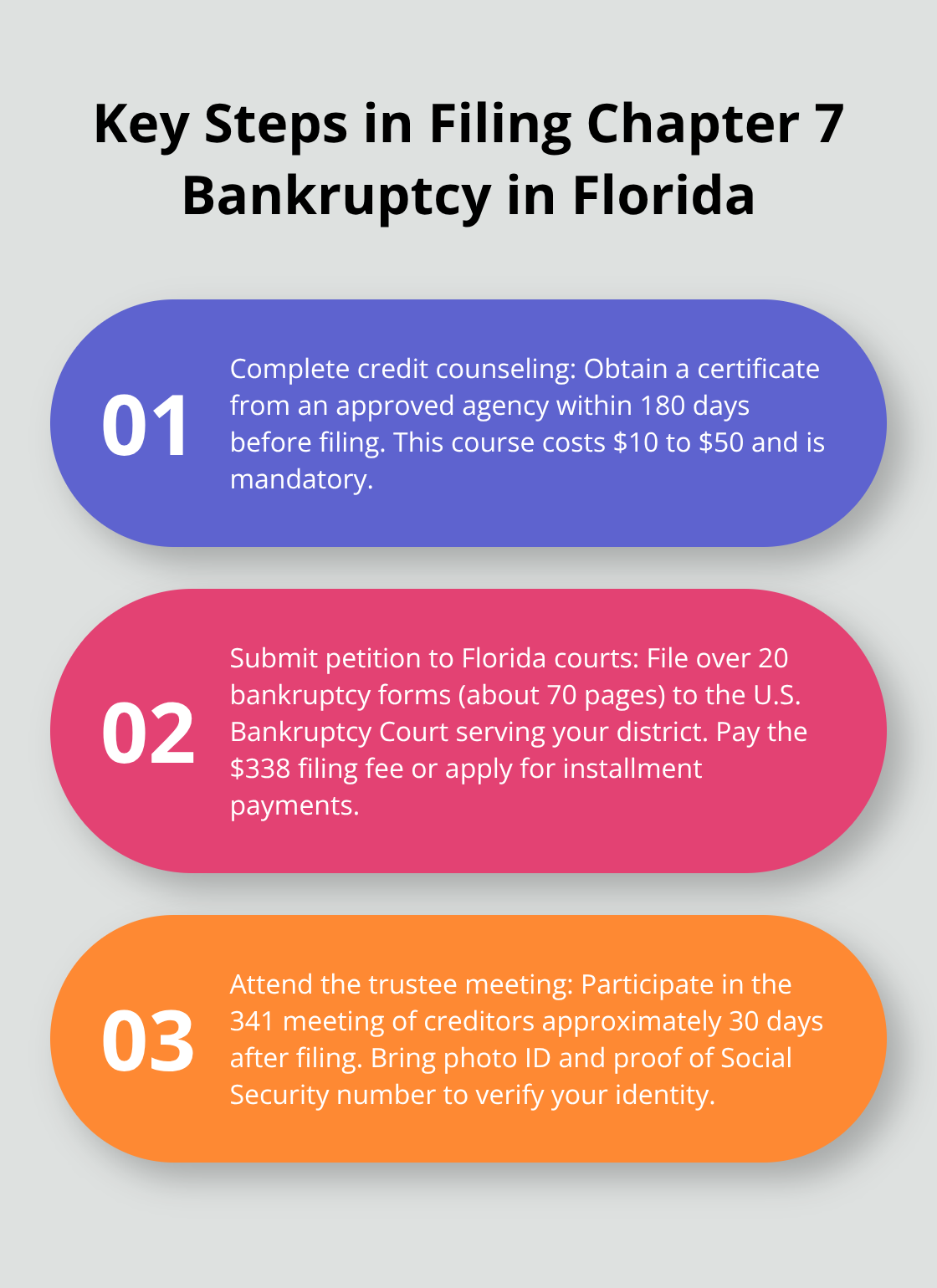
Federal law mandates that you complete a court-approved session from an approved agency before you file your Chapter 7 petition. This course costs between $10 and $50 unless you qualify for a fee waiver based on income. The U.S. Trustee’s website maintains a list of approved credit counseling agencies that offer the required certification. You must complete this counseling within 180 days before you file, and the certificate becomes part of your bankruptcy petition documents.
Once you understand these requirements and gather all necessary documentation, the actual filing process begins with completing over 20 different forms that detail every aspect of your financial situation.
How Do You Actually File Chapter 7 in Florida
The process starts when you obtain your credit counseling certificate from an approved agency within 180 days before you submit your petition. The U.S. Trustee maintains a current list of approved agencies, and costs range from $10 to $50 unless you qualify for a fee waiver. You must gather over 20 bankruptcy forms that total approximately 70 pages after you complete counseling. The most critical forms include the Voluntary Petition for Individuals Filing for Bankruptcy, Schedule A/B for property listings, Schedule D for secured creditors, Schedule E/F for unsecured creditors, and the Statement of Financial Affairs. Form B122A-1 calculates your current monthly income, while Form B122A-2 performs the means test calculation if required.
Submit Your Petition to Florida Courts
Florida bankruptcy cases must go to the U.S. Bankruptcy Court that serves your district, not local state courts. The court charges a $338 filing fee, payable by certified check or money order within 14 days of electronic submission. You can apply for installment payments with the Local Form Application for Individuals to Pay the Filing Fee in Installments (this requires at least half the fee upfront). Your petition package must include a creditor matrix that lists all creditors in the court’s specified mailing format, plus a legible photocopy of your government-issued photo identification. Courts reject filings with outdated forms or missing documents, which causes delays that can jeopardize your case timeline.
Attend the Trustee Meeting
The 341 meeting of creditors occurs approximately 30 days after you file, where the Chapter 7 trustee verifies your identity and asks standard questions about your financial affairs under oath. Trustees typically ask about asset valuations, recent financial transactions, and the accuracy of your petition documents. You must bring photo identification and proof of Social Security number to this meeting. The trustee may request additional financial documents or bank statements during your case administration.
Complete Post-Filing Education Requirements
You must complete a Financial Management Course within 60 days after the trustee meeting to receive your debt discharge. This course costs $10 to $50 and takes at least two hours to complete through an approved provider. The court will not grant your discharge without this certificate. Most cases conclude with a discharge order three to six months after you file your petition.
While these steps seem straightforward, many self-filers make critical errors that can result in case dismissal or loss of protected property.
What Mistakes Destroy Self-Filed Chapter 7 Cases in Florida
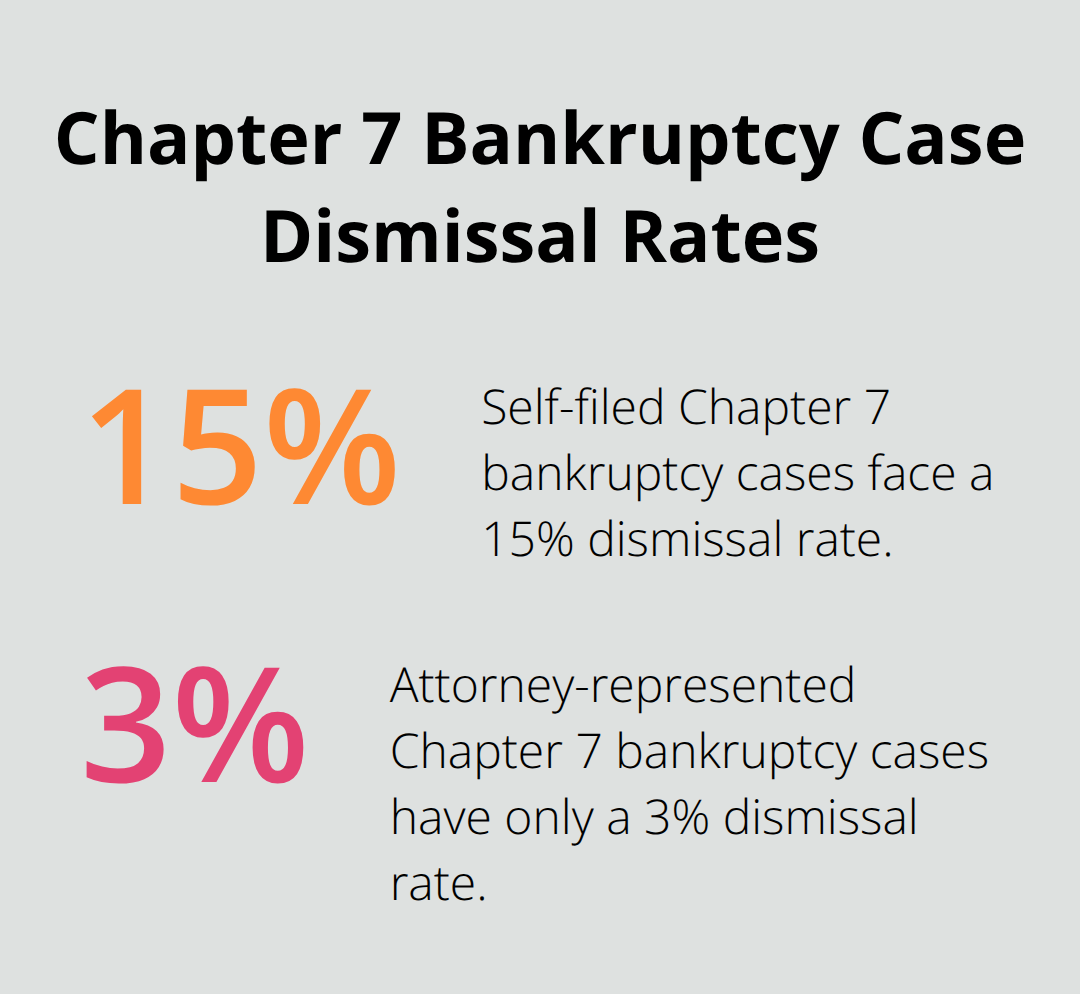
Self-filed bankruptcy cases face a 15% dismissal rate compared to just 3% for attorney-represented cases according to Federal Judicial Center data. The most devastating errors occur when filers submit outdated forms or calculate exemptions incorrectly. Florida courts dismissed 847 pro se Chapter 7 cases in 2023 for paperwork defects alone.
Form Errors Lead to Automatic Rejection
Form errors happen frequently because the bankruptcy code requires over 20 different documents that change annually. Filers who download forms from random websites often use obsolete versions that courts automatically reject. The means test calculation on Form B122A-2 trips up most self-filers because it requires precise income calculations over six months plus complex expense deductions that vary by county. Courts refuse to accept incomplete or incorrectly dated forms, which forces filers to restart the entire process.
Florida Exemption Mistakes Cost Property
Florida filers who fail to claim the homestead exemption lose their homes when trustees discover the oversight. The $5,000 motor vehicle exemption protects car equity, but many filers forget to list vehicles correctly on Schedule A/B or fail to claim the exemption on Schedule C. The $4,000 wildcard exemption gets overlooked when people assume they cannot protect personal items like jewelry or electronics. Retirement account protection requires specific language on exemption schedules (missing this protection exposes IRAs to creditor claims). Trustees sold $2.3 million worth of improperly exempted assets in Florida’s Middle District during 2023.
Incomplete Disclosures Trigger Fraud Investigations
The U.S. Trustee Program investigates approximately 200 Florida bankruptcy cases annually for suspected fraud, with 85% cases related to incomplete asset disclosures. Filers who forget to list bank accounts, recent financial transfers, or business interests face criminal referrals to federal prosecutors. The Statement of Financial Affairs requires disclosure of all financial transactions that exceed $600 within two years before you file. Courts consider omitted payments to relatives, recent property transfers, or closed bank accounts as bankruptcy fraud (punishable by up to five years in prison). Courts revoke discharges when trustees discover hidden assets through routine audits that cross-reference tax returns with petition schedules.
Final Thoughts
DIY Chapter 7 cases succeed when debtors have straightforward finances with minimal assets, stable income below Florida’s median levels, and no complex financial transactions. Simple cases that involve credit card debt, medical bills, and basic personal property typically proceed without legal representation. However, cases that involve business ownership, recent large financial transfers, or valuable non-exempt assets require professional guidance.
Mastering how to file Chapter 7 bankruptcy myself demands understanding Florida’s specific requirements: complete credit counseling, gather extensive financial documentation, calculate exemptions correctly, and submit over 20 forms to the proper bankruptcy court. The $338 filing fee and mandatory financial management course add complexity to the process. Courts dismiss cases when filers make critical errors in paperwork or exemption claims.
After you receive your discharge, focus on credit rebuilding through secured credit cards and credit report monitoring. Most people restore their credit scores to pre-bankruptcy levels within two years through responsible financial management. We at Harnage Law, PLLC help Florida residents navigate Chapter 7 bankruptcy while protecting their assets and stopping creditor harassment through personalized legal guidance.