A judgment lien can derail your path to debt discharge in Chapter 7 bankruptcy. Creditors use these liens to claim a stake in your property, and they don’t disappear just because you file for bankruptcy protection in Florida.
We at Harnage Law, PLLC help clients navigate these complications and protect their assets. Understanding how judgment liens work is the first step toward a successful fresh start.
How Judgment Liens Stay With Your Property After Chapter 7
A judgment lien attaches to your property the moment a creditor wins a lawsuit against you in court. In Florida, this happens when the creditor obtains a judgment and files it with the county clerk. The lien then claims a stake in your real estate, accounts receivable, and under Florida’s Judgment Lien Improvement Act effective July 1, 2023, even intangible property like payment intangibles and royalties.
Most debtors mistakenly believe that filing Chapter 7 bankruptcy automatically removes these liens. It does not. When you file Chapter 7, the automatic stay under 11 U.S.C. § 362 stops creditors from enforcing the lien while your case is pending, typically 60 to 90 days. However, once your debts are discharged, the lien remains attached to your property as an independent court record.
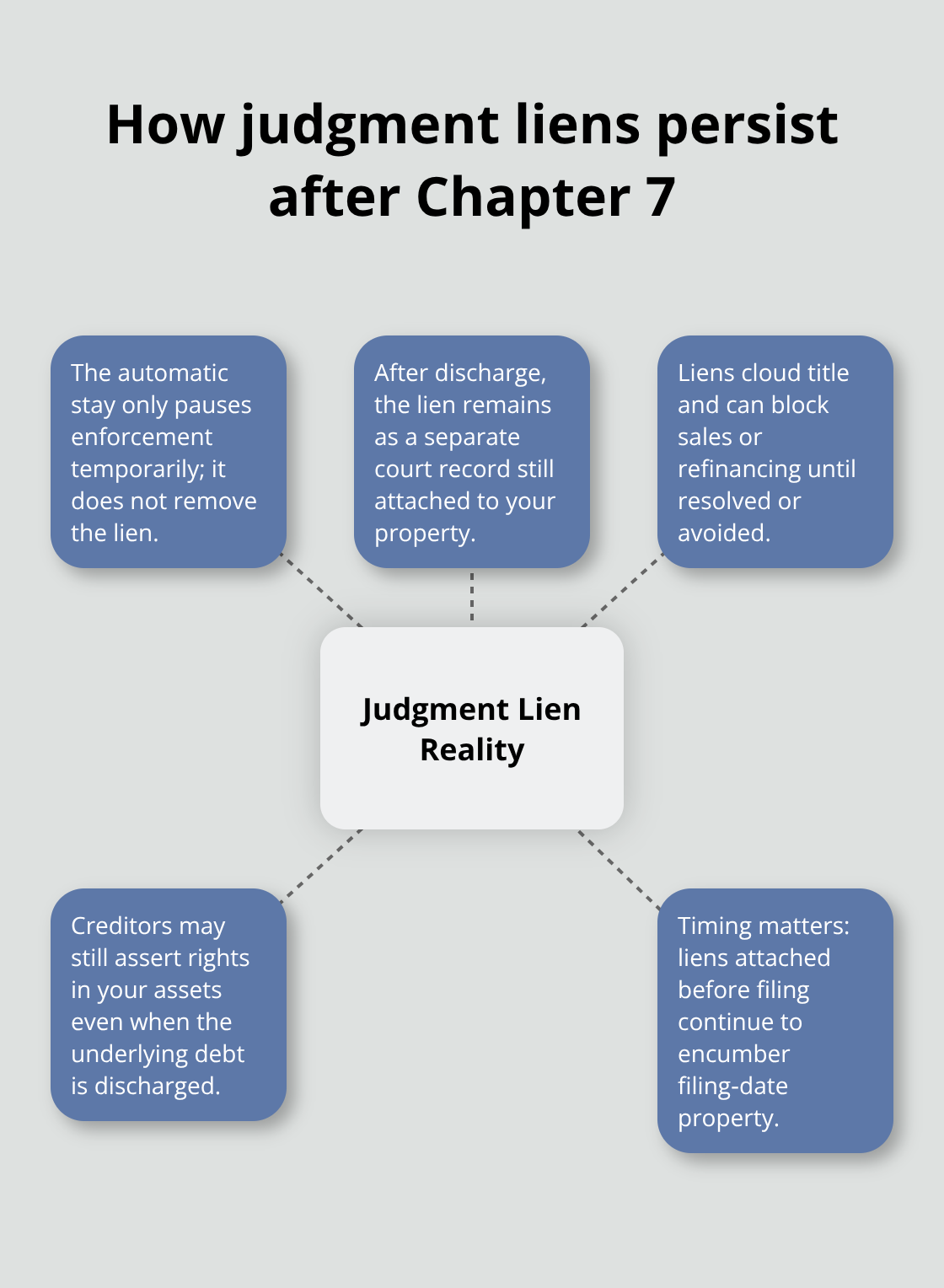
A creditor can still claim rights to your assets even though you no longer owe them the underlying debt. The lien becomes a cloud on your title, blocking your ability to sell or refinance without paying it off first.
How Timing Affects Your Judgment and Bankruptcy Filing
The timing of when a judgment was entered relative to your bankruptcy filing matters significantly. If a creditor obtained the judgment before you filed Chapter 7, that lien attaches to all property you owned at the filing date. If the judgment was entered after you file but before discharge, the automatic stay typically prevents the lien from being enforced, though the lien itself may still attach.
Florida law allows judgment liens to remain valid for five years and be renewed for another five years. This extended timeline creates real complications for asset recovery and property transfers long after your bankruptcy ends. A lien that persists for a decade can affect your ability to refinance or sell property years into your financial recovery.
What Conditions Must Exist for Lien Avoidance
Removing a judgment lien through Chapter 7 is possible but not automatic. You can file a motion to avoid the lien only if it impairs an exemption you’re entitled to claim under Florida law. This means the lien must reduce the equity you’re allowed to protect below zero or eliminate your exemption rights entirely.
You must gather property valuation documents, mortgage balances, and copies of the judgment to prepare this motion. Courts evaluate whether the lien, combined with other encumbrances, leaves you with no equity in the property. If you qualify, the trustee’s avoiding powers under 11 U.S.C. § 522(f) can eliminate or reduce the lien from your title. However, if your property has sufficient equity after accounting for mortgages and your homestead exemption, the lien avoidance motion may fail, leaving the lien intact even after discharge.
Understanding these conditions helps you assess whether lien avoidance is a realistic option in your case. The next section covers the specific strategies you can use to protect your exempt property from judgment liens and how to work with an attorney to address liens effectively.
How to Remove Judgment Liens From Your Property in Chapter 7
Understanding Lien Avoidance Under Federal Bankruptcy Law
Removing a judgment lien through Chapter 7 requires understanding the specific conditions under Florida law and filing the right motion at the right time. The most direct path is lien avoidance under 11 U.S.C. § 522(f), which allows you to eliminate or reduce a judgment lien if it impairs an exemption you qualify for in Florida. This means the lien must reduce your protected equity below zero or completely wipe out your exemption rights.
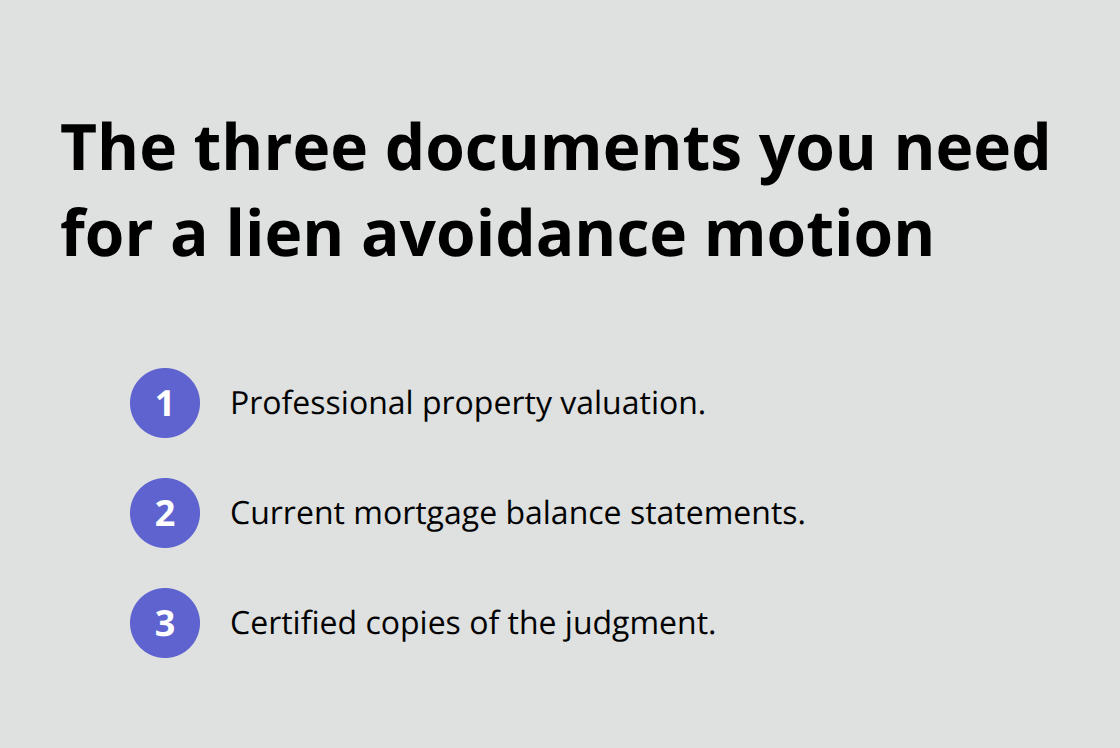
To succeed, you need three pieces of documentation: a professional property valuation, current mortgage balance statements, and certified copies of the judgment. Courts apply a straightforward calculation: they subtract the first mortgage balance, any other superior liens, and your homestead exemption amount from the property’s fair market value. If that calculation shows the judgment lien consumes all or part of your exempt equity, you can avoid it.
How the Math Works in Practice
Consider a concrete example. Your Florida home is worth $250,000, you owe $200,000 on the first mortgage, and your homestead exemption is $50,000. You have no exempt equity remaining. A judgment lien in this scenario can be avoided entirely because it impairs your exemption. However, if your home has $75,000 in equity after the mortgage, the judgment lien cannot be avoided since it does not impair your protected amount.
The timing of your filing matters significantly. A judgment lien attaches to all property you owned on your Chapter 7 filing date, so creditors cannot add liens to your property after you file. The automatic stay immediately stops lien enforcement, giving you breathing room to plan your strategy with an attorney.
Protecting Your Exempt Property Through Complete Disclosure
Protecting your exempt property requires proactive disclosure and strategic planning before filing. You must list every judgment and every lien on your bankruptcy schedules with complete accuracy, including the creditor’s name, judgment date, and amount. Courts take omissions seriously, and failing to disclose a lien can result in dismissal or complications later.
Many debtors incorrectly assume that if they do not mention a lien, it will disappear, but this creates legal problems rather than solving them. Gather all court documents, judgment abstracts, and lien notices at least 30 days before filing so your attorney can evaluate each one thoroughly.
Screening for Liens on Intangible Property
Florida’s Judgment Lien Improvement Act, effective July 1, 2023, expanded judgment liens to attach to intangible property like accounts receivable and payment intangibles, making comprehensive screening even more important. If you own a business with receivables or rental properties generating income, check the Florida Secretary of State’s judgment lien registry to identify any existing liens before filing. This step takes 15 minutes and can reveal liens you were unaware of.
Your attorney can then determine whether lien avoidance is viable or whether other strategies like converting to Chapter 13 might better protect your assets. Chapter 13 treats avoided lien amounts as unsecured debt in a three- to five-year repayment plan, which sometimes offers better protection than Chapter 7 liquidation depending on your income and property value. The choice between these approaches depends on your specific financial situation and the equity you hold in your assets, which your attorney will evaluate during the initial consultation.
Critical Mistakes That Destroy Your Lien Avoidance Strategy
Acting Too Late on Judgment Liens
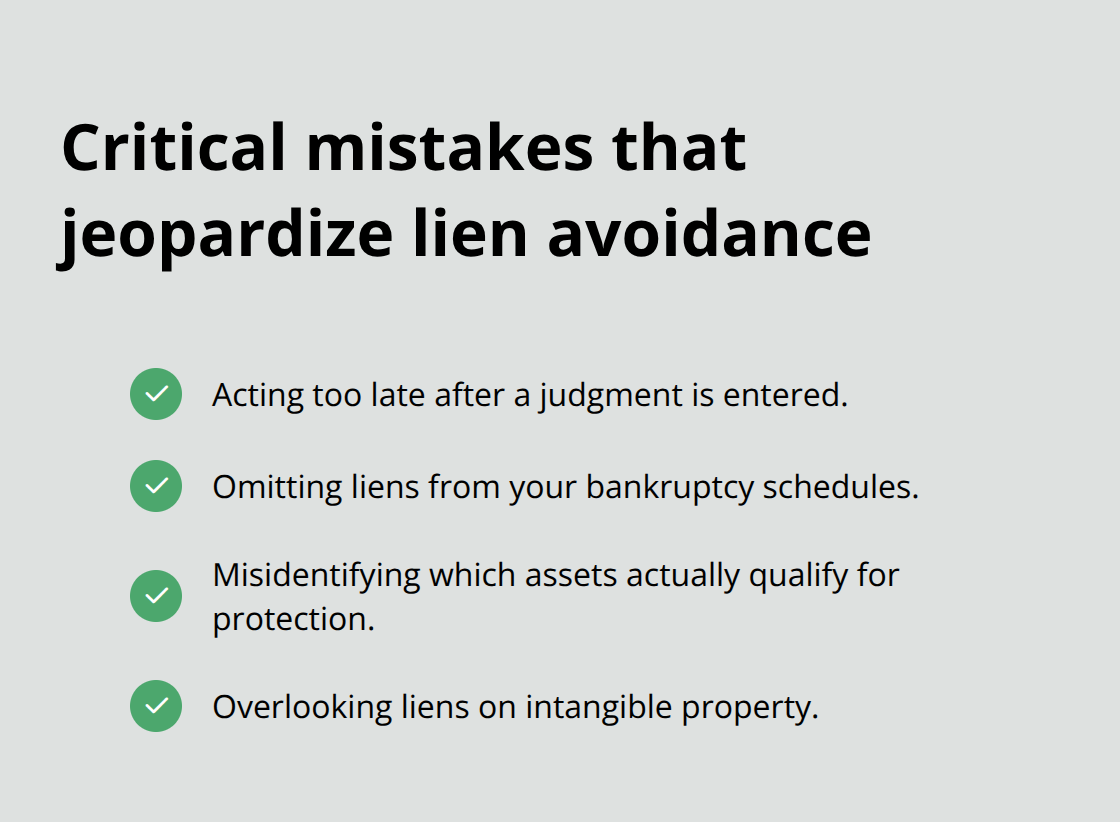
Most debtors address judgment liens only when they sit down with a bankruptcy attorney, and by then valuable opportunities have closed. The moment a creditor wins a lawsuit and files a judgment in Florida, you enter a narrow window for strategic action. Waiting until your Chapter 7 filing date means you lose the chance to negotiate a settlement, dispute the judgment in state court, or plan your bankruptcy timing around lien attachment dates. Many people discover liens they did not know existed only after reviewing their credit report during the bankruptcy process, which is dangerously late. A judgment lien filed six months before your Chapter 7 filing already attaches to your property and will require a motion to avoid it in bankruptcy court. Had you known about the lien earlier, you might have converted it into a settlement agreement or challenged its validity before the judgment became final. Courts in Florida require that you file an avoidance motion within the statute of limitations, and missing this deadline means the lien survives your discharge permanently.
Proactive screening through the Florida Secretary of State’s judgment lien registry takes 15 minutes and costs nothing, yet fewer than one in ten debtors complete this step before filing. Run this search at least three months before you plan to file, giving yourself time to evaluate your options and work with an attorney on a strategy.
Omitting Liens From Your Bankruptcy Schedules
Incomplete disclosure of liens on your bankruptcy schedules creates far worse problems than the liens themselves. Courts view omitted liens as fraud or carelessness, and either way, judges respond by dismissing your case or requiring amendments that delay your discharge. A creditor can challenge your discharge if you failed to list their judgment, which means you could lose your debt relief entirely and face the underlying obligation again. List every judgment and every lien on your schedules with complete accuracy, including the creditor’s name, judgment date, and amount. Gather all court documents, judgment abstracts, and lien notices at least 30 days before filing so your attorney can evaluate each one thoroughly.
Misidentifying Which Assets Qualify for Protection
The second critical mistake is misunderstanding which assets are actually protected under Florida law. Your homestead exemption covers up to $50,000 in equity on your primary residence, but this protection only applies to liens that impair that exemption. A judgment lien on a rental property or business asset receives no exemption protection at all, meaning lien avoidance is impossible on those assets regardless of the amount owed. Many debtors incorrectly assume that all property is shielded equally, then discover too late that their income-producing assets remain encumbered after discharge.
Overlooking Intangible Property Liens
Intangible assets like accounts receivable and payment intangibles became attachable under the Judgment Lien Improvement Act effective July 1, 2023, expanding the types of liens creditors can file against Florida property owners. If you own a business or hold rental agreements with payment streams, you face liens on these intangibles that require specialized avoidance strategies. Failing to identify and address these liens before filing means creditors can pursue collection against your income sources even after your debts are discharged. Check whether you hold any intangible property that could attract judgment liens, and disclose these assets to your attorney during your initial consultation.
Final Thoughts
Judgment liens create real obstacles to your financial recovery in Chapter 7 bankruptcy, but they are not insurmountable. A lien that survives your debt discharge can block your ability to sell or refinance property for years, turning what should be a fresh start into an ongoing entanglement with your past creditors. Understanding how liens attach to your property and knowing which ones you can avoid through bankruptcy gives you concrete tools to protect your financial future.
Florida’s judgment lien laws are complex, especially after the Judgment Lien Improvement Act expanded liens to cover intangible property like accounts receivable and payment intangibles. Your homestead exemption provides some protection, but only if you file the right motion at the right time with proper documentation. An attorney who understands both federal bankruptcy law and Florida state law can evaluate your property, calculate your exempt equity, and determine whether lien avoidance is realistic in your case.
If you have judgment liens or suspect creditors may have filed liens against your property, contact Harnage Law, PLLC to discuss your options and develop a strategy that protects your fresh start. Our team guides you through every step of the process, from identifying judgment liens to filing avoidance motions and securing your debt discharge. Take control of your financial recovery today.