Chapter 7 bankruptcy offers a legal path to eliminate overwhelming debt and start fresh financially. This process allows qualifying individuals to discharge most unsecured debts within months.
We at Harnage Law, PLLC see many Florida residents asking what is Chapter 7 bankruptcy in simple terms. The answer involves understanding eligibility requirements, the filing process, and potential consequences for your financial future.
What Exactly Is Chapter 7 Bankruptcy
Chapter 7 bankruptcy stands as the most straightforward debt elimination tool available to Americans who face financial hardship. Known as liquidation bankruptcy, this legal process allows qualified individuals to wipe out most unsecured debts within four to six months. The U.S. Courts reported nearly 400,000 bankruptcy filings in 2022, with Chapter 7 cases representing the majority of consumer filings. Unlike payment plans or debt consolidation, Chapter 7 provides immediate relief through an automatic stay that halts all collection activities, wage garnishments, and foreclosure proceedings the moment you file.
Chapter 7 vs Other Bankruptcy Options
Chapter 7 operates differently from Chapter 13 bankruptcy in three key ways. First, Chapter 7 eliminates debts rather than reorganizes them into payment plans. Second, the process completes in months rather than years (Chapter 13 requires three to five years of monthly payments).
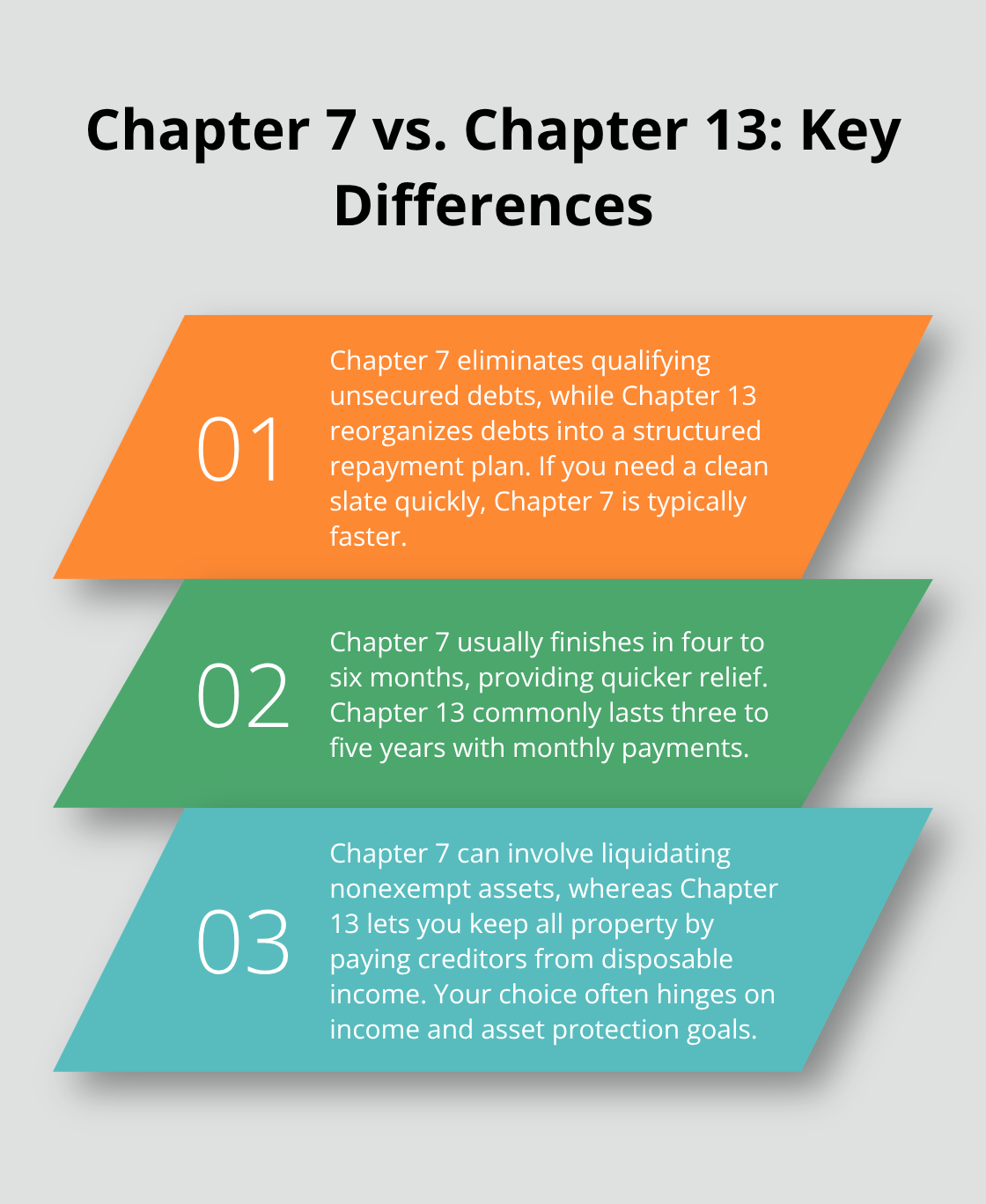
Third, Chapter 7 focuses on asset liquidation while Chapter 13 allows debtors to keep all property by paying creditors through disposable income. The choice between these options depends on your income level and asset protection needs.
Income Requirements and Eligibility Rules
Florida residents must pass the means test to qualify for Chapter 7 bankruptcy. This test compares your average monthly income over the past six months to the median household income for your family size in Florida. If your income falls below the state median, you automatically qualify. Higher earners face additional scrutiny through a disposable income calculation. The current median income limits change annually, which makes timing important for borderline cases. Additionally, you cannot file Chapter 7 if you received a discharge in a previous Chapter 7 case within eight years or completed a Chapter 13 case within six years.
Pre-Filing Requirements
All Chapter 7 filers must complete credit counseling from an approved agency within 180 days before filing. This mandatory session costs approximately $50 and takes one to two hours to complete. The counseling agency will review your financial situation and may suggest alternatives to bankruptcy. You must also gather extensive financial documentation, including tax returns, pay stubs, bank statements, and a complete list of assets and debts. These requirements help the court assess your financial situation and determine the best path forward for your specific circumstances.
How Does Filing Chapter 7 Work in Florida
Required Documents and Court Filings
Chapter 7 bankruptcy in Florida demands precise documentation and strict adherence to federal requirements. You must submit the Voluntary Petition, complete schedules that detail all assets and liabilities, income statements that cover the past six months, and your credit counseling certificate.
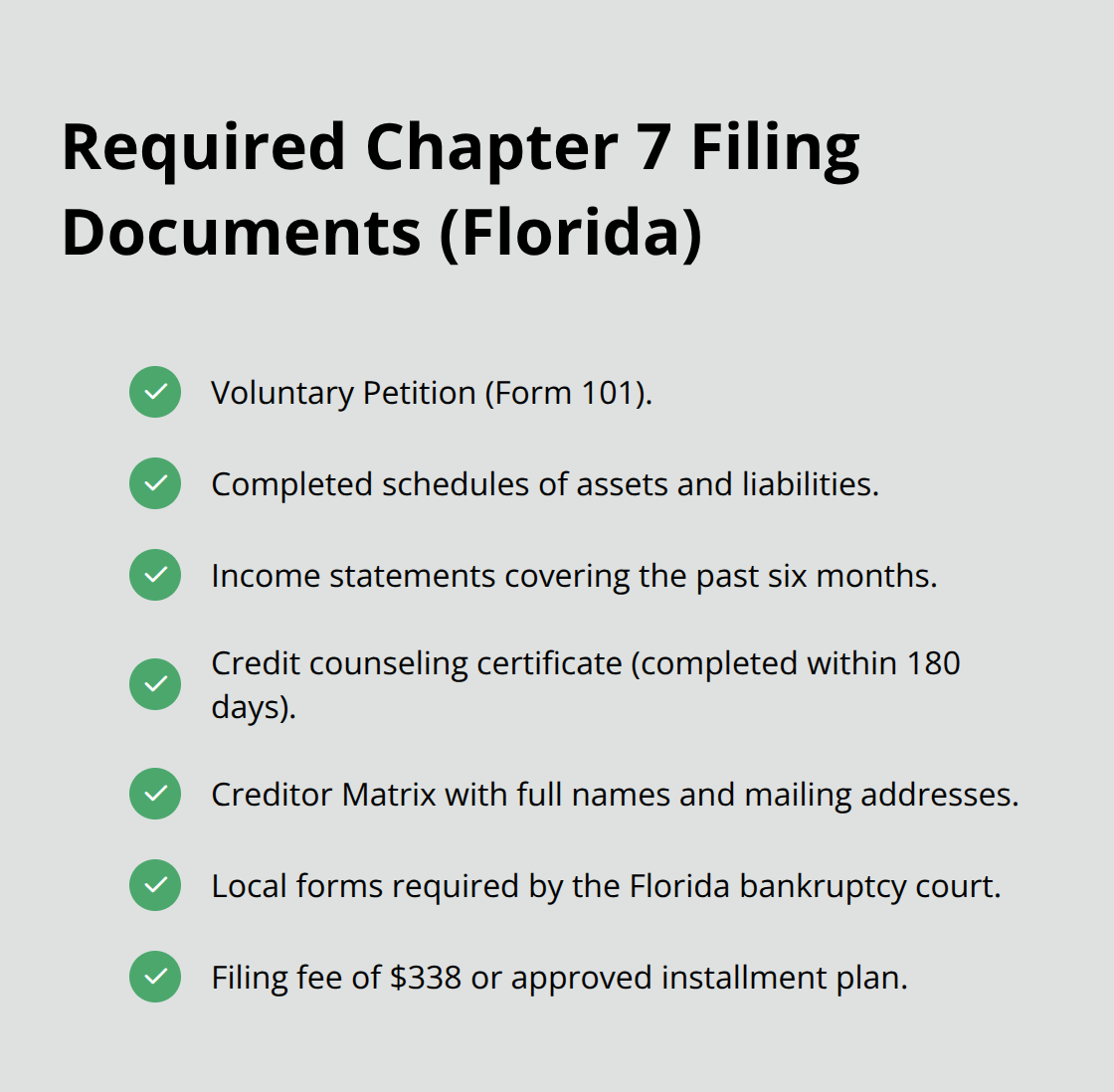
The filing fee totals $338, which you can pay in installments if your income falls below 150% of the poverty guidelines. Florida courts require additional local forms, including a Creditor Matrix that lists all creditors with complete addresses.
Missing documents or incomplete information will delay your case or result in dismissal. The Southern District of Florida bankruptcy court processes most filings within 24 hours, but errors in paperwork can extend this timeline significantly. Courts reject incomplete petitions immediately, which forces debtors to refile and pay additional fees.
The 341 Meeting Process
The Meeting of Creditors (known as the 341 meeting) occurs 20 to 40 days after you file and represents the most important event in your Chapter 7 case. The court-appointed trustee will question you under oath about your financial affairs, asset valuations, and recent financial transactions. This meeting typically lasts 10 to 15 minutes for straightforward cases, but complex situations that involve business ownership or significant assets require longer sessions.
Creditors rarely attend these meetings, despite having the right to question debtors. You must bring photo identification and proof of your Social Security number to this meeting. The trustee reviews your petition and schedules before the meeting begins.
Trustee Responsibilities and Asset Review
The trustee’s primary role involves identification of nonexempt assets for liquidation and investigation of potential fraud or preferential payments made within 90 days before filing. Trustees examine bank statements, property deeds, and vehicle titles to determine which assets they can sell for creditor benefit. They also review large financial transactions that occurred before your filing date.
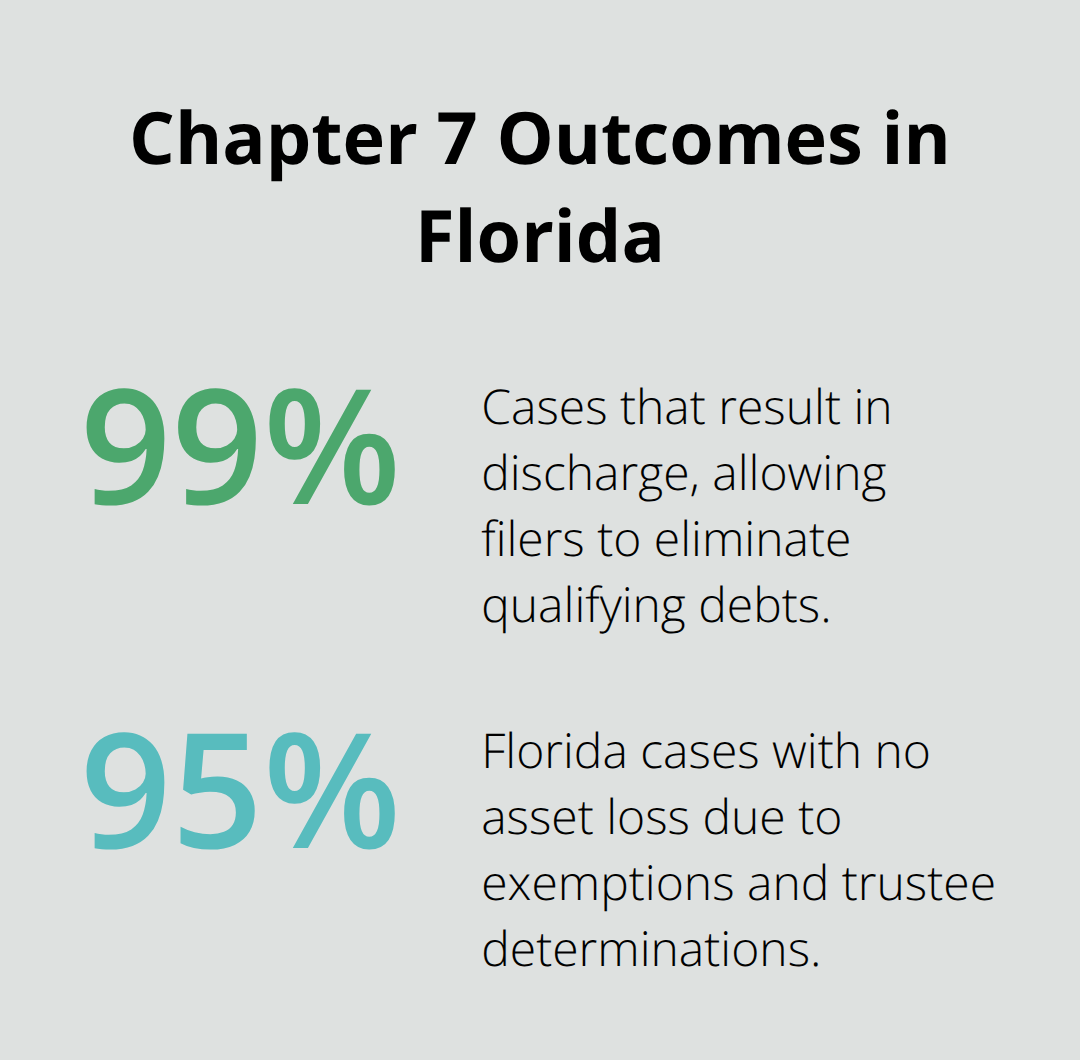
Over 99% of Chapter 7 cases result in discharge, but trustee objections or creditor challenges can complicate the process. Most cases proceed as “no-asset” cases, which means the trustee finds no property worth liquidation. Your case will close within 60 to 90 days after the 341 meeting if no issues arise, which sets the stage for the final discharge that eliminates your qualifying debts and provides the fresh start you need.
What Are the Real Benefits and Costs
Chapter 7 bankruptcy delivers immediate debt elimination for most unsecured obligations, including credit cards, medical bills, personal loans, and old utility bills. The discharge typically occurs within 60 to 90 days after your 341 meeting, which means you could be debt-free in four to six months from filing. This process stops all collection calls, wage garnishments, and lawsuits immediately through the automatic stay. The American Bankruptcy Institute reports that Chapter 7 filers eliminate an average of $50,000 in unsecured debt, which provides substantial monthly cash flow relief for families who struggle with overwhelming payments.
Credit Impact and Recovery Timeline
Chapter 7 bankruptcy remains on your credit report for 10 years, but the practical impact diminishes much faster than most people expect. Your credit score will drop initially by 130 to 200 points, but many filers see scores rebound to 650 or higher within two years. Secured credit cards and credit-builder loans become available immediately after discharge, which allows active credit rebuilding. The Federal Trade Commission notes that many Chapter 7 filers qualify for conventional mortgages within two to four years post-discharge if they maintain steady income and rebuild credit responsibly. This timeline beats attempts to pay off overwhelming debt for decades while your credit suffers from missed payments and high utilization ratios.
Florida Asset Protection Advantages
Florida offers some of the most generous bankruptcy exemptions in the United States, which allows most Chapter 7 filers to keep all their property. The unlimited homestead exemption protects your primary residence regardless of equity value (provided the property does not exceed half an acre in municipalities or 160 acres elsewhere). You can exempt up to $5,000 in vehicle equity, $1,000 in personal property through the wildcard exemption, and all retirement accounts including 401(k)s and IRAs. Married couples who file jointly can double these exemptions if they jointly own the protected property.
Property Loss Risks and Realities
Over 95% of Chapter 7 cases in Florida result in no asset loss, which makes the process far less intimidating than most people anticipate. The trustee only liquidates nonexempt property that exceeds the allowable exemption amounts. Most debtors own property that falls within Florida’s generous exemption limits or have minimal equity in assets after accounting for loans and liens. The trustee abandons property that costs more to sell than it would generate for creditors (such as older vehicles with mechanical problems or household goods with little resale value).
Final Thoughts
Chapter 7 bankruptcy provides a straightforward solution for Florida residents who face overwhelming debt. This process eliminates most unsecured debts within four to six months while it protects your home, vehicle, and retirement accounts through Florida’s generous exemptions. The automatic stay stops collection calls and wage garnishments immediately, which gives you breathing room to rebuild.
What is Chapter 7 bankruptcy in simple terms comes down to three key points: income qualification through the means test, completion of required credit counseling, and cooperation with the court-appointed trustee. Most cases result in complete debt discharge without asset loss. This makes Chapter 7 an effective fresh start tool for families who struggle with unmanageable debt loads.
Professional legal guidance becomes valuable when you own significant assets, operate a business, or face complex financial situations (such as multiple income sources or recent large financial transactions). We at Harnage Law, PLLC help Florida families navigate the Chapter 7 process while we protect their assets and stop creditor harassment. Our experienced bankruptcy attorneys guide clients through every step from initial consultation to final discharge. Your financial recovery begins when you take action and address overwhelming debt head-on.