
Wage garnishment can take a significant portion of your paycheck before it even reaches your bank account. At Harnage Law, PLLC, we see how quickly this financial pressure builds for Florida residents facing creditor collection efforts.
Chapter 7 bankruptcy offers a direct path to wage garnishment relief in Florida by stopping creditors in their tracks. This guide walks you through how garnishment works, why bankruptcy halts it, and what comes next for your finances.
How Wage Garnishment Works in Florida
Maximum Garnishment Amounts Under Florida Law
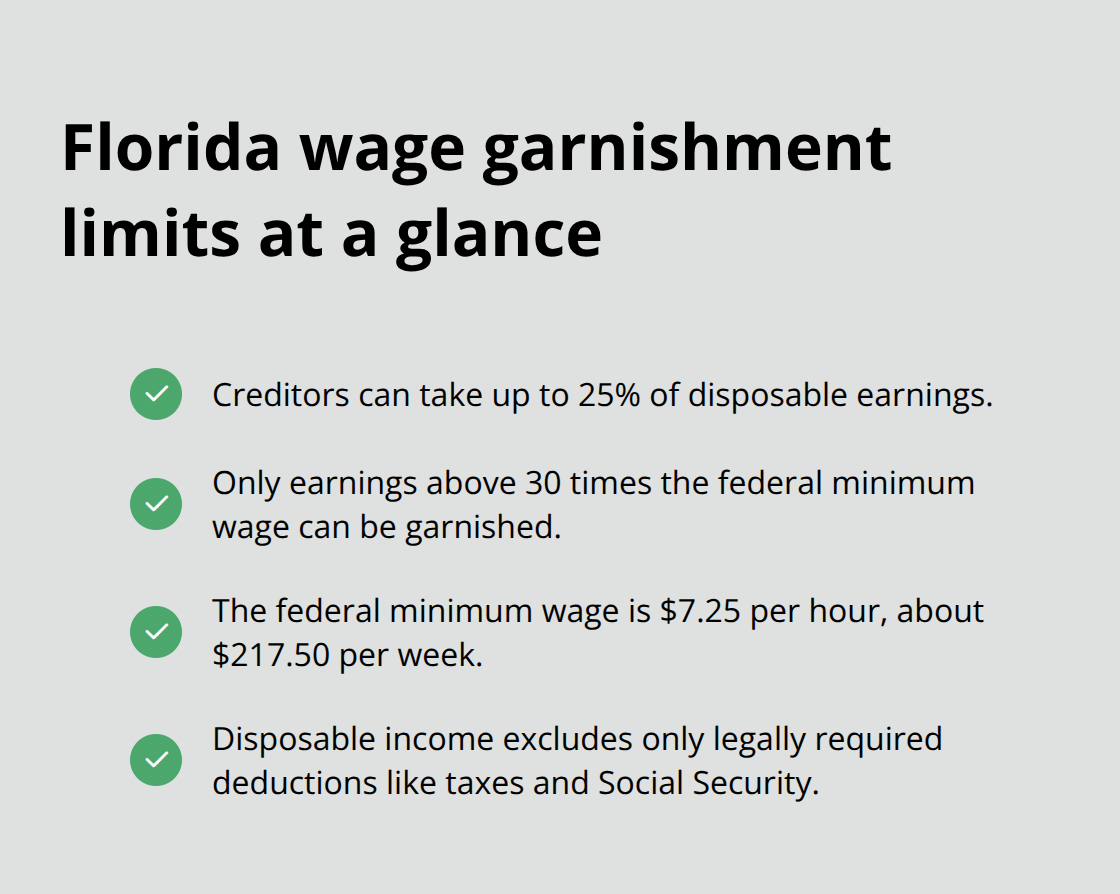
Florida creditors can take up to 25% of your disposable earnings through wage garnishment, or the amount by which your weekly income exceeds 30 times the federal minimum wage, whichever is lower. The federal minimum wage sits at $7.25 per hour, meaning creditors cannot touch wages below roughly $217.50 per week. This calculation sounds straightforward until you realize disposable income excludes only legally required deductions like taxes and Social Security, not health insurance or childcare costs.
The Court Judgment Requirement
A creditor must first win a court judgment against you before they can garnish wages. Once they obtain that judgment, they file a Motion for a Continuing Wage Garnishment with the court. This is an ex parte motion, which means you may never receive notice before the garnishment starts. Your employer receives a Continuing Writ of Wage Garnishment and has 20 days to respond and begin withholding. Many Florida residents only discover they are being garnished when they notice their paycheck is smaller than expected.
Debts That Trigger Garnishment
Not all debts trigger the same garnishment rules. Credit card companies, medical providers, and personal loan creditors must obtain a judgment first. The IRS and Florida Department of Revenue operate differently-they can garnish wages without any court order. In 2024, the IRS reported over 314,000 levy requests nationwide, demonstrating how aggressively federal tax debt is pursued. Child support enforcement and federal student loan servicers also bypass the court judgment requirement.
Claiming Exemptions Before It’s Too Late
You have exactly 20 days from receiving a wage garnishment notice to file a Claim of Exemption and Request for Hearing if you qualify for protection under the Head of Household exemption or other statutory exemptions. This deadline is strict and non-negotiable. If you provide more than 50% of support for a dependent and earn $750 or less per week in net wages, you may qualify for full exemption. Even if your earnings exceed $750 weekly, you still qualify if you never signed a written waiver agreeing to garnishment. Missing the 20-day deadline forfeits your exemption rights for that specific garnishment, though other collection remedies remain available.
Understanding how garnishment operates in Florida reveals why many residents turn to Chapter 7 bankruptcy as their solution. The automatic stay that bankruptcy triggers stops wage garnishment immediately, regardless of whether you missed the exemption deadline or whether your debt comes from a source that bypasses court judgments altogether.
How Chapter 7 Bankruptcy Stops Wage Garnishment Immediately
The Automatic Stay Halts Garnishment on Day One
Filing Chapter 7 bankruptcy triggers an automatic stay, a federal court order that halts nearly all collection activity the moment your case is filed. The bankruptcy court sends notice to your creditors and employer within days of receiving your petition. Your employer must stop withholding wages from garnishment immediately upon receiving that notice, even if they have been deducting money for weeks.
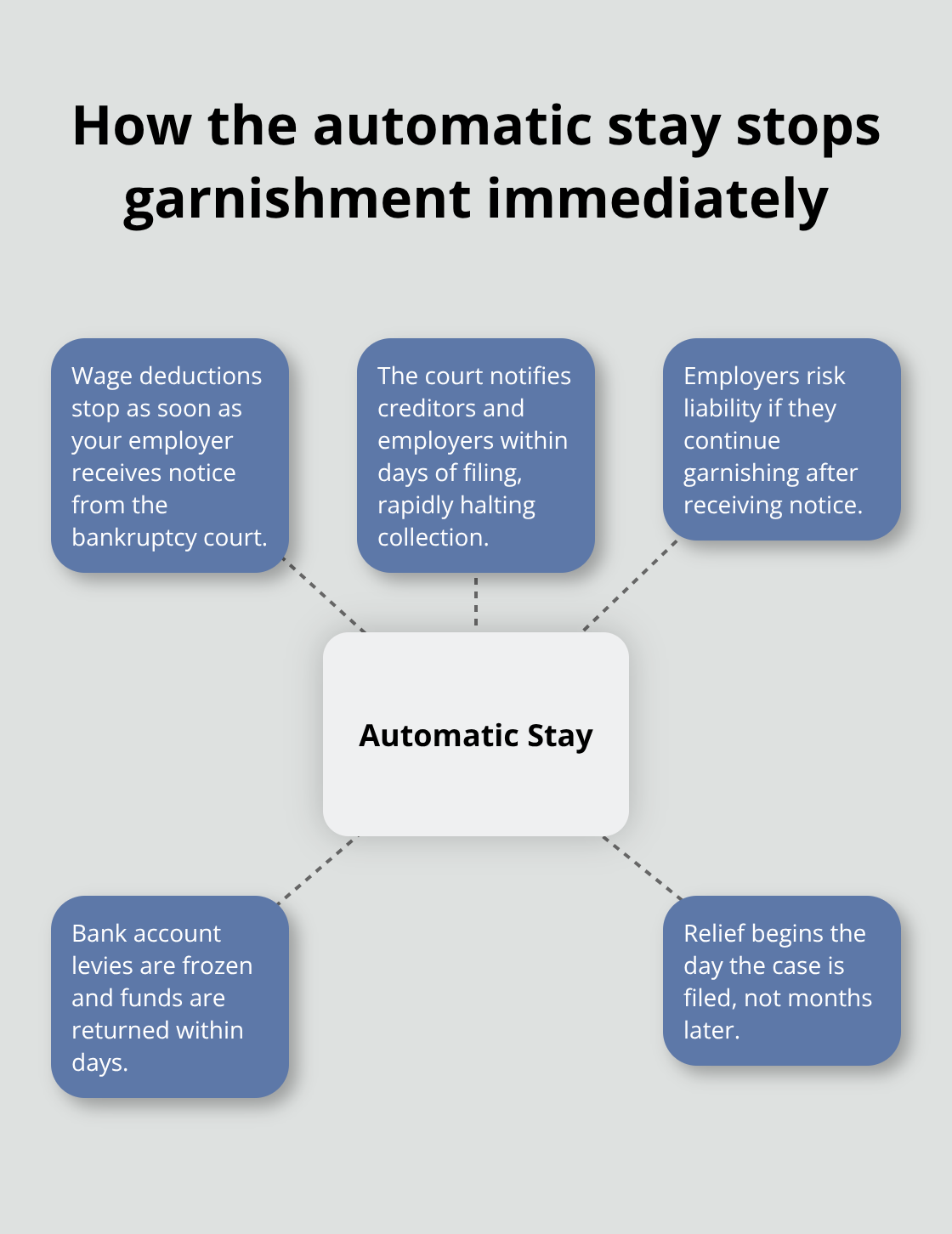
This is not a request or a suggestion-it is a federal mandate under the U.S. Bankruptcy Code. If your employer continues garnishing after receiving notice of your bankruptcy filing, they violate federal law and expose themselves to liability. Wage garnishment stops on the same day your case is filed, not months later. This matters enormously because even a two-week delay costs you hundreds of dollars in lost wages.
Bank Account Levies and Frozen Funds
The automatic stay also freezes bank account levies, which creditors sometimes use alongside wage garnishment. If a creditor has frozen your bank account, that freeze lifts once the bankruptcy trustee receives notice of your filing. The funds held in your account return to you within days, restoring access to money you need for rent, food, and utilities. This dual relief-stopping both wage garnishment and bank freezes simultaneously-provides immediate financial breathing room that exemption claims cannot match.
Chapter 7 Discharge Ends Garnishment Permanently
Chapter 7 cases in Florida typically conclude within 90 to 120 days from filing to discharge. Once your case closes and debts are discharged, the garnishment cannot resume for those debts because they no longer legally exist. This permanent resolution separates Chapter 7 from temporary fixes like claiming exemptions, which only protects wages in that specific case and leaves the underlying debt intact. The discharged debts cannot be collected through any method-no garnishment, no bank levies, no future collection calls.
Dischargeable Versus Non-Dischargeable Debts
For credit card debt, medical bills, and personal loans, discharge means the creditor’s right to collect vanishes entirely. Tax debts operate differently; most tax obligations cannot be discharged, but Chapter 7 still stops IRS garnishment temporarily through the automatic stay, giving you breathing room to explore whether older tax debts qualify for discharge under the three-year rule if your return was filed timely. Child support and recent tax debts remain non-dischargeable, so garnishment for those obligations may resume after your case closes, but Chapter 7 still provides months of relief while the case is active.
The distinction between what Chapter 7 discharges and what it does not shapes your financial recovery strategy. Understanding which debts disappear and which ones continue helps you prepare for life after bankruptcy and identify which garnishments will stop permanently versus temporarily.
Common Misconceptions About Wage Garnishment and Bankruptcy
Not All Debts Follow the Same Collection Rules
Many Florida residents avoid Chapter 7 because they believe myths about bankruptcy rather than facts. The first misconception is that all debts can be garnished, leaving you defenseless if you cannot claim an exemption. This is false. Credit card companies, medical providers, and personal loan creditors cannot garnish your wages without first obtaining a court judgment, filing a Motion for Continuing Wage Garnishment, and waiting for the court to approve it. The IRS and Florida Department of Revenue operate under different rules and can levy without a judgment, but even tax garnishment stops immediately when you file Chapter 7. Child support enforcement can garnish without a judgment, yet Chapter 7 still halts the garnishment through the automatic stay while your case is active. Not all debts follow the same collection path, and Chapter 7 stops nearly all of them regardless of which collection method creditors attempted.
Your Credit Recovers Faster Than You Think
The second misconception holds that bankruptcy permanently ruins your financial future and credit. This belief traps people in wage garnishment for years when relief exists. The truth is measurable and practical. Chapter 7 cases in Florida close within 90 to 120 days, and once discharged, your debts vanish. Your credit score does take an immediate hit, typically dropping 130 to 200 points, but recovery begins immediately. Borrowers who file Chapter 7 and rebuild responsibly can reach a credit score of 650 or higher within two years and 700 or higher within four years, according to research on post-bankruptcy credit recovery.
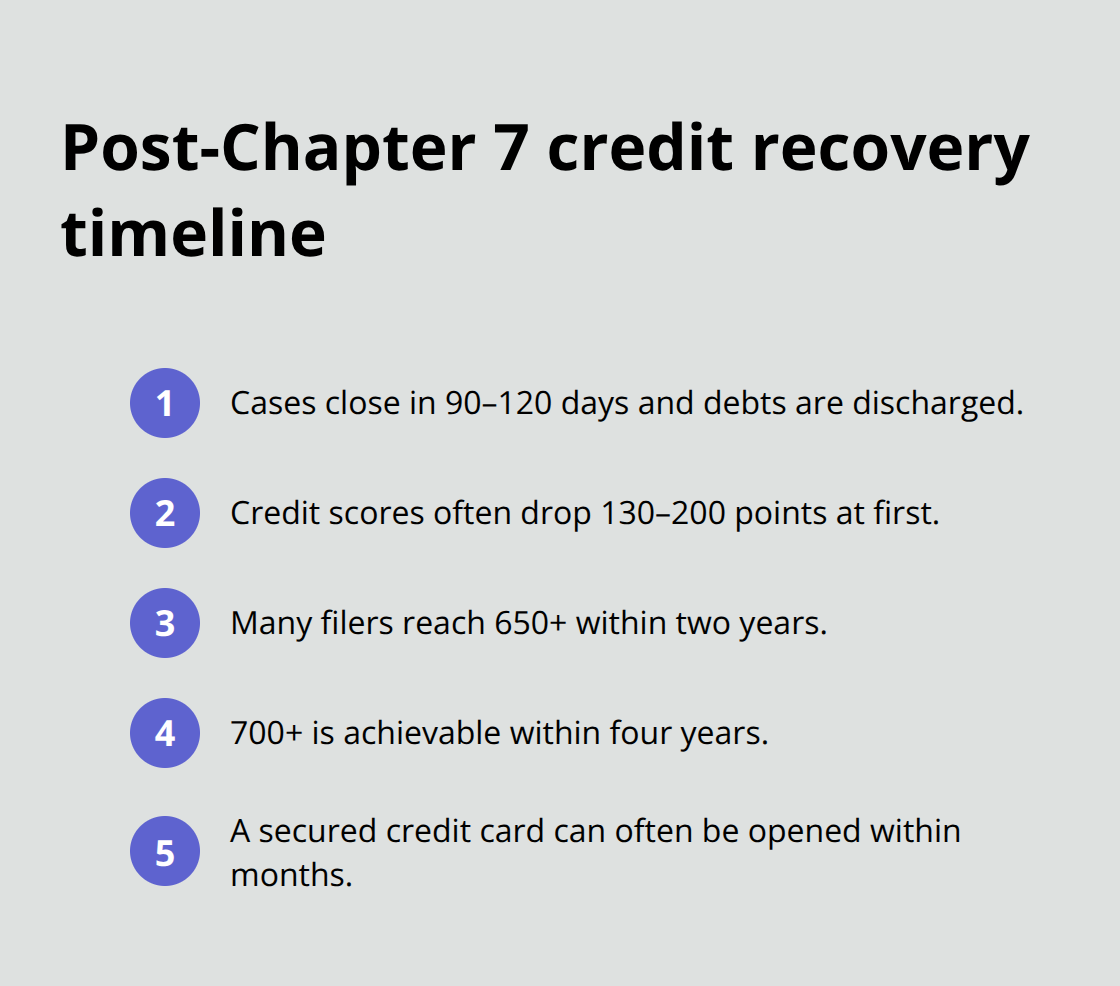
You can apply for a secured credit card within months of discharge and start building positive payment history. This path moves you forward faster than spending years paying down debts through wage garnishment.
Chapter 7 Does Not Strip Away Your Assets
The third misconception is that Chapter 7 strips away all your assets. This damaging myth prevents people from accessing relief they qualify for. Florida law provides substantial exemptions that protect your property in Chapter 7. You can exempt your primary residence up to a certain equity amount, your vehicle, retirement accounts like IRAs and 401ks, and personal property up to specified limits. The bankruptcy trustee assigned to your case does not seize belongings to sell them; the trustee looks for non-exempt assets that can be liquidated to pay creditors. For most Florida residents filing Chapter 7, there are no non-exempt assets to liquidate, meaning you keep your home, car, and personal possessions. The fear of losing everything often exceeds the actual outcome by a wide margin.
Final Thoughts
Wage garnishment in Florida operates through a structured legal process that gives creditors significant power to extract money from your paycheck before you receive it. Creditors can take up to 25% of your disposable earnings once they obtain a court judgment, file a Motion for Continuing Wage Garnishment, and receive court approval. The IRS and Florida Department of Revenue bypass this requirement entirely and can levy wages without any judgment.
Chapter 7 bankruptcy provides wage garnishment relief Florida residents need by triggering an automatic stay that halts garnishment immediately upon filing. Your employer must stop withholding within days of receiving notice from the bankruptcy court, restoring hundreds of dollars to your paycheck right away. For debts like credit cards and medical bills, Chapter 7 discharge eliminates the underlying obligation permanently, meaning garnishment cannot resume after your case closes within 90 to 120 days.
If wage garnishment is reducing your paycheck or you fear it may start soon, contact Harnage Law, PLLC to discuss your situation. We assist individuals and families in overcoming financial challenges by providing legal guidance and representation focused on stopping creditor harassment, preventing wage garnishments, and halting lawsuits. The sooner you act, the sooner garnishment stops and your financial recovery begins.
