Filing Chapter 7 bankruptcy in Florida doesn’t mean losing everything you own. State law protects certain assets from creditors, and understanding these protections is the first step toward rebuilding your financial life.
Chapter 7 exemptions in Florida allow you to keep your home, retirement savings, and essential personal property while liquidating non-exempt assets to pay creditors. We at Harnage Law, PLLC help clients navigate these protections and maximize what they can retain through the bankruptcy process.
How Exemptions Shield Your Assets in Chapter 7
Understanding What Exemptions Protect
Exemptions are the legal rules that determine which assets you keep and which the bankruptcy trustee can sell to pay your creditors. When you file Chapter 7 in Florida, you don’t lose everything-the law carves out specific property categories that remain yours. Florida courts apply state exemptions to protect assets like your home, retirement accounts, vehicles, and personal belongings. The trustee can only liquidate non-exempt property, which means understanding exemptions is the difference between keeping your essential assets or watching them disappear.
Florida’s Exemption Advantage
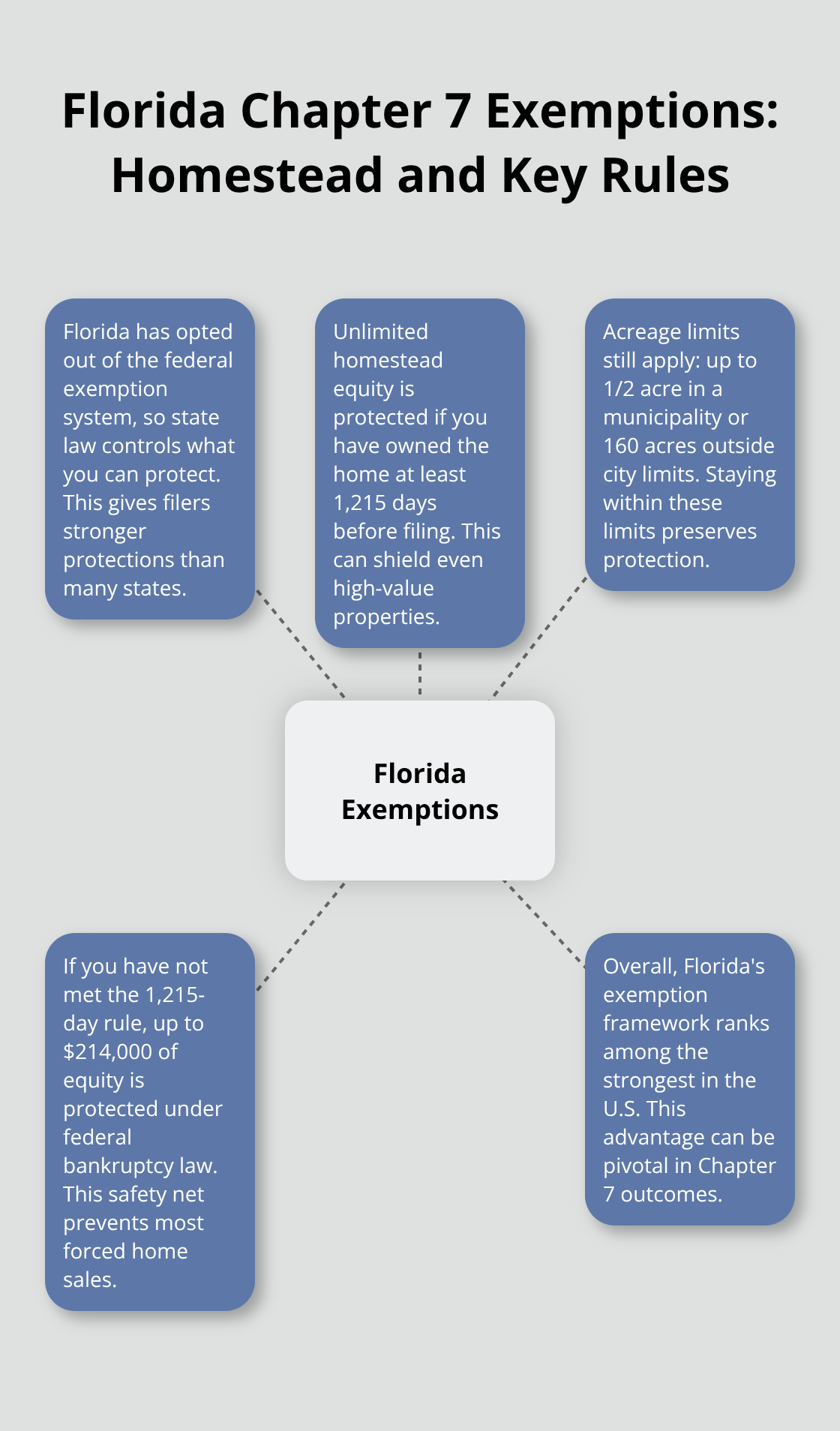
Florida has opted out of the federal exemption system, so state law governs what you protect. This choice gives you a major advantage because Florida exemptions rank among the strongest in the country. Your homestead exemption alone offers unlimited protection for home equity if you’ve owned the property for at least 1,215 days before filing and the home sits within ½ acre in a city or 160 acres outside city limits. If you haven’t met the 1,215-day requirement, Florida still protects up to $214,000 of home equity under federal bankruptcy law.
Vehicles, Retirement, and Personal Property
Vehicle equity receives strong protection too-you can exempt up to $5,000 per vehicle, which covers most cars completely since the average used vehicle has less equity. Retirement accounts, including 401(k)s, 403(b)s, and IRAs, are fully protected up to approximately $1,711,975 per person for filings between April 2025 and March 2028, making them one of the most valuable exemptions available to filers. Personal property exemptions protect household goods, furniture, clothing, and electronics up to $1,000 per person, or $4,000 if you don’t claim the homestead exemption.
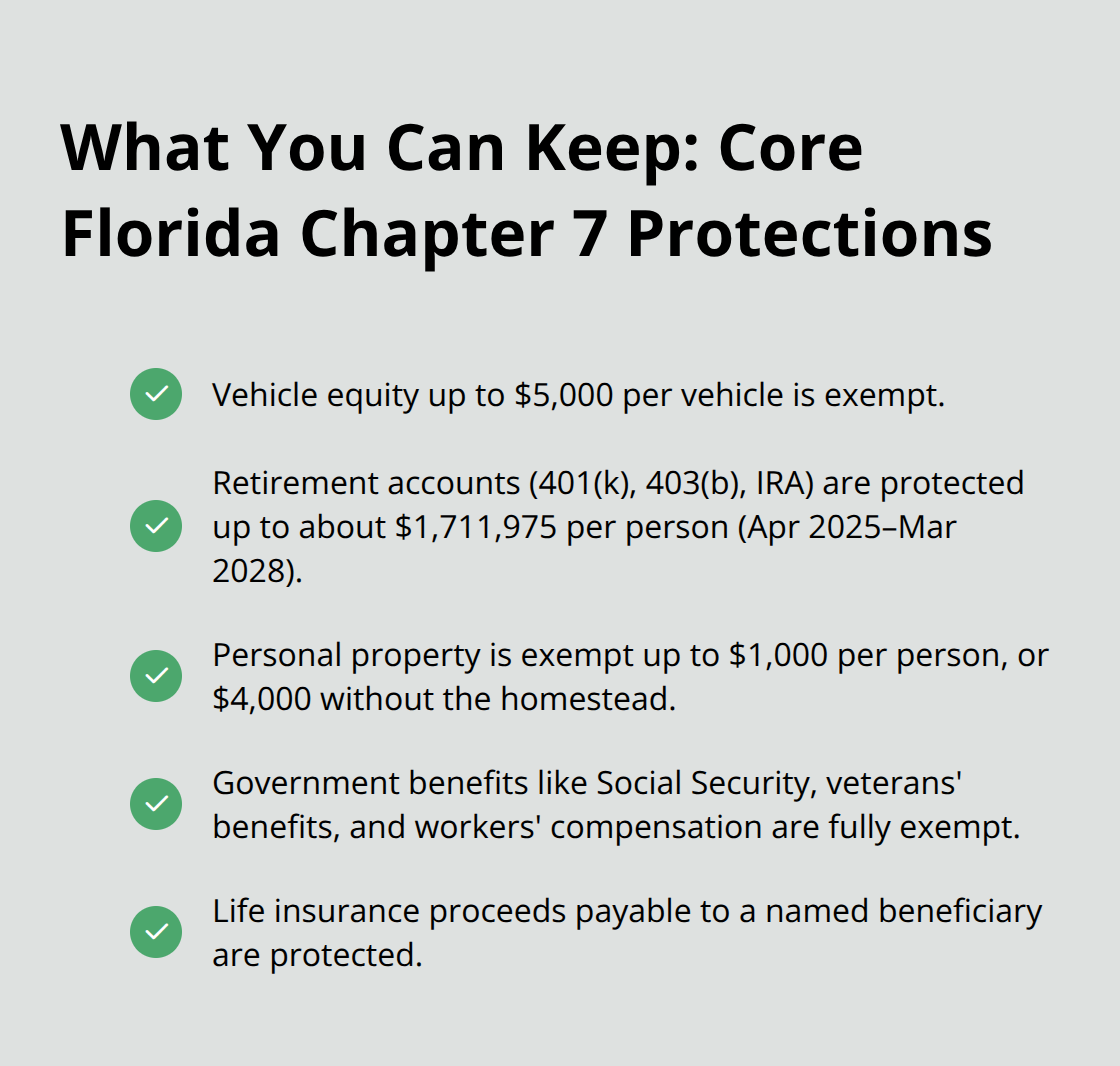
Government benefits like Social Security, veterans’ benefits, and workers’ compensation are completely exempt and cannot be touched by creditors. Life insurance proceeds payable to a named beneficiary are also fully protected.
What Actually Gets Liquidated
The practical reality is that most Florida filers keep their homes, vehicles, retirement savings, and essential belongings while only non-exempt assets like investment accounts, luxury items, and cash savings face liquidation. When you file, you list all property and claim exemptions on your bankruptcy schedules. The trustee reviews your claimed exemptions and can challenge them at the 341 Meeting of Creditors if they believe you’ve overstated an exemption amount or claimed property that shouldn’t be exempt.
Accuracy Matters in Your Filing
Accurate valuation matters-list personal property at replacement value, not sentimental value, and be honest about what you own. Many filers make the mistake of undervaluing assets to hide them, which constitutes fraud and can result in case dismissal or criminal charges. Harnage Law, PLLC guides clients through accurate asset listing and exemption strategy to maximize protection while keeping you fully compliant with bankruptcy law. Understanding which assets fall into exempt versus non-exempt categories sets the stage for knowing exactly what property you’ll retain once the bankruptcy process moves forward.
Common Assets You Can Protect Under Florida Law
Your Primary Residence and Home Equity
Your home represents the most significant asset Florida protects during Chapter 7 bankruptcy. If you’ve owned your primary residence for at least 1,215 days before filing, Florida’s homestead exemption shields unlimited equity regardless of your home’s value, provided the property doesn’t exceed ½ acre within city limits or 160 acres outside municipalities. This means a home worth $500,000 or $1 million receives the same complete protection as a modest property, making Florida’s homestead exemption one of the strongest in the nation. If you haven’t met the 1,215-day ownership requirement, federal law still protects up to $214,000 of your home equity, so you won’t lose your residence in most cases.
The critical requirement is staying current on your mortgage payments-the homestead exemption protects equity, not the underlying mortgage debt, so lenders can still enforce their security interest if you fall behind. Many filers worry about losing their homes during Chapter 7, but the reality is that keeping your residence is standard when you maintain payments and claim the exemption properly.
Retirement Accounts and Pension Plans
Retirement accounts receive near-total protection under Florida law, with 401(k)s, 403(b)s, traditional IRAs, and Roth IRAs shielded up to approximately $1,711,975 per person for cases filed between April 2025 and March 2028. This protection means your decades of retirement savings remain completely safe from liquidation, which is why retirement accounts often become the foundation for rebuilding after bankruptcy. The law treats these accounts as off-limits to creditors, allowing you to preserve long-term financial security even as you discharge other debts.
Vehicles and Transportation Assets
Vehicles receive solid protection too-you can exempt up to $5,000 of equity per vehicle, which covers the vast majority of cars since the average used vehicle has minimal equity after accounting for loan balances. If you own multiple vehicles and both are necessary for work or family transportation, you can protect more than one with proper documentation showing business or household necessity. This flexibility means you keep the transportation you need to maintain employment and handle daily responsibilities.
Personal Property and Government Benefits
Personal property like furniture, clothing, electronics, and household goods receives protection up to $1,000 per person, or $4,000 if you don’t claim the homestead exemption, giving you flexibility to protect either your home or additional personal items depending on your situation. Government benefits including Social Security, disability payments, veterans’ benefits, and workers’ compensation are completely untouchable by creditors, meaning your income safety net remains intact throughout the bankruptcy process. Life insurance proceeds payable to a named beneficiary also stay protected, ensuring your family’s financial security continues uninterrupted.
Understanding which assets remain protected sets the foundation for knowing what property you’ll retain once the bankruptcy process moves forward. The next section examines the flip side-which assets the trustee can liquidate and why certain possessions fall outside Florida’s exemption protections.
Assets You Cannot Protect in Chapter 7
Non-Exempt Property Subject to Liquidation
When you file Chapter 7 in Florida, the bankruptcy trustee will not touch your home, retirement accounts, or vehicles-but they will absolutely liquidate everything else that falls outside exemption protections. Non-exempt assets include investment accounts, brokerage holdings, second homes, vacation properties, rental real estate, and substantial cash savings beyond what exemptions cover. If you own a stock portfolio worth $50,000 or a vacation condo, the trustee will sell these assets to distribute proceeds to your creditors. This is the fundamental trade-off in Chapter 7: you protect essential living assets while liquidating wealth that exceeds exemption limits.
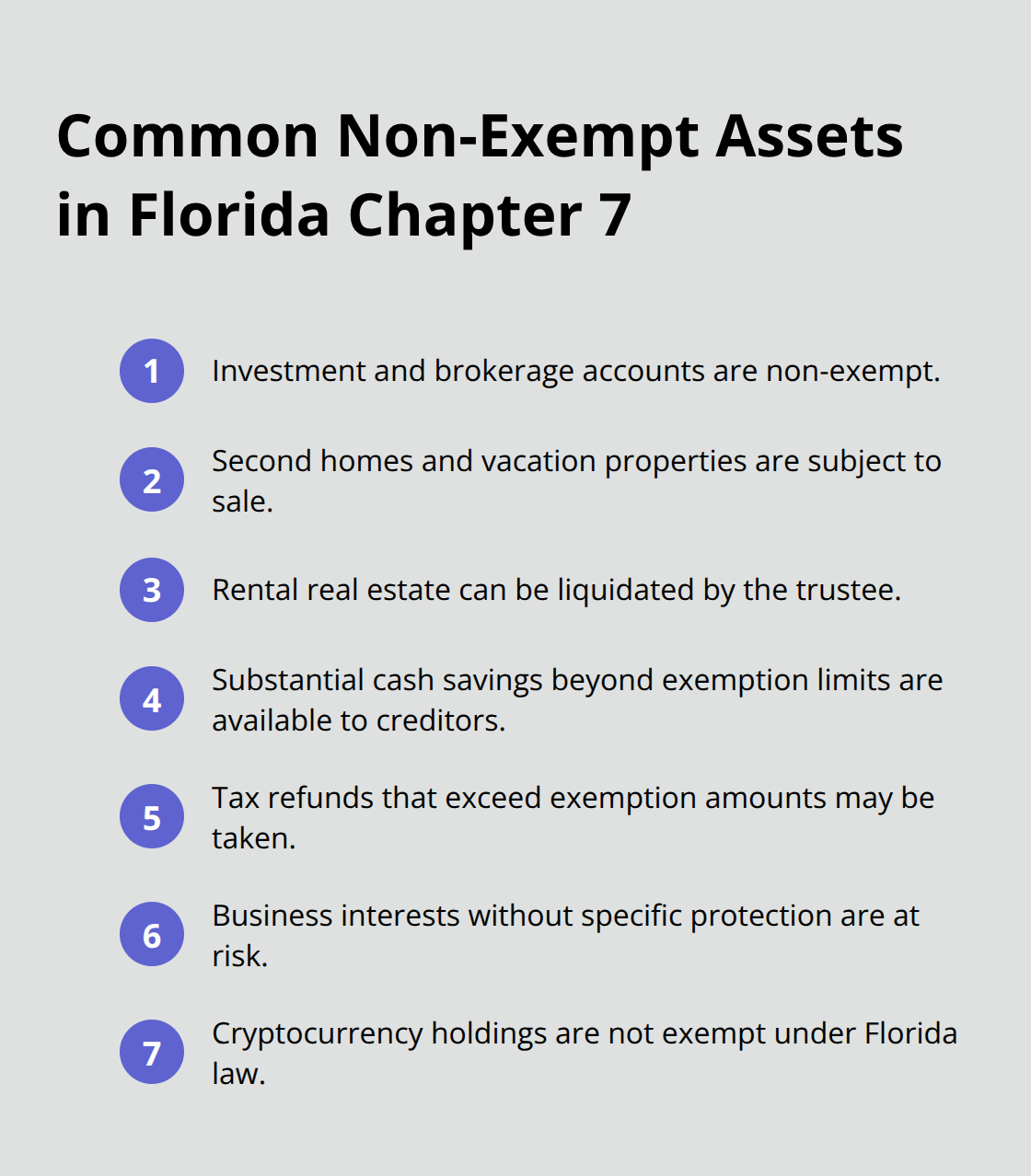
The average Chapter 7 case involves liquidating investment accounts, tax refunds that exceed exemption amounts, and business interests that lack protection under Florida law. Certain financial accounts present particular liquidation risk because they lack the statutory protections given to retirement accounts. Brokerage accounts, stock holdings, mutual fund investments, and cryptocurrency holdings are not exempt and become available for sale by the trustee.
Luxury Items and High-Value Possessions
Luxury items like high-end jewelry, expensive artwork, collectibles, and designer goods above reasonable personal property limits face liquidation because Florida’s $1,000 personal property exemption only covers basic household goods and necessities. A Rolex watch worth $15,000 or original paintings valued at $20,000 cannot be protected and will be sold by the trustee. Similarly, cash savings accounts with balances that exceed exemption limits become estate property available for creditor distribution. If you have $30,000 in a savings account and your exemptions do not cover that amount, the trustee will liquidate those funds.
This reality means many filers strategically time their bankruptcy filing to minimize cash on hand and avoid accumulating liquid assets before filing. Education savings accounts like 529 plans receive protection under Florida law, but regular investment accounts do not.
Real Estate and Business Interests
If you own rental property that generates income beyond your primary residence, that asset typically faces liquidation unless it qualifies for specific exemptions you can document. Second mortgages, home equity lines of credit, and other secured interests in non-exempt property also become subject to trustee proceedings. The key distinction is that Florida’s generous homestead exemption protects only your primary residence-any other real estate you own, whether vacant land or income-producing property, can be sold to satisfy creditors.
Business interests and ownership stakes in companies are liquidated unless they qualify as tools of trade or professional equipment with specific exemption status. Many filers overlook these hidden assets until the trustee identifies them during the 341 Meeting of Creditors, which is why accurate asset disclosure matters significantly. Harnage Law, PLLC works with clients before filing to identify which assets will face liquidation and helps develop strategies within legal boundaries to protect property where possible, so you understand exactly what you will lose before you sign your bankruptcy petition.
Final Thoughts
Florida’s exemption protections give you a genuine path forward in Chapter 7 bankruptcy. Your home equity remains unlimited if you’ve owned the property for at least 1,215 days, your retirement accounts stay completely protected up to roughly $1.7 million per person, and your vehicle can be kept with up to $5,000 of equity shielded from creditors. Personal property like household goods and clothing receives protection, while government benefits and life insurance proceeds remain untouchable.
The practical reality is that understanding which assets you’ll keep and which the trustee will sell requires careful analysis of your specific situation. Asset values, ownership timelines, and how property is titled all affect what protection applies to Chapter 7 exemptions in Florida. Many filers make costly mistakes by either undervaluing assets to hide them or failing to claim exemptions they’re entitled to use, and both approaches create serious problems-fraud allegations in the first case and unnecessary asset loss in the second.
Contact Harnage Law, PLLC to discuss your Chapter 7 case and learn how Florida’s exemption protections apply to your situation. Our team helps you understand exactly which property faces liquidation and which assets remain yours after discharge. A clear understanding of what you’ll keep makes the bankruptcy decision far less frightening and positions you for genuine financial recovery.