Creditors calling multiple times daily can wreck your sleep, damage your relationships, and tank your work performance. The constant stress takes a real toll on your mental and physical health.
The good news: you have legal rights, and there are concrete ways to stop creditor calls in Florida. We at Harnage Law, PLLC help people use Chapter 7 bankruptcy to halt collection activities permanently and get a genuine fresh start.
What Does Creditor Harassment Actually Do to Your Health and Work?
Physical Health Damage From Relentless Calls
Constant creditor calls destroy more than just your finances. Research shows that debt-related stress triggers measurable physical health problems. Each unexpected call spikes your cortisol levels, raises your blood pressure, and plummets your sleep quality. People under heavy collection pressure report tension headaches, digestive problems, and weakened immune function. The anxiety builds because you never know when the next call will come. Some collectors call seven or more times within a single week, which violates the Consumer Financial Protection Bureau’s debt collection rule that generally caps repeated calls at seven in seven consecutive days.
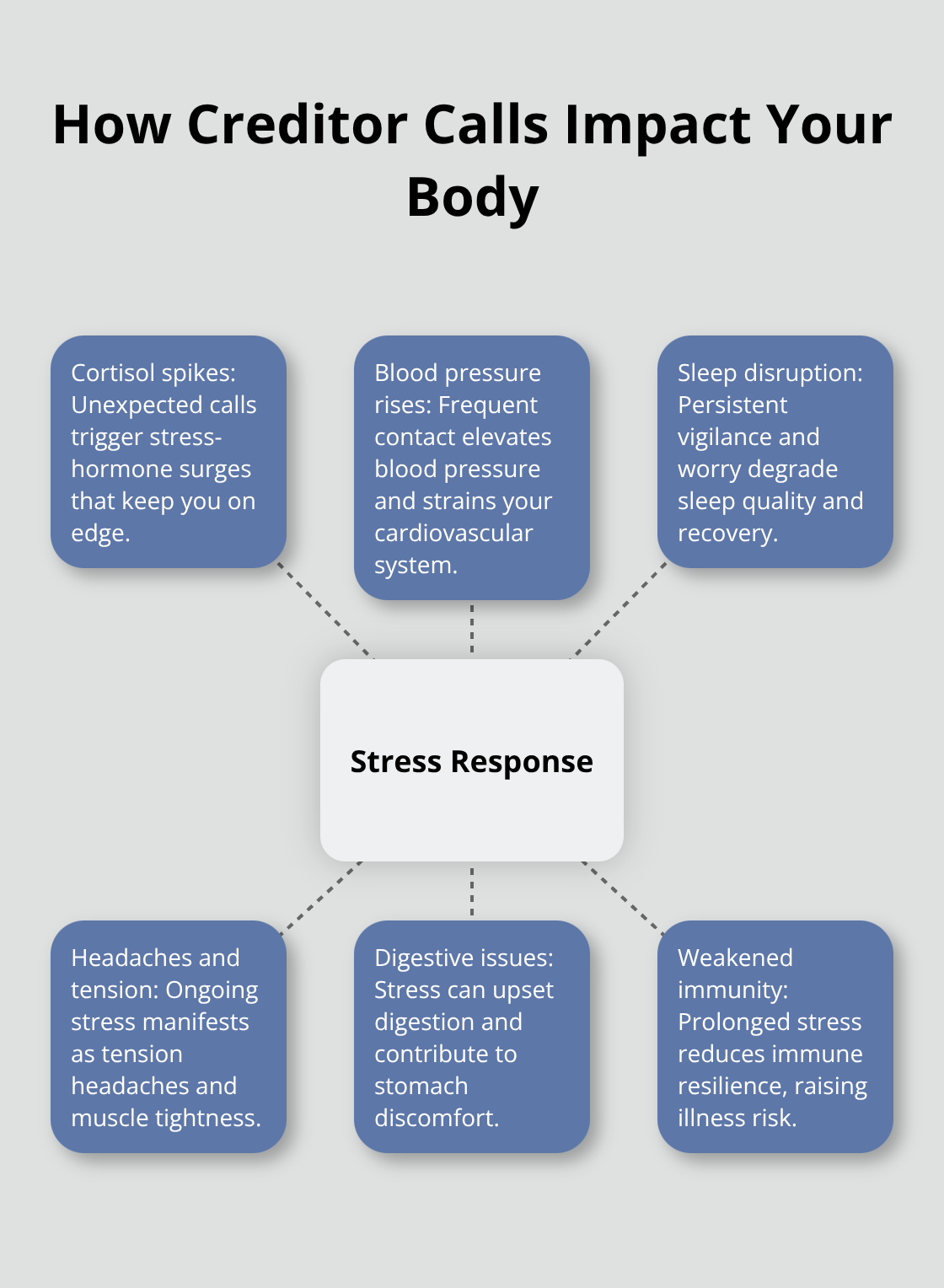
That relentless contact keeps your nervous system in overdrive.
Work Performance and Professional Relationships
Your work suffers because you cannot focus, and you may miss deadlines or make mistakes under stress. Family relationships crack when creditors call your relatives or your workplace, embarrassing you and creating conflict at home. Florida law prohibits collectors from contacting your employer before obtaining a final judgment, but many still do it anyway, hoping you will panic and pay. The stress follows you into every professional interaction, making it harder to maintain your reputation or advance in your career.
Emotional Toll and Psychological Impact
The emotional weight compounds the physical damage. You feel trapped because debt collectors often make illegal threats-claiming they will have you arrested, garnish your wages without a court order, or seize your home. These threats violate the Fair Debt Collection Practices Act, yet collectors use them anyway because fear makes people pay faster. You start avoiding your phone, missing important calls from doctors or family. Your credit score drops further, making it harder to rent an apartment, get a job, or access credit when you need it. Florida’s Fair Credit Collection Practices Act provides protections against abusive tactics (including harassment, false statements, and threats of force), but knowing your rights does not stop the calls from coming. The constant pressure pushes many people toward desperation, leading them to pay debts they do not actually owe or cannot afford.
Why Legal Action Matters
Stopping this harassment requires more than just understanding your rights-it requires action that actually works. Chapter 7 bankruptcy offers a powerful tool to halt collection activities permanently and address the root cause of the harassment: the debts themselves.
What Collectors Can and Cannot Do Under Federal Law
The Hard Limits on Collector Contact
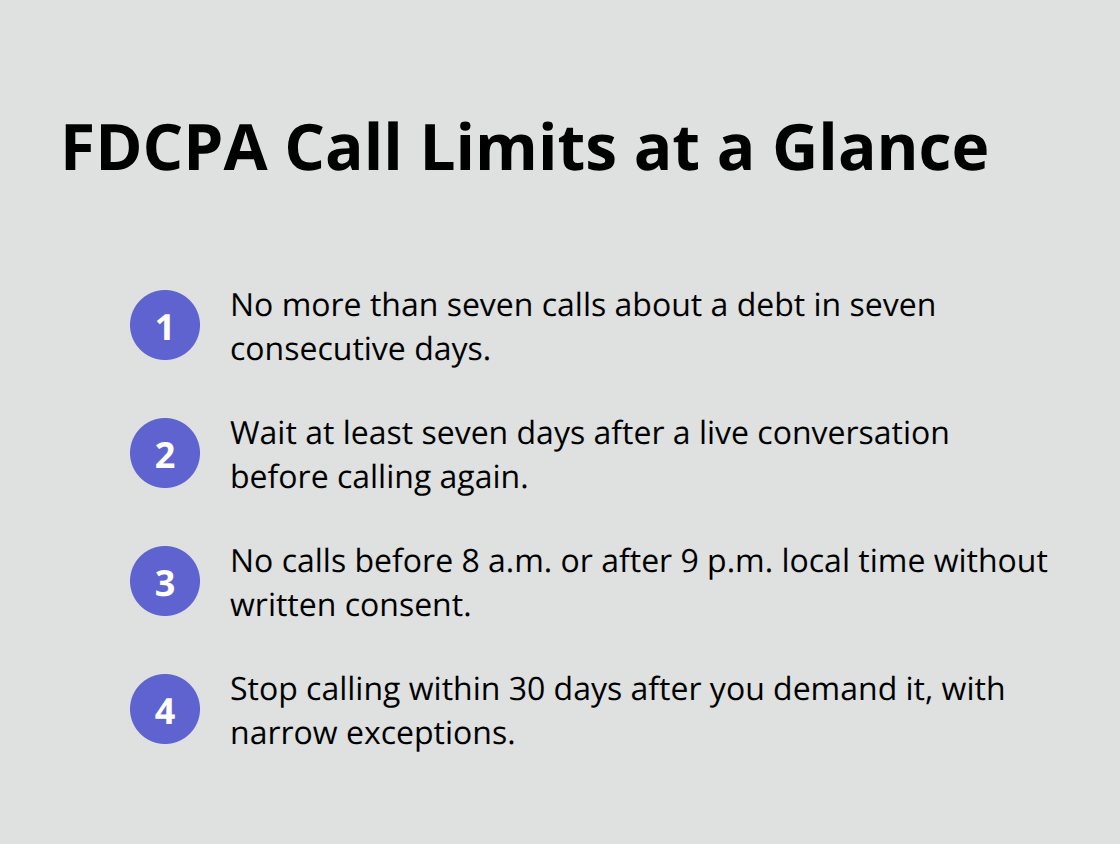
The Fair Debt Collection Practices Act sets hard limits on what debt collectors can do, and violating these rules gives you grounds to sue them. Under the Consumer Financial Protection Bureau’s debt collection rule, collectors cannot call you more than seven times within seven consecutive days about a single debt, and they must wait at least seven days before calling again after you have spoken with them. Calls before 8 a.m. or after 9 p.m. in your time zone are illegal without your written consent. If you tell a collector to stop calling, they must stop within 30 days unless they are confirming receipt of a payment or notifying you of a lawsuit.
Where Collectors Cannot Reach You
Collectors cannot call your workplace if you have told them your employer prohibits such calls, and they absolutely cannot contact your employer before obtaining a final judgment against you. They cannot threaten you with arrest, jail time, or criminal charges over a consumer debt because debt collectors have no power to have you arrested for owing money. They cannot claim they represent law enforcement, a government agency, or an attorney if they do not. Under Florida Statutes Chapter 559 Part VI, collectors also cannot use profane or abusive language, make threats of force or violence, or simulate being a law enforcement officer.
Illegal Communications and Deceptive Tactics
Any communication claiming to be from an attorney when it is not, or using attorney letterhead without legitimate authorization, violates federal and state law. Collectors cannot discuss your debt with family members or coworkers who have no legitimate business reason to know about it. Florida law forbids embarrassing envelopes labeled with terms like “Deadbeat” or anything designed to shame you. These tactics violate both federal and state protections that exist specifically to stop abusive collection practices.
Document Everything to Prove Violations
Start keeping detailed records immediately. Write down the date, time, phone number, caller’s name, what they said, and whether the call came to your home, cell phone, or workplace. Save every voicemail, text message, email, and letter-do not delete anything because these records are your evidence if you need to file a complaint or lawsuit against the collector. Screenshot text messages and emails showing the collector’s name and the content. When a collector violates these rules repeatedly, you can file a complaint with the Consumer Financial Protection Bureau, which tracks patterns of abuse. You can also sue the collector in state or federal court for statutory damages plus actual damages and attorney fees.
Why Documentation Leads to Action
Many collectors bank on debtors not knowing their rights or not bothering to fight back, so your documentation turns the tables on them. However, stopping harassment through lawsuits against individual collectors takes time and money-and it does not address the underlying debts that fuel the calls in the first place. A more powerful solution exists: Chapter 7 bankruptcy halts all collection activities immediately through the automatic stay and eliminates the debts that collectors are trying to collect.
How Chapter 7 Bankruptcy Stops Creditor Calls Permanently
The Automatic Stay Halts Collection Activities Immediately
Filing Chapter 7 bankruptcy triggers the automatic stay, a court order that halts all collection activities the moment your case is filed. Creditors cannot call, send letters, file lawsuits, garnish wages, or seize assets once the stay is in effect. The automatic stay applies to nearly every creditor and collection agency pursuing you, which means the harassment stops immediately, not weeks or months later. This is not a negotiation or a request to collectors-it is a federal court order backed by law.
Violating the automatic stay carries serious consequences for collectors, including liability for damages and attorney fees. In Florida bankruptcy cases, the stay becomes effective upon filing, and creditors receive notice through the court system. Many people report sleeping through the night for the first time in months once the stay takes effect because they know collectors cannot contact them.
Temporary Stay Limitations in Repeat Filings
The automatic stay is temporary in some situations. Under 11 U.S.C. Section 362, if you have filed bankruptcy cases previously and dismissed them within the past year, the stay may last only 30 days unless you file a motion to extend it. If you have filed two or more bankruptcy cases in the prior year, the stay may not apply at all unless you file a motion and prove the current filing is made in good faith. These rules exist to prevent debtors from repeatedly filing bankruptcy just to delay creditors, so courts examine your circumstances carefully.
Discharge Eliminates the Debts Collectors Pursue
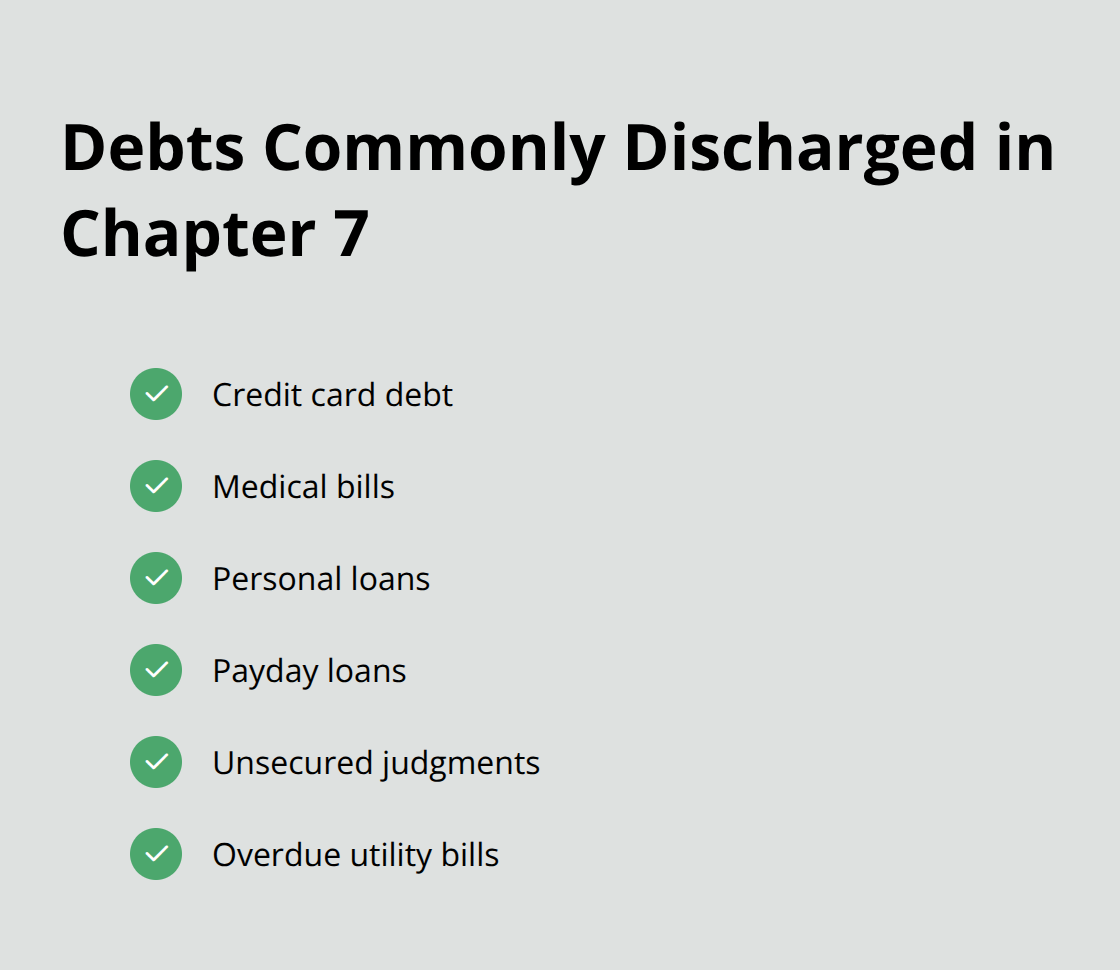
Discharging debts through Chapter 7 eliminates the legal obligation to pay, which removes the collector’s entire reason for calling. Credit card debt, medical bills, personal loans, payday loans, unsecured judgments, and overdue utility bills are commonly discharged in Chapter 7, freeing you from future collection attempts on those accounts. Once your debts are discharged, collectors cannot pursue you for those balances, and attempting to collect a discharged debt violates federal law.
The discharge typically occurs four to six months after filing, and once it is final, the creditor’s claim is gone permanently. Certain debts cannot be discharged, including most taxes, child support, alimony, student loans (unless you prove undue hardship), criminal fines, and debts from fraud or willful injury. Understanding which debts discharge and which do not is essential before filing.
The Chapter 7 Filing Process and Timeline
The process requires you to complete credit counseling with an approved agency before filing, gather your financial records, and file the required schedules and forms with the court. The filing fee is currently $338, though fee waivers and installment payment options are available if you cannot pay the full amount upfront. After filing, you must attend the Section 341 meeting of creditors, where a court-appointed trustee reviews your case. Within 60 days after this meeting, you must complete a financial management course to qualify for discharge.
A Florida bankruptcy attorney can guide you through each step, reviewing your specific debts, explaining what will discharge, and preparing all required documents. This structured process protects your rights and ensures creditors receive proper notice while you gain permanent relief from collection harassment.
Final Thoughts
You have legal protections under federal and Florida law that limit what collectors can do, and documenting their violations gives you grounds to fight back. The Fair Debt Collection Practices Act caps repeated calls at seven within seven consecutive days, prohibits contact before 8 a.m. or after 9 p.m., and forbids threats of arrest or workplace harassment. Florida’s Fair Credit Collection Practices Act adds state-level protections against abusive tactics, false statements, and intimidation.
Chapter 7 bankruptcy offers a faster, more comprehensive solution than pursuing individual lawsuits against collectors. The automatic stay halts all collection activities the moment you file, stopping creditor calls Florida through a federal court order that collectors cannot ignore. Discharging your debts eliminates the legal obligation to pay, which removes the collector’s reason for calling altogether, and credit card debt, medical bills, personal loans, and unsecured judgments typically discharge in Chapter 7.
We at Harnage Law, PLLC help individuals and families overcome financial challenges through the Chapter 7 bankruptcy process, guiding you through every step from credit counseling through discharge while protecting your rights. Contact us for a consultation to discuss your specific debts, which ones discharge, and how Chapter 7 can provide permanent relief from the harassment that has disrupted your life. The filing fee is $338, with fee waivers and installment options available if cost is a barrier.