Filing for Chapter 7 bankruptcy doesn’t mean losing your home. Florida’s homestead exemption is one of the strongest protections available, and it can shield your primary residence from creditors even during bankruptcy.
At Harnage Law, PLLC, we help homeowners understand how this protection works and what it means for their financial future. This guide breaks down the facts about homestead exemption Florida and addresses the myths that often worry people facing bankruptcy.
What Florida’s Homestead Exemption Actually Protects
The Unlimited Protection Florida Offers
Florida Statutes sections 222.01 and 222.02 create one of the nation’s most powerful homestead protections. The law shields your primary residence from creditors by exempting home equity from liquidation in bankruptcy. A trustee cannot force you to sell your home to pay unsecured debts like credit cards or medical bills, regardless of how much equity you have built. The exemption applies only to your primary residence-the place where you actually live-and the property size cannot exceed half an acre within a municipality or 160 acres in rural areas. Unlike most exemptions that cap protection at a specific dollar amount, Florida’s homestead exemption is truly unlimited. You could own a home worth $500,000, $1,000,000, or more, and the entire equity remains protected if you meet the eligibility requirements.
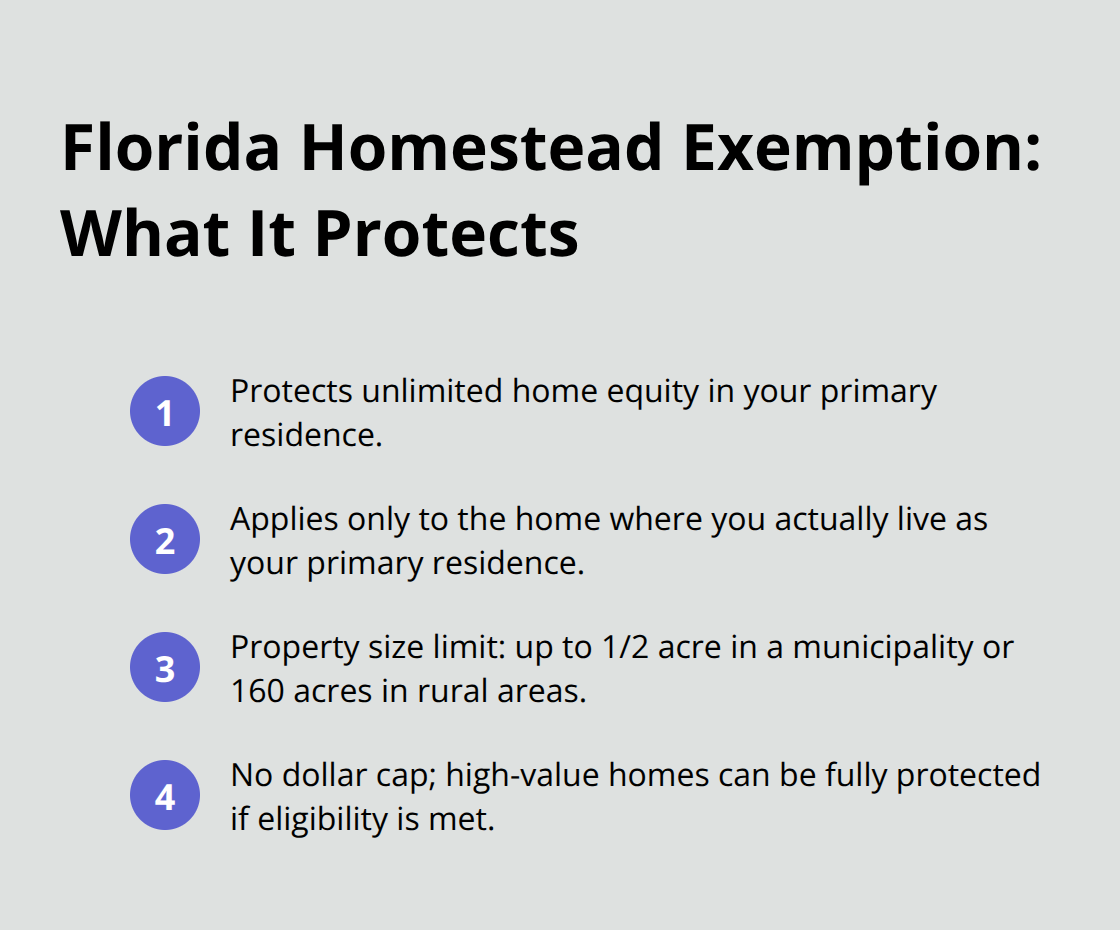
This unlimited protection ranks Florida among the most favorable states for homeowners filing Chapter 7 bankruptcy.
Meeting the Ownership and Residency Requirements
To qualify for unlimited protection, you must have owned and occupied your Florida home as your primary residence for at least 1,215 days (approximately 40 months) before filing. You also need to have lived in Florida for at least 730 days in the two years before your filing date. If you fail to meet the 1,215-day ownership requirement, the exemption still applies but gets capped at $189,050 in equity under federal limits-still substantial protection but not unlimited.
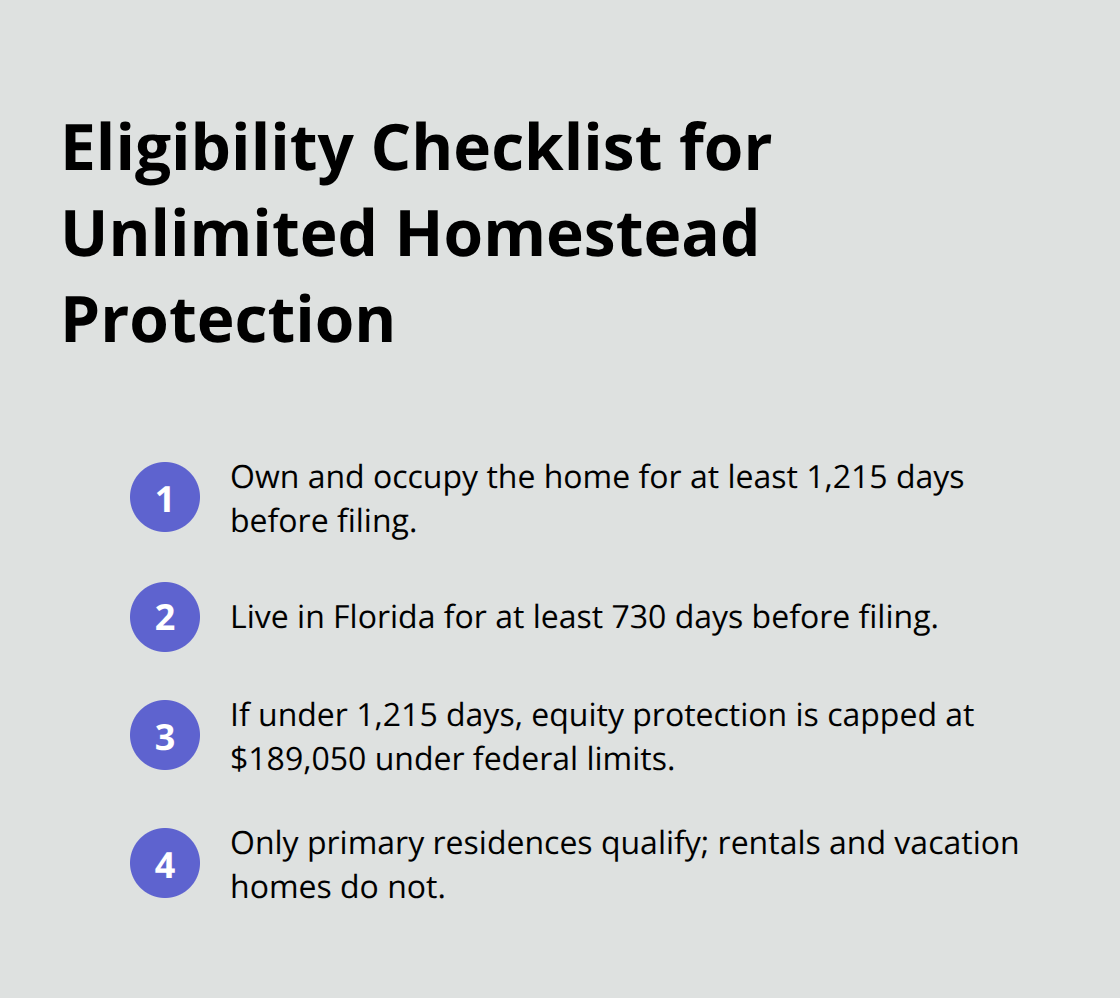
You cannot claim homestead protection for rental properties, vacation homes, or investment real estate; only the property where you sleep and conduct your daily life qualifies.
How the Exemption Interacts with Your Mortgage
The homestead exemption protects your equity in the home, but your mortgage remains a valid secured debt. In Chapter 7, staying current on mortgage payments is essential because falling behind can trigger foreclosure regardless of the exemption. The homestead exemption prevents the bankruptcy trustee from liquidating your home to pay creditors, but it does not erase the mortgage obligation itself. Understanding this distinction shapes how you approach your bankruptcy filing and what happens to your home after discharge.
How Your Home Stays Protected During Chapter 7
The Automatic Stay Shields You From Creditors
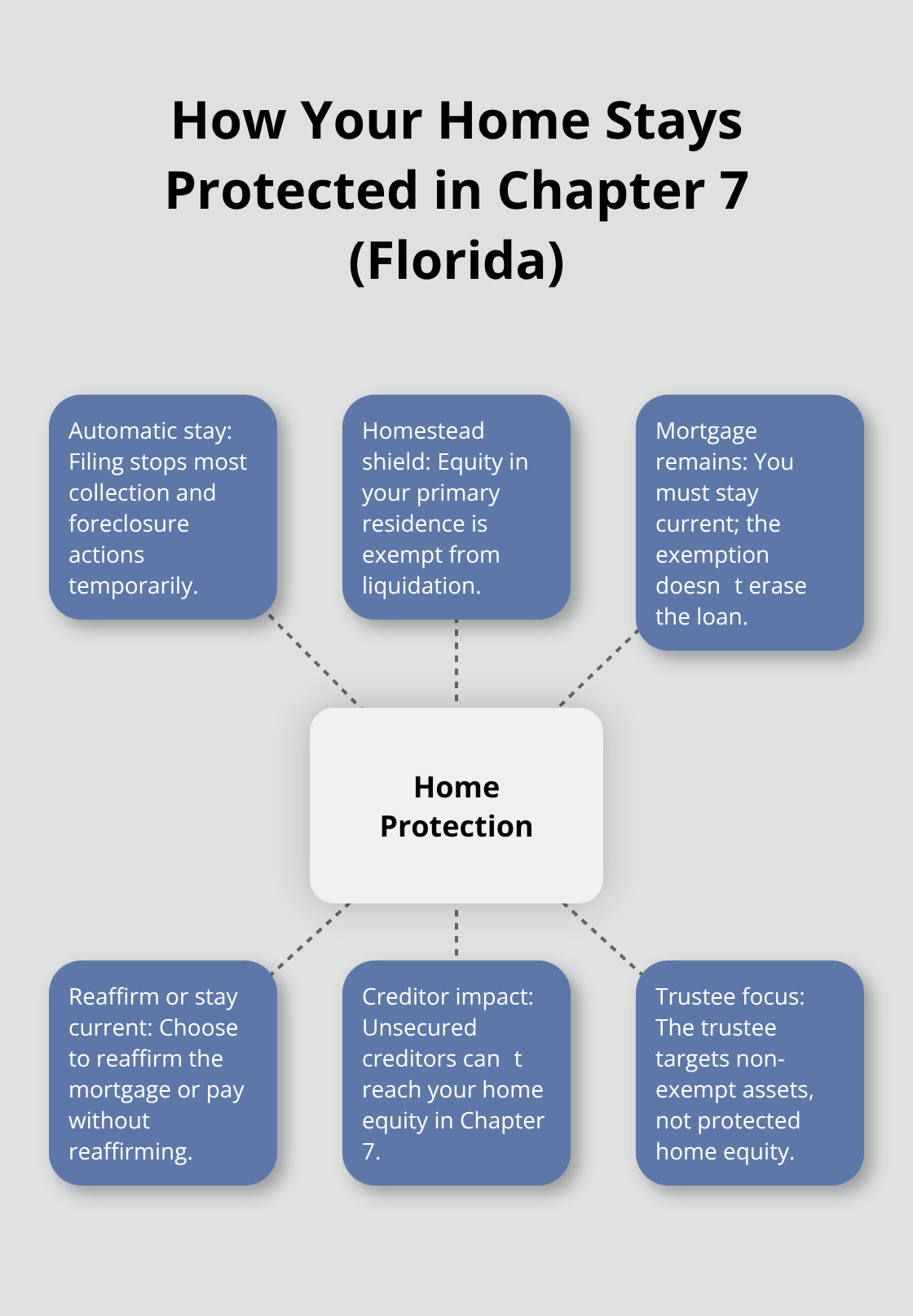
Filing Chapter 7 bankruptcy triggers an automatic stay that halts creditor collection efforts immediately. Your home faces no threat from the bankruptcy process itself. The trustee assigned to your case has one job: liquidate non-exempt assets to pay creditors. Since Florida’s homestead exemption shields your home equity from this liquidation, the trustee cannot touch it. You keep your residence regardless of its value, provided you meet the ownership and residency requirements discussed earlier.
Managing Your Mortgage Obligation
The real challenge is not the exemption itself but managing your mortgage obligation. You must remain current on payments throughout bankruptcy and after discharge. If you fall behind on your mortgage, the lender can still foreclose even though your equity is protected-the homestead exemption only stops the trustee, not the mortgage holder.
To keep your home, you have two clear paths: reaffirm the mortgage debt by signing an agreement to continue paying it after discharge, or simply stay current without reaffirming. Many homeowners choose reaffirmation because it helps rebuild credit faster, as on-time mortgage payments report to credit bureaus. If you are behind on payments at the time of filing, Chapter 7 offers temporary relief through the automatic stay, but you cannot remain behind permanently. The stay typically lasts three to six months unless you take action, giving you a window to catch up or explore options.
How Creditors React to Your Protected Equity
Your home equity’s protection fundamentally changes how creditors view your case. Unsecured creditors like credit card companies and medical bill collectors receive nothing from your home value in Chapter 7, which means they have zero incentive to object to your bankruptcy. This dramatically increases the likelihood of a smooth, uncontested discharge.
The exemption also simplifies your asset listing: you report your home’s current market value on your bankruptcy petition, but you do not lose sleep over equity. Homeowners with substantial equity sometimes worry that high value creates problems, but Florida law eliminates that concern entirely. A $750,000 home with $500,000 in equity receives the same protection as a $300,000 home with $200,000 in equity.
What the Trustee Actually Reviews
The trustee reviews your case based on non-exempt assets like bank accounts, vehicles, and personal property-not your protected home equity. This reality shapes the entire bankruptcy experience for Florida homeowners. Your discharge eliminates qualifying unsecured debts while leaving your primary residence untouched, allowing you to rebuild finances from a stable housing foundation. With your home secured and debts eliminated, you can now address the misconceptions that often prevent homeowners from pursuing the relief they need.
Common Misconceptions About Homestead Exemption and Bankruptcy
Myth One: You Will Lose Your Home in Chapter 7
The fear that Chapter 7 bankruptcy will strip away your home stops many homeowners from filing when they desperately need relief. This belief is false, and it costs people real money in the form of continued creditor harassment, wage garnishments, and accumulated interest on debts they could have discharged. Florida Statutes sections 222.01 and 222.02 explicitly protect your primary residence from liquidation if you meet the ownership and residency requirements. The trustee cannot force a sale to pay unsecured creditors, period. What actually happens is that you keep your home, remain current on your mortgage, and unsecured debts disappear after discharge.
Myth Two: The Exemption Only Applies to Retirees
The homestead exemption applies to anyone-working professionals, self-employed individuals, business owners, families with young children-provided they own and occupy the home as their primary residence for at least 1,215 days. Age has nothing to do with it. The exemption protects substantial equity for working-age homeowners across all income levels and professions.
Myth Three: Mortgage Payments Disappear in Bankruptcy
Your mortgage is a secured debt backed by the home itself. Chapter 7 discharges qualifying unsecured debts like credit cards and medical bills, but the mortgage obligation remains. You must continue making payments to keep the home. However, the automatic stay does pause collection efforts for 90 days or longer, giving you breathing room if you fall behind on payments.
How These Myths Create Real Financial Damage
Bankruptcy myths persist because the process is complex and misinformation spreads faster than accuracy. A homeowner facing $40,000 in credit card debt hears that Chapter 7 will cost them their house and decides to struggle through debt management instead, paying thousands in interest over years. Another assumes the exemption does not apply because they are not yet retired and never investigates further. A third person avoids bankruptcy entirely because they believe the mortgage will vanish and then faces shock when they learn otherwise.
The actual mechanics are straightforward: your home equity stays protected, your unsecured debts get discharged, and you rebuild from a stable housing foundation. If you fall behind on the mortgage, Chapter 13 offers a structured plan to catch up over three to five years while keeping the home (though this chapter focuses on Chapter 7). The difference between believing these myths and understanding the facts can mean the difference between years of financial stress and a genuine fresh start within months.
Final Thoughts
Florida’s homestead exemption removes the biggest barrier preventing homeowners from filing Chapter 7 bankruptcy: the fear of losing their primary residence. Your home equity stays protected regardless of value if you meet the ownership and residency requirements, unsecured debts like credit cards and medical bills disappear after discharge, and you rebuild your financial life from a stable housing foundation instead of drowning in creditor calls and wage garnishments.
The path forward starts with understanding what actually happens in Chapter 7 rather than what myths suggest. You keep your home, you remain current on your mortgage, your protected equity cannot be liquidated to pay creditors, and the automatic stay halts collection efforts immediately. Within months, you receive a discharge that eliminates qualifying debts and gives you genuine breathing room to stabilize your finances.
If you are considering bankruptcy, the next step is a conversation with someone who understands Florida’s homestead exemption laws and how they apply to your specific situation. We at Harnage Law, PLLC help homeowners navigate Chapter 7 bankruptcy with clarity and confidence, guide you through the filing process, protect your assets, and stop creditor harassment. Contact Harnage Law, PLLC to explore whether Chapter 7 makes sense for your situation and discuss your options.