Debt collectors call relentlessly, sometimes multiple times a day. Many Florida residents don’t realize they have legal protections against this harassment, and fewer still know that filing for Chapter 7 bankruptcy triggers an automatic stay that stops collection calls immediately.
At Harnage Law, PLLC, we help people reclaim their peace by using bankruptcy law as a shield against aggressive collectors. This guide shows you exactly how collection calls work in Florida and how Chapter 7 can put an end to them.
What Collectors Can and Cannot Do Under Florida Law
Debt collectors operating in Florida must follow strict rules under federal law, particularly the Fair Debt Collection Practices Act and Florida Statutes 559.72. Many collectors ignore these rules anyway, which is why knowing your rights matters. Collectors cannot contact you between 9 p.m. and 8 a.m. in your time zone without written consent, and they cannot call more than once per day or use excessive frequency to harass you. They also cannot use profane language, threaten force, simulate being a lawyer or government official, or disclose your debt information to your employer before obtaining a judgment. If you have a lawyer representing you, collectors must stop contacting you directly unless your attorney fails to respond within 30 days. Florida law specifically prohibits collectors from mailing embarrassing communications in envelopes labeled deadbeat or similar language designed to humiliate you.
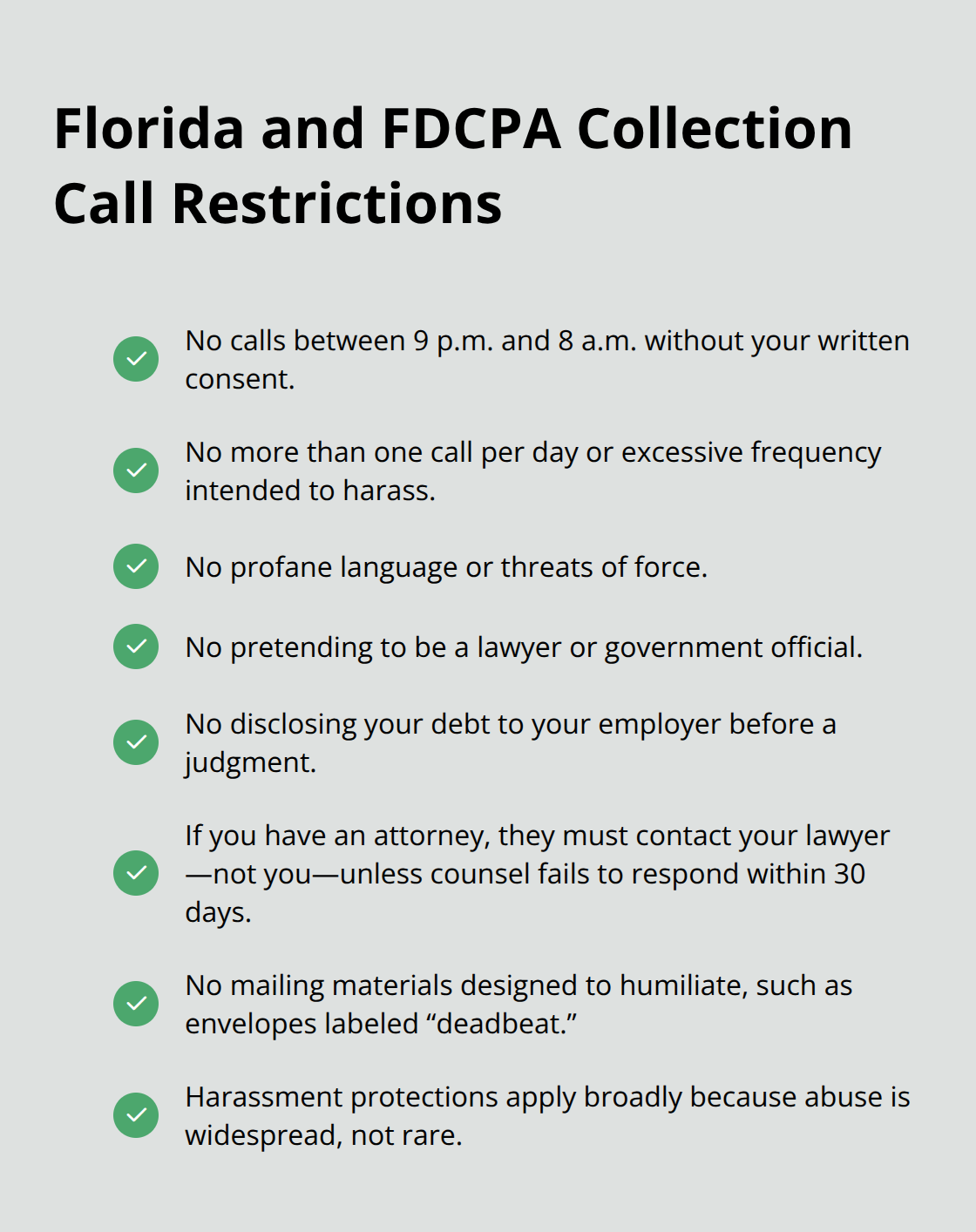
These protections exist because debt collection harassment is widespread, not rare.
When Collectors Cross the Line
Collectors frequently violate these rules because penalties for violations are often small compared to what they collect. If a collector uses profane language, calls repeatedly, threatens legal action they do not intend to take, or contacts you at work despite knowing your employer prohibits it, they have violated federal law. You should document everything: write down the date, time, collector name, and what was said. Send a cease-and-desist letter via certified mail demanding they stop all contact immediately. After receiving your letter, collectors can only contact you to say they are stopping or to notify you of a lawsuit. If harassment continues after your cease-and-desist letter, you have grounds for a lawsuit against the collector, potentially recovering damages for the violation. Many Florida residents do not know they can sue collectors; this is a powerful tool that stops harassment fast.
Filing Complaints and Taking Official Action
Collection calls that violate Florida law create an official record when you file complaints with the Consumer Financial Protection Bureau or the Florida Attorney General’s Office. These complaints may trigger an investigation and hold collectors accountable. However, complaints take time to process, and collectors often continue calling while agencies investigate. Filing for Chapter 7 bankruptcy stops collection calls instantly through the automatic stay, which freezes nearly all collection actions the moment you file. This is not a theoretical benefit; the stay is a court order that forces collectors to stop immediately or face contempt of court charges. For Florida residents drowning in debt and exhausted by constant calls, Chapter 7 offers the fastest legal path to silence.
How Chapter 7 Stops Collection Calls Immediately
The Automatic Stay Takes Effect Right Away
Filing Chapter 7 bankruptcy triggers an automatic stay that activates the moment your case reaches the court. This stay functions as a legal injunction, not a suggestion or informal agreement-collectors who contact you after the stay takes effect face contempt of court charges.
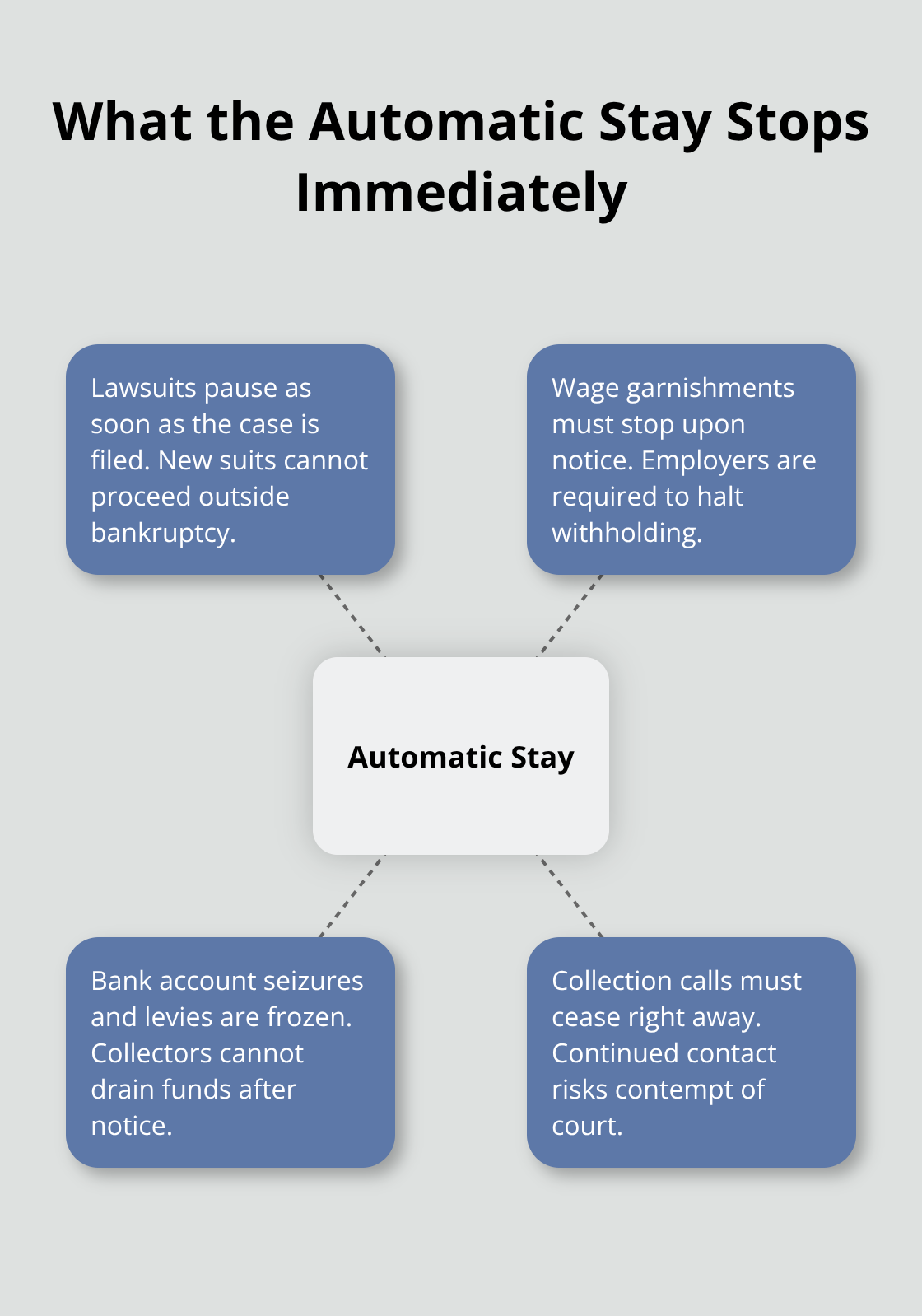
The automatic stay freezes nearly all collection actions, including lawsuits, bank account seizures, wage garnishments, and collection calls. In practical terms, collectors must stop calling within hours or days of your filing, depending on how quickly the bankruptcy court notifies them. You do not need to wait for a hearing, a judge’s decision, or approval from creditors. The stay activates automatically and immediately, which is why Chapter 7 offers the fastest legal path to silence collection calls in Florida.
Unlike cease-and-desist letters (which some collectors ignore), the automatic stay carries the full force of federal law. If a collector calls you after receiving notice of your bankruptcy filing, you can report the violation to the court, and the collector faces serious legal consequences. Federal bankruptcy courts enforce the stay, and violations result in prosecution.
What Happens to Your Debts
Your debts in Chapter 7 fall into two categories: dischargeable and non-dischargeable. Most credit card debt, medical bills, unsecured personal loans, payday loans, and overdue utility bills qualify for discharge, meaning you no longer owe them after the case closes. Judgments related to unsecured debts also qualify for discharge. The Chapter 7 process typically finishes in 90 to 120 days, and once your case closes with a discharge, those debts vanish. Non-exempt assets may be liquidated by a trustee to pay creditors, but Florida exemptions protect many assets from liquidation.
How Creditors Must Respond
Creditors must stop collection efforts and participate in the bankruptcy process once you file. They cannot continue calling, suing, or garnishing your wages after the automatic stay activates. If a creditor violates the stay after receiving notice, you have grounds to sue them for damages. The court notifies creditors of your filing, so they have no excuse for continuing collection activities. Once you file, creditors must follow bankruptcy court procedures, and any attempt to collect outside those procedures violates federal law. This legal framework shifts power away from aggressive collectors and places it firmly in your hands, giving you the breathing room needed to move forward with your financial recovery.
Taking Action Against Harassing Collectors
Cease-and-Desist Letters: Your First Defense
A cease-and-desist letter serves as your first line of defense if you want to avoid bankruptcy but need immediate relief from collection calls. Send it via certified mail to the collection agency, stating clearly that you forbid all future contact except to notify you of a lawsuit or to confirm they will stop calling. Once collectors receive this letter, federal law requires them to cease contact with you, with only narrow exceptions. The problem is that some collectors ignore cease-and-desist letters entirely, betting you will not follow through with legal action. If harassment continues after you send the letter, document every violation with the date, time, caller name, and what was said. This documentation becomes evidence if you file a lawsuit against the collector for violating the Fair Debt Collection Practices Act. A successful lawsuit can recover actual damages plus statutory damages up to $1,000 per violation, plus attorney fees.
When Cease-and-Desist Letters Fail
Cease-and-desist letters work best for smaller debts or collectors who operate legitimately. For aggressive collectors or when you owe substantial amounts, this approach often fails because the financial incentive to ignore the letter outweighs the risk of being sued. Many Florida residents send cease-and-desist letters and then wait weeks for results while collectors continue calling anyway.
Filing Complaints with Government Agencies
Filing a complaint with the Consumer Financial Protection Bureau creates an official record and may trigger an investigation, but the process takes weeks or months while collectors continue calling. The Federal Trade Commission also accepts complaints, as does the Florida Attorney General’s Office. These agencies investigate patterns of abuse and can take enforcement action, but individual complaints rarely stop harassment quickly. Many Florida residents file complaints and then continue suffering collection calls for months before any agency action occurs.
Chapter 7 Bankruptcy: The Fastest Solution
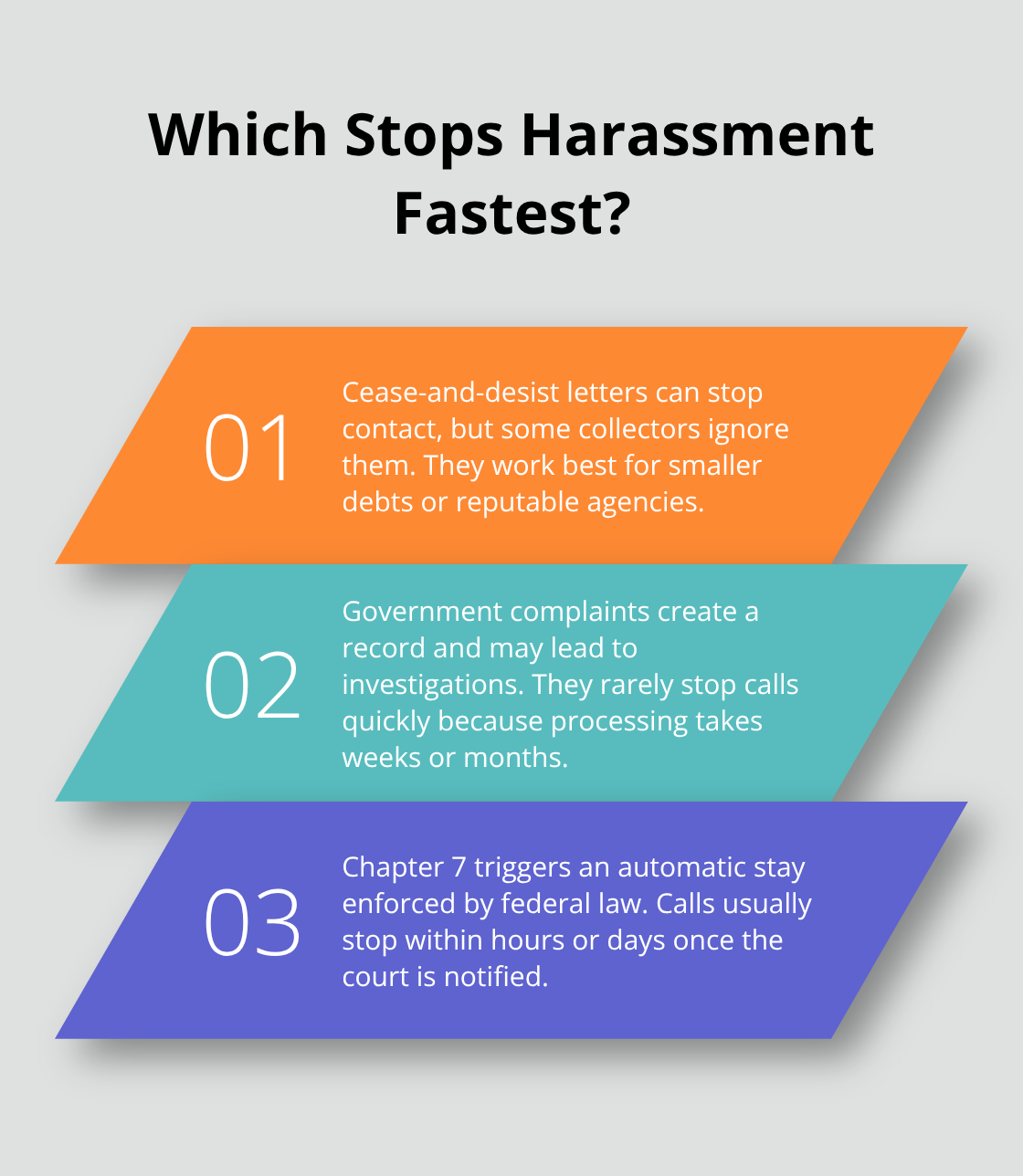
Chapter 7 bankruptcy stops all collection calls instantly through the automatic stay, which federal law enforces immediately. Unlike cease-and-desist letters or agency complaints, the automatic stay carries the force of a court order that collectors cannot ignore without facing contempt charges. For anyone facing serious harassment combined with substantial debt, Chapter 7 offers the fastest legal path to silence. The automatic stay activates the moment your case reaches the court, and collectors must stop calling within hours or days of your filing. This immediate relief makes Chapter 7 fundamentally different from other approaches (cease-and-desist letters, complaints, or negotiation) that require weeks or months to produce results. If you owe qualifying debts and collection calls have become unbearable, Chapter 7 provides both immediate harassment relief and the opportunity to discharge those debts entirely.
Final Thoughts
Collection calls destroy your peace, but you have legal options that work. Cease-and-desist letters and complaints with government agencies provide some protection, yet many collectors ignore these approaches and continue calling anyway. To stop collection calls in Florida, you need action that carries real legal force, not just requests or formal complaints that take weeks to process.
Chapter 7 bankruptcy offers what other methods cannot: immediate relief through the automatic stay. The moment your case reaches court, collectors must stop calling or face contempt charges. Federal law enforces the stay, and collectors know the consequences of violating it. For Florida residents buried under credit card debt, medical bills, personal loans, or other qualifying obligations, Chapter 7 provides both instant harassment relief and the opportunity to discharge those debts entirely (most cases finish in 90 to 120 days).
If collection calls have become relentless and you owe substantial debt, Chapter 7 may be the right solution. We at Harnage Law, PLLC help individuals and families overcome financial challenges by providing legal guidance through the bankruptcy process. Contact us today to discuss your situation and explore whether Chapter 7 bankruptcy can give you the fresh start you deserve.