Filing Chapter 7 bankruptcy doesn’t automatically mean losing your home. Florida law provides strong protections for homeowners, and understanding these safeguards is the first step toward keeping your home through the process.
At Harnage Law, PLLC, we help Florida residents navigate bankruptcy while protecting their most valuable asset. The strategies and protections outlined here can make the difference between keeping your residence and facing foreclosure.
How Your Florida Home Stays Protected in Chapter 7
Florida’s Unlimited Homestead Exemption
Florida’s homestead exemption stands as one of the strongest asset protections in the nation, and it applies directly when you file Chapter 7 bankruptcy. If you own your primary residence and meet two specific requirements, your home equity receives unlimited protection regardless of its value. First, you must have owned the property for at least 1,215 days (roughly 3.3 years) before filing. Second, the property cannot exceed half an acre within a municipality or 160 acres outside city limits (Florida Statute sections 222.01 and 222.02).
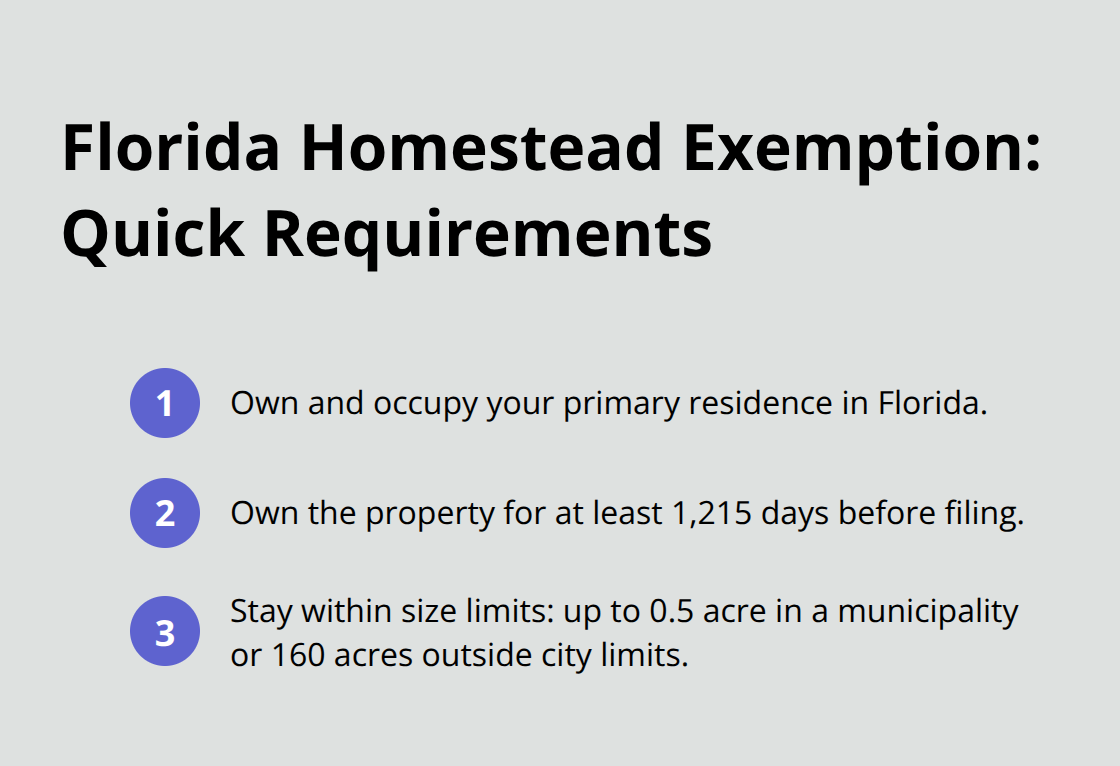
These requirements mean that a homeowner with $300,000 in equity who meets the timeline requirement faces zero loss of that equity through Chapter 7. The trustee cannot sell your home to pay unsecured creditors like credit card companies or medical providers. If you haven’t owned your home for 1,215 days yet, Florida law still protects up to $170,350 of equity, which covers most homes in moderate markets. This protection applies whether you file alone or jointly with a spouse-married couples filing together can double the protection if both own the property.
Meeting the Ownership Timeline Requirement
The 1,215-day ownership requirement exists to prevent last-minute home purchases designed solely to shield assets from creditors. You must establish this timeline before your filing date, and your county homestead declaration helps prove your claim. Many Florida residents already have this declaration on file, which strengthens your position during the bankruptcy process. If you fall short of the 1,215-day mark, the $170,350 protection still applies, offering substantial coverage for most properties.
Staying Current on Mortgage Obligations
Keeping your home requires staying current on mortgage payments, as the homestead exemption shields equity but does not eliminate your obligation to the lender. If you fall behind on payments, Chapter 13 bankruptcy becomes the better option because it allows you to catch up on arrears through a three to five year repayment plan while keeping the home. In Chapter 7, nonpayment leads to foreclosure regardless of exemption status.
When you list your home on your bankruptcy schedules, use current market value for replacement cost, not the original purchase price, to accurately reflect what exemptions cover. The trustee reviews all claimed exemptions on Schedule C and may object if values appear inflated or if you fail to claim exemptions properly.
When Homeowners Lose Their Homes in Chapter 7
Situations where you lose your home in Chapter 7 are rare in Florida due to these protections, but they occur when you have no equity (the home is underwater or barely above water), when you fail to reaffirm the mortgage or stay current on payments, or when you do not meet the residency requirement of living in Florida for at least 730 days before filing. Understanding these risk factors helps you take corrective action before filing. The next section explores specific strategies that maximize your home protection throughout the Chapter 7 process.
Protecting Your Home Through Strategic Exemption Claims
Claiming Exemptions Correctly on Schedule C
The difference between keeping your home and losing it often comes down to how you claim exemptions and manage your finances during Chapter 7. Florida law gives you powerful tools, but you must use them correctly from day one. Your Schedule C exemption form is where you declare which assets the trustee cannot touch, and errors here create vulnerability. List every exemption with precision, using current replacement value for personal property rather than original purchase price. If you own furniture worth $800 today instead of the $2,000 you paid five years ago, report the $800 figure. Trustees scrutinize inflated valuations and may object at your 341 meeting, potentially costing you protection you should have had.
Understanding Your Homestead Exemption Limits
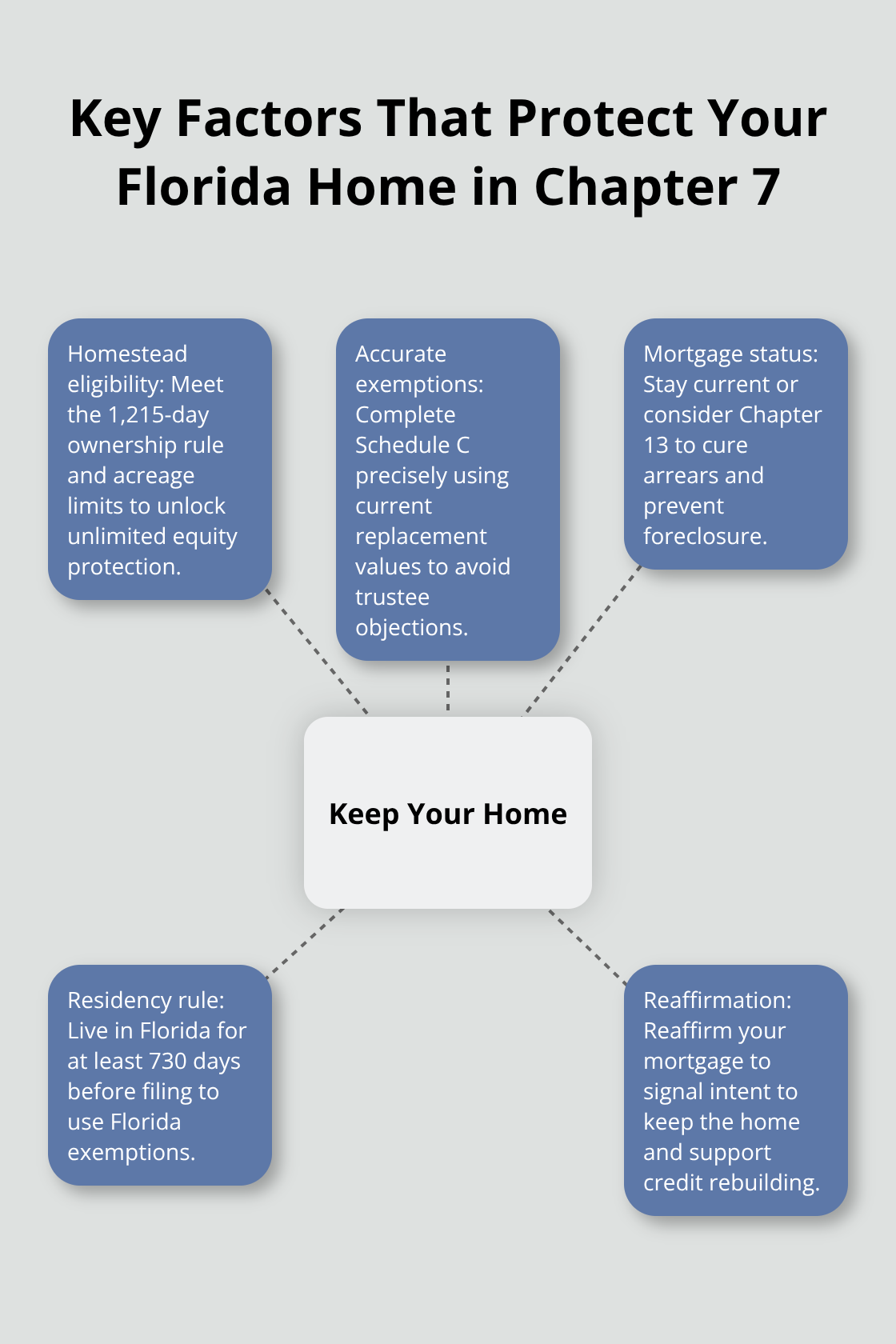
The homestead exemption requires you to verify your ownership timeline and property size meet Florida’s requirements before filing. If you have owned your home for at least 1,215 days and it does not exceed half an acre in the city or 160 acres outside municipal limits, your equity protection is unlimited. If you fall short of the 1,215-day mark, the $170,350 protection still applies, which covers most moderate-value properties in Florida. Married couples filing jointly can double these protections if both spouses own the home, making this a significant advantage for married homeowners facing financial crisis.
Managing Your Mortgage and Payment Obligations
Your mortgage situation demands immediate attention because the homestead exemption protects equity but not your obligation to the lender. If you are behind on payments, Chapter 7 will not save your home from foreclosure, making Chapter 13 the superior choice since it allows you to catch up on arrears through a three to five year plan while maintaining ownership. If you are current on payments, staying that way throughout bankruptcy is non-negotiable. Missing even one payment after filing triggers foreclosure proceedings that bypass exemption protections entirely. When you file, your lender receives notice and may accelerate the loan, so contact them immediately to confirm the loan terms remain in effect. Reaffirming your mortgage in writing tells the court and lender you intend to keep the debt and the home, which strengthens your position and can help rebuild credit after discharge.
Verifying Your Florida Residency Status
If you have not lived in Florida for at least 730 days before filing, you cannot use Florida exemptions at all, forcing you to rely on exemptions from your previous state of residency or federal exemptions, which may offer less protection for your home. Verify your Florida residency timeline now because this single factor can eliminate your strongest protection before you even file. Many homeowners overlook this requirement and discover too late that they cannot access the unlimited homestead exemption they counted on. Your residency status determines which exemptions apply, making this verification step essential before you submit your petition.
The specifics of your situation-your ownership timeline, mortgage status, and residency history-shape which protections apply to your home. Understanding these details positions you to move forward with confidence into the next phase of your Chapter 7 case.
Stabilizing Your Housing and Rebuilding Credit After Discharge
Protecting Your Home After Discharge Becomes Final
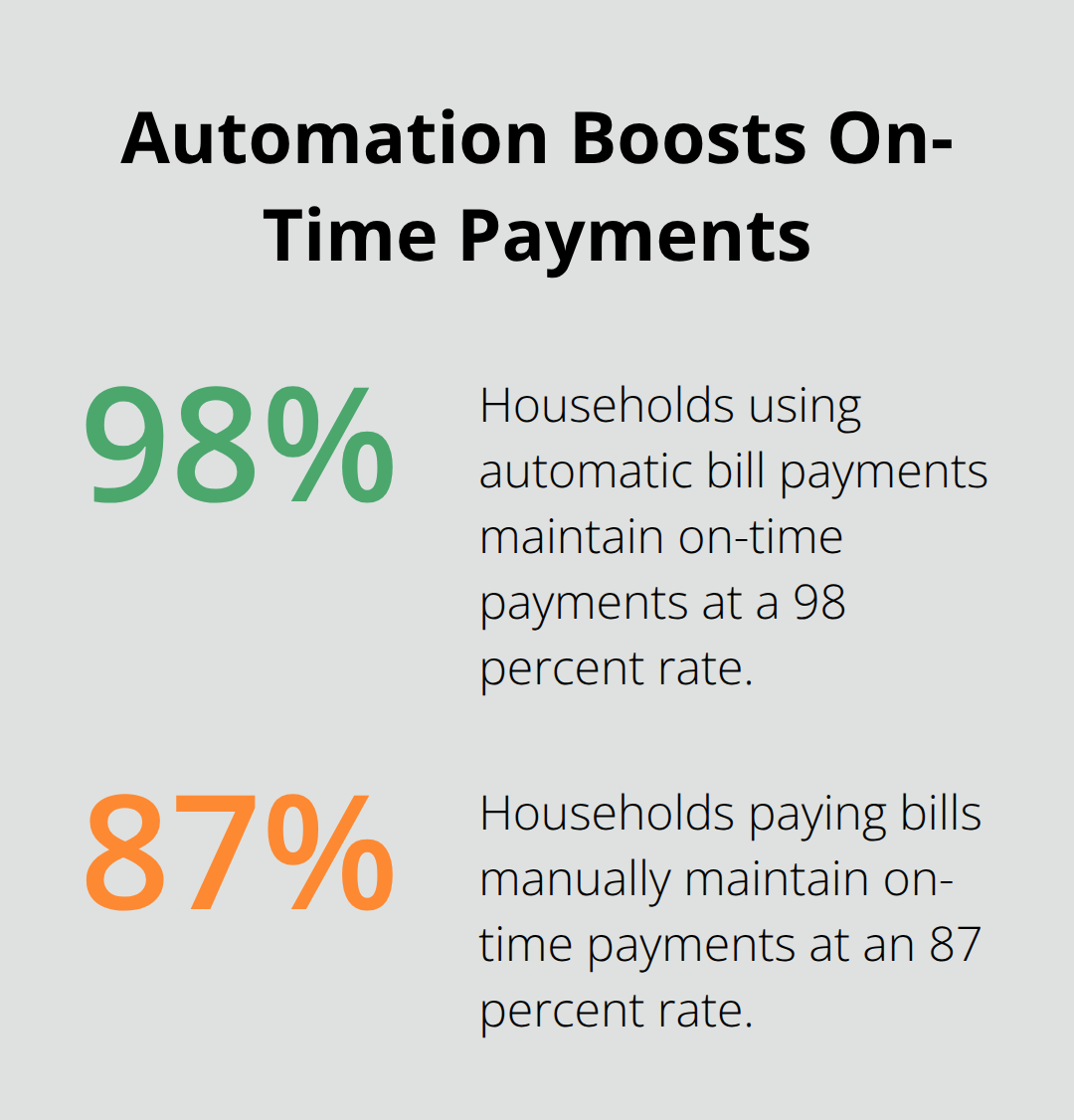
Chapter 7 discharge eliminates your unsecured debts, but your mortgage remains a secured debt tied to your home. The moment your discharge becomes final, your focus shifts to preventing future housing instability and reestablishing creditworthiness. If you reaffirmed your mortgage during bankruptcy, your lender has already reported this to credit bureaus, which means your payment history going forward directly impacts your credit score. Missing even one mortgage payment after discharge can trigger foreclosure, so set up automatic payments through your bank to eliminate the risk of accidental nonpayment. The Federal Reserve’s 2023 Survey of Household Economics and Decisionmaking found that households with automatic bill payments maintained a 98 percent on-time payment rate compared to 87 percent for manual payments, making automation your strongest defense against housing loss.
Accelerating Credit Score Recovery Through Strategic Actions
Your credit score begins recovering immediately after discharge, and mortgage payments are the fastest way to rebuild it. Experian data shows that consumers who maintain current mortgage payments for 12 months after Chapter 7 discharge see average credit score increases of 80 to 120 points. After 24 months of on-time payments, increases often reach 150 to 200 points, moving scores from the poor range into fair or good territory. Secured credit cards accelerate this recovery without requiring significant capital. Open a secured card with a $500 to $1,000 deposit, use it for small monthly purchases like groceries or gas, and pay the full balance before the due date each month. This activity reports to all three credit bureaus and demonstrates responsible credit management. After 12 months of perfect payments, most issuers graduate you to an unsecured card and return your deposit.
Avoid the temptation to apply for multiple cards simultaneously, as each application generates a hard inquiry that temporarily lowers your score by 5 to 10 points. Space applications 6 to 12 months apart to allow your score to stabilize between inquiries. Within 18 to 24 months of consistent mortgage and secured card payments, your credit score typically reaches 650 or higher, making you eligible for conventional refinancing, home equity lines of credit, or other favorable lending products at competitive rates.
Building Long-Term Wealth Through Strategic Equity Growth
Your discharged Chapter 7 case remains on your credit report for 10 years but loses its negative impact much faster. After seven years, lenders often ignore the bankruptcy filing entirely and focus on your post-discharge payment history. Use this window to build equity aggressively through extra mortgage payments whenever possible. Adding $100 to $200 monthly to your principal reduces your loan term by several years and saves tens of thousands in interest. If your mortgage rate exceeds 5 percent after refinancing becomes available, prioritize that move to lower your monthly obligation and accelerate equity growth. Property taxes in Florida average 0.83 percent of home value annually, making homeownership cost-effective compared to renting.
Homeowners also benefit from the homestead exemption continuing to protect unlimited equity after discharge, meaning any wealth you build through equity cannot be seized by future creditors. Once you have 20 percent equity in your home, eliminate private mortgage insurance by requesting removal from your lender, which typically reduces your monthly payment by $150 to $300 depending on your loan amount. Direct these savings toward retirement accounts or taxable investment accounts to diversify your wealth beyond real estate.
Maximizing Tax-Advantaged Retirement Savings
Florida residents benefit from no state income tax, making retirement accounts particularly valuable for tax-deferred growth. Contribute to your 401(k) or Traditional IRA up to annual limits, which currently stand at $24,500 for 401(k)s and $7,000 for IRAs for those under 50 years old. These accounts remained fully protected during your Chapter 7 filing and continue providing unlimited asset protection going forward, making them the foundation of long-term financial security. Your post-discharge years offer the perfect opportunity to maximize these contributions and build wealth that creditors cannot touch.
Final Thoughts
Florida’s unlimited homestead exemption protects your home when you own it for at least 1,215 days and meet property size requirements, while the $170,350 protection covers most moderate-value properties if you fall short of that timeline. Claiming exemptions correctly on Schedule C, verifying your residency status, and staying current on mortgage payments throughout Chapter 7 determine whether you keep home bankruptcy Florida protections intact. Your ownership timeline, mortgage status, property value, and residency history shape which strategies work best for your specific circumstances.
Professional guidance matters significantly because missing even one detail can cost you protections you should have had. We at Harnage Law, PLLC assist individuals and families in overcoming financial challenges through the bankruptcy process by helping you discharge qualifying debts, stop creditor harassment, prevent wage garnishments, and halt lawsuits while protecting your assets. Our goal focuses on helping you rebuild your financial future after Chapter 7 while safeguarding your residence.
Contact Harnage Law, PLLC for personalized guidance on your specific situation, and we can review your ownership timeline, mortgage obligations, and exemption eligibility to determine the best path forward for keeping your home through bankruptcy.