
At Harnage Law, PLLC, we understand the challenges of rebuilding your financial life after bankruptcy. Many Floridians wonder how to remove bankruptcy from their credit file and start fresh.
This guide will walk you through the process of addressing bankruptcy on your credit report and provide practical steps to improve your credit score. We’ll also share strategies to help you rebuild your financial standing and move towards a brighter financial future.
How Bankruptcy Affects Your Credit in Florida
Types of Bankruptcy on Credit Reports
In Florida, two main types of personal bankruptcy appear on credit reports: Chapter 7 and Chapter 13. Chapter 7, often called “liquidation bankruptcy,” remains on your credit report for 10 years from the filing date. Chapter 13, known as “reorganization bankruptcy,” stays for 7 years.
Duration of Bankruptcy on Your Credit Report
The Fair Credit Reporting Act (FCRA) dictates how long bankruptcy information can remain on your credit report in Florida (and other states). Chapter 7 bankruptcies persist for a decade, while Chapter 13 filings disappear after 7 years. Individual accounts included in your bankruptcy may fall off your report earlier, typically 7 years from the date of first delinquency.
Credit Score Impact
Bankruptcy can cause a substantial drop in your credit score. FICO reports that a Chapter 7 bankruptcy can lower a credit score by 130 to 240 points for someone with a good credit score, and 150 to 240 points for someone with an excellent score. The impact tends to decrease over time, especially if you take steps to rebuild your credit.
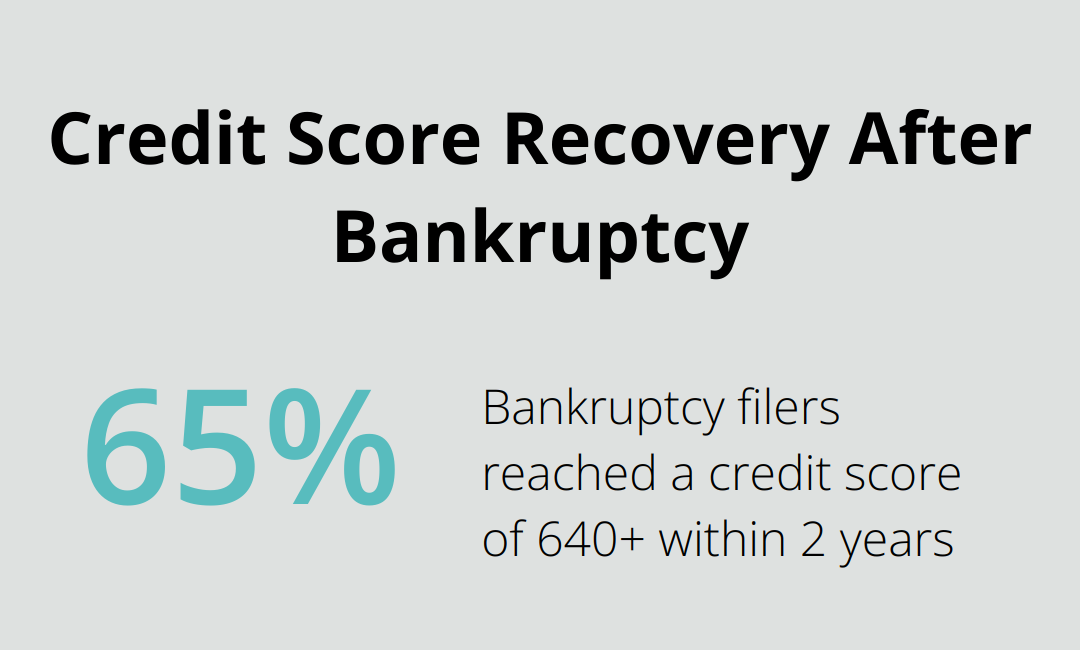
A 2019 LendingTree study found that 65% of people who filed for bankruptcy had a credit score of 640 or higher after 2 years. This statistic demonstrates that recovery is possible with the right strategies and patience.
Monitoring Your Credit After Bankruptcy
We recommend regular checks of your credit reports after filing for bankruptcy. You have the right to one free credit report from each of the three major credit bureaus annually through AnnualCreditReport.com. These checks (which should occur at least once a year) help ensure that all information is accurate and that your bankruptcy is correctly reported and eventually removed.
The impact of bankruptcy on your credit can be significant, but it’s not permanent. The next section will outline specific steps you can take to remove bankruptcy from your credit report and start rebuilding your financial future.
How to Remove Bankruptcy from Your Credit Report in Florida
Review Your Credit Reports
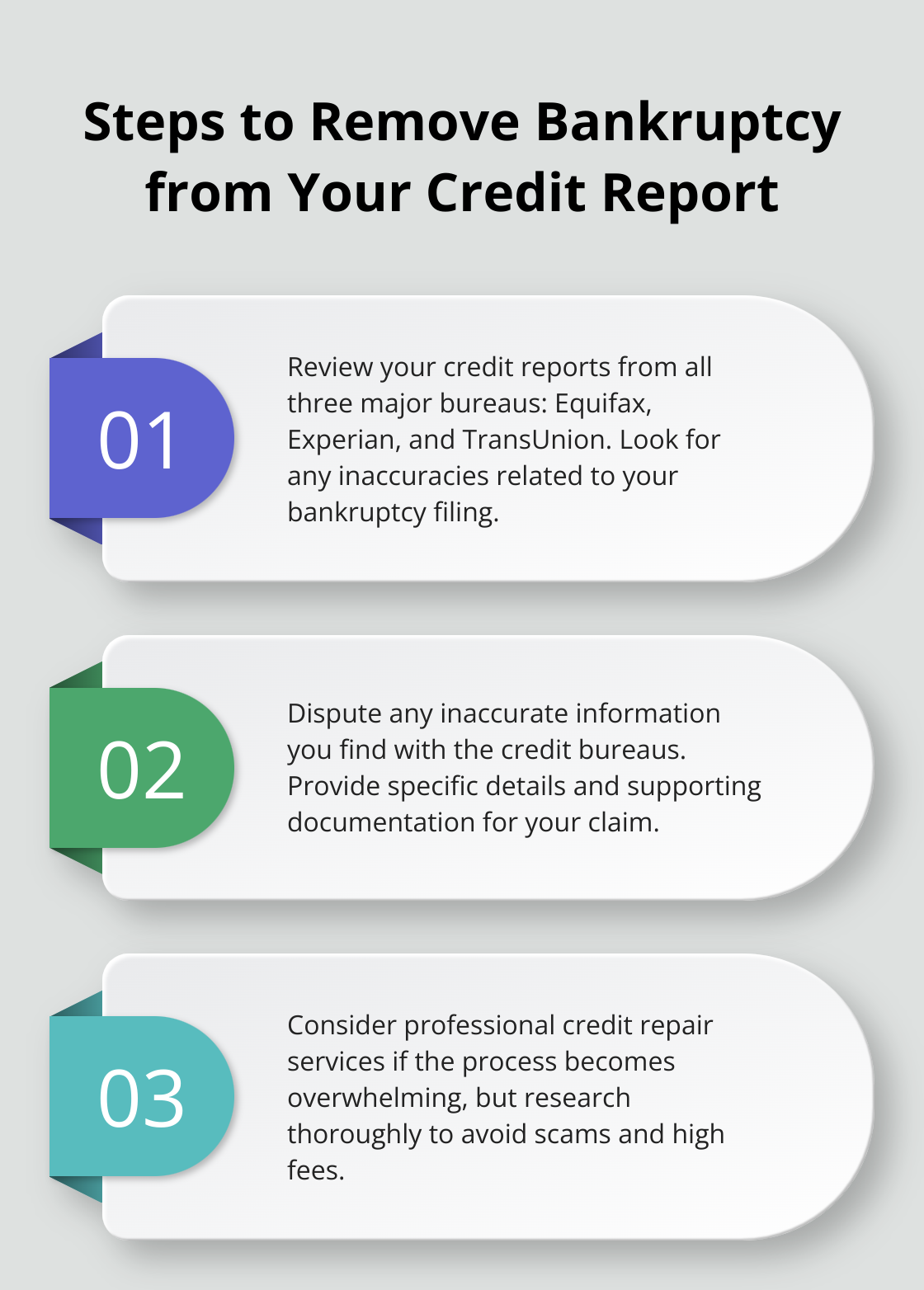
The first step to remove bankruptcy from your credit report in Florida involves a thorough examination of your credit reports. Obtain reports from all three major credit bureaus: Equifax, Experian, and TransUnion. Look for any inaccuracies related to your bankruptcy filing, such as incorrect dates, account statuses, or debts that should have been discharged but still appear as active.
A Federal Trade Commission study found that one in five consumers had an error on at least one of their three credit reports. This statistic highlights the importance of careful review. (You can access your free credit reports annually through AnnualCreditReport.com.)
Dispute Inaccurate Information
If you find errors, file a dispute with the credit bureaus. You can submit disputes online, by mail, or by phone. Provide specific details about the incorrect information and include supporting documentation. Credit bureaus must investigate your claim within 30 days and correct any verified errors.
A Consumer Financial Protection Bureau study revealed that companies provided relief in response to approximately 11% of complaints, with planned relief for another 5%. While these numbers might seem low, they indicate that persistence can yield results.
Consider Negotiation with Creditors
In some instances, you might negotiate with creditors for early removal of negative items, including bankruptcy. This approach works best if you’ve maintained a positive relationship with the creditor since your bankruptcy.
However, this strategy often proves challenging. Most creditors have agreements with credit bureaus to report accurate information, which includes bankruptcy filings. (Success rates for this method tend to be low, but it’s worth attempting if other options have been exhausted.)
Explore Professional Credit Repair Services
While you can handle these steps independently, some individuals opt for credit repair companies. These firms manage the time-consuming process of reviewing reports, filing disputes, and negotiating with creditors.
Exercise caution when considering this option. The Federal Trade Commission warns that some credit repair companies make false promises and charge high fees for services you can perform yourself for free. If you decide to use a credit repair service, conduct thorough research and select a reputable company.
The process of removing bankruptcy from your credit report requires patience and persistence. While these steps can help ensure the accuracy of your report and potentially improve your overall credit picture, rebuilding your credit after bankruptcy involves additional strategies. Let’s explore effective methods to restore your financial standing in the next section.
How to Rebuild Credit After Bankruptcy in Florida
Start with a Secured Credit Card
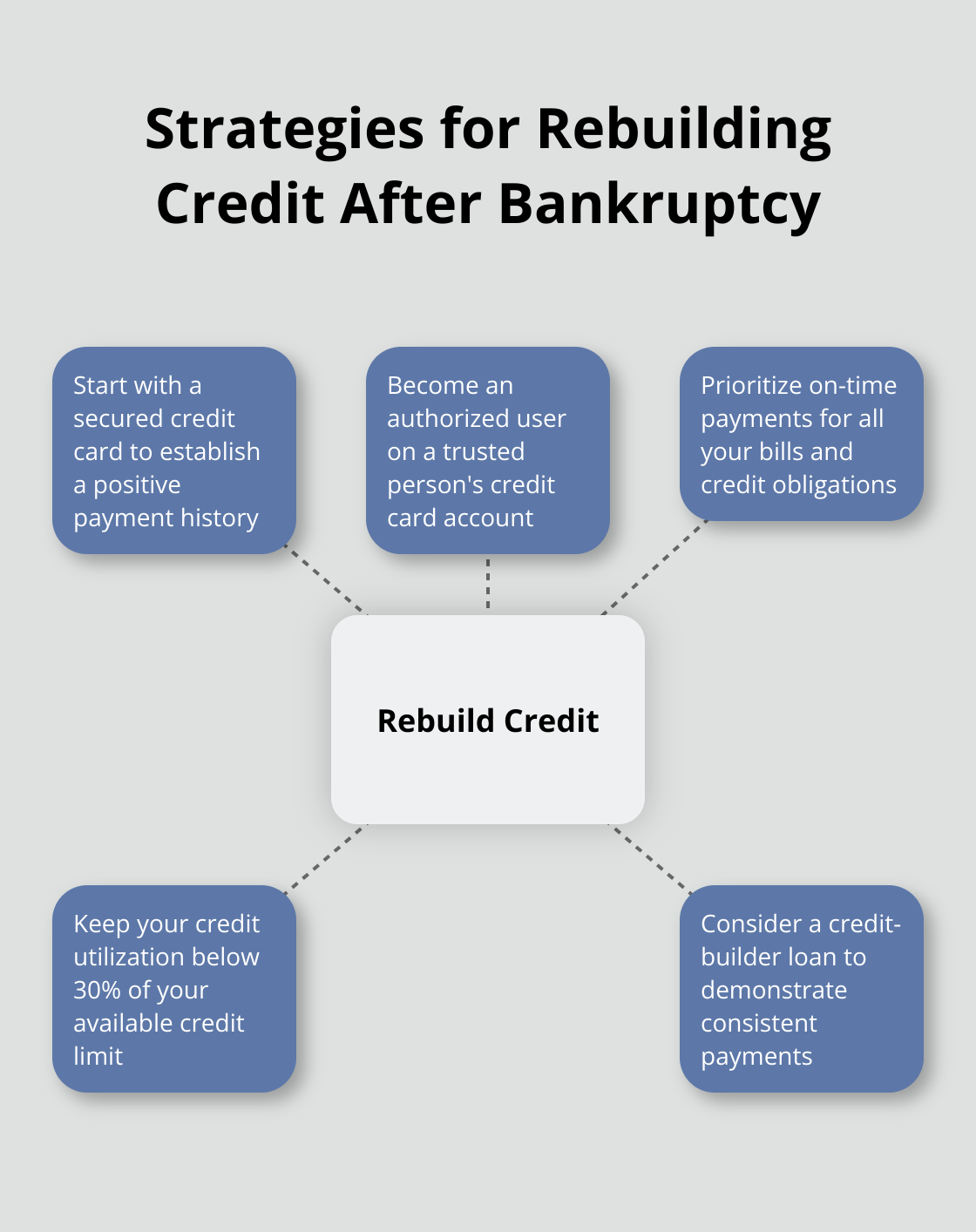
A secured credit card serves as an effective tool for credit rebuilding. These cards require a cash deposit that typically becomes your credit limit. The Capital One Secured Mastercard and the Discover it Secured Credit Card are popular options. They report to all three major credit bureaus, which helps you establish a positive payment history.
Become an Authorized User
You can boost your credit score by becoming an authorized user on a family member or trusted friend’s credit card account. Their positive payment history can reflect on your credit report. However, choose wisely – their negative actions can also impact your credit.
Prioritize On-Time Payments
Payment history accounts for 35% of your FICO score. Set up automatic payments or reminders to ensure you never miss a due date. Even a single late payment can significantly impact your recovering credit score.
According to Experian, 65% of consumers who filed for bankruptcy reached a credit score of 640 or higher within two years (largely due to consistent, on-time payments).
Keep Credit Utilization Low
Credit utilization – the amount of credit you use compared to your credit limits – plays a significant role in your credit score. Try to keep your utilization below 30%. For example, if you have a $1,000 credit limit, try not to carry a balance over $300.
A study by Credit Karma found that consumers with excellent credit scores (800+) have an average credit utilization of just 5.7%.
Consider a Credit-Builder Loan
Credit-builder loans, offered by some credit unions and online lenders, help people build or rebuild credit. The money you borrow is held in a savings account while you make payments, and you receive the funds once you’ve paid off the loan.
Self (formerly Self Lender) reports that their customers see an average credit score increase of 32 points over the course of 12 months.
By following these steps, you can start to rebuild your financial future after bankruptcy. Remember, most Chapter 7 cases are completed within four to six months, giving you a clean slate and a chance to rebuild your credit sooner than you might think.
Final Thoughts
Removing bankruptcy from your credit file in Florida takes time and effort. You must review your credit reports, dispute inaccuracies, and explore negotiation options. These actions will improve your financial standing and bring you closer to your goal of financial recovery.
Bankruptcy information can remain on your credit report for up to a decade. However, its impact decreases over time when countered with positive financial behaviors. On-time payments, proper credit utilization, and gradual credit rebuilding will produce tangible results.
At Harnage Law, PLLC, we support you through this process. Our team helps individuals and families in Florida navigate Chapter 7 bankruptcy complexities. We offer guidance to help you discharge qualifying debts and start fresh financially.
