Chapter 7 bankruptcy wipes your debts clean, but it also wipes your credit score. The good news is that rebuilding credit after Chapter 7 is entirely possible with the right strategy and consistent effort.
We at Harnage Law, PLLC have guided countless clients through this recovery process. This guide walks you through proven steps to restore your financial standing in Florida.
How Chapter 7 Bankruptcy Affects Your Credit Score in Florida
The Immediate Impact on Your Credit Score
Chapter 7 bankruptcy hits your credit score hard and immediately. Most people see their score drop by 100 to 200 points depending on their starting score, existing debt level, and payment history before filing. If you started with a higher score, the fall feels steeper. If you had already missed payments and carried high balances, the damage is less dramatic but the recovery path is longer. The filing itself appears on your credit report as a public record, and individual accounts show they were included in bankruptcy. This stays visible for up to 10 years in Florida, though the negative impact weakens significantly after the first two years as newer positive activity accumulates on your report.
Why the First 24 Months Matter Most
The first 24 months after discharge represent your fastest window for credit recovery. Lenders weight recent payment history much more heavily than older negative marks, so every on-time payment you make starting today directly counters the bankruptcy filing. Your credit score is built on five factors: payment history accounts for roughly 35 percent of your score, credit utilization makes up 30 percent, length of credit history is 15 percent, new credit inquiries are 10 percent, and credit mix is 5 percent.
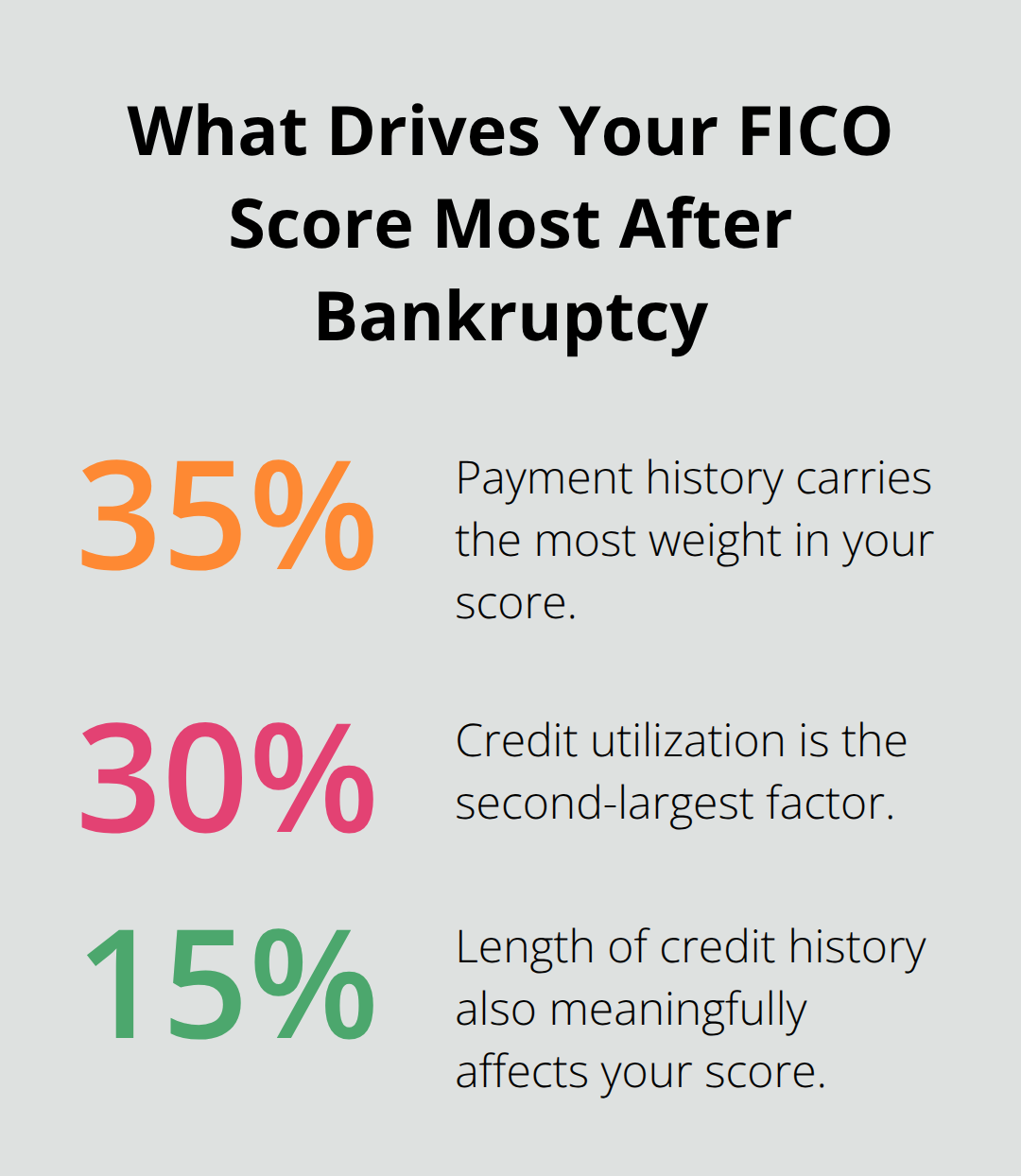
After bankruptcy, you control three of these immediately. You can make perfect on-time payments starting now, keep any new credit accounts at low utilization, and avoid unnecessary new applications.
What Creditors and Lenders Look for After Discharge
Creditors and lenders post-bankruptcy care less about what happened before discharge and far more about what you do after. A mortgage lender typically requires at least four years of clean history post-discharge, but FHA loans sometimes approve sooner. Car lenders may offer financing within months of discharge, though terms are usually unfavorable at first. The real opportunity sits in secured credit cards and credit-builder loans, which report directly to all three bureaus and let you prove responsible credit behavior immediately. Opening a secured card within your first month after discharge shows lenders you are serious about rebuilding, not hiding from credit. This foundation sets the stage for the practical steps that will accelerate your recovery.
Building Your Foundation After Discharge
Open a Secured Credit Card Within Your First Month
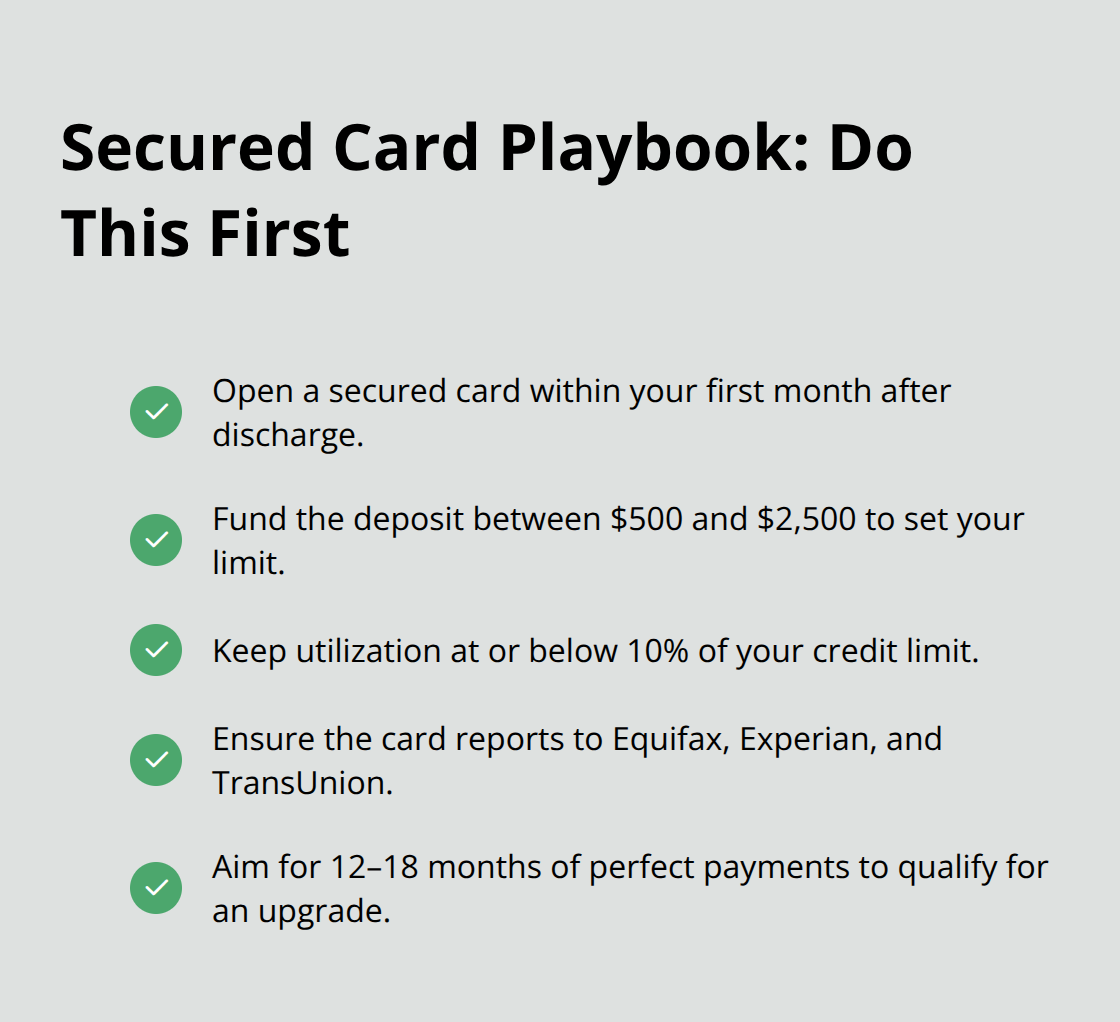
A secured credit card is non-negotiable after discharge. You deposit cash-typically between $500 and $2,500-which becomes your credit limit. This deposit sits in a savings account and earns interest while you rebuild, so you are not just spending money on credit repair. The card reports to all three bureaus (Equifax, Experian, and TransUnion), meaning every on-time payment directly rebuilds your score. After 12 to 18 months of perfect payments, most issuers upgrade you to an unsecured card and return your deposit. Secured credit cards rebuild payment history fast, making this the fastest, most concrete way to prove to lenders that you take credit seriously after bankruptcy.
Keep your balance at or below 10 percent of the limit. For a $1,000 credit limit, that means keeping your balance at $100 or less. This low utilization signals financial discipline and prevents the card from becoming a spending trap disguised as a credit-building tool.
Automate Every Payment to Prevent Mistakes
Payment history accounts for 35 percent of your credit score, making it the single most powerful factor in your recovery. One missed payment erases months of progress, which is why automation is not optional-it is your insurance policy against human error. Set up automatic payments for every bill the day after you receive your paycheck. If you cannot automate a bill, set phone reminders three days before the due date.
Use budgeting tools like YNAB or EveryDollar to track every dollar and flag upcoming payments before they slip past you. Many people underestimate how much damage a single late payment causes after bankruptcy; lenders interpret it as a sign you have not truly changed your financial behavior. Space new credit applications by three to six months as well. Each application triggers a hard inquiry that temporarily lowers your score and signals financial desperation to lenders, so avoid applying for multiple cards at once.
Monitor Your Credit Report and Dispute Errors
Your credit report likely contains errors after bankruptcy-accounts showing incorrect balances, discharged debts still listed as active, or missed payments attributed to accounts you never owned. Pull free reports from annualcreditreport.com and review all three bureaus. Dispute any errors in writing directly with each bureau; most disputes resolve within 30 days.
Errors on post-bankruptcy reports are common enough that disputing them is a standard step in recovery. Use free credit monitoring services like Equifax Core Credit to track monthly updates and catch problems early. Quarterly reviews in your first two years, then annual reviews afterward, prevent small errors from compounding into major score damage. Keep credit utilization low across all accounts; if you have older accounts from before bankruptcy that remain open, using them responsibly demonstrates that you manage multiple credit lines without overspending. These monitoring habits establish the discipline needed as you build a fresh financial foundation and move toward the next phase of rebuilding-exploring additional credit products that accelerate your recovery timeline.
Resources and Tools for Credit Rebuilding in Florida
Free Credit Monitoring Protects Your Recovery
Free credit monitoring serves as your first line of defense against errors that sabotage recovery. Equifax Core Credit provides monthly updates at no cost and alerts you when new accounts open in your name or when inquiries hit your report. This matters because identity theft targets bankruptcy filers-criminals know your credit is already damaged, making fraud easier to hide. Pull your full reports from annualcreditreport.com quarterly in your first two years, then annually after that. When you spot errors, dispute them in writing directly with each bureau. The Federal Trade Commission reports that roughly one in four consumers find errors on their credit reports, and post-bankruptcy reports contain even higher error rates because accounts transition from active to discharged status. Correcting these mistakes can add 20 to 50 points to your score within 30 days.
Nonprofit Counseling Addresses Root Causes
Financial counseling through nonprofit agencies affiliated with the National Foundation for Credit Counseling costs nothing or very little and addresses the root causes of your debt, not just the symptoms. These counselors help you build realistic budgets, negotiate with creditors if needed, and develop spending habits that prevent future bankruptcy. They work with you to identify where money leaks occur and how to plug those holes before they drain your recovery progress. This structured approach transforms vague financial anxiety into concrete action steps you can track and measure.
Credit-Builder Loans Accelerate Score Recovery
Credit-builder loans from credit unions like Alive Credit Union offer another practical tool-you borrow $500 to $1,200, the funds sit in savings earning interest, and you repay the loan over 12 months. At 12.00 percent APR, a $1,000 loan costs roughly $88.84 monthly, and every payment reports to all three bureaus.
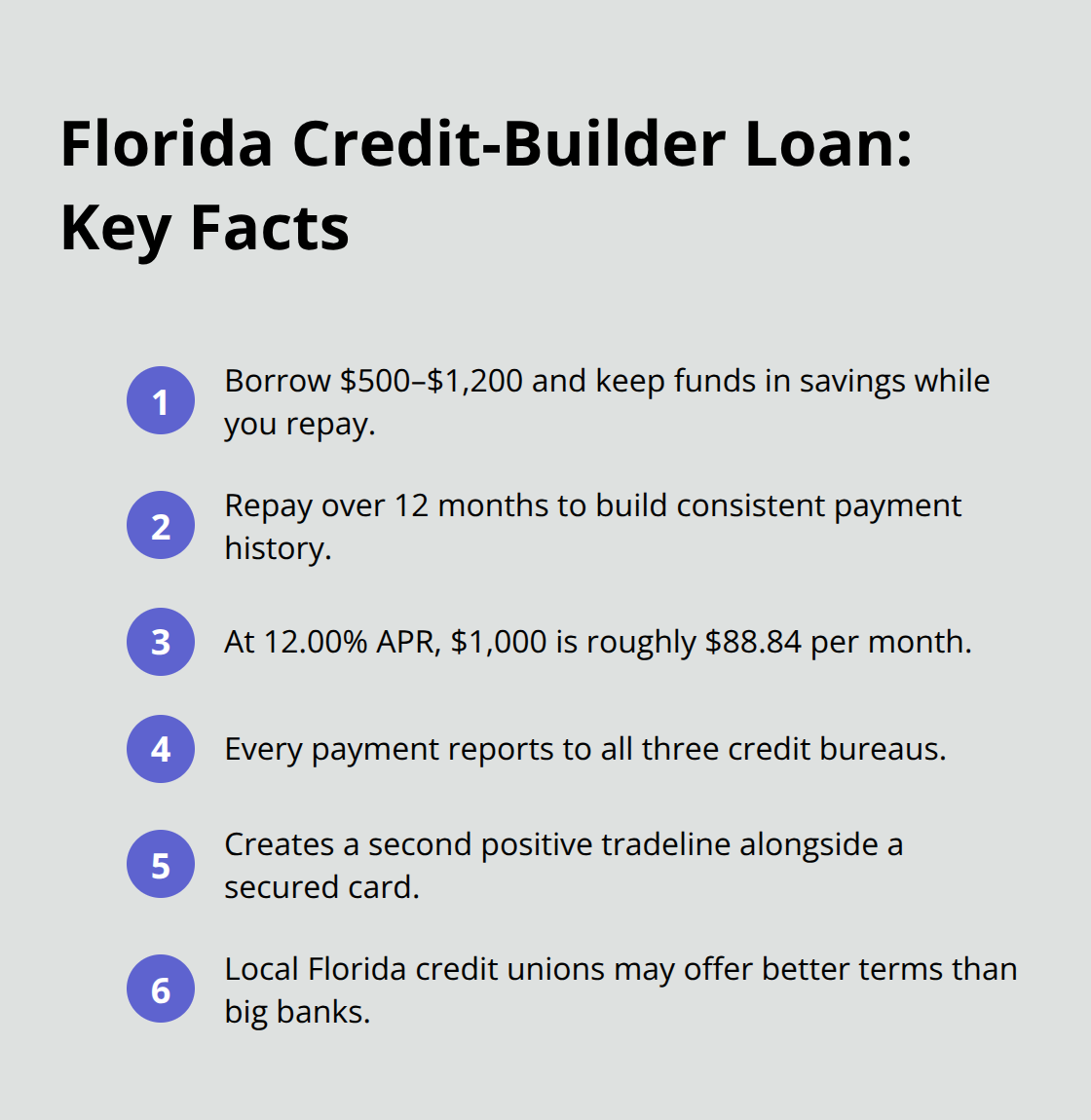
This creates a second positive tradeline alongside your secured card, diversifying your credit mix and accelerating score recovery. Local Florida credit unions often offer better terms than national banks because they focus on member financial wellness rather than profit margins alone.
Accountability Networks Prevent Silent Mistakes
A practical support network means surrounding yourself with accountability-whether that is a trusted friend who reviews your monthly spending, a financial counselor who checks your progress quarterly, or simply joining online communities where others post their post-bankruptcy recovery timelines and celebrate small wins. The isolation many people feel after bankruptcy actually slows recovery because poor financial decisions happen in silence. When you share your goals with others, you create friction that stops impulsive spending and keeps you honest about your progress. This social dimension transforms credit rebuilding from a solitary struggle into a shared journey where setbacks feel less permanent and victories feel more meaningful.
Final Thoughts
Credit rebuilding after Chapter 7 bankruptcy rewards consistency over months and years, not luck or shortcuts. The steps in this guide work because they address what lenders actually care about: your ability to manage credit responsibly starting today. Opening a secured card, automating payments, monitoring your report, and keeping utilization low are concrete actions that move your score upward and prove to creditors that you have changed your financial behavior. Within two to three years of disciplined credit management, you can qualify for better terms and lower interest rates, and within four years, mortgage lenders become accessible.
Long-term financial stability after Chapter 7 depends on habits you build now. Start an emergency fund at $500 to $1,000 and work toward three to six months of living expenses to prevent future debt when unexpected costs arise. Use budgeting tools to track spending, automate payments to prevent mistakes, and review your credit reports regularly to catch errors before they compound. These habits transform your relationship with money from reactive and desperate to proactive and controlled.
Bankruptcy is not the end of your financial story-it is a reset button that allows you to start fresh. If you are considering Chapter 7 bankruptcy or have questions about how it affects your specific situation in Florida, contact Harnage Law, PLLC to discuss your options and learn how to rebuild credit after Chapter 7 with professional guidance.