Chapter 7 bankruptcy offers powerful financial relief for Florida residents drowning in debt. The benefits of filing Chapter 7 bankruptcy extend far beyond immediate creditor protection.
We at Harnage Law, PLLC see clients transform their financial futures through this legal process. Within months, qualifying debts disappear while protected assets remain safe.
What Protection Does Chapter 7 Filing Provide in Florida
The moment you file Chapter 7 bankruptcy in Florida, federal law activates an automatic stay that immediately stops all creditor collection activities. This powerful legal shield means phone calls from debt collectors cease within 24 hours, and creditors face contempt of court charges if they continue harassment. The automatic stay halts wage garnishments instantly, which returns your full paycheck while your case proceeds through the courts.
Immediate End to Wage Garnishments and Bank Freezes
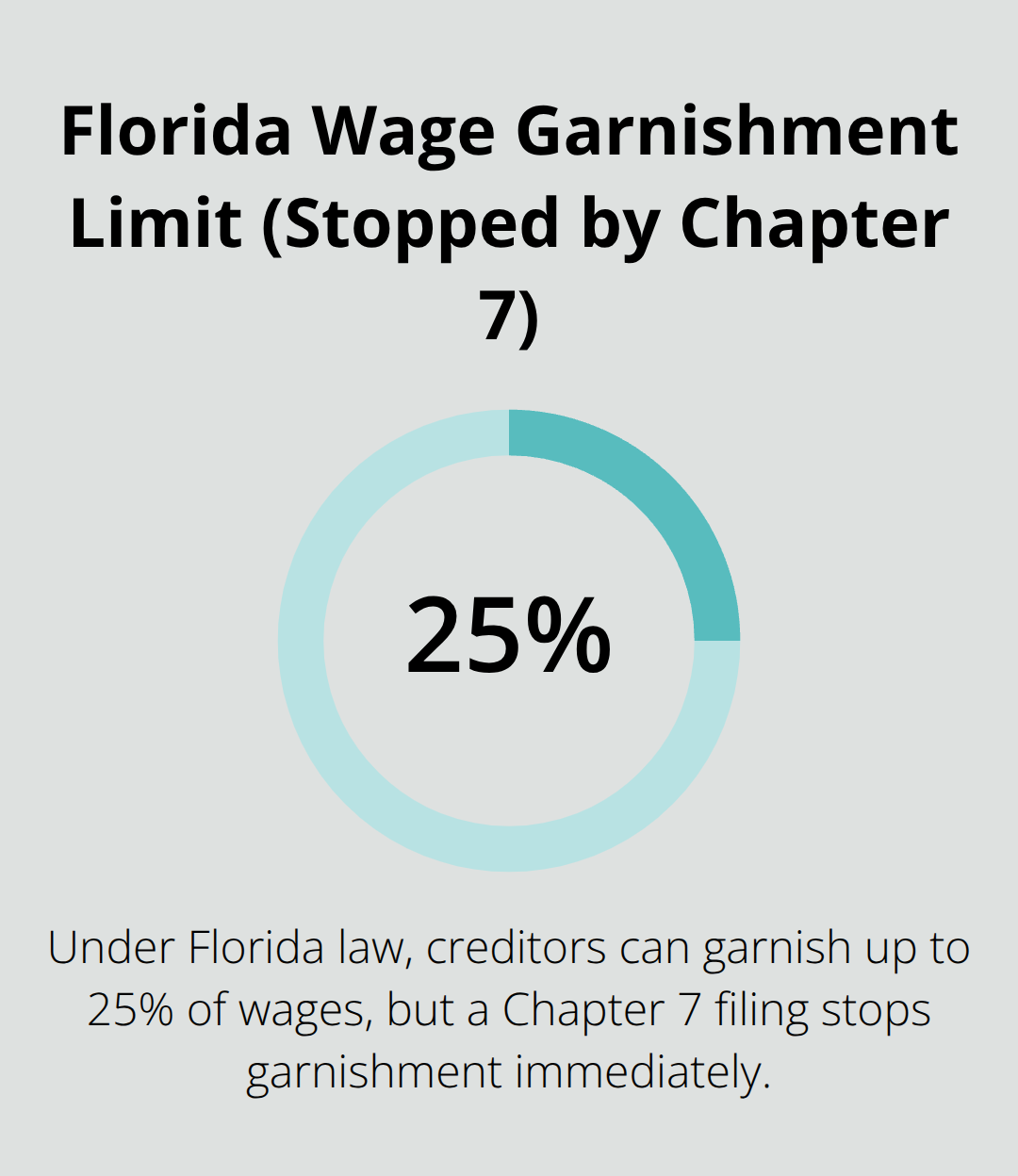
Florida law allows creditors to garnish up to 25% of your wages, but Chapter 7 filing stops this collection method immediately. Bank account freezes also end once the automatic stay takes effect, which restores access to your funds. Most clients see garnished wages return to normal levels within one pay period after filing. The U.S. Bankruptcy Code requires creditors to release all frozen assets upon receipt of your bankruptcy filing notice (giving you breathing room to manage essential expenses).
Foreclosure and Repossession Protection
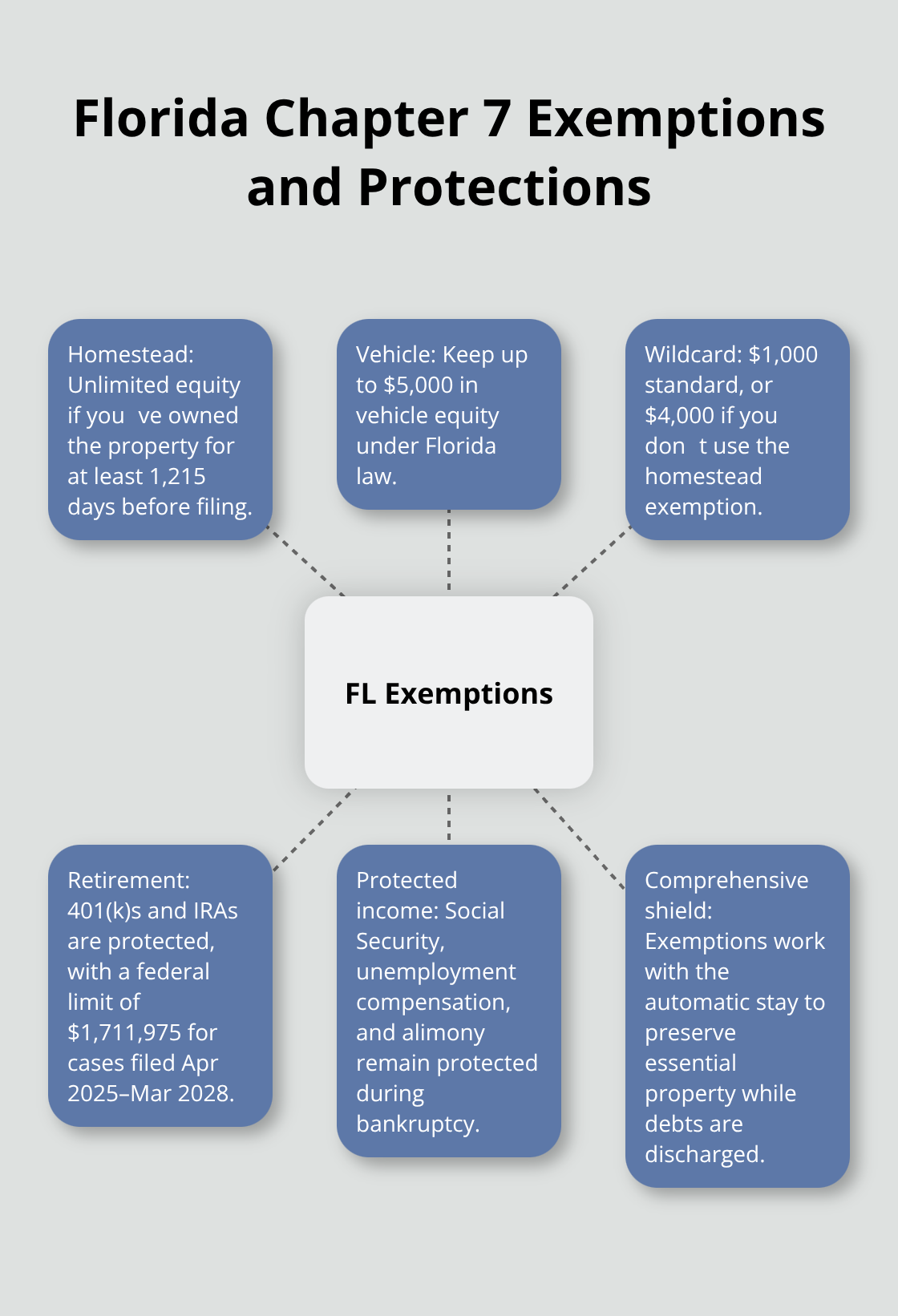
The automatic stay provides temporary protection against foreclosure proceedings, which gives homeowners time to evaluate their options without immediate property loss. Vehicle repossessions halt completely once creditors receive bankruptcy notice, though secured debts require additional planning for long-term resolution. Florida homeowners benefit from the state’s generous homestead exemption, which protects unlimited home equity if you’ve owned the property for at least 1,215 days before filing.
Asset Protection Through Florida Exemptions
Florida’s exemption laws work alongside the automatic stay to create comprehensive asset protection during bankruptcy. The state allows you to keep up to $5,000 in vehicle equity and provides a $1,000 wildcard exemption for personal property ($4,000 if you don’t use the homestead exemption). Tax-exempt retirement accounts like 401(k)s and IRAs remain protected, with federal limits reaching $1,711,975 for cases filed between April 2025 and March 2028. These protections form the foundation for understanding which debts Chapter 7 can eliminate permanently.
How Does Chapter 7 Bankruptcy Transform Your Financial Future in Florida
Chapter 7 bankruptcy delivers permanent debt elimination for most unsecured obligations, with approximately 99% of individual debtors who receive a discharge according to federal bankruptcy statistics. Credit card balances, medical bills, personal loans, and utility debts vanish completely within three to four months of filing, which creates immediate monthly savings that average $800 to $1,200 for typical Florida filers.
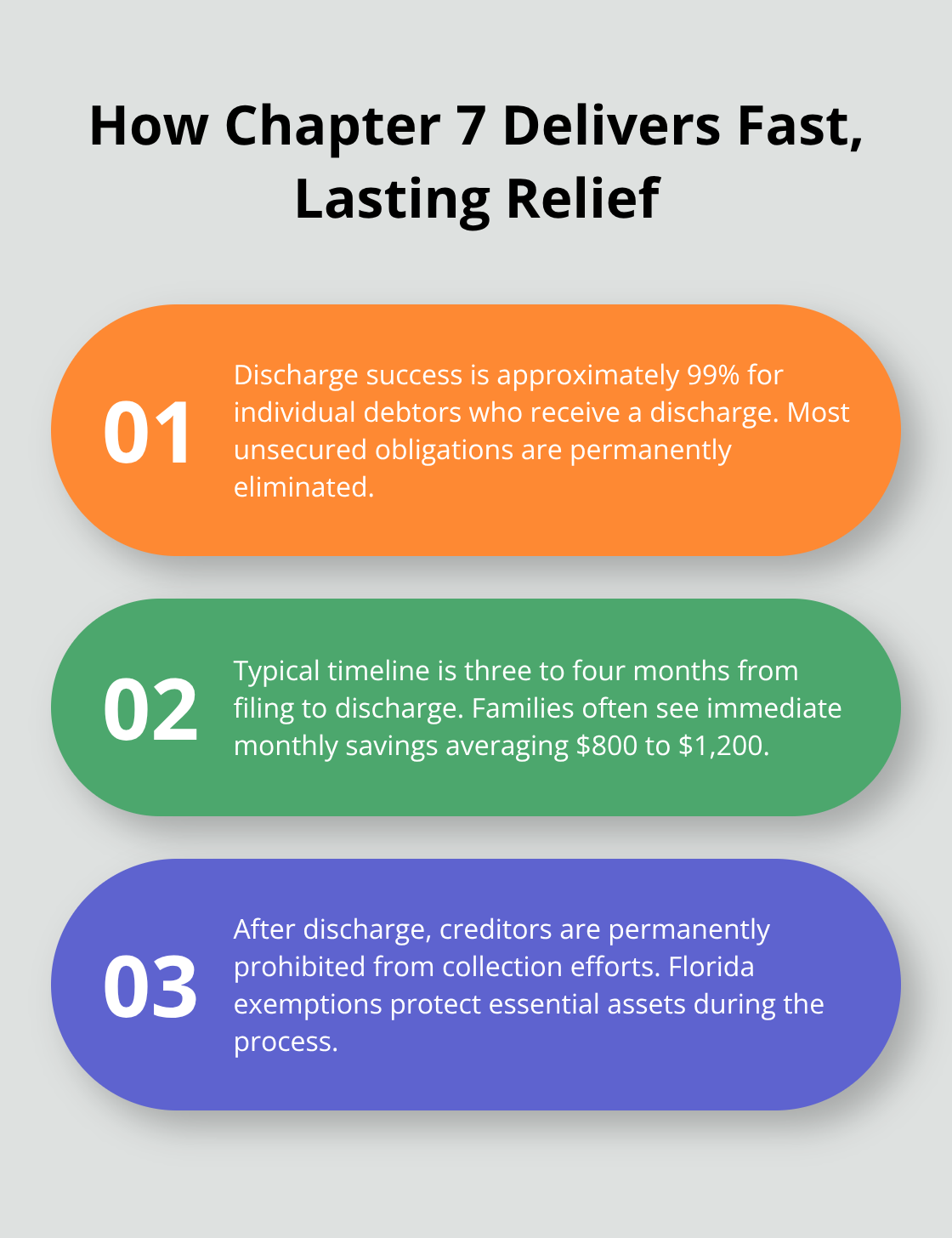
The discharge prohibits creditors from ever attempting collection on these debts again, which means phone calls, letters, and legal threats stop permanently. Florida residents benefit from the state’s generous exemption laws that protect essential assets during this process (including unlimited homestead equity for properties owned over 1,215 days, up to $5,000 in vehicle equity, and complete protection for retirement accounts like 401(k)s and IRAs).
Permanent Debt Relief Creates Monthly Cash Flow
The debt discharge in Chapter 7 bankruptcy provides measurable financial relief that continues for years after case completion. Florida filers typically eliminate between $15,000 and $45,000 in unsecured debt, which translates to monthly payment savings of $300 to $900 based on minimum payment requirements. These savings allow families to cover essential expenses like housing, transportation, and healthcare without the crushing burden of credit card minimums and collection demands. Social Security benefits, unemployment compensation, and alimony payments remain completely protected throughout the bankruptcy process under Florida Statute 222.201 (which maintains income stability during financial recovery).
Credit Rebuilding Starts Immediately After Discharge
Chapter 7 bankruptcy actually accelerates credit rebuilding compared to struggling with unmanageable debt loads for years. Most clients see credit score improvements within six months of discharge as debt-to-income ratios improve dramatically and payment history stabilizes. Secured credit cards become available immediately after discharge, and many Florida residents qualify for auto loans within 12 to 18 months at reasonable interest rates. The bankruptcy notation remains on credit reports for ten years, but its impact diminishes significantly after two years when responsible payment patterns demonstrate financial rehabilitation.
Asset Protection Maximizes Financial Recovery
Florida’s exemption laws work hand-in-hand with debt discharge to preserve essential property while eliminating overwhelming obligations. The state’s $1,000 wildcard exemption increases to $4,000 if you don’t use the homestead exemption, which provides flexibility for protecting valuable personal items. Tax-exempt retirement accounts receive federal protection up to $1,711,975 for cases filed between April 2025 and March 2028 (ensuring your future financial security remains intact). This comprehensive asset protection forms the foundation for understanding the specific steps required to navigate the Chapter 7 process successfully in Florida courts.
What Documents Do You Need for Chapter 7 Bankruptcy in Florida
Chapter 7 bankruptcy in Florida demands precise documentation and strict adherence to federal court deadlines. The court requires a $338 filing fee paid via certified check or money order, though qualified individuals can apply for installment payments or fee waivers based on income guidelines. You must complete credit counseling from an approved agency within 180 days before you file, and the U.S. Trustee’s website provides the current list of approved providers. Essential documents include your completed Voluntary Petition for Individuals Filing for Bankruptcy, Statement About Your Social Security Numbers, Creditor Matrix, Summary of Assets and Liabilities, and current government-issued photo ID. Schedule D must list all secured creditors, while Schedule I and Schedule J detail your income and expenses (with wet signatures required on all forms).
Meeting of Creditors Occurs Within 40 Days
The court schedules the meeting of creditors between 21 and 40 days after you file, where you answer questions under oath about your financial situation and bankruptcy petition. Most meetings last 5 to 10 minutes with routine questions about income, assets, and debts, though trustees may probe deeper if inconsistencies appear in your paperwork. You must bring government-issued photo identification and proof of Social Security number to this meeting, and failure to appear results in case dismissal. The trustee reviews your documents for accuracy and determines whether any nonexempt assets exist for liquidation (though 99% of Chapter 7 cases are no-asset cases where debtors keep all their property).
Financial Management Course Completion Required
You must complete a Financial Management Course within 60 days after the creditors meeting to receive your discharge. This certificate must be filed with the court before the discharge order issues, and failure to complete this requirement prevents debt elimination. The course covers budgeting, money management, and credit rebuilding strategies that help prevent future financial problems. Approved agencies offer these courses online or by phone for approximately $50 to $100, making completion convenient for most Florida residents.
Discharge Arrives in 60 to 90 Days
The typical Chapter 7 case completes within 90 to 120 days from filing to discharge, making it the fastest debt relief option available. The discharge permanently eliminates qualifying debts and prohibits creditors from future collection attempts, though certain obligations like child support, alimony, and most student loans survive bankruptcy. This streamlined timeline allows Florida residents to rebuild their financial lives quickly while they maintain essential assets through the state’s generous exemption laws (which protect homes, vehicles, and retirement accounts from liquidation).
Final Thoughts
The benefits of filing Chapter 7 bankruptcy in Florida provide immediate relief from creditor harassment, wage garnishments, and overwhelming debt burdens. Within 90 to 120 days, qualifying debts disappear permanently while Florida’s generous exemption laws protect your home, vehicle, and retirement accounts. This legal process stops collection calls within 24 hours and restores access to your full paycheck.
Professional legal guidance proves vital for federal court requirements, documentation deadlines, and exemption strategies. We at Harnage Law, PLLC guide Florida residents through every step of the bankruptcy process from initial consultation to final discharge. Our team focuses on asset protection and debt elimination while clients rebuild their financial stability (which typically begins within six months of case completion).
Chapter 7 bankruptcy offers a proven path to eliminate debt and regain control of your finances. The sooner you address overwhelming debt, the faster you can begin credit rebuilding and secure your family’s financial future. Contact us today to learn how Chapter 7 bankruptcy can transform your financial situation and provide the fresh start you need.