Choosing between Chapter 7 or 13 bankruptcy can feel overwhelming when you’re facing financial hardship. Each option offers different benefits and requirements that could significantly impact your financial future.
We at Harnage Law, PLLC understand that Florida residents need clear guidance to make the right decision. This guide breaks down the key differences to help you determine which bankruptcy chapter fits your situation.
How Does Chapter 7 Bankruptcy Work in Florida
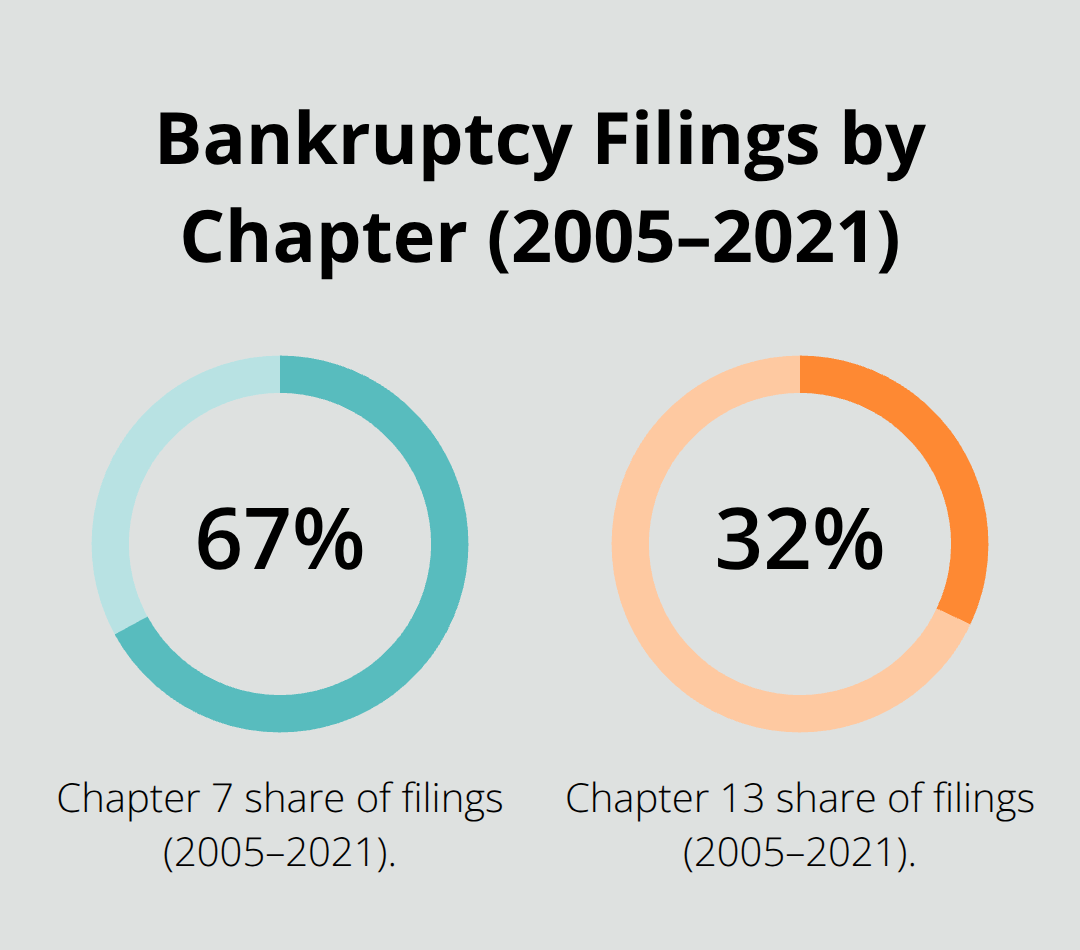
Chapter 7 bankruptcy eliminates most unsecured debts within 3-4 months, which makes it the fastest route to financial relief. The U.S. Courts reported that 67% of all bankruptcy filings between 2005 and 2021 were Chapter 7 cases, a statistic that reflects its popularity among debt-burdened Americans. Florida residents can discharge credit card debt, medical bills, and personal loans while they keep most essential property through state exemptions.
The 90-Day Debt Elimination Process
The Chapter 7 timeline moves quickly once you file your petition with the court. Within 20-40 days, you’ll attend a Meeting of Creditors where the trustee reviews your financial documents. Most cases receive discharge orders within 60-90 days after this meeting, which officially eliminates qualifying debts. The entire process costs $338 in court filing fees (though payment plans are available for those who qualify).
Income Limits and Qualification Rules
Florida residents must pass the means test to qualify for Chapter 7 bankruptcy. The 2024 median income threshold for a single person in Florida is $54,825, while a family of four cannot exceed $89,739 in annual income. If your income falls below these limits, you automatically qualify. Higher earners may still qualify if their disposable income after allowed expenses is insufficient to fund a Chapter 13 repayment plan.
Asset Protection Under Florida Law
Florida’s generous exemption laws protect more property than most states allow. The homestead exemption shields unlimited equity in your primary residence, provided you’ve owned it for at least 1,215 days before you file. You can also protect up to $5,000 in vehicle equity, $1,000 in personal property through the wildcard exemption, and all retirement accounts (including 401(k)s and IRAs). Most Chapter 7 filers in Florida keep all their property because these exemptions cover their assets completely.
While Chapter 7 offers quick debt relief, Chapter 13 bankruptcy provides a different approach that allows you to keep non-exempt property through a structured repayment plan.
How Does Chapter 13 Bankruptcy Work in Florida
Chapter 13 bankruptcy operates through a court-approved repayment plan that spans 3 to 5 years and allows you to reorganize debts while you keep your property. This option works best for Florida residents with steady income who want to avoid asset liquidation. The U.S. Courts data shows that 32% of bankruptcy filings between 2005 and 2021 were Chapter 13 cases, though this percentage has declined since the COVID-19 pandemic. Your monthly payment depends on your disposable income after necessary expenses, and the plan must pay unsecured creditors at least what they would receive in Chapter 7.
Three-Year vs Five-Year Payment Plans
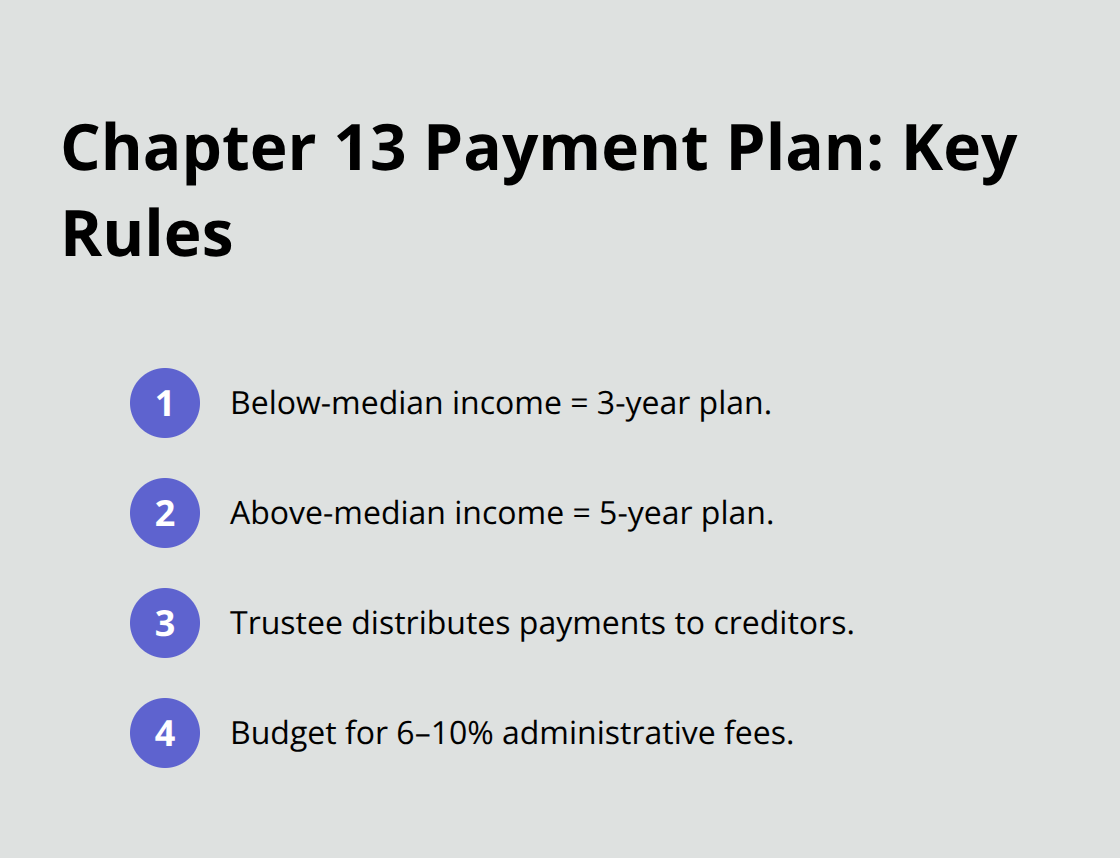
Florida residents with below-median income can complete their Chapter 13 plan in three years, while those with above-median income must commit to five years. The 2024 median income threshold determines this timeline: single filers who earn less than $54,825 qualify for the shorter plan, while families of four below $89,739 also get the three-year option. Your plan payments go to a trustee who distributes funds to creditors according to the court-approved schedule. Administrative fees typically consume 6-10% of your payments, so you should factor this cost into your budget calculations.
Debt Restructuring and Property Protection
Chapter 13 allows you to cure mortgage arrearages over the life of your plan, which makes it ideal for those who want to stop foreclosure proceedings. You can also strip second mortgages if your home’s value falls below the first mortgage balance (this effectively converts them to unsecured debt). The maximum debt limits for Chapter 13 are $2,750,000 total, which includes both secured and unsecured obligations. Florida’s generous exemptions still apply, but Chapter 13 lets you keep non-exempt property when you pay its value through your plan.
Monthly Payment Structure and Creditor Priority
The court calculates your monthly payment based on your disposable income after you subtract allowed living expenses. Priority debts like taxes and child support receive full payment first, while secured debts follow according to your payment schedule. Unsecured creditors receive whatever remains after priority and secured debts are satisfied (often just a small percentage of what you owe). The trustee collects your monthly payment and distributes it according to the confirmed plan, which provides structure and protection from creditor collection efforts.
These payment structures and debt reorganization benefits create significant differences when you compare Chapter 13 to Chapter 7 bankruptcy options.
Which Bankruptcy Chapter Should You Choose in Florida
The income requirements create the most significant difference between these bankruptcy options in Florida. Chapter 7 requires you to pass the means test, which compares your income to state median levels – $54,825 for single filers and $89,739 for families of four in 2024. If you earn above these thresholds, the court calculates your disposable income after allowed expenses to determine eligibility. Chapter 13 has no upper income limits but requires steady income to fund your repayment plan. You also cannot exceed $2,750,000 in total debt to qualify for Chapter 13, while Chapter 7 has no debt limits.
Timeline Differences Matter for Your Financial Recovery
Chapter 7 completes within 3-4 months, while Chapter 13 extends 3-5 years (based on your income level). The U.S. Courts data shows Chapter 7 accounts for over 70% of all 2022 bankruptcy filings because people prefer quick debt elimination. Chapter 13 requires monthly trustee payments throughout your plan period, with administrative fees that consume 6-10% of each payment. Your credit report reflects Chapter 7 for 10 years but Chapter 13 for only 7 years.
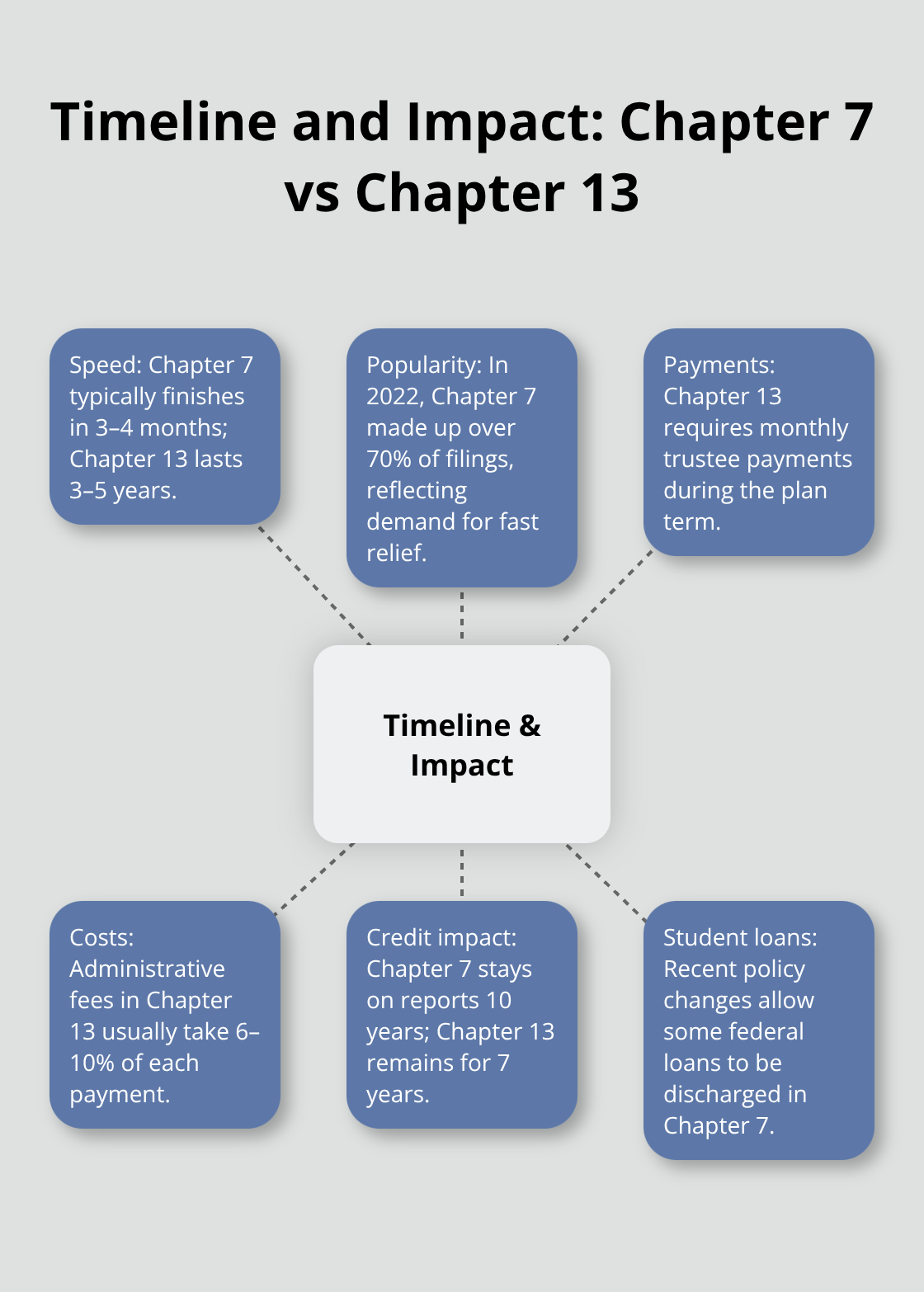
Students can now discharge federal loans through Chapter 7 due to recent U.S. Department of Education policy changes, which makes it more attractive for younger filers with education debt.
Property Protection Strategies Differ Between Chapters
Chapter 7 bankruptcy in Florida eliminates unsecured debts completely but cannot address non-dischargeable obligations like alimony or recent tax debt. Chapter 13 allows you to pay these priority debts through your plan while you protect your property. Foreclosure prevention strongly favors Chapter 13 since you can cure mortgage arrearages over time, while Chapter 7 offers no such protection. Your post-bankruptcy credit rebuilding starts immediately after Chapter 7 discharge, but Chapter 13 filers must wait until plan completion.
Regional Trends Show Clear Preferences
Nevada leads the nation with 2.2 Chapter 7 filings per thousand residents, while Alabama tops Chapter 13 rates at 2.5 per thousand. These statistics show regional preferences based on local economic conditions and property values. Florida residents often choose Chapter 7 when they qualify because the state’s generous exemptions protect most assets without the need for lengthy repayment plans.
Final Thoughts
Your financial situation determines whether Chapter 7 or 13 bankruptcy serves you best in Florida. Income levels, debt types, and property ownership all influence this decision. Chapter 7 works well when you need quick debt elimination and qualify under the means test, while Chapter 13 benefits those who want to keep non-exempt property or catch up on mortgage payments.
The complexity of bankruptcy law makes professional guidance valuable for Florida residents. We at Harnage Law, PLLC help individuals navigate these proceedings, stop creditor harassment, and protect assets through the process. Our firm provides personalized legal services to guide clients toward a fresh financial start.
You should gather your financial documents and assess your income against Florida’s median thresholds to begin the process. The $338 filing fee and required credit counseling course represent your first steps toward debt relief (whether you pursue Chapter 7 or another option). Acting promptly prevents further financial deterioration and stops collection efforts that damage your credit score.