
Filing for Chapter 7 bankruptcy in Florida involves several costs that catch many people off guard. Court fees, attorney charges, and administrative expenses add up quickly, leaving filers wondering if they can afford the process at all.
We at Harnage Law, PLLC know that understanding Florida Chapter Seven costs upfront helps you make informed decisions. This guide breaks down exactly what you’ll pay and shows you realistic ways to manage those expenses.
What You’ll Actually Pay for Chapter 7 in Florida
Court Filing Fees and Trustee Charges
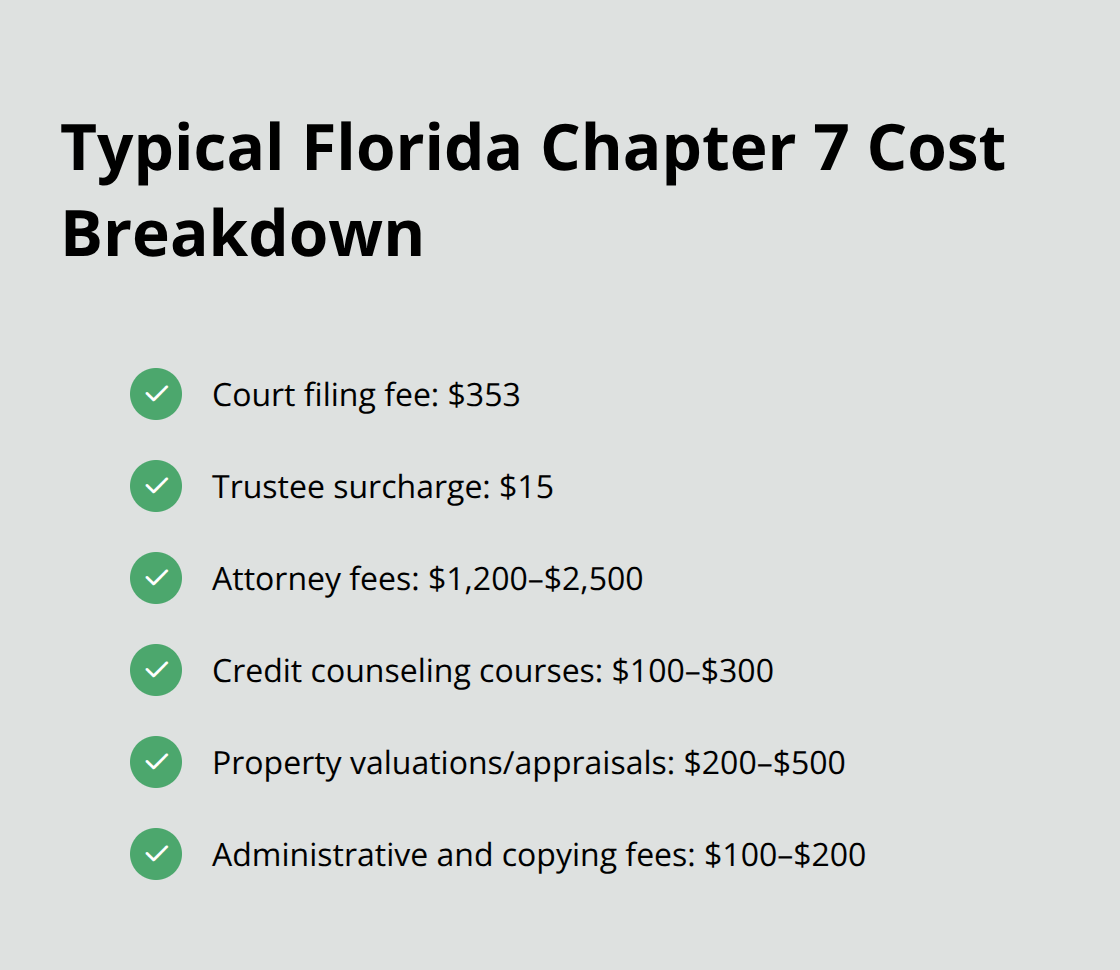
The federal court system charges a fixed filing fee of $338 for Chapter 7 bankruptcy cases, a number that hasn’t changed since 2020. This fee goes directly to the court and is non-negotiable regardless of your income or assets. On top of this, you’ll need to pay $15 for the trustee surcharge, bringing the total court costs to $353.
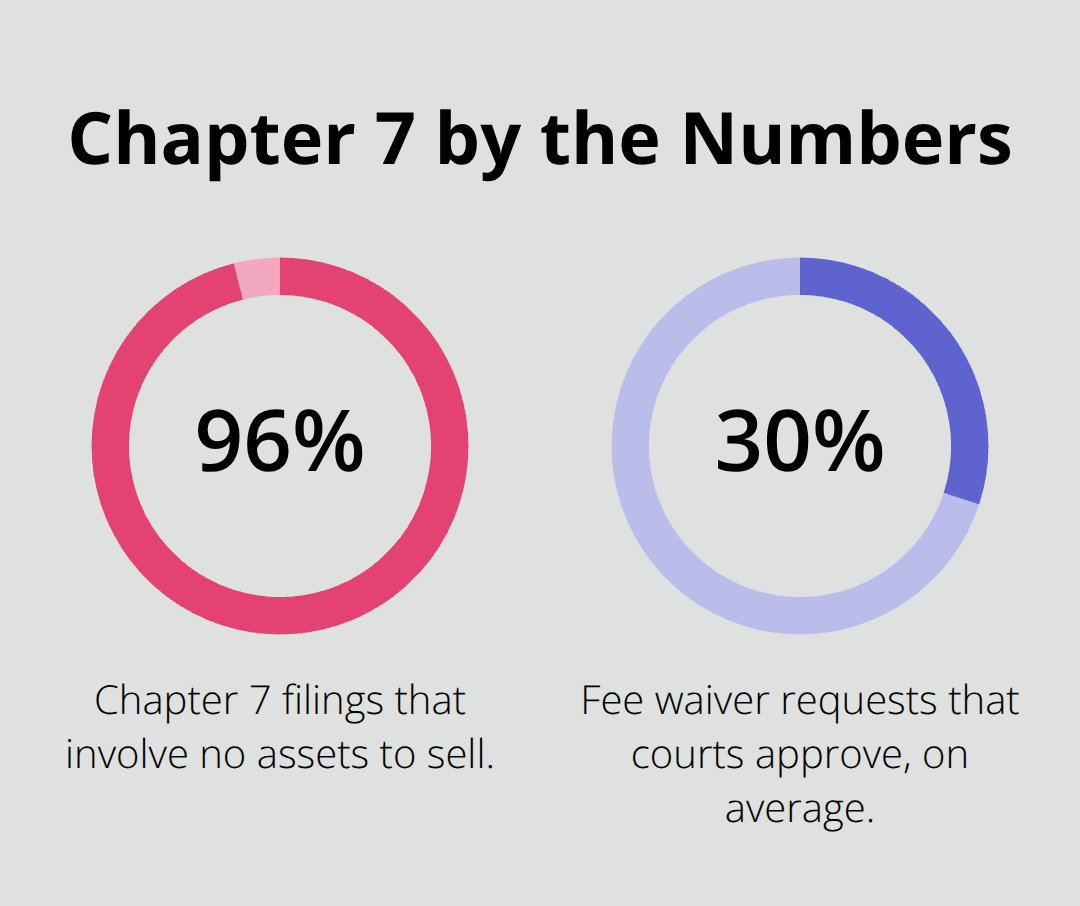
If your income falls below 150% of the federal poverty line, you can request to pay this in installments or have it waived entirely. Courts approve waivers in roughly 30% of cases according to bankruptcy filing data.
Attorney Fees for Chapter 7 Representation
Attorney fees in Florida typically range from $1,200 to $2,500 for a straightforward Chapter 7 case. More complex situations involving asset disputes or creditor challenges can push costs higher. We at Harnage Law, PLLC provide transparent pricing so you know exactly what you’re paying for from the start.
Mandatory Credit Counseling Courses
You’ll face two mandatory credit counseling courses that run $50 to $150 each, totaling roughly $100 to $300 for both. The pre-filing credit counseling must happen before you submit your petition, while the post-filing financial management course happens after your case is filed. Some nonprofit agencies offer these courses for as little as $25 if you demonstrate financial hardship.
Additional Expenses You Might Encounter
If you own property or have assets that need appraisal, you might pay $200 to $500 for property valuations. Court reporters and document copying fees rarely exceed $100 to $200 total. Most people filing Chapter 7 in Florida spend between $1,800 and $3,500 all-in when combining court fees, attorney representation, and mandatory courses.
The actual total depends heavily on whether your case involves complications like a home, significant assets, or aggressive creditors pursuing collection actions. Understanding these variable costs helps you prepare for what comes next in managing your Chapter 7 expenses.
Where Your Chapter 7 Money Actually Goes
Understanding Trustee Fees and Asset Distribution
The $353 in federal court fees represents only a fraction of your total Chapter 7 costs. The trustee assigned to your case receives a percentage of any assets they liquidate and distribute to creditors, typically ranging from 3% to 25% depending on asset value. However, roughly 96% of Chapter 7 filings involve no assets to sell, according to American Bankruptcy Institute data. In these cases, the trustee receives a small administrative fee of approximately $60 from the court system rather than from your pocket. This distinction matters because most filers won’t face unexpected trustee charges beyond the initial $353 court fee.
Mandatory Credit Counseling Expenses
You must complete credit counseling courses before and after filing, with costs ranging from $50 to $150 per course through approved agencies. Nonprofit organizations often reduce this to $25 or less if you submit proof of financial hardship. These courses aren’t optional regardless of your financial situation, and you cannot proceed without certificates proving completion. The total of these mandatory educational components typically falls between $100 and $300, making them a predictable expense you can plan for without surprise increases.
Administrative and Miscellaneous Costs
Administrative costs beyond trustee fees rarely exceed $100 to $200 in straightforward cases, covering items like court reporter transcripts if you attend a creditor meeting or document copies needed for your file. The Federal Judicial Center reports that most Chapter 7 cases in Florida conclude within three to six months, limiting the window for unexpected administrative charges to accumulate. Some law firms bundle the credit counseling course fees into their overall representation package, while others bill them separately. Clarifying this upfront with your attorney prevents confusion about what’s included in their quoted price versus what constitutes additional expenses.
Getting Clear Pricing From Your Attorney
Request an itemized fee schedule from any attorney you consult, as this transparency prevents confusion about billing structure. Different firms handle fee arrangements differently, so understanding exactly what you’ll pay and when you’ll pay it matters before you sign any representation agreement. With court fees, trustee charges, and mandatory courses now clear, the largest variable in your total Chapter 7 cost remains attorney representation-and that’s where comparing your options makes the biggest financial difference.
Reducing Your Chapter 7 Costs in Florida
Fee Waivers and Payment Plans
Most people filing Chapter 7 in Florida focus entirely on attorney fees without realizing they have leverage to negotiate the total bill. The federal court system allows fee waivers for filers earning below 150% of the poverty line, and courts approve roughly 30% of these requests according to bankruptcy filing data. If your income qualifies, you can eliminate the $353 court filing fee entirely or spread it across monthly installments.
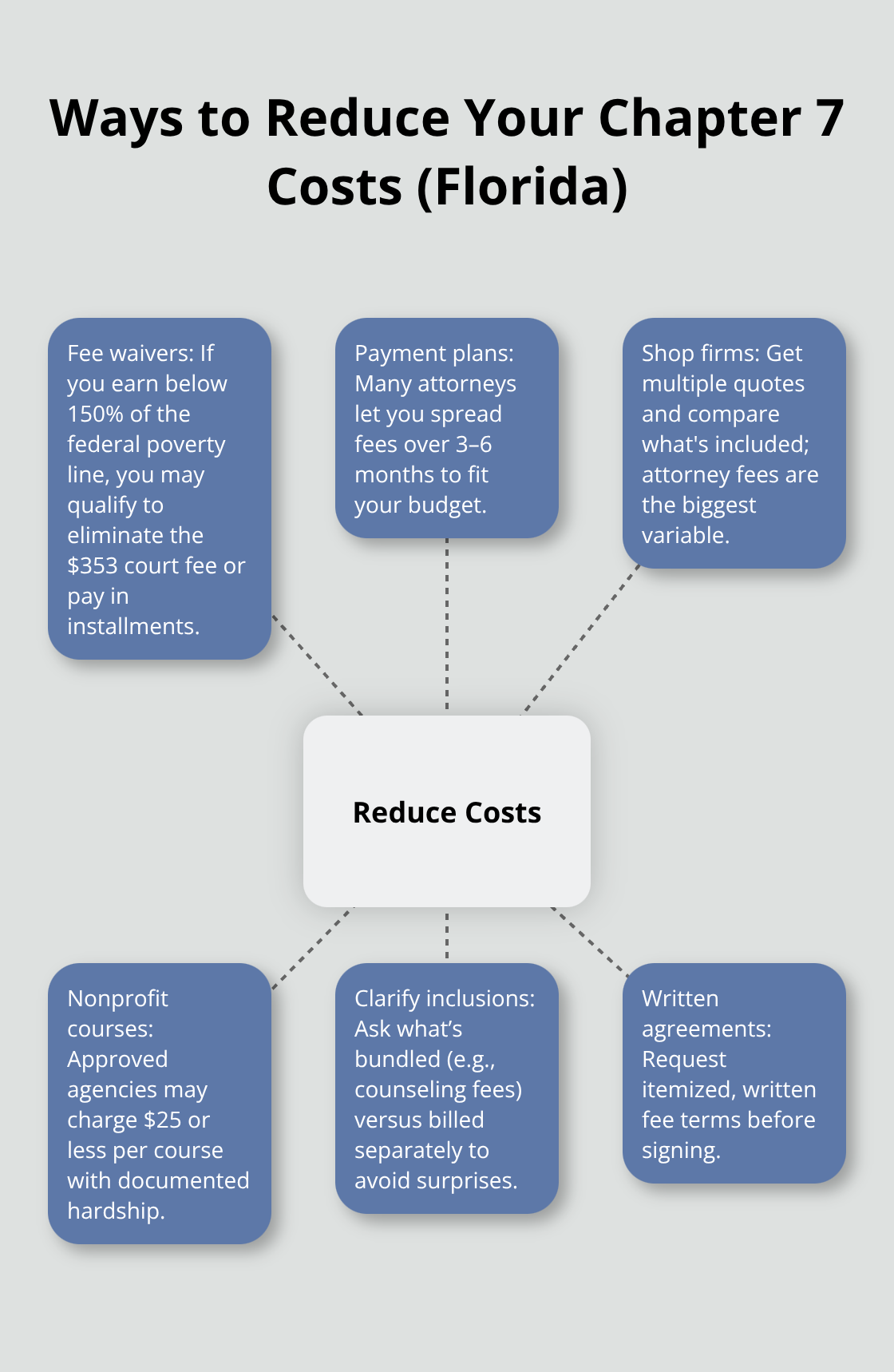
Many attorneys also offer payment plans that match your financial situation, allowing you to pay attorney fees over three to six months rather than upfront. This matters because the difference between a $1,200 flat fee and a $2,500 fee for complex cases can be substantial, making it worth shopping around before committing.
Comparing Attorney Fees Across Firms
Get at least three quotes from different firms in your area because fees vary significantly even for identical case types. Some firms charge $1,200 for straightforward filings while others charge $2,000 for the same service, and there’s no correlation between higher fees and better outcomes. When comparing law firms, ask specifically what they include in their quoted fee and what costs come separately, because some bundle credit counseling while others bill it on top of their representation charge. Request written fee agreements before signing anything, as this prevents surprises when the bill arrives.
Nonprofit Credit Counseling Savings
The nonprofit credit counseling agencies approved by the court system offer dramatic savings on mandatory courses if you document financial hardship. Rather than paying $150 per course at commercial providers, many nonprofits charge $25 or less, cutting your total counseling costs from $300 down to $50. Contact the National Foundation for Credit Counseling or the Financial Counseling Association to find approved agencies near you offering reduced rates. Your attorney should provide a complete list of approved providers during your initial consultation.
Trustee Fees and Asset Liquidation
The trustee fee discussion matters less since 96% of Chapter 7 cases involve no assets to liquidate, meaning you won’t face surprise trustee charges beyond the initial court fee. The trustee assigned to your case receives a percentage of any assets they liquidate and distribute to creditors, typically ranging from 3% to 25% depending on asset value. However, in cases with no assets (which represents the vast majority of filings), the trustee receives a small administrative fee of approximately $60 from the court system rather than from your pocket. This distinction matters because most filers won’t encounter unexpected trustee charges beyond the initial $353 court fee.
Final Thoughts
Filing Chapter 7 in Florida costs between $1,800 and $3,500 when you combine court fees, attorney representation, and mandatory credit counseling courses. The $353 federal court filing fee remains fixed, but attorney charges vary significantly depending on case complexity. Since roughly 96% of Chapter 7 cases involve no assets, most filers won’t face surprise trustee charges beyond the initial court fee.
The long-term financial benefits of Chapter 7 far outweigh the upfront costs. Discharged debts disappear permanently, stopping creditor calls, wage garnishments, and lawsuits that drain your income month after month. Many people filing Chapter 7 report saving thousands annually once collection efforts cease and their paychecks remain intact.
Start by requesting fee quotes from multiple Florida law firms and comparing what each includes in their pricing. Ask about payment plans that spread attorney fees over several months, and investigate fee waivers if your income qualifies. Contact Harnage Law, PLLC to discuss your situation and receive transparent pricing for your specific case regarding Florida Chapter Seven costs.