Chapter 7 bankruptcy gives you a legal path to eliminate unsecured debts and start fresh. The process involves specific steps, from gathering documents to attending court meetings, and understanding each phase matters.
We at Harnage Law, PLLC know that a solid Chapter Seven plan removes confusion and helps you move through filing with confidence. This guide walks you through every stage so you know exactly what to expect.
1. Gather Your Financial Documents and Records
Start collecting documents immediately because the bankruptcy court requires specific paperwork before you file. The U.S. Courts require you to submit your last two years of tax returns, 60 to 90 days of recent pay stubs, three to six months of bank statements, and a complete inventory of all assets and debts. You need to document income from every source for the past six months, including W-2 wages, self-employment income, rental income, and government benefits. Pull your credit reports from all three major bureaus-Equifax, Experian, and TransUnion-to verify the debts listed against your own records. Inaccuracies on credit reports happen frequently, so comparing them to your personal documentation catches errors before they reach the bankruptcy court.
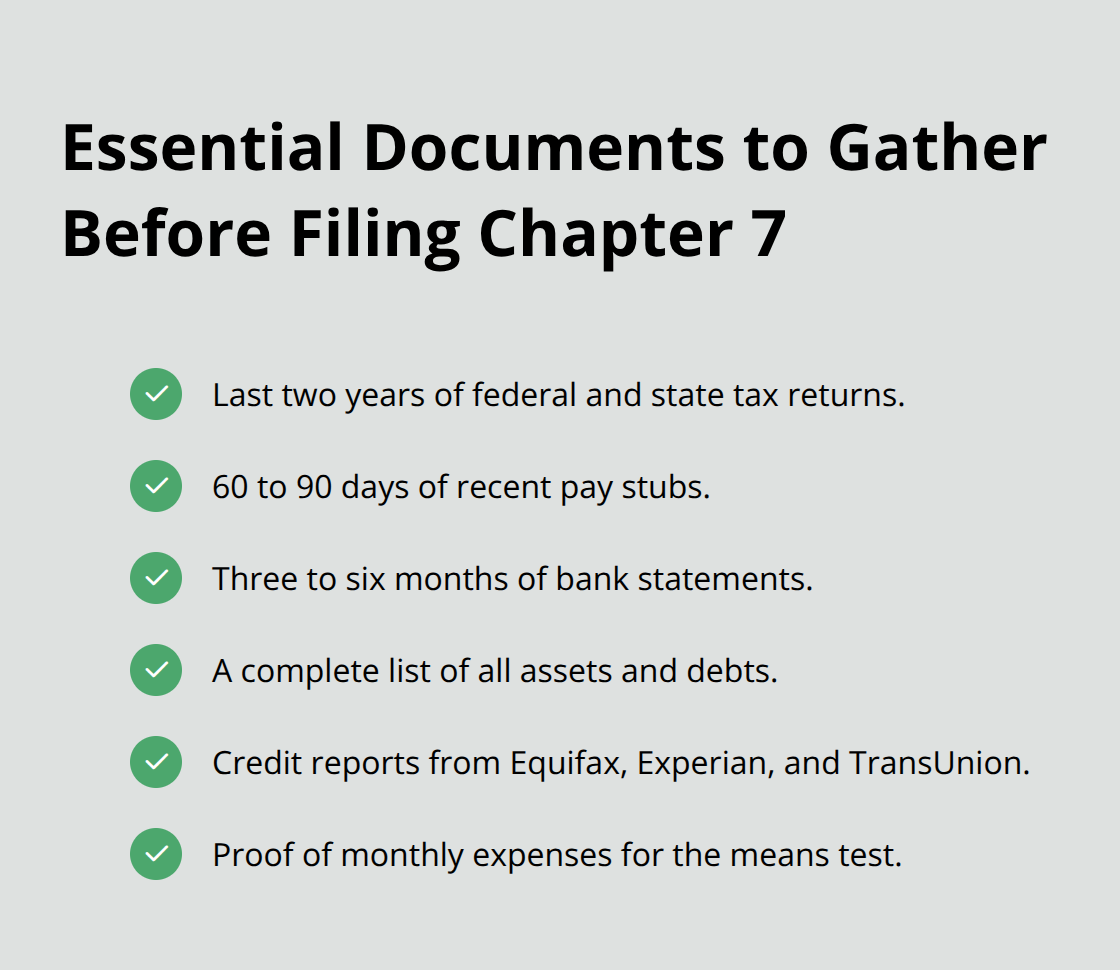
Organize your assets by category: real estate with recent property tax assessments, vehicles with current market values from Kelley Blue Book, bank and retirement account statements, and personal property like jewelry or collectibles with approximate valuations. You should gather proof of all monthly expenses including rent or mortgage, utilities, insurance, transportation, groceries, and childcare to complete the means test calculation accurately. The means test determines your Chapter 7 eligibility, and underreporting expenses can trigger trustee objections or case dismissal. Create a spreadsheet listing each creditor’s name, account number, balance, and monthly payment to ensure nothing gets overlooked during filing.
Having these documents organized in one folder before meeting with a bankruptcy attorney saves time and reduces the risk of filing delays. With your financial records assembled and verified, you can move forward to the next critical step in your Chapter 7 plan.
2. Complete the Mandatory Credit Counseling Course
The U.S. Trustee Program requires you to complete credit counseling from an approved agency before you file your Chapter 7 petition in Florida. You can find the official list of approved agencies on the U.S. Trustee website, which breaks down providers by state and includes both in-person and online options. Most agencies charge between $50 and $200 for the course, though fee waivers are available if your income falls below 150% of the federal poverty guidelines. The counseling session typically lasts 60 to 90 minutes and covers budgeting fundamentals, debt management alternatives, and the bankruptcy process itself. You receive a certificate of completion immediately after finishing, and this certificate becomes your proof that you satisfied this requirement before filing.
Timing matters significantly because you must obtain your certificate within 180 days before submitting your petition to the bankruptcy court. Schedule your counseling early rather than waiting until the last moment, since some agencies experience scheduling delays during busy periods. During the session, the counselor will ask detailed questions about your income, expenses, and debt situation to determine whether alternatives to bankruptcy might work for your circumstances. The counselor is not your attorney and cannot provide legal advice, so treat this as an educational requirement rather than a substitute for consulting with a Florida bankruptcy lawyer. Once you have your certificate in hand, keep it accessible because you will need to file it along with your other bankruptcy documents when you officially petition the court-and this brings you to the next critical phase of your Chapter 7 plan.
3. Fill Out the Official Bankruptcy Forms Accurately
The Official Bankruptcy Forms are not optional or flexible-the court will reject filings that use outdated versions or forms from other jurisdictions. Form 106 contains your schedules of assets and liabilities, Form 106Sum summarizes your financial situation, and Form 106Declaration certifies that your information is accurate under penalty of perjury. The means test calculation on Form 122A-2 requires you to report your current monthly income over the past six months, then subtract allowed expenses like food, utilities, transportation, and childcare. If your income exceeds the Florida median for your household size, the means test determines whether you qualify for Chapter 7 or get pushed toward Chapter 13 instead. List every legitimate expense you actually pay each month to avoid triggering trustee objections.
Accuracy matters more than speed when completing these forms because disclosure errors cause unnecessary delays and creditor challenges. You must list every asset you own-the second car in your driveway, jewelry in your safe deposit box, life insurance policies, and retirement accounts-because failing to disclose property gives creditors grounds to object or reopen your case after discharge. The Statement of Financial Affairs requires you to detail any property you sold, transferred, or gave away during the previous four years, which catches any suspicious transactions the trustee needs to investigate. File all forms with original wet signatures, not digital signatures, because the bankruptcy court in Florida requires handwritten signatures on the original petition. When you complete these forms accurately and thoroughly, you eliminate the most common reasons cases get delayed or dismissed, positioning you to move forward to determining which property you can protect through Florida’s exemption laws.
4. Determine Which Property You Can Keep Using Exemptions
Florida’s homestead exemption stands out as one of the most protective in the nation, allowing you to shield an unlimited amount of equity in your primary residence as long as the property doesn’t exceed half an acre in a municipality or 160 acres elsewhere. This means a home worth $500,000 with a $200,000 mortgage stays fully protected, and you keep the $300,000 in equity when you file Chapter 7. Beyond your home, certain assets may be exempt under Florida law, including one vehicle per licensed household member, retirement accounts including IRAs and 401(k)s up to $1,149,550 per account as of 2023, and personal property up to $1,000 in a wildcard exemption that you can apply to anything you own. The state also protects household furnishings, tools needed for your trade, and life insurance policies, which means your everyday belongings remain with you after filing.
Choosing between federal and state exemptions matters because Florida law allows you to select either option, and the choice significantly affects what property you keep. Most Florida filers benefit more from state exemptions due to the unlimited homestead protection, but if you own substantial retirement savings or inherited property, federal exemptions under 11 U.S.C. Section 522(d) might work better in rare situations. You must decide which exemption system to use when you file, and switching later becomes impossible, so consult with a bankruptcy attorney before making this choice. Document current values for vehicles using Kelley Blue Book, obtain property appraisals for real estate, and list retirement account statements to show the trustee exactly what you’re protecting. The trustee identifies nonexempt assets to liquidate, so accurate valuations and proper exemption claims keep your possessions intact throughout the bankruptcy process and position you to file your petition with the Florida Bankruptcy Court.
5. File Your Petition with the Florida Bankruptcy Court
Filing your Chapter 7 petition in the correct Florida district matters because the bankruptcy court where you file determines which trustee handles your case and which judges oversee your proceedings. The Middle District of Florida covers central Florida including Orlando and Tampa, the Southern District covers Miami and Fort Lauderdale, and the Northern District covers Jacksonville and Pensacola, so you file in whichever district contains your primary residence. The filing fee totals $338, though you can pay it in installments using the local form Application for Individuals to Pay the Filing Fee in Installments if you cannot afford the full amount upfront, with a minimum initial payment of half the fee required at filing. If your income falls below 150% of federal poverty guidelines, you qualify for a fee waiver by submitting Official Bankruptcy Form 103B, which eliminates the filing cost entirely and removes a major barrier for low-income filers.
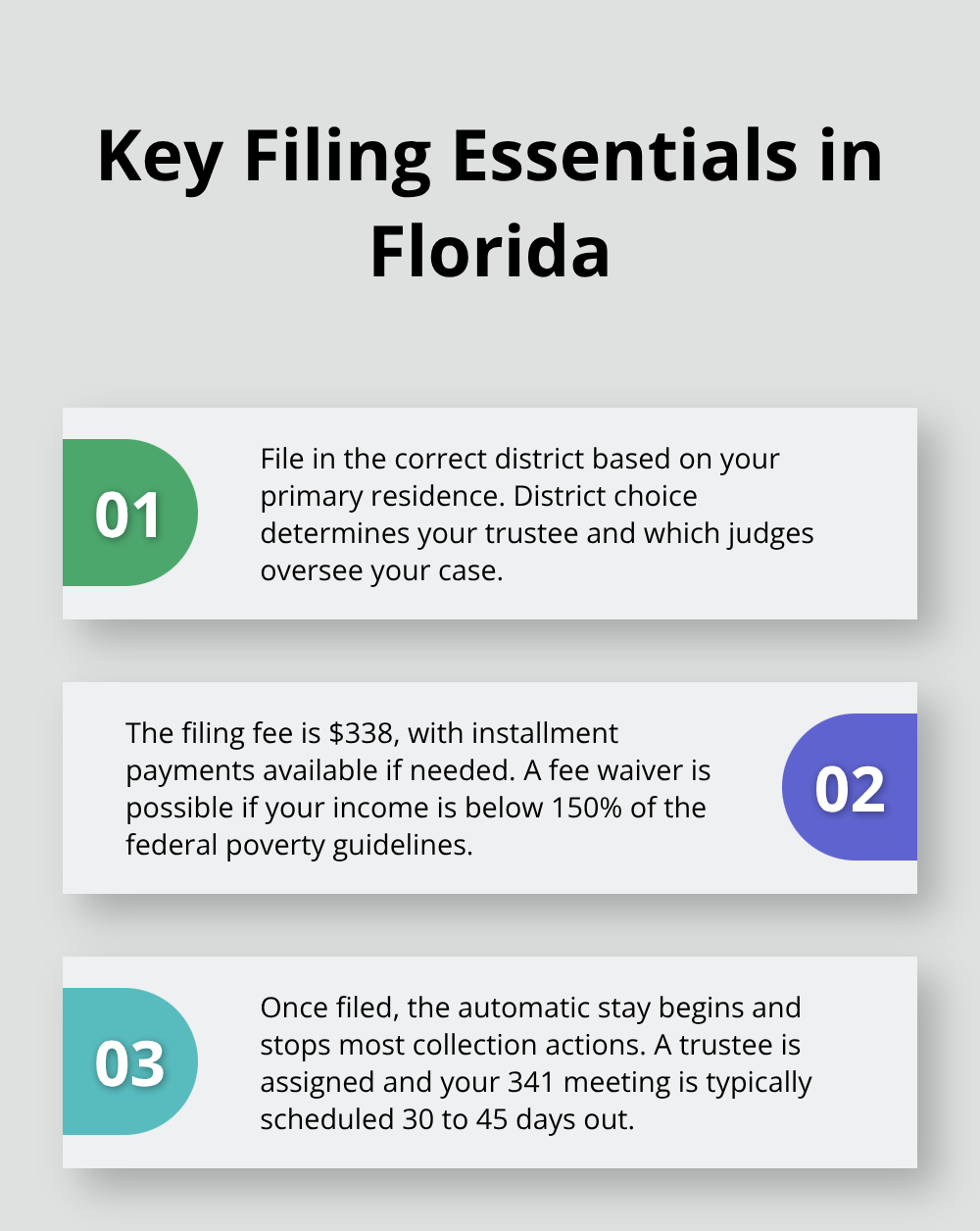
The moment you submit your petition to the Florida Bankruptcy Court, an automatic stay takes effect immediately, stopping wage garnishments, collection calls, lawsuits, and creditor harassment within hours of filing. Your creditors receive notice that you filed bankruptcy and must cease all collection efforts against you personally, though the stay does not eliminate liens on property or stop some actions like child support enforcement or criminal proceedings. Within the first 24 hours after filing, the court assigns a Chapter 7 trustee to your case, schedules your 341 meeting of creditors typically 30 to 45 days out, and sends official notices to every creditor you listed. The trustee begins reviewing your filed documents to identify nonexempt assets that can be liquidated to pay unsecured creditors, though in many cases debtors have no nonexempt assets and creditors receive nothing. Your next obligation involves preparing thoroughly for the 341 meeting, where the trustee will ask questions about your finances and verify the accuracy of your filed documents.
6. Attend the 341 Meeting of Creditors
The Section 341 meeting takes place 30 to 45 days after you file, and despite its formal name, it typically lasts only 5 to 10 minutes. The trustee assigned to your case will ask you questions under oath to verify that your filed schedules match reality, focusing on income sources, major asset valuations, and any property transfers you made in the past four years. Bring your government-issued photo ID, Social Security card, recent pay stubs from the last 60 days, and statements for all bank and investment accounts you listed on your schedules. The trustee reviews your documents before the meeting and prepares specific questions based on discrepancies or unusual items in your filing, so having these documents ready prevents delays and demonstrates you prepared thoroughly. Most meetings conclude quickly when debtors arrive prepared, answer directly without volunteering extra information, and stick to facts rather than explanations.
Creditors rarely attend Chapter 7 meetings in Florida unless you own substantial nonexempt assets they might recover funds from, which means you typically face only the trustee and possibly a court clerk. If creditors do appear, they may ask about income, job stability, or whether you incurred the debt through fraud, but these questions happen infrequently and the trustee controls the meeting. Common issues arise when debtors undervalue assets, fail to disclose recent property transfers, or claim exemptions that don’t match Florida law, so accuracy in your filed forms prevents these problems entirely. If the trustee identifies nonexempt property, they may discuss redemption or reaffirmation options with you at the meeting, or they may require you to address these matters before your case proceeds to discharge. Once the trustee closes their investigation after the meeting concludes, you move forward to completing the mandatory financial management course required before receiving your discharge.
7. Complete the Financial Management Course
The financial management course you take after filing differs significantly from the pre-filing credit counseling session you completed earlier. Pre-filing counseling focuses on whether bankruptcy suits your situation and explores alternatives, while post-filing financial management education teaches you how to avoid returning to bankruptcy after your discharge. The U.S. Trustee Program requires you to complete this course before the court grants your discharge, and skipping it means forfeiting your fresh start entirely. You must file the completion certificate with the court within 60 days after your first 341 meeting, which means you have a narrow window to finish this requirement. Most debtors complete the course within two to three weeks after their meeting, leaving themselves a comfortable buffer before the deadline.
Finding an approved provider in Florida takes minutes since the U.S. Trustee website lists every authorized agency by state, and most offer online courses you can complete from home at your own pace. Course fees typically range from $25 to $75, significantly less than pre-filing counseling, and fee waivers apply if your income qualifies under federal poverty guidelines. The course covers rebuilding credit after bankruptcy, creating sustainable budgets, recognizing predatory lending practices, and establishing emergency savings habits. Reputable providers deliver two to three hours of instruction covering practical topics like negotiating with creditors, understanding credit reports, and avoiding high-fee financial products that trap you in debt cycles. Once you complete the course and receive your completion certificate, upload it to the court’s filing system or submit it through your bankruptcy attorney, and this final requirement clears your path to receiving your discharge order, which typically arrives within 60 to 90 days after your 341 meeting concludes.
Final Thoughts
Your discharge order arrives 60 to 90 days after your 341 meeting concludes, marking the official end of your Chapter 7 case and releasing you from personal liability for most unsecured debts including credit card balances, medical bills, and personal loans. Once the court enters your discharge, creditors lose all legal right to collect the debts listed in your bankruptcy petition, and wage garnishments stop permanently. Certain obligations like child support, alimony, and most student loans remain nondischargeable, so check your discharge order carefully to confirm it lists all debts you intended to eliminate.
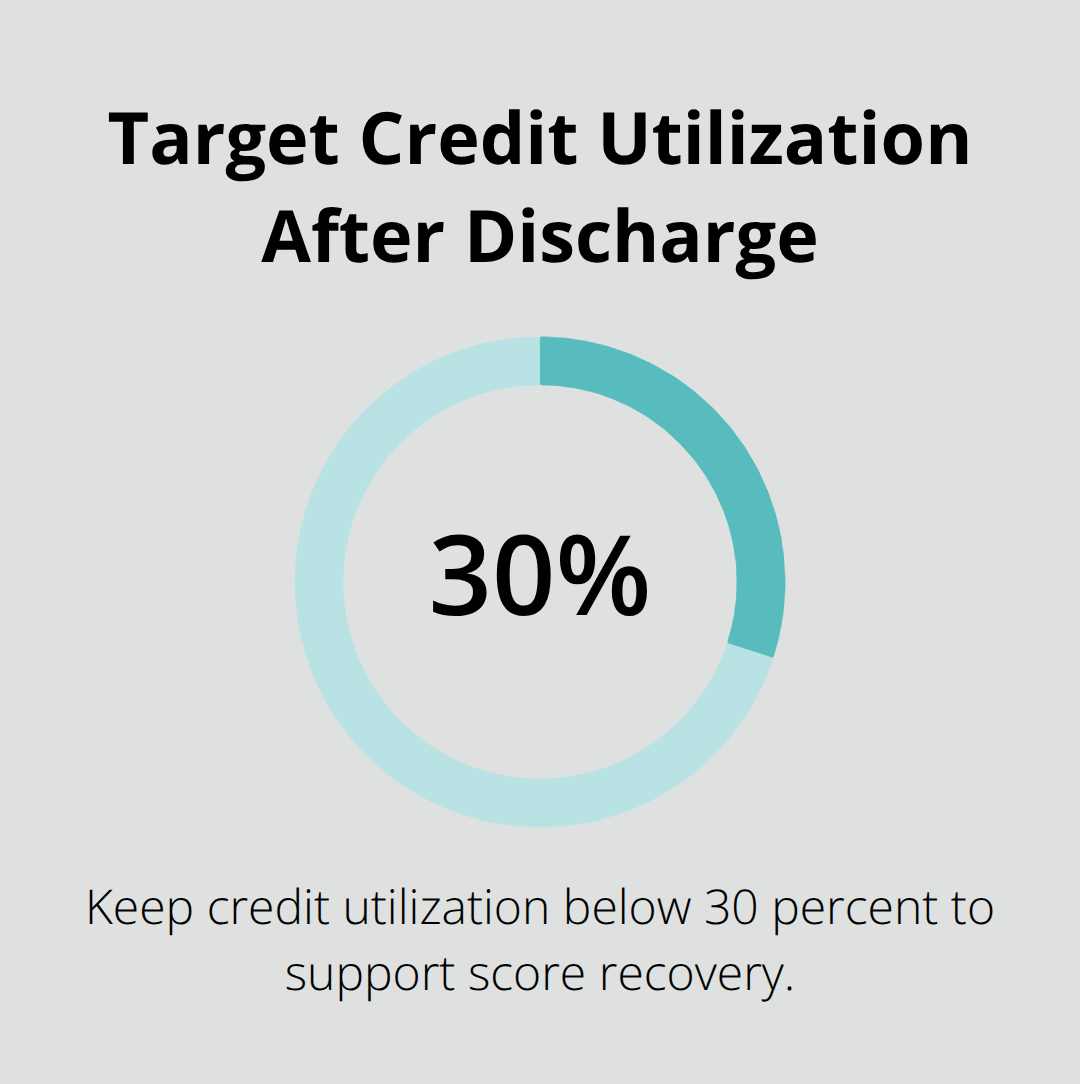
Rebuilding credit after Chapter 7 requires discipline and realistic expectations about timing, though your credit score will drop 100 to 200 points when you file and recovery begins immediately after discharge. Within 12 to 24 months of consistent on-time payments and responsible credit use, most filers see meaningful score improvements by opening a secured credit card with a $300 to $500 deposit, keeping credit utilization below 30 percent, and making every payment on time without exception.
Pull your credit reports from all three bureaus and dispute any inaccurate items that should show zero balance after discharge, then consider adding a credit-builder loan from a credit union to demonstrate your ability to manage installment debt responsibly.
Protecting your fresh start means avoiding the financial patterns that led to bankruptcy in the first place and building an emergency fund of at least $1,000 to cover unexpected costs without triggering new debt. Decline payday loans, title loans, and other high-fee products that trap borrowers in debt cycles, and your Chapter 7 plan succeeds long-term when you maintain the discipline that carried you through filing and discharge. Contact Harnage Law, PLLC if questions arise about your post-bankruptcy obligations or credit rebuilding strategy.