Chapter 7 bankruptcy offers a genuine path to eliminate qualifying debts, but discharge prospects in Florida depend on understanding which obligations actually disappear and which ones follow you forward.
We at Harnage Law, PLLC know that many people assume all debts vanish after discharge-they don’t. This guide breaks down exactly what gets wiped away and what remains your responsibility.
What Debts Actually Disappear in Florida Chapter 7
Unsecured Debts That Chapter 7 Eliminates
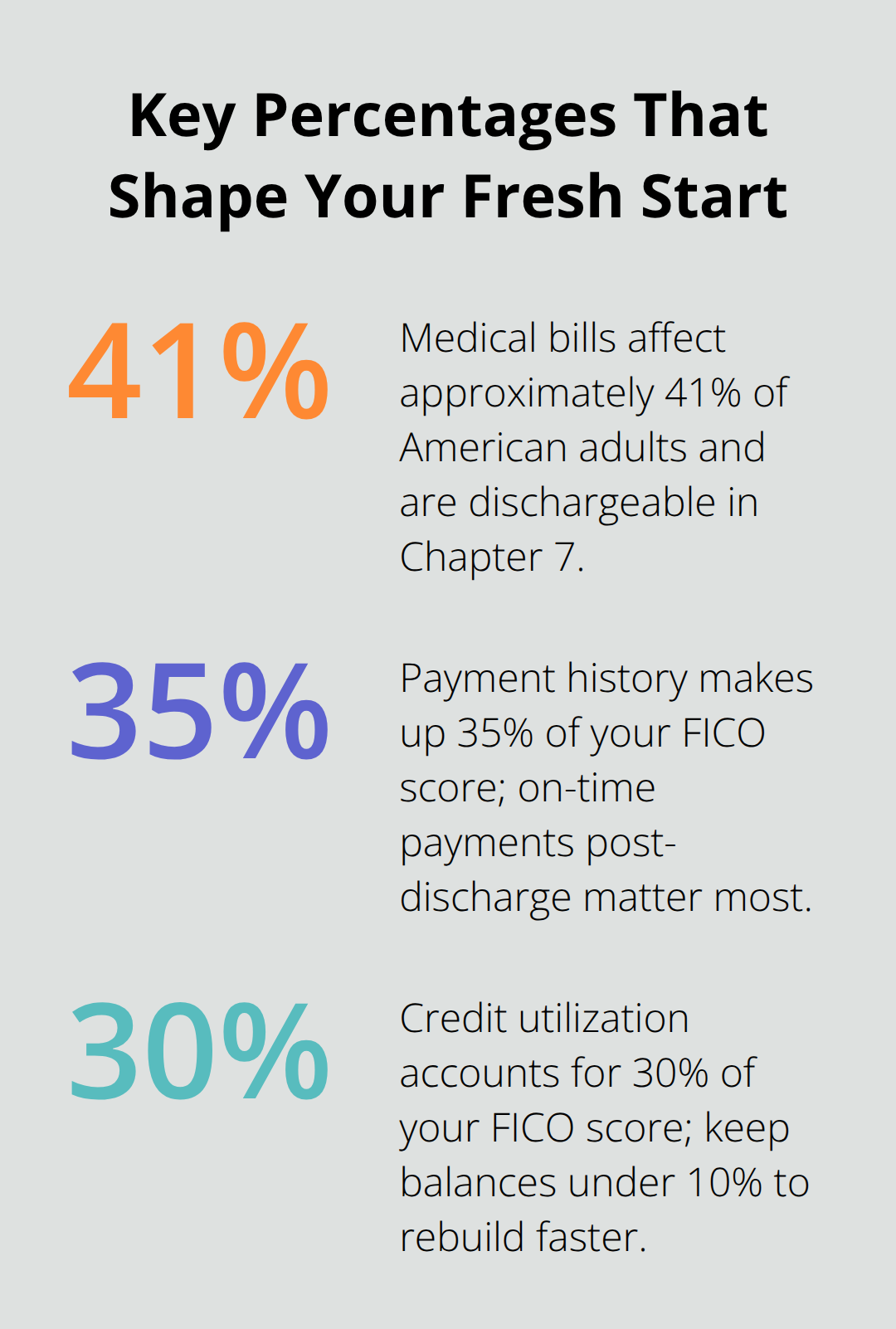
Credit card balances, personal loans, and medical bills represent the bulk of what Chapter 7 eliminates for Florida filers. These unsecured debts carry no collateral, meaning creditors have no claim to your home, car, or other assets if you stop paying. When your discharge becomes final, these obligations vanish completely. Credit card debt typically accounts for the largest portion of discharged debts in Chapter 7 cases. Medical bills, which affect approximately 41% of American adults according to KFF data, disappear entirely through discharge. Personal loans from banks or online lenders also fall into this category.
Collection accounts tied to these original debts get wiped out as well, removing the harassing calls and letters that follow unpaid bills.
How the Automatic Stay Protects You
The automatic stay that begins when you file stops creditors from pursuing collections immediately, and discharge makes that relief permanent. Utilities, phone bills, and other service debts get discharged. Payday loans, even with their punishing interest rates, disappear through Chapter 7. Gym memberships and subscription services you stopped paying become non-collectible.
Secured Debts That Remain Your Responsibility
If you owe money on a mortgage or car loan, those secured debts remain your responsibility because they’re backed by collateral the lender can reclaim. Many Florida filers worry they’ll lose everything, but discharge protects the debts that actually cause financial collapse while keeping secured obligations intact if you continue making payments. Understanding this distinction prevents the common mistake of assuming Chapter 7 solves all financial problems at once.
Moving Forward With Clarity
The reality is cleaner and more manageable: unsecured debts disappear, secured debts continue as agreed, and your financial obligations become manageable again. This clarity helps you move forward with confidence rather than confusion about what happens after your case closes. However, not all debts qualify for discharge-some obligations follow you beyond the bankruptcy process, and knowing which ones matters significantly for your post-discharge planning.
Debts That Survive Your Florida Chapter 7 Discharge
Student loans present the harshest reality for Florida filers: they almost never disappear through Chapter 7 discharge. Federal student loans and private education debt remain your legal obligation even after your case closes, meaning you will still owe them years or decades later. The only narrow exception involves proving undue hardship to a bankruptcy judge, a standard so strict that fewer than 0.1% of filers succeed.
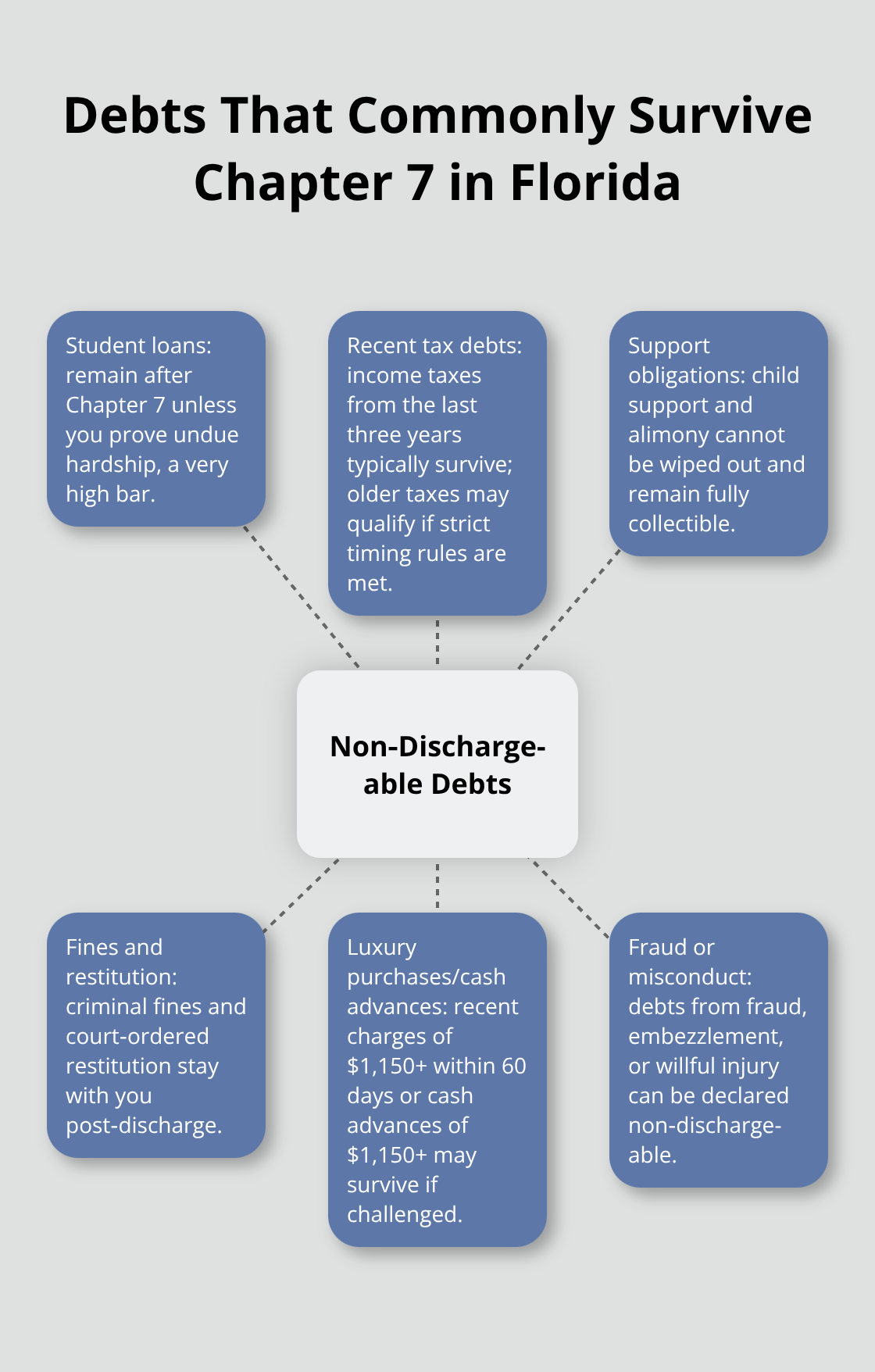
Recent tax debts within the last three years also survive discharge, along with any other tax obligations owed to federal or state governments. Court-ordered child support and alimony payments cannot be wiped away either, regardless of your financial situation. Traffic tickets, criminal fines, and restitution ordered by courts remain non-dischargeable. Luxury purchases totaling $1,150 or more within 60 days before filing, cash advances of $1,150 or more during that same window, and debts from fraud, embezzlement, or willful injury to someone’s property may also survive discharge if creditors challenge them successfully. These obligations form the core of what follows you into your post-discharge life, and ignoring them creates serious legal consequences.
Family Support Obligations Never Disappear
Child support and alimony are treated as priority debts that bankruptcy cannot touch, period. If you owe back payments, those arrears remain collectible through wage garnishment, tax refund intercepts, and license suspension long after your case concludes. Florida courts take family support violations seriously, and Chapter 7 provides zero relief. The distinction matters because many filers hope discharge will eliminate all financial obligations, then face shock when their ex-spouse’s attorney pursues collections. You must continue these payments as ordered, regardless of discharge status.
Tax Debts and Government Claims
Recent income tax debts stay with you, but older tax obligations may discharge if they meet specific criteria: the return was due more than three years ago, the debt was assessed more than 240 days before filing, and you filed the return at least two years before bankruptcy. This technical framework means some older tax debts do discharge while recent ones do not. Criminal fines and court-ordered restitution represent government claims that discharge cannot touch, making them permanent obligations. State and local taxes follow similar rules to federal taxes, so review your specific tax situation with a Florida bankruptcy attorney to determine what survives.
Debts Incurred Through Fraud or Misconduct
If you obtained credit through fraud, bankruptcy judges can declare those debts non-dischargeable after a creditor files a challenge. Embezzlement, theft, or breach of trust also create non-dischargeable obligations. These situations require creditors to prove their case in court, so the outcome is not automatic, but the possibility means fraudulent debts carry real risk of surviving your discharge. Understanding which debts follow you beyond discharge sets the stage for what comes next: rebuilding your financial life with the obligations that remain and the fresh start that Chapter 7 provides.
Your Credit and Financial Life After Discharge
Your credit score will drop immediately after discharge, but this temporary decline is far less damaging than the slow bleed of unpaid debts. If your score sits between 500 and 600 before filing, expect a 50–100 point drop. Higher scores between 700 and above will fall 100–200 points. This sounds severe, but the math works in your favor: Chapter 7 eliminates the debts causing ongoing negative reporting, which stops the daily damage that keeps your score trapped in the basement. Start rebuilding within weeks of discharge, not months later.
Verify Your Credit Reports and Rebuild Immediately
Pull your credit reports from Equifax, Experian, and TransUnion immediately and verify that all discharged debts show zero balance. Dispute any errors where debts still appear as active or unpaid-these mistakes happen frequently and disputes take 30 days to resolve. Open a secured credit card backed by a cash deposit within the first month after discharge and make a small purchase each month, then pay it in full. This single action creates a new positive tradeline that rebuilds your payment history, the factor that comprises 35% of your FICO score.
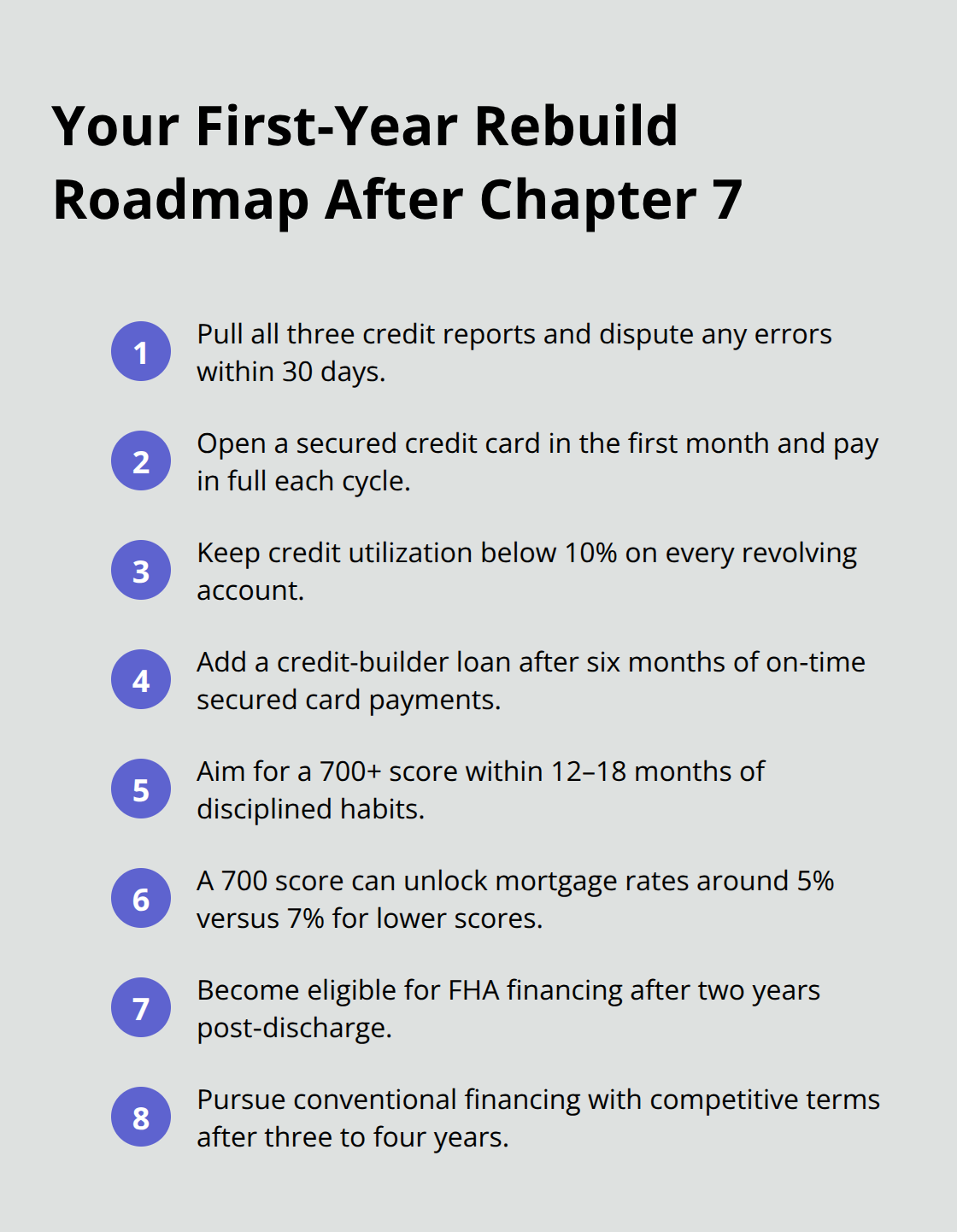
Keep utilization below 10% on any new accounts because credit utilization makes up 30% of your score. Within 12–18 months of disciplined payments and low balances, reaching a 700+ credit score is realistic and common. A 700 score unlocks better mortgage rates-roughly 5% compared to 7% for lower scores-which saves tens of thousands over a 30-year loan. After two years post-discharge, you become eligible for FHA loans, and after three to four years, conventional financing becomes available with competitive terms.
Your Emergency Fund Matters More Than Credit Cards
Building savings is more important than aggressively applying for new credit. Set aside $25 per week into a separate savings account specifically for emergencies, which creates a $1,300 cushion within a year. This fund prevents the relapse into high-interest borrowing when your car breaks down or medical expenses hit unexpectedly. Many people rebuild credit quickly but destroy their progress when an emergency forces them back into debt because they lack cash reserves. Avoid payday loans, title loans, and high-risk lending at all costs-these products carry annual percentage rates exceeding 400% and do not improve your credit profile meaningfully. If you need additional tradelines, add a credit-builder loan after six months of secured card success. These loans work backward: you borrow money held in a savings account, make monthly payments, and receive the funds after completion. This approach costs less than payday loans and actually builds your credit history. Do not co-sign loans for anyone while rebuilding because you become fully responsible if they miss payments, which can devastate your fresh start.
Protect Your Secured Debts and Income
Your secured debts like mortgages and car loans continue unchanged, so prioritize those payments above all else to keep your home and vehicle. Secured debts remain attached to collateral, meaning your house or car stays at risk only if you stop making payments. The Florida homestead exemption protected your home during the bankruptcy process, and that protection continues afterward. Your income is no longer subject to wage garnishment from discharged debts because those obligations no longer exist. Creditors cannot legally pursue collection on debts that appear on your discharge order. This protection is permanent and federal law backs it completely. Any new debts you incur after discharge are separate from your bankruptcy case and follow normal collection rules, so live within your means going forward. Your financial future depends on the habits you establish in months 1–6 after discharge more than any other period. Consistent on-time payments, low balances, and steady savings compound into genuine financial stability that bankruptcy alone cannot create.
Final Thoughts
Chapter 7 discharge in Florida eliminates unsecured debts like credit cards, medical bills, and personal loans while preserving your responsibility for secured debts, student loans, child support, and recent taxes. Your discharge prospects in Florida depend entirely on understanding this distinction and acting strategically in the months following your case closure. The automatic stay stops creditor harassment immediately, and discharge makes that relief permanent by removing the legal obligation to repay qualifying debts.
Your financial recovery starts the moment your discharge becomes final. Pull your credit reports from all three bureaus within weeks and dispute any errors showing discharged debts as active, then open a secured credit card and make small, on-time purchases to rebuild your payment history (which comprises 35% of your FICO score). Keep credit utilization below 10%, avoid payday loans or co-signing obligations that could derail your progress, and build an emergency fund starting with $25 weekly to prevent relapse into high-interest borrowing when unexpected expenses arise. Within 12 to 18 months of disciplined habits, reaching a 700+ credit score is realistic, which unlocks better mortgage rates and improves your overall financial prospects.
Your secured debts continue as agreed, and your income stays protected from wage garnishment on discharged obligations. The Florida homestead exemption that protected your home during bankruptcy continues afterward, and your financial stability depends on the habits you establish in the first six months after discharge more than any other factor. We at Harnage Law, PLLC guide clients through every step of the Chapter 7 process and help you understand your discharge prospects-contact us to discuss your situation and receive personalized guidance tailored to your specific circumstances.