Chapter 7 bankruptcy wipes your slate clean, but it also temporarily damages your credit score. The good news is that credit rebuilding in Florida after Chapter 7 is absolutely possible, and many people see meaningful improvement within two to three years.
We at Harnage Law, PLLC know that the path forward requires specific actions and the right tools. This guide walks you through exactly what happens to your credit, how to rebuild it, and which resources Florida residents can access right now.
What Happens to Your Credit After Chapter 7
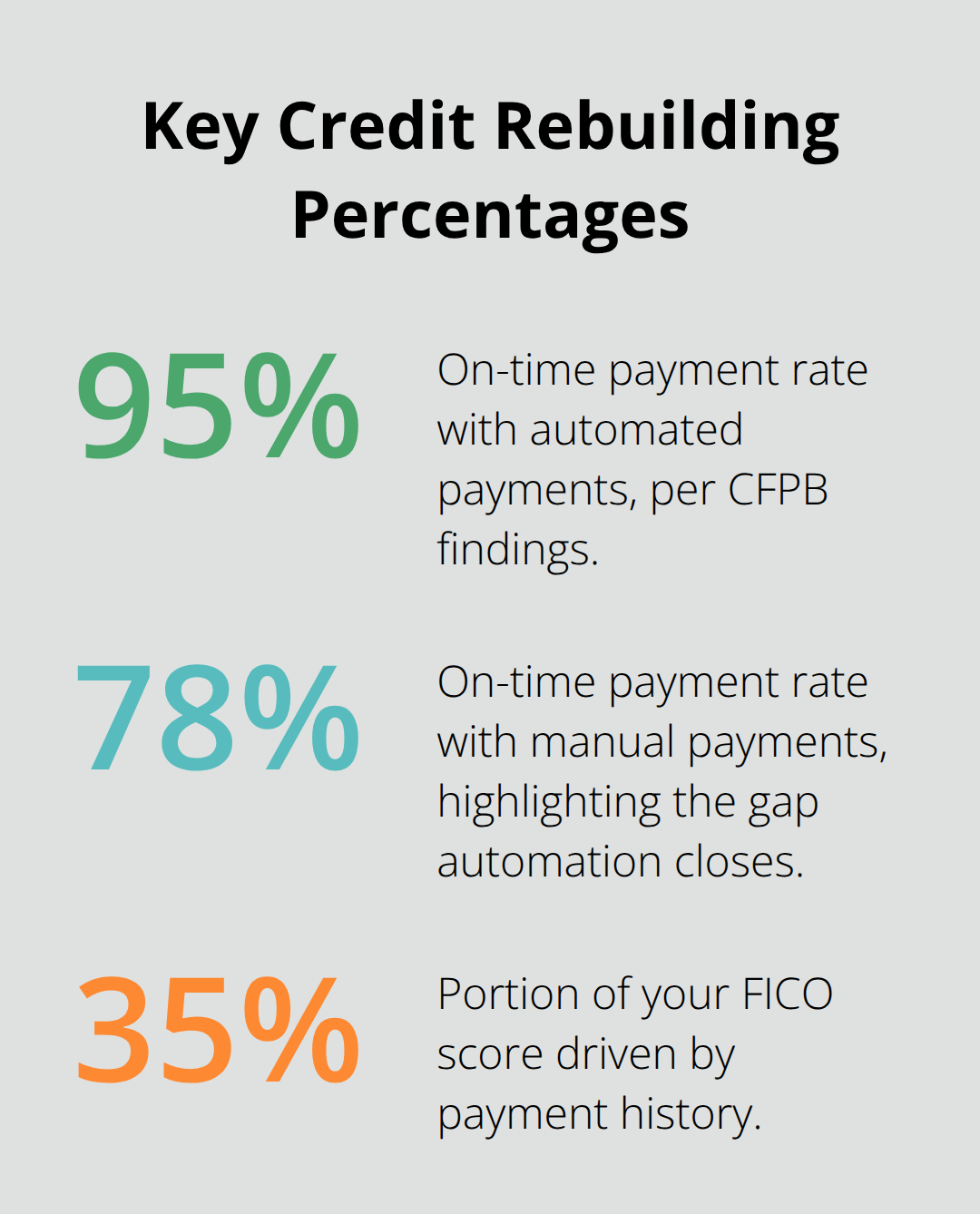
Filing Chapter 7 causes an immediate credit score drop of roughly 130 to 240 points, according to FICO data, though the exact hit depends on your starting score. Higher pre-filing scores often experience larger drops because they have more room to fall. The Federal Trade Commission reports that Chapter 7 remains on your credit report for 10 years from your filing date, not your discharge date, which matters when lenders pull your history. However, individual discharged accounts fall off your credit report 7 years after their original delinquency dates, not after discharge, so negative items gradually disappear even while the bankruptcy notation lingers. This distinction is critical: your report improves steadily over time, not all at once after 10 years. Most borrowers see their credit scores level off around 18 to 24 months post-discharge, then begin climbing steadily if they maintain clean payment habits. The Consumer Financial Protection Bureau data shows that payment history accounts for 35 percent of your FICO score, meaning removing those delinquent accounts after 7 years can generate 15 to 25 point annual increases once they vanish from your report.
Your pre-bankruptcy profile also shapes recovery speed: if you had a solid credit history before filing, you have a stronger foundation to rebuild from than someone with chronic payment problems.
The First 12 Months Matter Most
The actions you take in your first year after discharge determine how fast you recover. Opening a secured credit card within 6 to 12 months can deliver 50 to 80 point annual improvements if you maintain perfect payments, according to CFPB research. About 25 percent of credit reports contain errors, and disputing incorrect bankruptcy dates or account balances can boost your score by 20 to 40 points almost immediately.
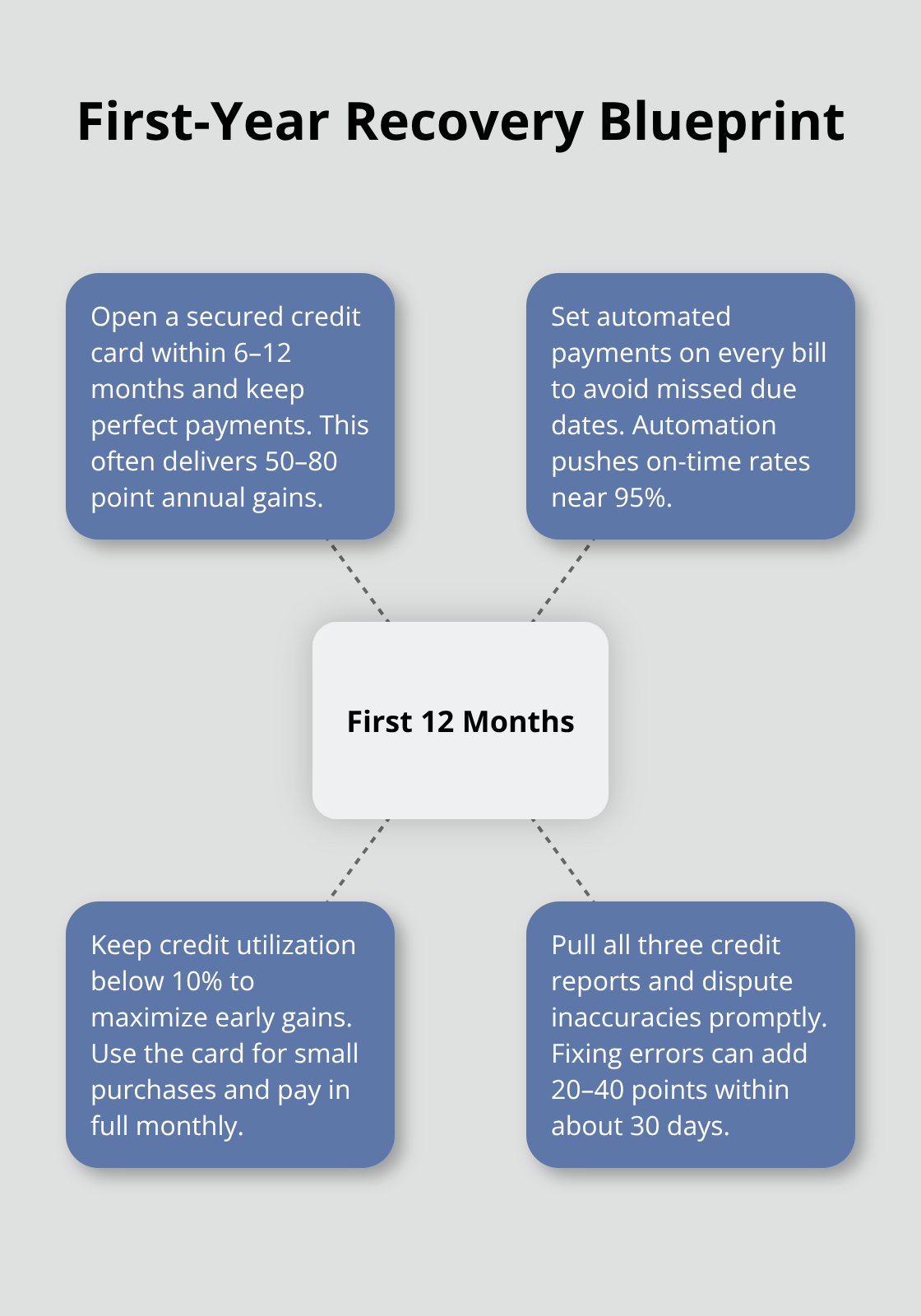
The FTC notes that disputes typically resolve within 30 days, so pulling your credit reports from Equifax, Experian, and TransUnion and checking for accuracy pays off fast. Setting up automated payments for all bills raises your on-time rate to roughly 95 percent compared to 78 percent for manual payments, a massive advantage in rebuilding. Keeping credit utilization below 10 percent generates 5 to 10 point monthly gains during your first recovery year, so if you open that secured card, use it for small purchases and pay it down aggressively.
How to Spot and Fix Report Errors
Credit bureaus make mistakes regularly, and those errors can slow your recovery significantly. Pull your three credit reports from Equifax, Experian, and TransUnion at no cost and review each one line by line for inaccurate bankruptcy dates, wrong account balances, or accounts that should have been removed. Dispute any errors directly with the credit bureaus-the process takes about 30 days and can lift your score by 20 to 40 points when resolved. Incorrect entries that linger on your report after 7 years from the original delinquency date should be removed immediately, so challenge them without delay. This step costs nothing and often produces faster results than any other rebuilding tactic.
Secured Cards and Automated Payments Drive Fast Gains
A secured credit card requires a cash deposit (typically $200 to $500) that serves as your credit limit, and you use it like a regular card while the bank holds your deposit. Open one within 6 to 12 months after discharge and make small purchases each month, then pay the full balance on time-this pattern generates 50 to 80 point annual improvements according to CFPB data. Set up automated payments for this card and all other bills to hit a 95 percent on-time rate versus the 78 percent rate for manual payments. Keep your card balance below 10 percent of your limit (so under $50 on a $500 card) to maximize monthly gains of 5 to 10 points during your first recovery year. These three actions-secured card, automation, and low utilization-form the foundation of rapid credit recovery and position you to access better credit products within 18 to 24 months.
How to Rebuild Credit Fast After Chapter 7 in Florida
Open a Secured Credit Card Within 6 to 12 Months
Secured credit cards stand as your most powerful tool for rapid credit recovery after discharge. Capital One, Discover, and Mission Lane accept post-bankruptcy applicants and typically require deposits between $200 and $500, which the bank holds as collateral while you build a positive payment history. The CFPB reports that maintaining perfect payments on a secured card generates 50 to 80 point annual score improvements, far outpacing other rebuilding methods. Use your card for small, recurring purchases like gas or groceries each month, then pay the full balance immediately to demonstrate responsible credit management without the risk of high balances. Verify that your card issuer reports to all three major bureaus (Equifax, Experian, and TransUnion) before you apply, since unreported accounts waste your effort entirely. After 12 to 18 months of flawless payments, many issuers automatically upgrade you to an unsecured card and return your deposit, eliminating the need to apply for new accounts and trigger additional credit inquiries.
Set Up Automated Payments for Every Bill
Automated payments eliminate the human error that derails most rebuilding efforts, and the numbers prove it-the CFPB found that automated payments achieve a 95 percent on-time rate versus just 78 percent for manual payments. Set up autopay for every single bill the moment you discharge, including rent, utilities, phone, insurance, and your secured card payment, so missed payments become virtually impossible. This single action protects your recovery timeline more effectively than any other tactic available to you.
Keep Credit Utilization Below 10 Percent
Your overall credit utilization across all accounts must stay below 10 percent to generate maximum gains during your first recovery year. If you have a $500 secured card and any other available credit, keep your total balances under $50 combined to achieve the 5 to 10 point monthly gains that accelerate your timeline. Low utilization signals responsible credit management to lenders and produces measurable score improvements month after month.
Pull Your Reports and Dispute Errors Immediately
Pull your credit reports immediately from AnnualCreditReport.com and check for errors like incorrect bankruptcy dates, discharged accounts still showing as active, or wrong balances, since about 25 percent of reports contain mistakes that the FTC confirms resolve within 30 days when disputed. Inaccurate entries can cost you 20 to 40 points, so dispute them without delay rather than waiting for them to age off naturally. Monitor your reports quarterly during your first two years post-discharge to catch new errors early and confirm that accounts are being reported correctly to all three bureaus, giving you the clean foundation needed for the fastest possible recovery trajectory. This ongoing attention prevents small mistakes from compounding into larger credit damage.
Track Your Progress and Plan Your Next Steps
Your credit profile strengthens measurably within 18 to 24 months if you maintain these four habits consistently. As your score climbs and your payment history lengthens, you position yourself to access better credit products and lower interest rates on future loans. The foundation you build now determines whether you qualify for favorable mortgage terms, auto loans, and unsecured credit cards in the years ahead, making these early actions the most valuable investment in your financial recovery.
Resources That Actually Work for Florida Residents
Free Credit Reports and Error Detection
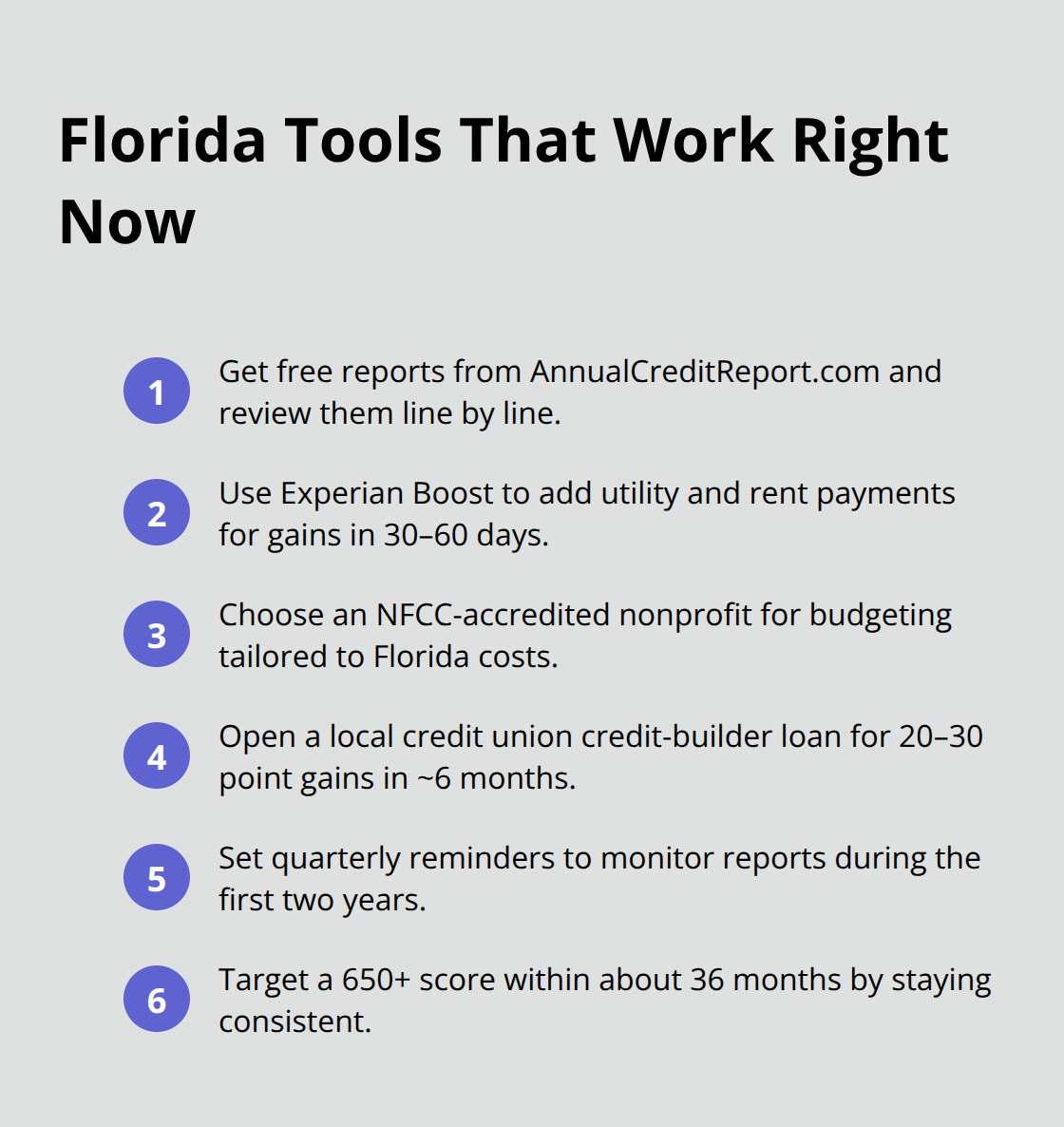
Florida residents rebuilding credit after Chapter 7 discharge access AnnualCreditReport.com as their single most valuable resource because it delivers free credit reports from all three bureaus once yearly. Pull your reports immediately after discharge to catch errors that cost you 20 to 40 points according to FTC data. Set a calendar reminder to check your reports quarterly during your first two years post-discharge rather than just once annually, since monitoring frequency directly correlates with faster error resolution and score improvement.
Experian Boost and Payment Reporting Services
Experian Boost, a free service offered by one of the three major credit bureaus, allows you to add rent and utility payments to your credit history retroactively and generates measurable gains within 30 to 60 days if you have at least three months of on-time payment history. This tool works particularly well for Florida residents because it counts payments you already make, transforming existing financial responsibility into credit score improvements without requiring new accounts or deposits.
Credit Counseling Programs Tailored to Florida Costs
Credit counseling becomes mandatory before and sometimes after Chapter 7 filing. Selecting a nonprofit credit counseling agency accredited by the National Foundation for Credit Counseling delivers genuine value beyond compliance. These agencies provide free or low-cost budgeting assistance tailored to Florida living costs, where housing and insurance expenses consume larger portions of household income than national averages. Their counselors help you build emergency savings to prevent reliance on new credit during your rebuilding phase.
Credit-Builder Loans From Local Credit Unions
Local Florida credit unions offer credit-builder loans ranging from $300 to $1,000 with monthly payments held in a savings account until completion. These loans generate 20 to 30 point gains within six months according to CFPB data while simultaneously building a small emergency fund. The American Bankruptcy Institute reports that about 95 percent of Chapter 7 cases result in full debt discharge, and combining that fresh start with these specific tools and resources positions you to reach 650+ credit scores within roughly 36 months (a timeline that opens access to conventional mortgages, unsecured credit cards, and favorable auto loan terms that seemed impossible immediately after filing).
Final Thoughts
Chapter 7 bankruptcy resets your financial life by removing qualifying debts and creating space to rebuild. The credit rebuilding Florida Chapter 7 process demands discipline, but the timeline moves faster than most people expect-you can reach 650+ credit scores within roughly 36 months if you act decisively in your first year after discharge. Pull your credit reports immediately, open a secured card, and set up automated payments for every bill to form the foundation of rapid recovery.
The 10-year reporting period for Chapter 7 does not define your financial future because individual discharged accounts fall off your report after 7 years, and your score climbs steadily as negative items vanish. The temporary credit hit you took at filing pales against the permanent debt relief you received, and that trade-off gives you a genuine opportunity to build wealth instead of servicing old debt. Build an emergency fund (even starting small prevents reliance on new credit when unexpected expenses strike), create a budget tailored to Florida living costs, and use credit counseling resources to strengthen these habits.
We at Harnage Law, PLLC help Florida residents discharge qualifying debts and stop creditor harassment so they can focus on rebuilding their financial lives. Contact us for a free consultation to discuss your Chapter 7 case or explore your financial options at https://chapter7florida.com/. Your fresh financial start is within reach.