
Filing for Chapter 7 bankruptcy in Florida can feel overwhelming, but understanding the discharge process removes much of that uncertainty. A Chapter 7 discharge eliminates most of your unsecured debts, giving you a genuine fresh start.
At Harnage Law, PLLC, we’ve guided hundreds of Floridians through this process and know exactly what to expect at each stage. This guide walks you through how Chapter 7 discharge works in Florida, which debts disappear, and how to protect your assets along the way.
How the Florida Chapter 7 Process Unfolds
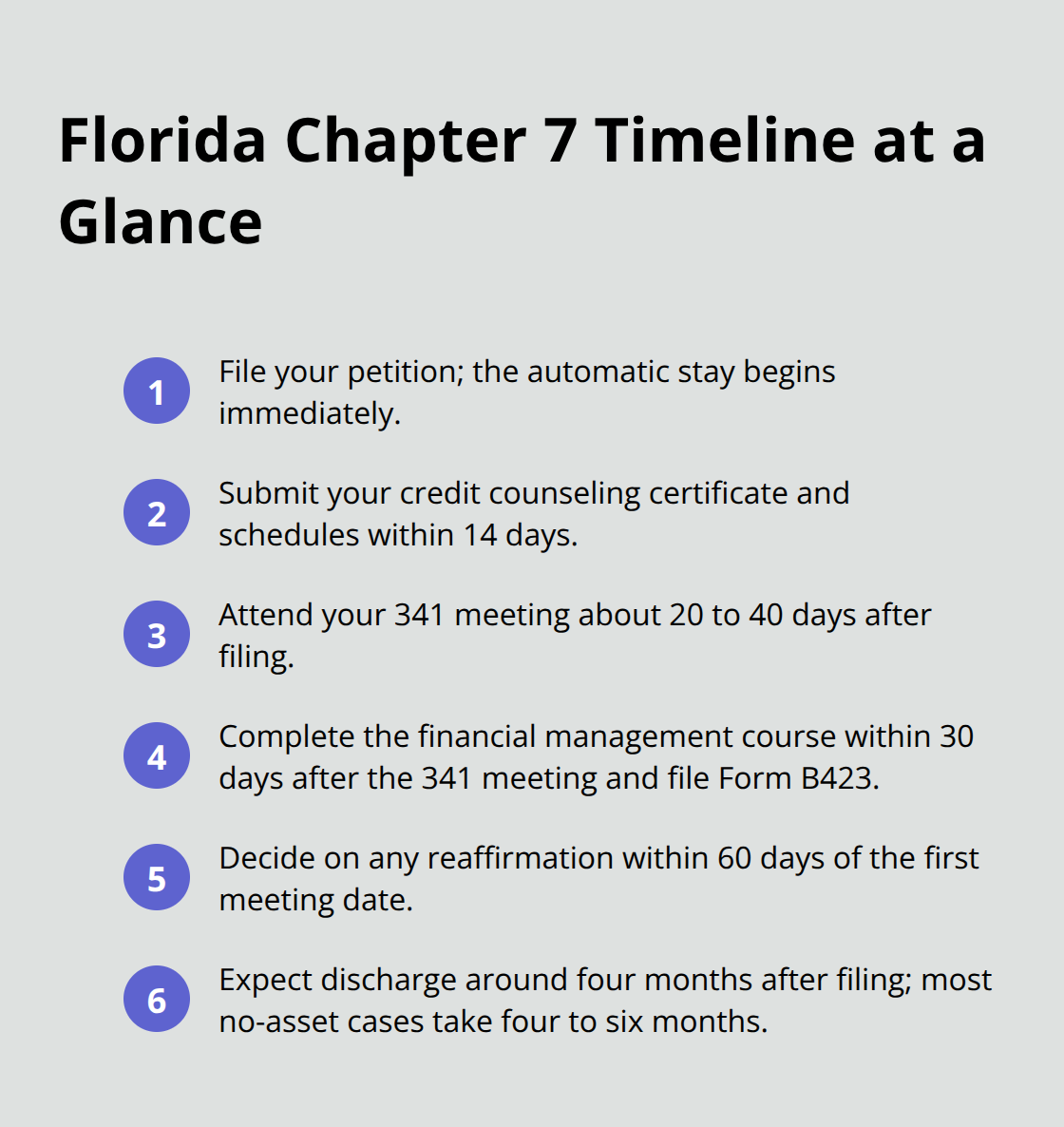
Filing for Chapter 7 in Florida means entering a structured federal process with specific deadlines and requirements you must follow. The journey starts when you file your petition with the U.S. District Court for the Southern District of Florida, which triggers the automatic stay. This immediately halts all creditor collection efforts, wage garnishments, and lawsuits against you. Within 14 days of filing, you must submit your Certificate of Credit Counseling from an approved agency listed on the U.S. Trustee’s website, along with your complete financial schedules and a list of all creditors. The filing fee is $338, though you can request installment payments or a fee waiver if your income falls below 150% of the poverty level.
Meeting Your Trustee at the 341 Hearing
About 20 to 40 days after filing, you attend the Meeting of Creditors, officially called the 341 meeting because Section 341 of the bankruptcy code governs it. This is not a court hearing with a judge present. Instead, a court-appointed trustee asks you questions under oath about your assets, debts, and financial situation. Bring your government-issued photo ID and your most recent federal tax return, which you must provide at least seven days before the meeting. Most creditors don’t show up, which means this meeting is often the only time you interact directly with the trustee. The meeting typically lasts 10 to 15 minutes.
Completing Required Courses and Agreements
Within 30 days after the 341 meeting, you must complete a post-petition financial management course from an approved agency and file Form B423 confirming completion. If you want to keep property securing a debt (like a car), you may enter a reaffirmation agreement within 60 days of the first meeting date. These steps are mandatory for obtaining your discharge and moving forward with your fresh start.
The Discharge Timeline and Asset Protection
The discharge is typically granted about four months after you file, assuming you complete all required steps without delays. A 60-day period follows your 341 meeting during which creditors can object to your discharge, though objections are rare in straightforward cases. Once the discharge order is issued, it becomes a permanent injunction that prevents creditors from collecting on discharged debts. If a creditor attempts collection after discharge, you can report them and the court can impose sanctions.
The entire timeline from filing to discharge in a standard no-asset case, where the trustee finds no property to liquidate, takes four to six months. If the trustee discovers non-exempt equity in an asset like a vehicle or second property, the timeline extends because the trustee must liquidate that asset and distribute proceeds to creditors. This is why claiming the correct exemptions upfront matters enormously-Florida allows you to protect up to $1,000 in vehicle equity plus a $4,000 wildcard exemption if you don’t use your homestead exemption. Understanding which debts actually disappear through discharge and which ones survive the process helps you plan your financial recovery more effectively.
Which Debts Vanish in Chapter 7 and Which Ones Stick Around
Debts That Disappear Through Chapter 7 Discharge
Credit card debt stands as the primary reason most Floridians file Chapter 7, and credit card balances-including overdue amounts and accumulated fees-are almost always dischargeable. Medical bills, another common burden, typically vanish through discharge as well. Unsecured personal loans, including payday loans that trap countless Floridians in cycles of high-interest borrowing, are dischargeable. Overdue utility bills for electricity, gas, and water can be eliminated.
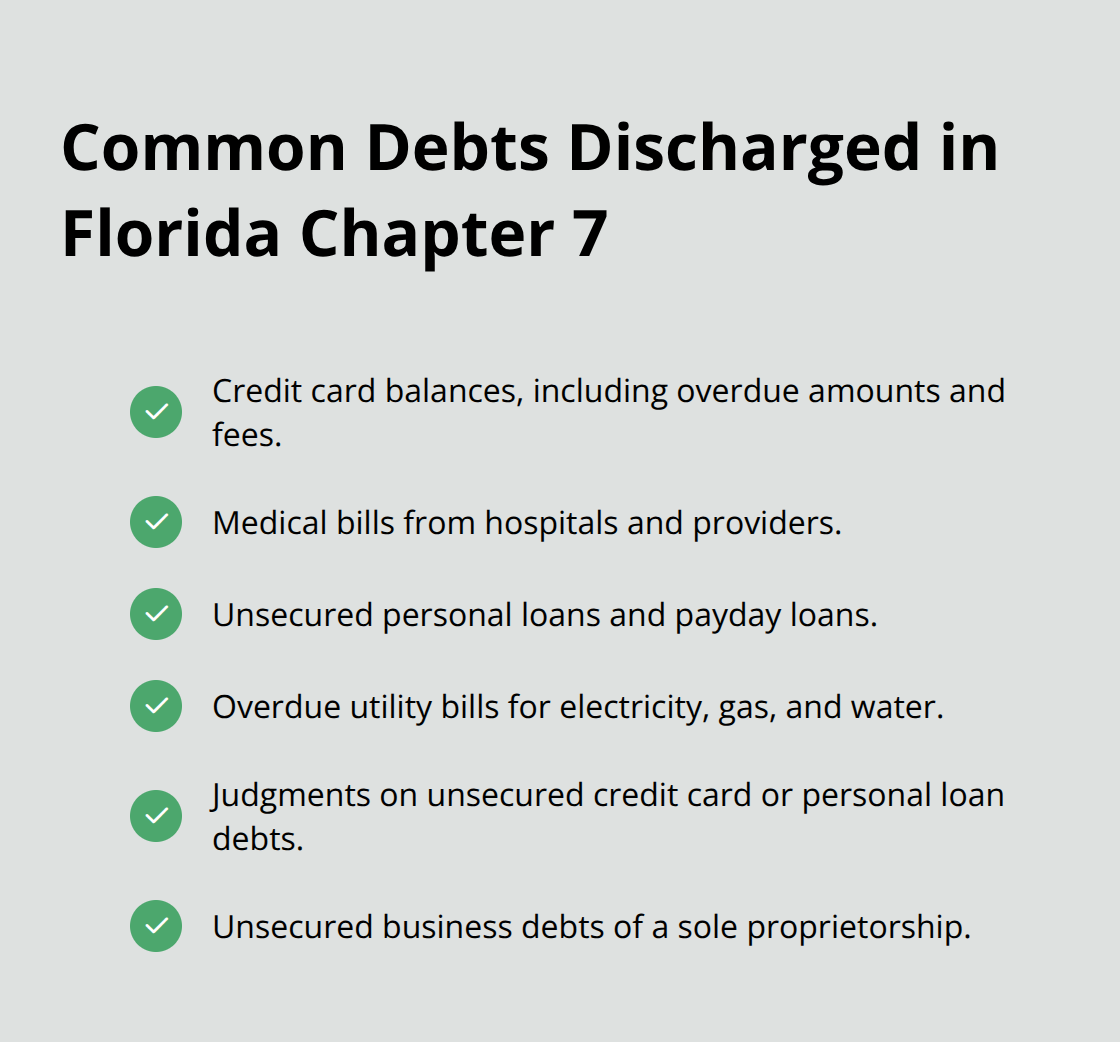
Judgments from creditors suing you over unsecured debts like credit cards or personal loans are also dischargeable.
If you operate a sole proprietorship, business debts classified as unsecured can be discharged too. The critical distinction lies between unsecured and secured debt. Unsecured debts have no collateral backing them-the creditor has no claim to your property if you stop paying. Secured debts, like mortgages and car loans, are backed by collateral that the creditor can seize if you default.
The 19 Nondischargeable Debt Categories
Chapter 7 has hard boundaries on what cannot be eliminated. Federal bankruptcy law lists 19 categories of nondischargeable debts under the U.S. Courts guidelines. Most tax debts remain your responsibility after discharge, though narrow exceptions exist for older tax obligations that meet specific criteria. Child support and alimony obligations never disappear-family courts view these as personal duties that survive bankruptcy. Most student loans cannot be discharged unless you prove undue hardship to the court, a legal standard that is difficult to meet.
Criminal fines, restitution orders, and penalties imposed by courts are nondischargeable. Debts arising from fraud, embezzlement, or willful and malicious injury to another person or their property survive discharge. This includes debts from personal injury or death caused by driving under the influence.
How Secured Debts Work After Discharge
Secured debts like mortgages and car loans technically survive discharge, but this distinction matters less than you might think. The discharge eliminates your personal liability for the debt, but the lender’s lien on the property remains intact. If you want to keep a vehicle or home, you can enter a reaffirmation agreement within 60 days after your 341 meeting to continue making payments on the secured debt.
If you choose not to reaffirm, the lender can repossess the vehicle or foreclose on the home, but they cannot pursue you personally for any deficiency after selling the property in Florida. This protection exists because Florida is a non-deficiency state for purchase-money mortgages and vehicle loans, meaning the lender’s remedy is limited to reclaiming the collateral. Understanding how your specific assets interact with Florida’s exemption laws determines what you actually keep after discharge.
What Property Can You Actually Keep in Florida Chapter 7
Florida Exemptions Protect More Than You Think
Florida’s exemption laws shield far more of your property than most debtors realize, and claiming them correctly makes the difference between losing assets and building your fresh start on solid ground. The state allows you to protect specific property from creditors, but you must claim these exemptions in your bankruptcy filing to activate the protection. Most Florida Chapter 7 cases result in no asset liquidation, meaning debtors keep virtually everything they own. This outcome happens because Florida exemptions are generous when properly applied. Your vehicle equity up to $1,000 receives automatic protection, and you can add a $4,000 wildcard exemption to shield additional vehicle equity if you don’t use your homestead exemption.
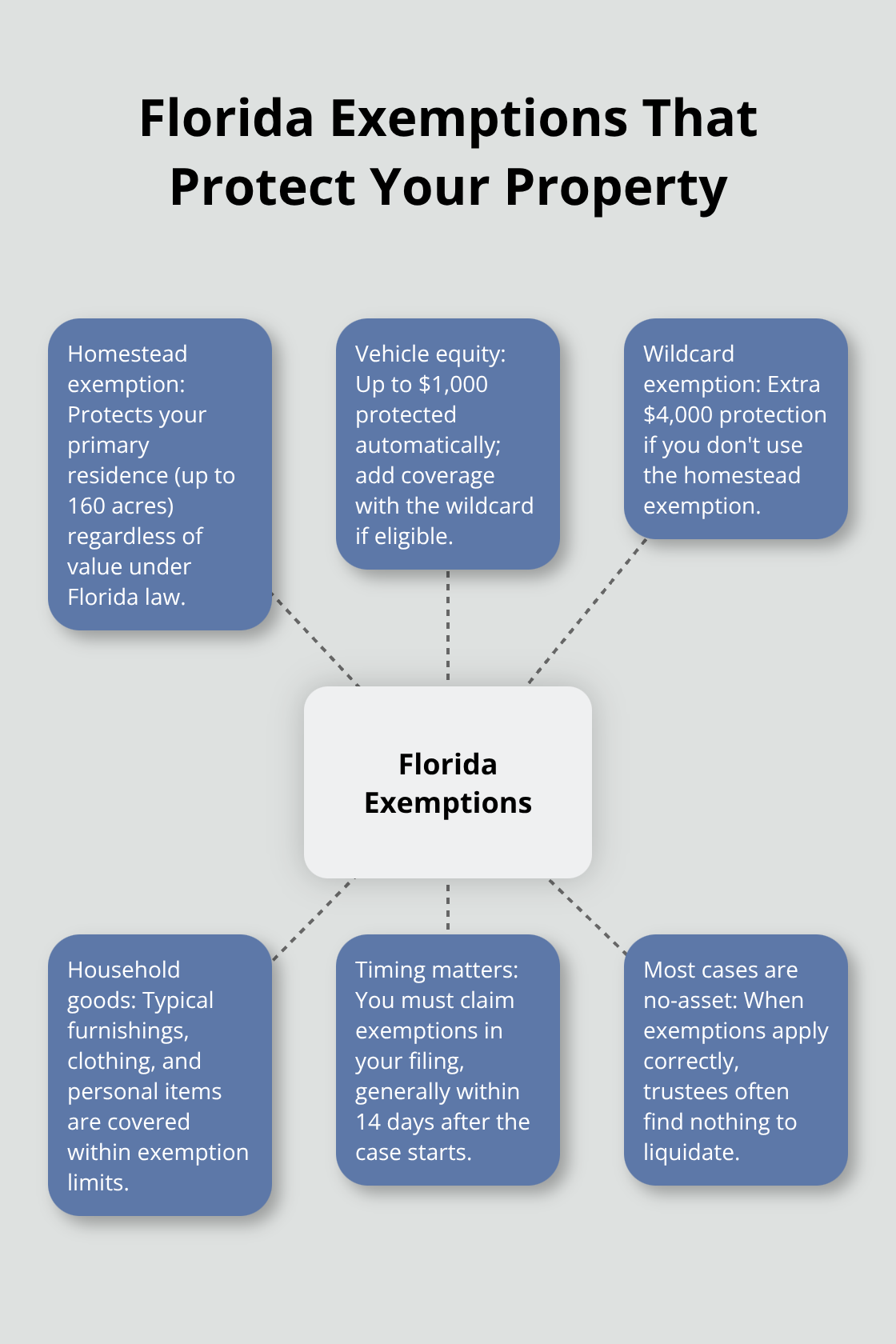
Household furnishings, clothing, and personal items have exemption limits that cover typical household goods. The key lies in understanding which exemptions apply to your specific situation and filing them on your bankruptcy schedules within the required 14-day window after filing.
The Homestead Exemption: Florida’s Strongest Protection
Your homestead exemption in Florida stands as one of the strongest asset protections in the nation. If you own a primary residence in Florida, you can exempt up to 160 acres of land and the home itself from creditor claims under Florida law, making your house nearly untouchable in bankruptcy. This protection applies regardless of the home’s value, which is why Florida homeowners rarely lose their properties in Chapter 7. If you have a mortgage, the lender’s lien survives discharge, but you keep the home through a reaffirmation agreement that allows you to continue making payments. Renters don’t have homestead protection, but they can use the $4,000 wildcard exemption to protect other assets like savings accounts, jewelry, or additional vehicle equity.
How the Trustee Evaluates Your Assets
A Chapter 7 trustee assigned to your case analyzes your property against available exemptions and decides whether anything has non-exempt equity worth liquidating. If equity in an asset substantially exceeds exemptions, the trustee can sell it and distribute proceeds to creditors, though this happens in a minority of Florida cases. The trustee’s decision directly affects your timeline and recovery plan, making accurate exemption claims essential from day one.
Final Thoughts
Chapter 7 discharge in Florida eliminates most unsecured debts and provides a genuine path forward, but success depends on understanding the process and taking correct action from the start. The timeline from filing to discharge typically spans four to six months in straightforward cases, and claiming your exemptions properly ensures you keep the assets that matter most. Florida’s generous homestead exemption protects your primary residence regardless of value, while vehicle and wildcard exemptions shield additional property when claimed on your bankruptcy schedules within the required 14-day window.
After the court issues your discharge order, creditors must stop collection efforts immediately. Any attempt to collect on discharged debts violates the permanent injunction issued by the court, and you can report violations for sanctions. If you reaffirmed secured debts like a mortgage or car loan, continue making those payments to keep the property, and your fresh start begins the moment discharge takes effect.
We at Harnage Law, PLLC guide clients through every step of the Chapter 7 discharge Florida process, stopping creditor harassment, preventing wage garnishments, and halting lawsuits while protecting your assets and securing your discharge. We analyze your specific situation to determine which exemptions apply, file your schedules correctly, and represent you at the 341 meeting and beyond. Contact us to discuss your situation and learn how we can help you achieve the fresh start you deserve.