
Chapter 7 bankruptcy offers a path to eliminate overwhelming debt, but the process can feel confusing without clear guidance. This process overview of Florida bankruptcy walks you through each stage, from initial filing to debt discharge.
We at Harnage Law, PLLC have guided countless Floridians through Chapter 7, and we know what questions arise at every step. This guide answers those questions so you understand exactly what happens next.
Understanding Chapter 7 Bankruptcy in Florida
Chapter 7 bankruptcy is a legal process that eliminates most unsecured debts, giving you a genuine financial reset rather than a long repayment plan. When you file Chapter 7 in Florida, the court appoints a trustee who reviews your assets and income to determine what can be liquidated to pay creditors. The process typically concludes with a discharge within four to six months, meaning debts like credit cards, medical bills, and personal loans are legally erased. This isn’t debt consolidation or negotiation-it’s a court-ordered elimination that stops wage garnishments, lawsuits, and creditor harassment immediately through what’s called an automatic stay under federal law. Chapter 7 works best for people with limited income and non-exempt assets, making it fundamentally different from other bankruptcy options available in Florida.
Income Thresholds Determine Your Eligibility
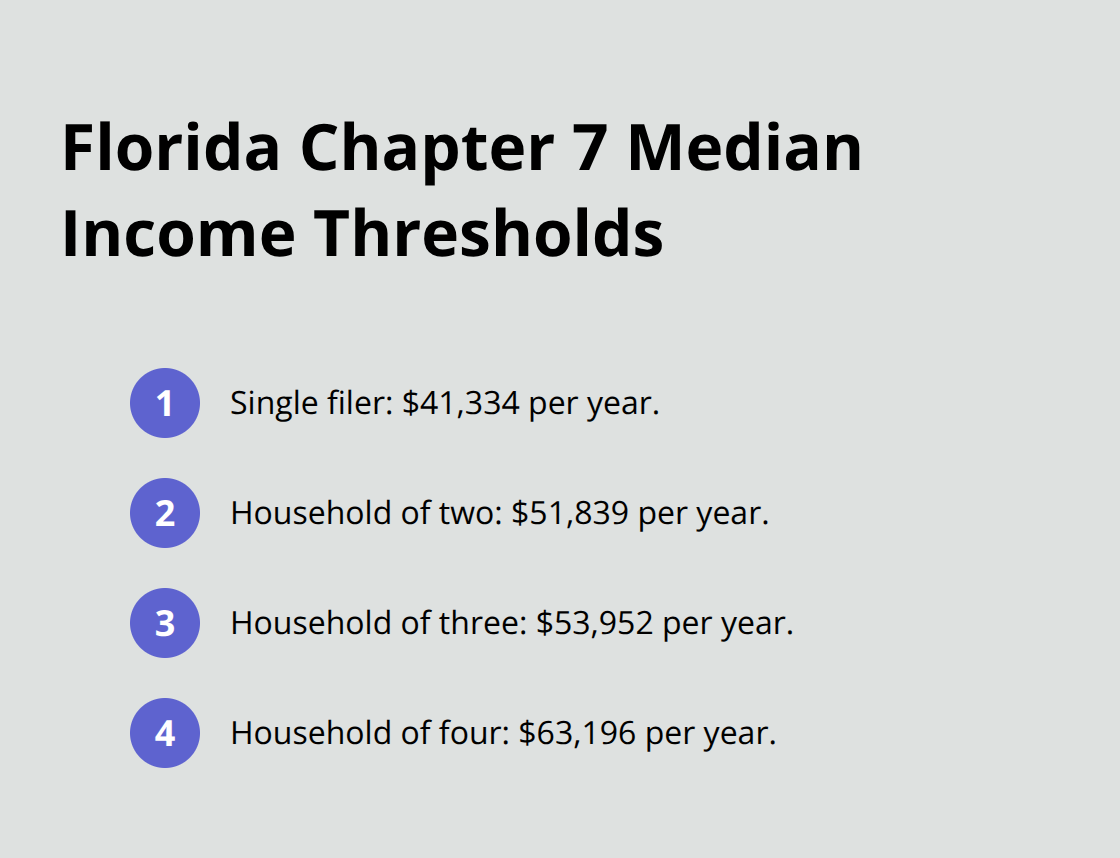
Your income is the primary factor deciding whether Chapter 7 is available to you in Florida. If your average monthly income from the last six months falls below the Florida state median for your household size, you qualify automatically. For a single person, that median is $41,334 annually; for a household of two, it’s $51,839; for three people, $53,952; and for four people, $63,196. The U.S. Trustee office publishes these medians, and they update regularly to reflect cost-of-living changes.
If your income exceeds your household’s median, you must complete a means test that calculates your disposable income after allowed expenses. This means test uses national and Florida-specific expense standards from the Census Bureau and Internal Revenue Service, so the calculation is standardized rather than arbitrary. The key point: if your projected 60-month income is less than $7,475, you pass the means test and can file Chapter 7. If it exceeds $12,475, you cannot file Chapter 7 and must consider Chapter 13 instead.
Chapter 13 Requires Income You Cannot Afford to Spare
Chapter 13 bankruptcy differs sharply because it demands a regular income and creates a three- to five-year repayment plan where you keep your assets but pay creditors a portion of your debt. Chapter 7 has no repayment plan-creditors receive what the trustee can liquidate from non-exempt property, then remaining qualifying debts vanish. Chapter 13 is appropriate when you have assets worth protecting (like a home with equity) or when your income exceeds the Chapter 7 threshold but you still need relief. Chapter 11 reorganization exists primarily for businesses and some individuals with substantial assets and complex debt structures, making it far more expensive and time-consuming than Chapter 7. For most Floridians facing overwhelming unsecured debt without significant assets, Chapter 7 is the faster, simpler path to elimination rather than repayment.
What Happens Next in Your Chapter 7 Case
Once you understand whether Chapter 7 fits your situation, the actual filing process begins with mandatory credit counseling. This requirement (completed within 180 days before you file) prepares you for the financial decisions ahead and ensures you’ve explored all available options. After you file your petition with the court, a trustee takes control of your case and schedules the 341 meeting of creditors, typically occurring about 40 days after filing. You must attend this meeting with photo identification and your Social Security number, as the trustee and any creditors present will ask questions about your finances under oath. Understanding each stage of this process removes much of the anxiety surrounding Chapter 7 and helps you prepare properly for what comes next.
Filing Your Chapter 7 Petition in Florida
Complete Credit Counseling Before Filing
Credit counseling must happen before you file, and this requirement is non-negotiable. You have 180 days before filing to complete an approved credit counseling course from an agency listed on the U.S. Trustee website. The court requires this counseling to confirm that you’ve considered alternatives and understand your financial situation fully. Upon completion, you receive a certificate that proves compliance-keep this document because you’ll submit it with your petition. Most non-profit agencies offer the course for under $100, though costs range from $50 to $300 depending on the provider.
Gather Required Documents and Forms
After counseling is complete, you must gather the documents needed for filing. The petition consists of multiple official bankruptcy forms that you cannot improvise or substitute with outdated versions. You must file Schedule A/B (property), Schedule C (exemptions), Schedule D (secured debts), Schedule E/F (unsecured debts), Schedule G (executory contracts), Schedule H (codebtors), Schedule I (current income), Schedule J (expenses), Schedule J-2 (additional expense information), the Statement of Financial Affairs, and the Means Test Calculation.
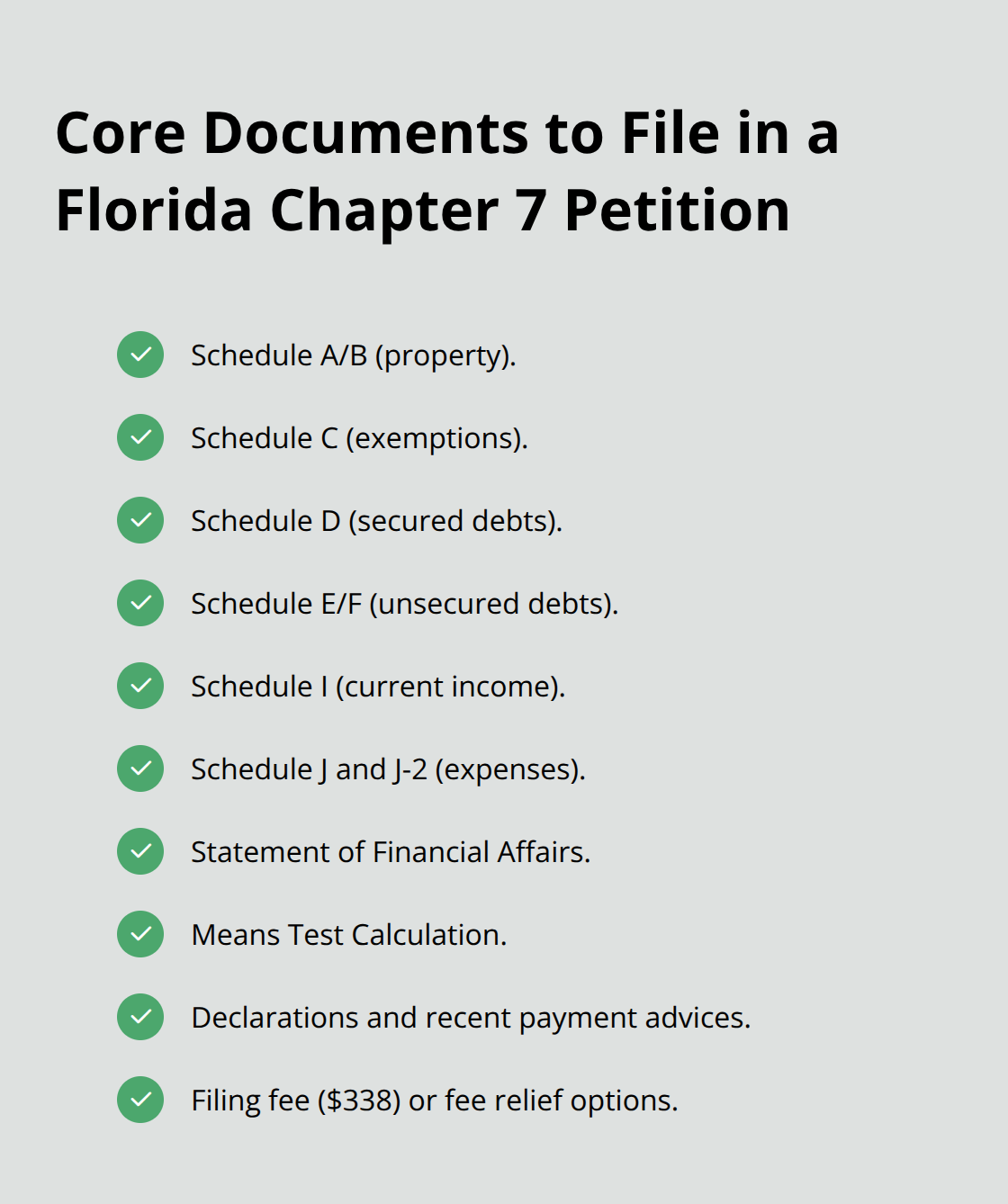
Additionally, you need the Declaration About Your Schedules, the Declaration of Intentions for Chapter 7, and a Declaration Regarding Payment Advices with pay stubs from the last 60 days (showing only your last four digits of Social Security number). The filing fee in the Southern District of Florida is $338, payable by cashier’s check or money order within 14 days of filing. If you cannot afford the full fee upfront, you can request an installment plan using the official Application for Individuals to Pay the Filing Fee in Installments, or if your household income falls below federal poverty guidelines, you can request a waiver using Form 103B. When mailing your payment, never send cash and always include your case number on the check or money order.
Prepare for the 341 Meeting of Creditors
The 341 meeting of creditors occurs roughly 40 days after you file and represents your first in-person interaction with the bankruptcy system. You must attend this meeting with a government-issued photo ID and your Social Security number; failure to appear results in automatic case dismissal. The trustee assigned to your case conducts this meeting under oath, meaning you answer questions truthfully about your income, expenses, assets, and debts. Creditors can attend and question you, but in most Chapter 7 cases, creditors don’t show up because they know the trustee will handle asset liquidation if any exists. The trustee’s primary concern is verifying that your petition information is accurate and that you haven’t hidden assets.
Meetings typically last 5 to 15 minutes per debtor, and the trustee asks straightforward questions like whether you’ve sold property recently, whether you own real estate, and whether your income and expense figures are correct. Bring documentation if you have it-recent tax returns, pay stubs, and bank statements help answer questions quickly. After the 341 meeting, if no issues arise, your case moves toward discharge. The entire Chapter 7 process from filing to discharge takes four to six months, and during this time the automatic stay remains in effect, meaning creditors cannot pursue collection, wage garnishment, or lawsuits against you. Once the trustee completes the asset review and creditors raise no objections, you’ll move into the final phase where you complete a post-filing financial management course before receiving your discharge.
Debt Discharge and Financial Recovery in Florida
Most Unsecured Debts Vanish Upon Discharge
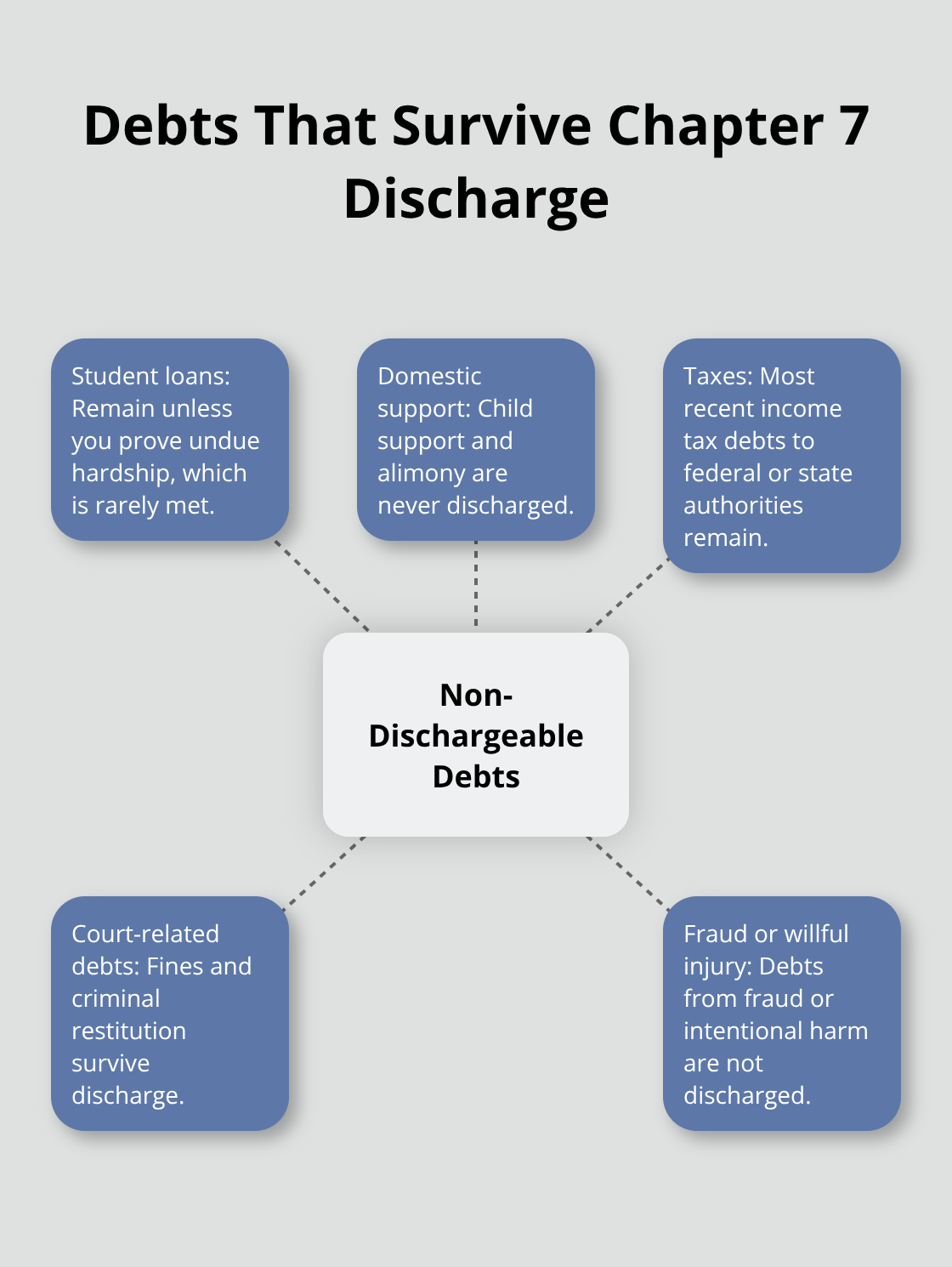
Chapter 7 discharge is not an all-or-nothing outcome. Most unsecured debts disappear completely, but certain debts survive the bankruptcy process regardless of how thorough your filing is. Credit card balances, medical bills, personal loans, and most payday loans vanish upon discharge, which typically arrives three to six months after you file. However, student loans remain your responsibility in nearly all Chapter 7 cases unless you can prove undue hardship, a legal standard so difficult to meet that fewer than one percent of filers succeed. Child support and alimony obligations never discharge, and neither do most tax debts owed to federal or state authorities, particularly income taxes from the last three years. Court fines, criminal restitution, and debts incurred through fraud or willful injury also survive discharge.
The U.S. Trustee office publishes detailed guidance on non-dischargeable debts under 11 U.S.C. Section 523, and understanding which of your specific debts fall into this category matters greatly for post-bankruptcy planning.
Your Discharge Timeline Moves Predictably
Your case number encodes the district, year filed, and judge assignment, and this case number appears on every document throughout your bankruptcy. The automatic stay takes effect immediately when you file, stopping wage garnishments, collection calls, and lawsuits within hours. Your 341 meeting occurs around day 40, and if the trustee finds no complications and creditors raise no objections, the court typically issues your discharge between 60 and 180 days after filing. This four- to six-month window means you exit active bankruptcy and begin rebuilding credit relatively quickly compared to Chapter 13, which ties you to a repayment plan for years. When you complete your financial management course within 60 days after your 341 meeting and submit the certificate of completion to the court, the discharge order arrives, legally releasing you from personal liability on all qualifying debts. After discharge, the trustee closes your case, and your obligations to the bankruptcy court end.
Rebuild Your Credit With Intentional Steps
Rebuilding credit after discharge requires intentional action rather than passive waiting. Obtain a copy of your credit report from all three bureaus through the Fair Credit Reporting Act; federal law entitles you to one free report annually from each bureau, and checking for inaccuracies matters because bankruptcy filings sometimes trigger reporting errors. Secured credit cards designed for rebuilding credit typically require a cash deposit matching your credit limit, and using one for small monthly purchases paid in full demonstrates responsible credit behavior. Within two to three years of consistent on-time payments and low credit utilization, your score can climb into the 650-700 range, qualifying you for traditional credit products. Avoid credit repair services that promise rapid improvement; legitimate credit rebuilding takes time and your own disciplined payment behavior. The Fair Credit Reporting Act allows bankruptcy to appear on your credit report for up to ten years, though the negative impact lessens significantly after three to four years as newer positive credit history accumulates.
Final Thoughts
Chapter 7 bankruptcy in Florida offers a genuine path forward when debt becomes unmanageable, and this process overview of Florida bankruptcy shows that the journey from filing to discharge follows a predictable timeline. If your income falls below Florida’s median threshold for your household size, you can eliminate most unsecured debts within four to six months without entering a multi-year repayment plan. Understanding which debts discharge and which survive bankruptcy matters enormously for your post-filing strategy, particularly regarding student loans, child support, and tax obligations that remain your responsibility.
Your next steps begin with finding an approved credit counseling agency on the U.S. Trustee website and completing the mandatory course before filing. Gather your financial documents, including pay stubs from the last 60 days and recent tax returns, then prepare the required bankruptcy forms using the official versions from the court. Schedule time to understand your exemptions under Florida law, which protect essential assets like your home’s equity, retirement accounts, and personal property up to specified limits.
We at Harnage Law, PLLC provide personalized legal guidance at every stage of Chapter 7 bankruptcy and help you discharge qualifying debts while protecting your assets. Contact us to discuss your situation and explore whether Chapter 7 is the right path for your fresh start.
