Chapter 7 bankruptcy offers a fresh start for Florida residents drowning in debt. The chapter 7 bankruptcy process can feel overwhelming, but understanding each step removes much of the mystery and fear.
We at Harnage Law, PLLC walk clients through this journey every day, from the initial filing through final discharge. This guide breaks down what happens at each stage and what protections exist for your assets.
Understanding Chapter 7 Bankruptcy Eligibility in Florida
Not everyone can file Chapter 7 bankruptcy in Florida. The court uses a specific income test to determine eligibility, and this test carries real weight. Your current monthly income, averaged over the six months before filing, must fall below the Florida state median income threshold. For 2026, the median income for a single person in Florida sits at approximately $65,000 annually, while a family of four faces a threshold around $135,000.
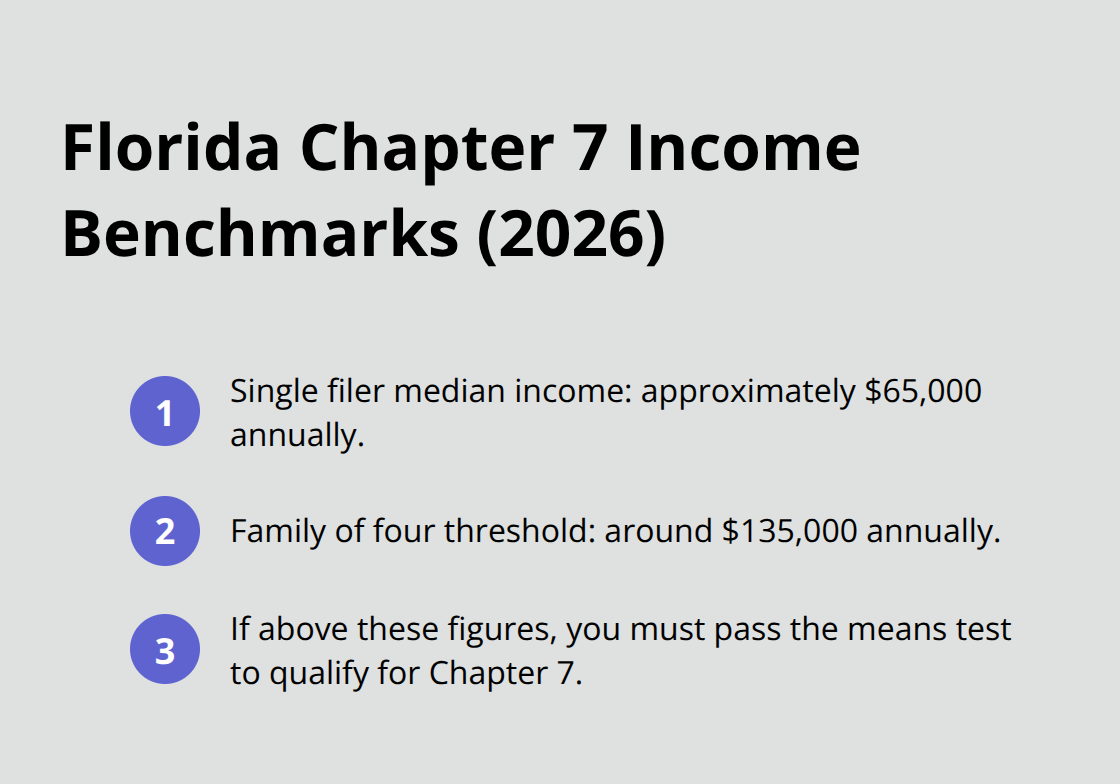
If your income exceeds these figures, you must pass the means test-the point where most people either qualify or get redirected to Chapter 13.
Income Requirements and the Means Test
The means test uses Census Bureau data and IRS expense multipliers to calculate your disposable income after accounting for living expenses. This calculation determines whether the court views your Chapter 7 filing as an abuse of the bankruptcy system. You must complete Official Bankruptcy Form B122A-1 to report your current monthly income and Form B122A-2 to show the means test calculation itself. These forms are non-negotiable, and the court reviews them before approving your case. Gathering tax returns and comprehensive financial records helps you accurately complete these income and expense statements.
Types of Debts That Can Be Discharged
Chapter 7 discharges most unsecured debts, which means you walk away from credit cards, medical bills, personal loans, and similar obligations without paying them back. The discharge typically arrives within three to six months after filing, and once granted, creditors cannot pursue you for those eliminated debts. However, secured debts operate differently. A mortgage or car loan remains tied to the property itself, so you must decide whether to keep the asset by reaffirming the debt or surrender it. Reaffirmation lets you continue paying to keep your vehicle or home, but it requires a written agreement and sometimes court approval if you lack an attorney.
Debts That Cannot Be Eliminated
Certain debts are permanent, and Chapter 7 cannot touch them. Child support and alimony obligations follow you through bankruptcy and beyond. Most federal and state taxes cannot be discharged unless the tax debt is older than three years and meets specific conditions. Student loans present another barrier: they survive discharge unless you prove undue hardship, which requires filing an adversary proceeding and meeting a difficult legal standard. Recent tax debts, criminal fines, and debts arising from fraud or willful injury also remain after discharge. Understanding what stays helps you plan realistically for life after bankruptcy.
These non-dischargeable obligations should factor into your decision about whether Chapter 7 makes sense for your situation. Once you confirm your eligibility and understand which debts will vanish, the actual filing process begins-and that process involves specific documents, strict deadlines, and important decisions about your assets.
The Chapter 7 Filing Process in Florida
Required Documents and Financial Disclosures
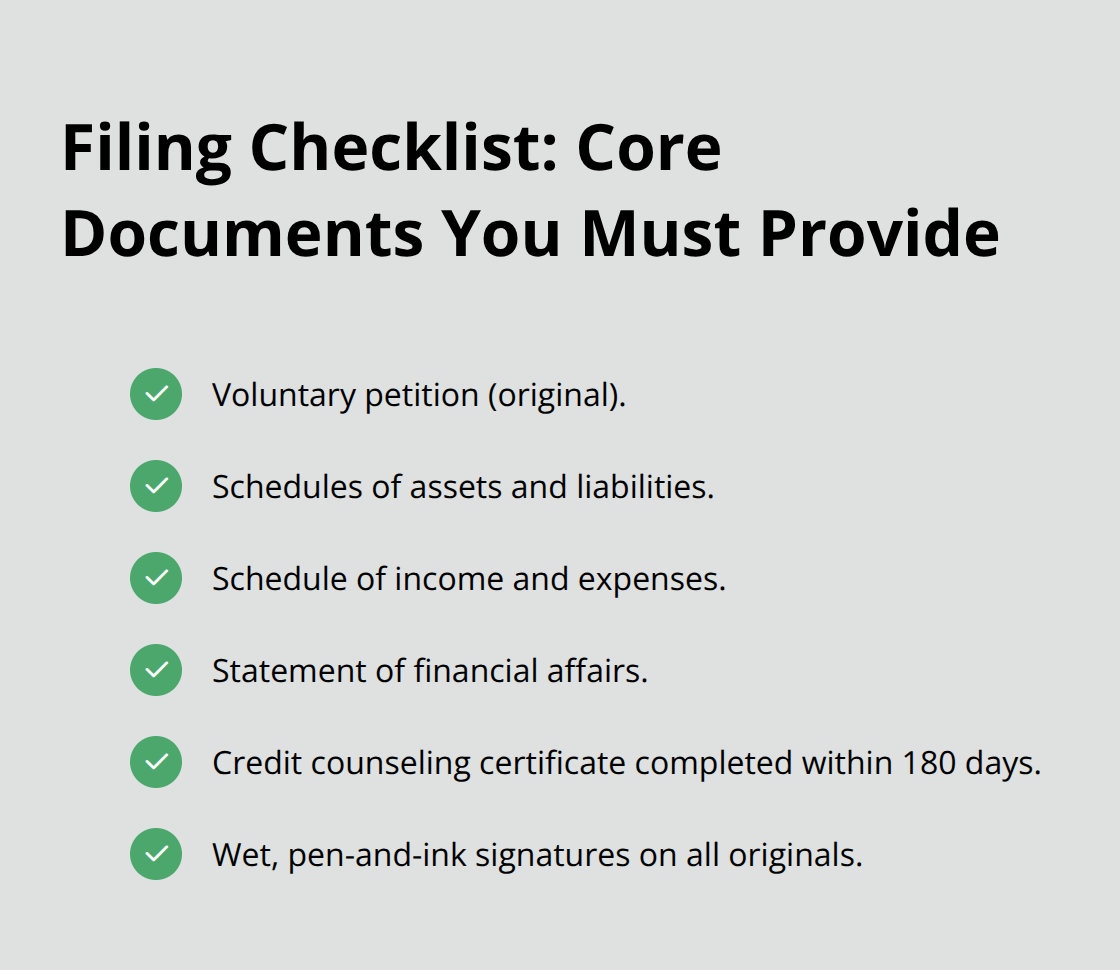
The filing process demands precision because missing deadlines or submitting incomplete documents can derail your entire case. You must submit a complete petition package at the court’s intake window, including your voluntary petition, all required schedules of assets and liabilities, your schedule of income and expenses, a statement of financial affairs, and the certificates proving you completed credit counseling within 180 days before filing. The court requires wet signatures on your original petition and all documents-pen-and-ink signatures only, no digital signatures or photocopies.
Your filing fee totals $338. You can request installment payments or a fee waiver if your income falls below 150% of the federal poverty guideline using Official Bankruptcy Form 103B. If you pay in installments, you have 14 days to submit the exact amount by certified check or money order along with your case number. The means test forms B122A-1 and B122A-2 must accompany your petition; the court will not accept your case without them. You also need a creditor matrix listing every creditor’s name and address to ensure proper notice, and you must provide a legible photo ID at filing.
The clerk’s notice titled Stop & Read Before Filing, available in Spanish and Creole, offers critical guidance you should review before submitting anything. Gathering tax returns and comprehensive financial records helps you accurately complete these income and expense statements.
The Trustee’s Role and the 341 Meeting
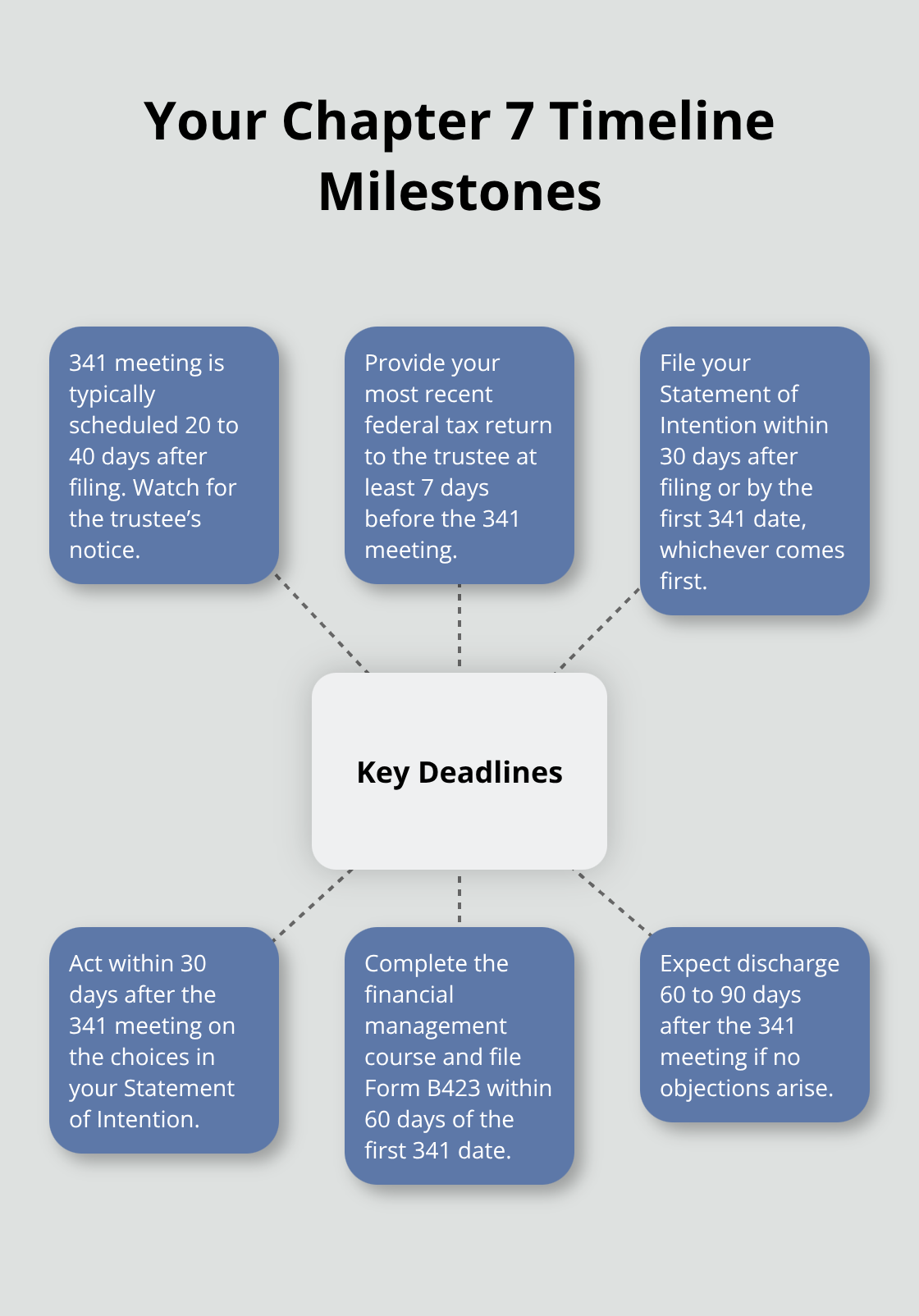
After you file, the court assigns a Chapter 7 trustee within days, and this trustee becomes the central figure in your case. The trustee reviews your financial disclosures to identify nonexempt assets available for liquidation and sends you a notice with the date of your 341 meeting of creditors, which typically occurs 20 to 40 days after filing. You must provide your most recent federal tax return to the trustee at least seven days before this meeting, and you should bring photo ID and copies of your filed schedules when you attend.
The 341 meeting is not a court hearing-no judge presides-but you are under oath and the trustee or creditors may question you about your finances, assets, and debts. Bring nothing except what’s required; cell phones and recording devices are prohibited. Within 30 days after filing or by the first date set for the 341 meeting (whichever comes first), you must file a Statement of Intention explaining whether you will surrender or reaffirm any secured debts like your car or home. After the 341 meeting concludes, you have 30 days to act on what you stated in your intention.
Completing Your Financial Management Course and Obtaining Discharge
You must complete a postpetition financial management course from an approved agency and file Form B423 within 60 days of the first date set for your 341 meeting. This course requirement applies to all individual debtors and represents a final step before the court grants your discharge. The discharge typically arrives within 60 to 90 days after the 341 meeting, assuming you meet all requirements and no creditor files an objection.
Once the court grants your discharge, most unsecured debts vanish and creditors cannot pursue you further. However, your obligations do not end there-certain assets may require decisions about reaffirmation or surrender, and understanding what happens to secured property becomes critical as you move forward.
Property and Asset Protection During Chapter 7 in Florida
Florida Exemptions Protect Your Most Valuable Assets
Florida offers some of the strongest asset protections in the nation, and understanding these exemptions determines what you actually keep after filing Chapter 7. The state exemption system shields specific property from liquidation, meaning the trustee cannot touch these protected assets even if you file. Florida allows you to exempt your primary residence with unlimited homestead protection as long as the property sits on no more than half an acre in a city or 160 acres outside city limits according to Florida Statute 222.01. This stands apart from most states that cap home exemptions at a specific dollar amount.
Your vehicle receives $4,000 in protection under the motor vehicle exemption, which covers one car regardless of its actual value. Personal property exemptions include $1,000 for household furnishings, $500 for jewelry, and $2,000 for tools of your trade if your work depends on them. You also protect $500 in cash or deposit accounts and retain your retirement accounts including IRAs and 401(k)s, which receive broad protection under federal bankruptcy law.
How the Trustee Evaluates Your Assets
The trustee evaluates your assets by comparing their market value against these exemption limits. If your home equity falls within the homestead exemption, the trustee walks away from it. If your car is worth $3,500, the full amount stays protected. The trustee focuses on nonexempt assets where real liquidation value exists.
You must list every asset on your schedules with honest valuations because undervaluing property to hide it constitutes fraud and can result in case dismissal or criminal charges. The trustee reviews your financial disclosures to identify which assets have actual value available for distribution to creditors.
Decisions About Secured Property and Reaffirmation
For secured debts like mortgages and car loans, you face a critical decision during the 341 meeting: reaffirm the debt to keep the asset while continuing payments, or surrender it to the trustee. Reaffirmation requires a written agreement with specific disclosures, and if you lack an attorney, you may need a reaffirmation hearing where the judge confirms you understand the consequences.
Many people choose to reaffirm car loans because losing transportation damages employment prospects, making the continued payment worthwhile. With your home, reaffirmation depends on whether you can sustain mortgage payments long-term, as falling behind after reaffirming creates additional problems the trustee cannot resolve.
Moving Forward After Your Chapter 7 Discharge
Your Chapter 7 bankruptcy process in Florida moves through distinct phases, each with specific deadlines and requirements that demand your attention and compliance. From initial credit counseling through the 341 meeting to your final discharge, staying organized keeps you on track and protects your interests throughout the case. Your discharge arrives within three to six months after filing, eliminating most unsecured debts and freeing you from creditor harassment and wage garnishments.
After discharge, your obligations shift from debt repayment to financial rebuilding, and creditors cannot pursue you for discharged debts under any circumstances. You must honor any reaffirmed secured obligations like mortgages or car loans, as these debts remain your responsibility. Your credit report will show the bankruptcy for ten years, but many people rebuild their credit scores within two to three years through responsible payment habits and secured credit cards.
We at Harnage Law, PLLC help Florida residents navigate every step of the Chapter 7 bankruptcy process, from eligibility assessment through discharge and beyond. Contact us at https://chapter7florida.com to discuss your situation and begin your path toward a fresh financial start.