
Filing for Chapter 7 bankruptcy in Florida means attending a 341 meeting, and many people feel anxious about what happens there. The questions you’ll face aren’t designed to trick you-they’re straightforward inquiries about your finances and assets.
We at Harnage Law, PLLC help clients prepare for this meeting every day, and we know exactly what to expect. This guide walks you through the typical Florida 341 meeting questions and how to answer them confidently.
What Happens at Your Florida 341 Meeting
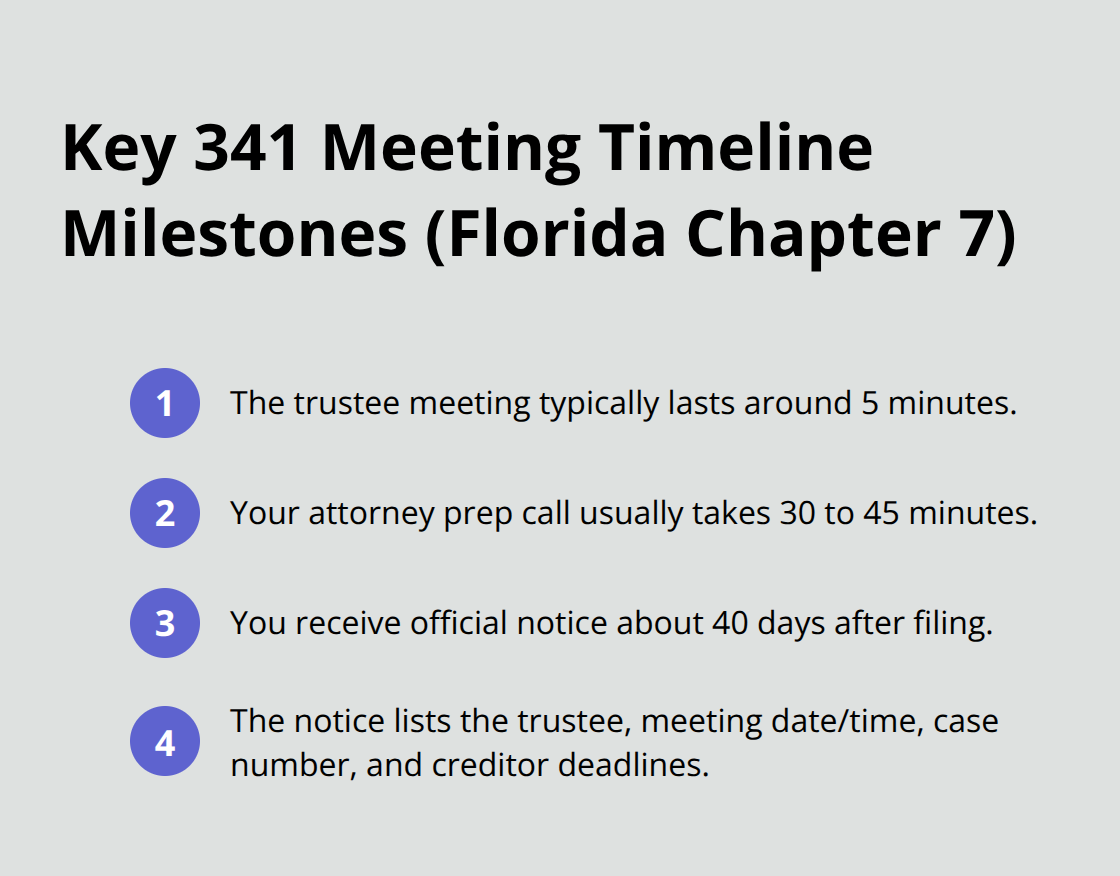
A 341 meeting is the official meeting of creditors required in every Chapter 7 bankruptcy case filed in Florida. The name comes from Section 341 of the Bankruptcy Code, and it’s the one mandatory hearing you must attend. The U.S. Trustee Program oversees these meetings, and a private case trustee conducts yours. This isn’t a court hearing before a judge-it’s a separate proceeding where the trustee questions you under oath about your bankruptcy petition, schedules, assets, debts, and income. The trustee administers your bankruptcy estate, locates assets to liquidate, and pays unsecured creditors and the government. Most creditors don’t attend; according to the U.S. Trustee Program, the actual meeting with the trustee typically lasts around 5 minutes, though your preparatory phone call with your attorney may take 30 to 45 minutes. You’ll receive official notice of your 341 meeting about 40 days after filing your bankruptcy petition. That notice includes the trustee’s name, the meeting date and time, the case number, and deadlines for creditors to file claims or object to your discharge.
The Trustee’s Role and Meeting Structure
The meeting takes place as a one-on-one session between you and the trustee, though your bankruptcy attorney will be present to assist. The trustee administers the oath, and you answer questions under oath. Your attorney cannot answer questions for you-you provide all responses directly to the trustee. The trustee’s questions derive from the information in your bankruptcy schedules, so accuracy in your filing documents matters significantly. This structure protects you by creating an official record of your testimony and allowing your attorney to intervene if questions fall outside proper bounds.
Documents You Must Bring and Send
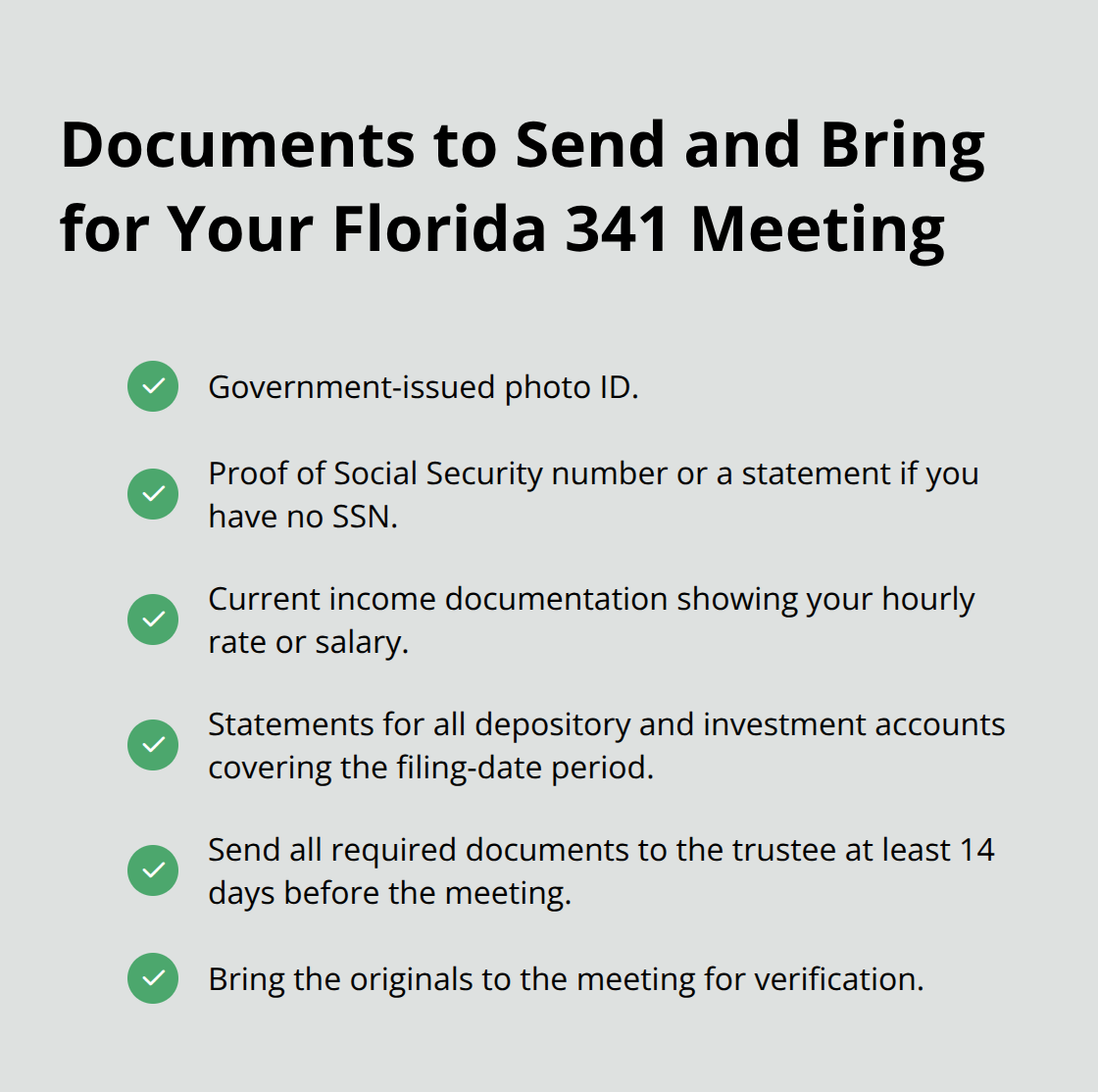
At least 14 days before the meeting, you must send the trustee government-issued photo ID and evidence of your Social Security number (your card or a written statement if you have no SSN). Bring originals to the meeting for verification. The U.S. Trustee Program also requires you to provide current income documentation and statements for all depository and investment accounts covering the period that includes your filing date.
These documents establish the accuracy of your financial disclosures and help the trustee assess your case quickly.
Attending Your Meeting Virtually
Almost all 341 meetings in Florida now occur virtually via Zoom, so you’ll join from home using the specific Zoom link the trustee provides in the meeting notice. Follow the Instructions for Joining a Zoom 341 Meeting of Creditors, which the trustee sends with your notice. Set up a quiet, private location with a good internet connection, and have your required documents within reach during the call. This preparation prevents technical delays and allows you to answer questions without interruption or distraction. With these details in place, you’re ready to understand the specific questions the trustee will ask about your finances and situation.
What the Trustee Will Ask You
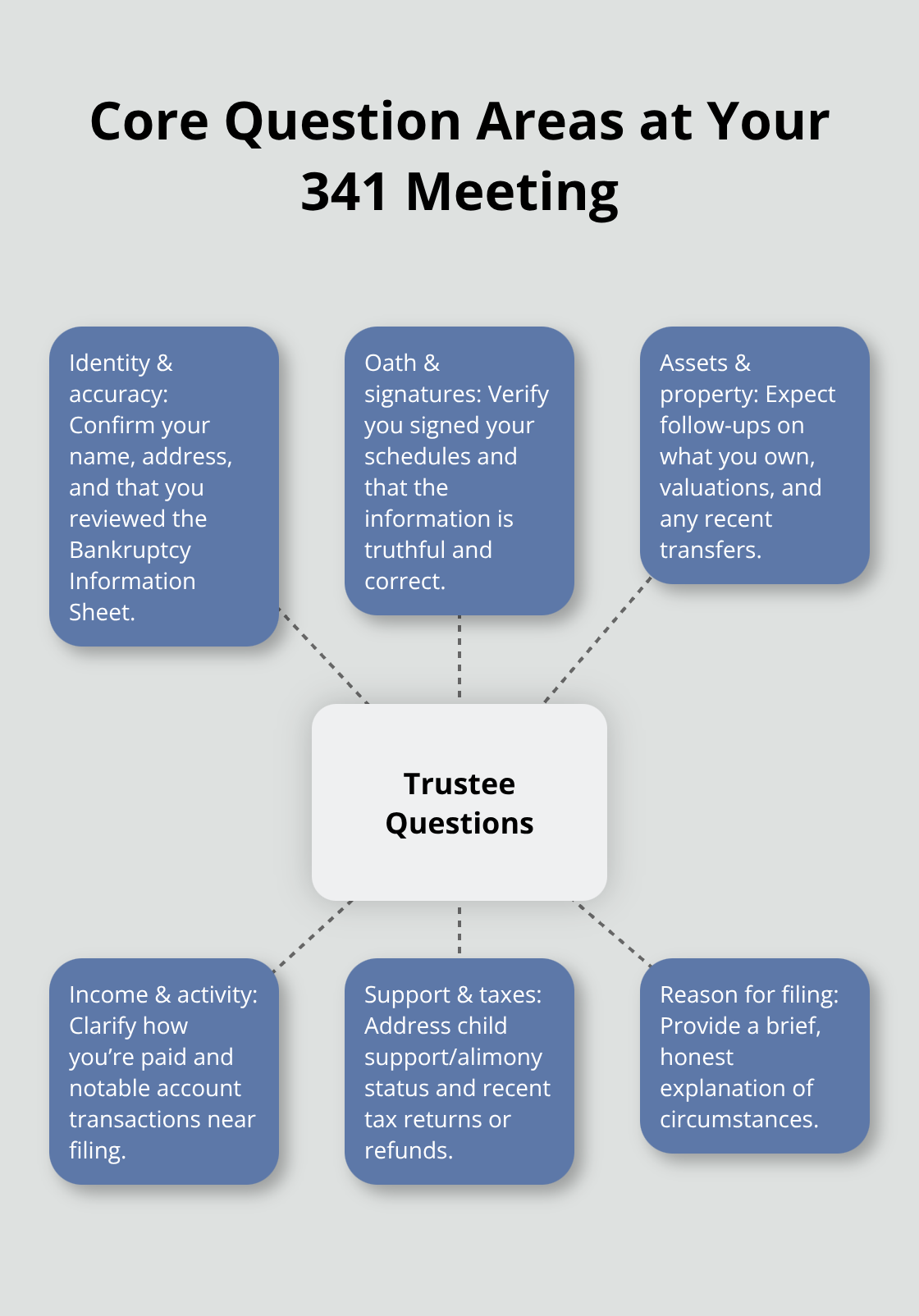
The trustee’s questions follow a predictable pattern based on information in your bankruptcy schedules, so understanding what’s coming removes much of the anxiety. The trustee will ask you to confirm your name and address on the record, verify that you reviewed the Bankruptcy Information Sheet your attorney provided, and confirm that you reported any moves since filing. You’ll be asked whether you signed your bankruptcy schedules and whether all information you provided is truthful and correct. These opening questions establish your identity and commitment to accuracy.
Your Assets and Property
The trustee will then move to your assets and debts, asking you to list everything on your schedules and explain how you arrived at the values for personal property like vehicles, jewelry, and household items. If you own real estate, the trustee will ask about mortgages, any transfers to family members in the past two years, and what happened to properties you owned in the past four years. The trustee may ask whether anyone owes you money, whether you have claims against others such as from a car accident or personal injury, and whether you’re entitled to life insurance proceeds or an inheritance. These questions matter because hidden assets or potential claims can affect your case.
Income and Recent Financial Activity
Regarding income and expenses, the trustee will ask whether you receive hourly or salary compensation and what your rate is. You must provide documentation of current income and account statements covering the period that includes your filing date, so have those ready. The trustee may ask whether you paid down your mortgage or contributed to a 401(k) or IRA in the past 12 months, and whether you bought, sold, or leased any property during that same period. The trustee wants to know if you gave money or property valued at $1,000 or more to family members in the past four years, since transfers to insiders can trigger additional scrutiny.
Domestic Support and Tax Obligations
If you have domestic support obligations such as child support or alimony, the trustee will ask to whom they’re owed and whether you’re current on post-petition payments. The trustee will also verify that you filed all required tax returns for the past four years and will ask about your most recent tax return. If you expect a tax refund for the year prior to filing, you must send that refund to the trustee rather than direct deposit, and the trustee will pro-rate the amount after the meeting. The final question addresses why you filed bankruptcy, which gives you an opportunity to explain your circumstances honestly. With these questions answered and documented, the trustee moves toward closing the meeting and determining next steps in your case.
How to Prepare for Your 341 Meeting in Florida
Collect Your Required Documents Early
Preparation separates confidence from anxiety at your 341 meeting. Start by collecting every financial document the trustee requires at least two weeks before your meeting. You need government-issued photo ID, your Social Security card or a written statement confirming you have no SSN, current income documentation showing your hourly rate or salary, and bank statements covering the period that includes your filing date. The U.S. Trustee Program requires you to send these documents to the trustee 14 days in advance, so send them early rather than waiting until the deadline. If you expect a tax refund for the year before filing, have that documentation ready as well, since you must send any refund to the trustee rather than keeping it. Missing even one document forces the trustee to request it later, which delays your case and creates unnecessary back-and-forth.
Review Your Bankruptcy Petition and Schedules Thoroughly
Your bankruptcy petition and schedules form the roadmap for the trustee’s questions, so you must review them thoroughly before the meeting. Read through every asset you listed, every debt you claimed, and every income figure you reported, because the trustee will ask you to confirm these details under oath. If you spot an error or inconsistency, contact your attorney immediately so you can file an amendment before the meeting rather than having to correct it on the record. The trustee will examine your property values, your income, transfers you made in the past four years, and any claims you might have against others. The meeting typically lasts five minutes according to the U.S. Trustee Program, but that’s only because you answer clearly and accurately. If you hesitate, contradict yourself, or claim you don’t remember information that’s in your schedules, the meeting extends and the trustee investigates further.
Prepare Specific Answers About Your Assets and Income
Write notes about how you arrived at values for personal property like vehicles, jewelry, and household items, since the trustee will ask you to explain your valuation methods. Know your income figure precisely, whether you’re paid hourly or salary, and be ready to explain any unusual deposits or withdrawals from your accounts (the trustee examines these closely). The more prepared you are with specific answers, the faster your meeting concludes and the sooner you move toward discharge.
Final Thoughts
Your 341 meeting in Florida is a manageable step in your Chapter 7 bankruptcy journey when you prepare properly. The trustee’s questions about your assets, debts, income, and financial history follow a predictable pattern, and understanding what to expect removes the uncertainty that causes anxiety. You now know that the meeting typically lasts five minutes, that your attorney will be present to support you, and that accuracy in your bankruptcy schedules is your strongest defense.
After your 341 meeting closes, you’ll move into the final phase of your Chapter 7 case. You must complete and file your Financial Management Certificate before discharge is issued, and if you’re reaffirming any debts, those agreements must be signed and filed promptly. Creditors have 60 days from your meeting to object to your discharge, but most cases proceed without objections when your schedules are accurate and complete.
Once discharge is granted, you’ll have eliminated qualifying debts and gained the fresh financial start that Chapter 7 provides. If you’re preparing for your Florida 341 meeting questions or need support navigating your Chapter 7 case, contact Harnage Law, PLLC to discuss your situation with someone who understands Florida bankruptcy law and your specific circumstances.
