Filing for Chapter 7 bankruptcy in Florida doesn’t mean losing everything you own. Your pets and personal belongings receive specific legal protections that many people don’t realize exist.
At Harnage Law, PLLC, we help clients understand what they can actually keep when they file. This guide shows you exactly how Florida law protects your pets and possessions, and how to stop debt from forcing you to give up what matters most.
What Happens to Your Pets in Chapter 7 Bankruptcy
Pets Receive Legal Protection as Family Members, Not Assets
The fear of losing a beloved pet during bankruptcy ranks among the top concerns clients raise when considering Chapter 7 in Florida. The reality is far less dramatic than most people imagine. Federal bankruptcy law does not treat household pets as liquidatable assets, which means a bankruptcy trustee cannot sell your dog, cat, or other family animal to pay creditors. The U.S. Bankruptcy Code focuses on financial assets and property with monetary value. Your pet’s status as a family member, not a financial asset, provides the first layer of protection. However, pet-related items that support your animal’s care do fall into personal property categories, which is why understanding Florida’s exemption structure matters for protecting everything connected to your pet’s wellbeing.
Florida Exemptions Cover Pet-Related Items and Transportation
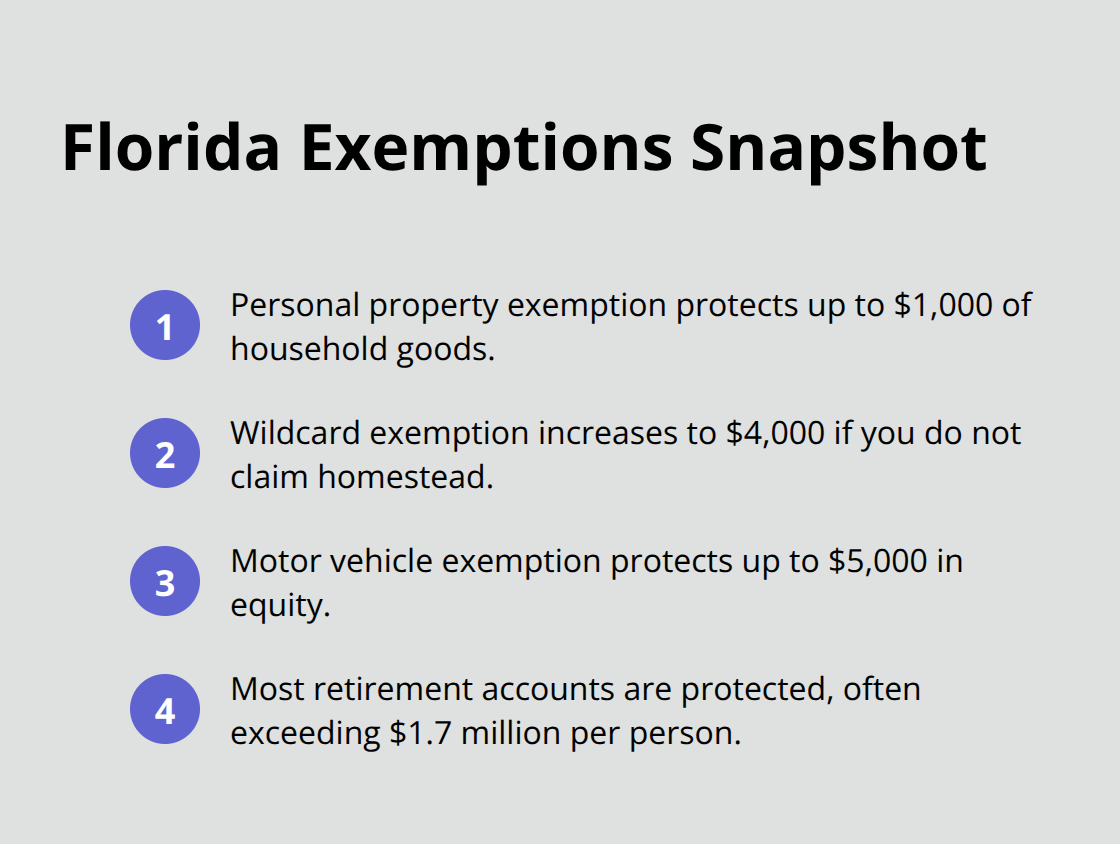
Florida’s personal property exemption allows you to protect up to $1,000 of household goods and personal items, which includes pet-related equipment like crates, carriers, bowls, beds, and toys. If you choose not to claim the homestead exemption for a residence, the wildcard exemption increases to $4,000, giving you substantially more room to protect pet supplies alongside other essential household items. The motor vehicle exemption up to $5,000 also matters if you need a car to transport your pet to veterinary appointments or parks. Many Florida filers overlook this connection, but keeping a functional vehicle directly supports your ability to maintain proper pet care. Trustees prioritize liquid assets and items they can easily convert to cash. Family pets and their basic supplies fall far outside this category, making them naturally low-risk in most Chapter 7 cases.
Documentation Establishes Clear Ownership
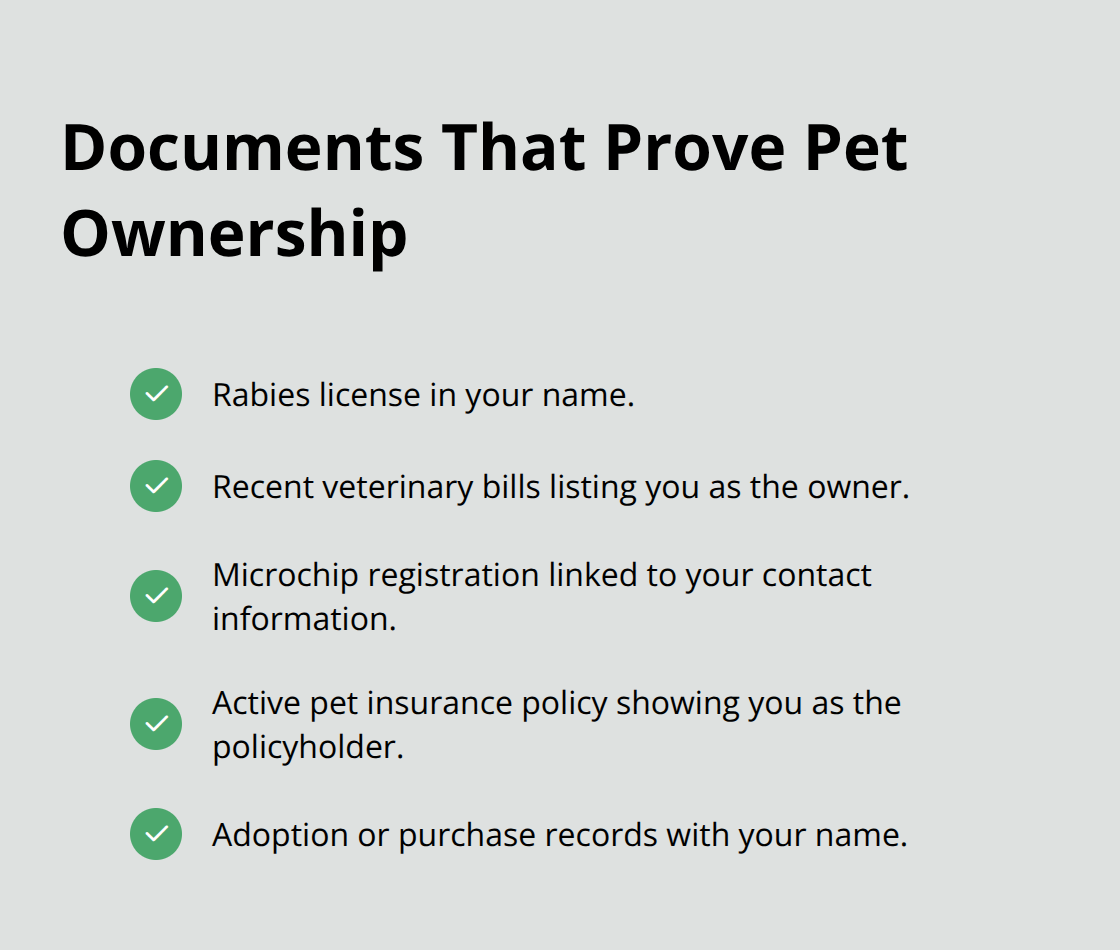
The strongest practical step you can take is maintaining clear ownership records for your pet. Rabies licenses, veterinary bills, microchip registrations, and pet insurance documents all serve as proof that the animal belongs to you and not to another household member. This documentation becomes important if you file while living with a spouse or other family members, as it clarifies which assets belong to the bankruptcy estate and which do not.
When listing your belongings on the Schedule of Exempt Property, assign a nominal value to your pet-typically $1-which ensures it falls squarely under personal property exemptions rather than creating questions about liquidation value. This approach has proven effective across Florida bankruptcy cases. Your veterinary records and ownership documentation should be organized and accessible before filing, so you can reference them during your 341 creditors meeting if questions arise about household possessions.
What Happens to Your Personal Items Depends on Proper Classification
Understanding how Florida law classifies your possessions determines what you actually keep after filing. The bankruptcy trustee examines your Schedule of Exempt Property to identify which items fall under protected categories and which do not. Items you own outright (not financed) and that exceed exemption limits may become part of the bankruptcy estate. However, most household goods, clothing, and pet supplies fall well within Florida’s exemption amounts, meaning they remain yours. The key is accurate reporting on your bankruptcy forms and clear documentation of ownership for items that might raise questions during the process.
What You Can Actually Keep Under Florida Law
Personal Property Exemptions Cover Household Essentials
Florida’s personal property exemption structure gives you concrete protection for household items, and the numbers matter more than most people realize. You can shield up to $1,000 of personal property outright, which covers everyday belongings like furniture, electronics, clothing, and pet supplies. That $1,000 threshold sounds modest until you inventory an actual household-a typical family’s clothing easily reaches $2,000 to $3,000 in replacement value, yet Florida law protects the items themselves regardless of what you paid for them originally. The trustee cannot force you to liquidate clothing, bedding, or kitchen equipment to repay creditors because these items fall within the exemption.
The Wildcard Exemption Expands Your Protection
If you own a home and claim the homestead exemption, that $1,000 personal property limit stands as written. However, if you rent or choose not to claim homestead protection, Florida’s wildcard exemption jumps to $4,000 for personal property, dramatically expanding what you keep. This distinction alone can mean the difference between protecting your pet’s crate, carrier, and supplies versus losing them. Your vehicle receives separate protection up to $5,000 in equity, which matters directly for pet care since you need transportation to reach veterinary clinics. A 2025 NADA Guides valuation determines your car’s actual worth; if your vehicle is worth $4,200 and you owe $3,000, you have $1,200 in nonexempt equity that could theoretically be at risk, but if it’s worth $3,800 with a $3,500 loan, the equity falls within the exemption and stays protected.
Retirement Accounts Receive Maximum Protection
Retirement accounts receive the strongest protection of all. Your 401(k), 403(b), and IRA accounts are exempt with limits exceeding $1.7 million per person as of 2025, according to federal bankruptcy law. This means your long-term savings for retirement remain completely off-limits to creditors and the trustee, providing financial security for your family’s future (including ongoing pet care expenses).
Schedule Your Exempt Property Accurately
Proper listing on your Schedule of Exempt Property determines whether these protections actually apply to your situation. You must identify each item you claim as exempt and state which Florida statute protects it. For example, you would list your pet’s crate under the personal property exemption at a nominal value of $1, then cite Florida Statute 222.25(1). Your clothing goes on the same schedule, listed by category (winter clothes, summer clothes, work attire) rather than individual items. The trustee reviews this schedule to verify your claims are accurate and that you have not undervalued items to hide nonexempt property. Honest and complete disclosure actually protects you because it shows you understand the exemption rules and follow them correctly.
Document Ownership and Clarify Joint Property
Many filers make the mistake of leaving items off the schedule entirely, which creates problems during the 341 meeting when the trustee asks about possessions you own. The safest approach involves listing everything you own, assigning reasonable values based on what you could actually sell each item for today (not what you paid), and then claiming the exemptions that apply. If you own items jointly with a spouse or other family member, clarify the ownership split on your schedule. A gaming console owned by your child is typically not your property for bankruptcy purposes, so it would not appear on your schedule at all. Pet ownership documentation becomes essential here because your veterinary records, microchip registration, and rabies license prove the pet belongs to you personally. Store these documents where you can access them quickly when preparing your bankruptcy forms. The Schedule of Exempt Property is not a guessing game-it is a legal document that protects your rights during the process. Accurate completion of this form directly affects what you keep after your case closes, which is why understanding how Florida law values and protects your possessions matters before you file.
What You Actually Lose in Chapter 7 Bankruptcy
Most Chapter 7 Cases Result in No Asset Liquidation
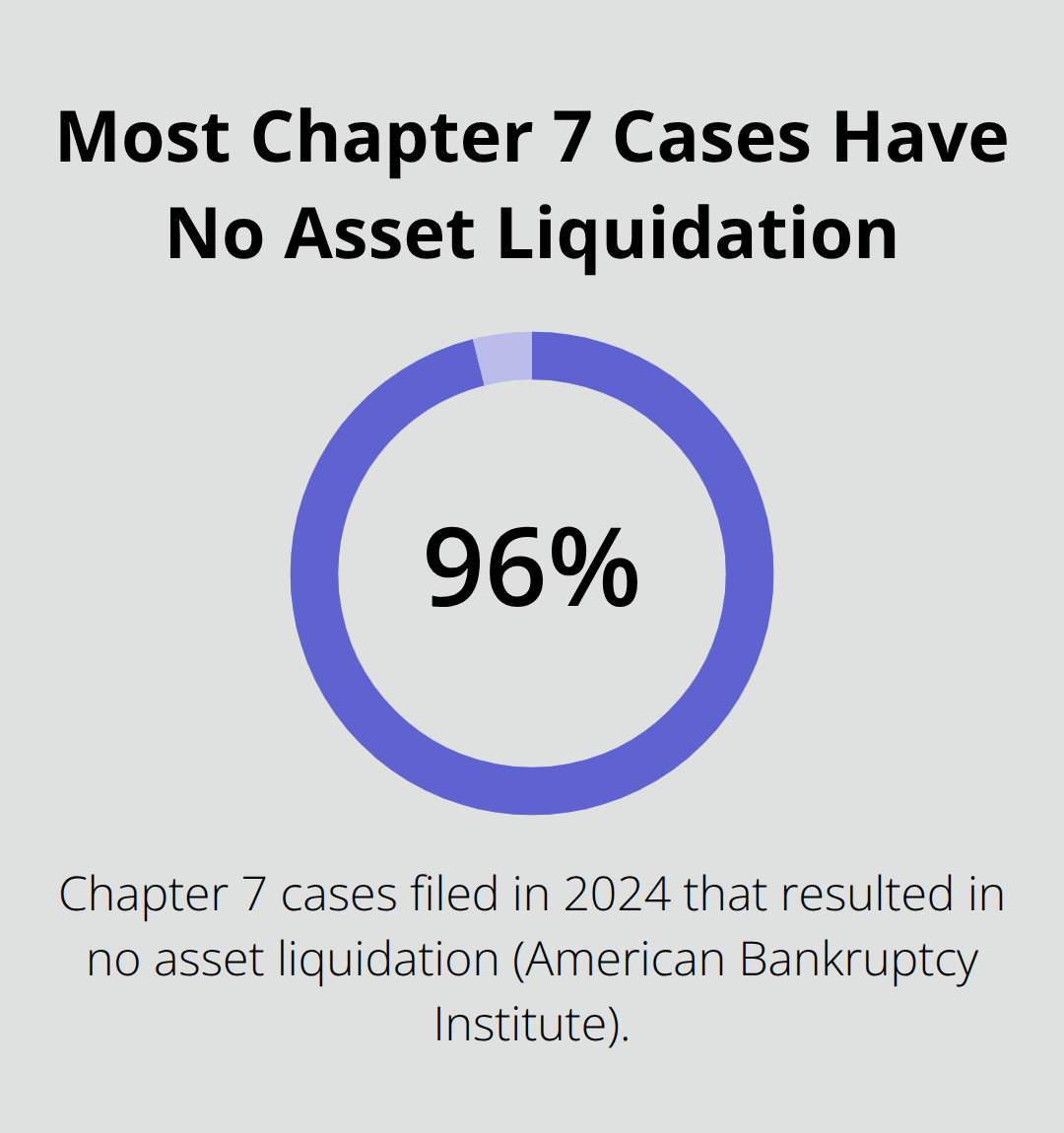
The bankruptcy industry profits from fear, and the biggest fear is losing everything. The truth is far simpler: you lose only nonexempt assets that have genuine liquidation value. In a typical Florida Chapter 7 case, the trustee looks for items worth money right now, today, at resale value. Your clothing, furniture, pet supplies, and household goods have virtually no resale value as a group because selling used household items costs more in time and effort than any proceeds would generate. The trustee will not hold a garage sale of your belongings. According to data from the American Bankruptcy Institute, approximately 96 percent of Chapter 7 cases filed in 2024 resulted in no asset liquidation, meaning the debtor kept everything. This statistic exists because most people own only exempt property.
Trustees Focus on High-Value Items, Not Household Goods
Your $500 used couch, your $200 television, and your pet’s $80 crate all fall within Florida’s personal property exemptions. The real risk in Chapter 7 involves specific, high-value items: a second vehicle worth $8,000, jewelry appraised at $6,000, or collectibles with documented market value. Even then, the trustee must weigh the cost of liquidation against potential proceeds. A bankruptcy trustee in Jacksonville or Miami spends roughly 10 to 15 hours administering a no-asset case, earning a flat fee. Liquidating assets requires significantly more work for similar compensation, which creates zero financial incentive to pursue low-value household goods. The trustee’s job is to identify nonexempt property with real market value and convert it to cash for creditors. Your pet’s crate and carrier, your clothing, and your kitchen equipment do not meet this standard.
Florida Exemptions Protect Your Essential Assets
Florida residents who file Chapter 7 keep their primary residence if they claim the homestead exemption and have owned the home for at least 1,215 days before filing. The homestead exemption in Florida protects unlimited equity in your primary home, a protection that exists nowhere else in the country. Your vehicle stays if the equity falls within the $5,000 motor vehicle exemption, which covers most everyday cars financed through traditional loans. Your retirement accounts remain completely untouched, with protection limits exceeding $1.7 million per account as of 2025. Your Social Security benefits, veterans benefits, and disability income stay protected from creditors. These are not theoretical protections; they are statutory facts written into Florida law.
Real Outcomes for Florida Families
A single parent in Tampa filing Chapter 7 with $35,000 in credit card debt, a vehicle worth $6,200 with a $5,800 loan, and a rented apartment typically walks away from the bankruptcy with everything intact except the discharged debt. The parent keeps the vehicle because the $400 equity falls within the exemption. The household goods and pet supplies stay because they fall within the $4,000 wildcard exemption available when not claiming homestead. The Social Security income that supports the household remains protected, meaning the parent’s ability to care for children and pets continues without interruption. This outcome repeats across Florida bankruptcy courts because the exemption structure is designed to protect working families, not punish them. The Bankruptcy Code recognizes that people need shelter, transportation, and basic possessions to function in society. Chapter 7 discharges the debt while letting you keep the essentials.
Final Thoughts
Filing Chapter 7 bankruptcy in Florida protects far more than most people realize. Your pets remain with you because they are family members, not liquidatable assets. Your personal belongings stay protected through Florida’s exemption structure, which shields up to $1,000 in household goods or $4,000 if you skip the homestead exemption. Your vehicle, retirement accounts, and income sources receive statutory protection that creditors cannot touch, and roughly 96 percent of Chapter 7 cases result in no asset liquidation.
The real protection comes from understanding how Florida law classifies your possessions and reporting them accurately on your bankruptcy forms. A nominal $1 value assigned to your pet’s crate, combined with proper documentation of ownership through veterinary records and microchip registration, ensures these items fall squarely within exemptions. Your clothing, furniture, and household supplies need no special protection because they fall within the exemption limits automatically. The Schedule of Exempt Property is not a form to fear; it is a legal tool that works in your favor when you complete it honestly and thoroughly.
We at Harnage Law, PLLC help clients understand what they can keep and guide them through filing to achieve debt stop and discharge. Contact us through our website to discuss how Florida exemptions apply to your pets, possessions, and financial goals. A clear understanding of what you actually keep transforms bankruptcy from a feared outcome into a practical tool for rebuilding your financial life while protecting what matters most.