
Chapter 7 bankruptcy offers genuine relief, but most people filing in Florida have no idea how long the process actually takes. The timeline varies wildly depending on your specific situation, and small mistakes can add months to your case.
We at Harnage Law, PLLC have guided hundreds of filers through this process, and we’ve seen firsthand how understanding what’s ahead makes a real difference. This guide breaks down exactly what to expect from filing to discharge.
How Long Your Chapter 7 Case Actually Takes
The Standard Timeline from Filing to Discharge
Most people filing Chapter 7 in Florida expect the process to drag on for years. The reality is faster than that, but only if you stay on track. A typical Chapter 7 case closes within 3 to 6 months from the filing date, according to United States Courts data. That timeline assumes you hit every deadline, provide documents when requested, and attend all required meetings. Miss even one deadline, and you’ll face delays that stretch into additional months. The automatic stay takes effect immediately when you file, stopping creditor calls and collection lawsuits right away, but that protection only lasts if your case stays active and moving forward.
What Happens at the 341 Meeting
The 341 meeting of creditors occurs roughly 20 to 40 days after filing. The Chapter 7 trustee assigned to your case asks questions about your income, debts, and assets under oath. You must bring a photo ID and your completed schedules to this meeting. The trustee looks for non-exempt assets that can be liquidated to pay unsecured creditors, and your honesty here matters far more than you might think. If the trustee finds discrepancies between what you filed and what you say at this meeting, the case stalls while they investigate further.
Critical Deadlines After the 341 Meeting
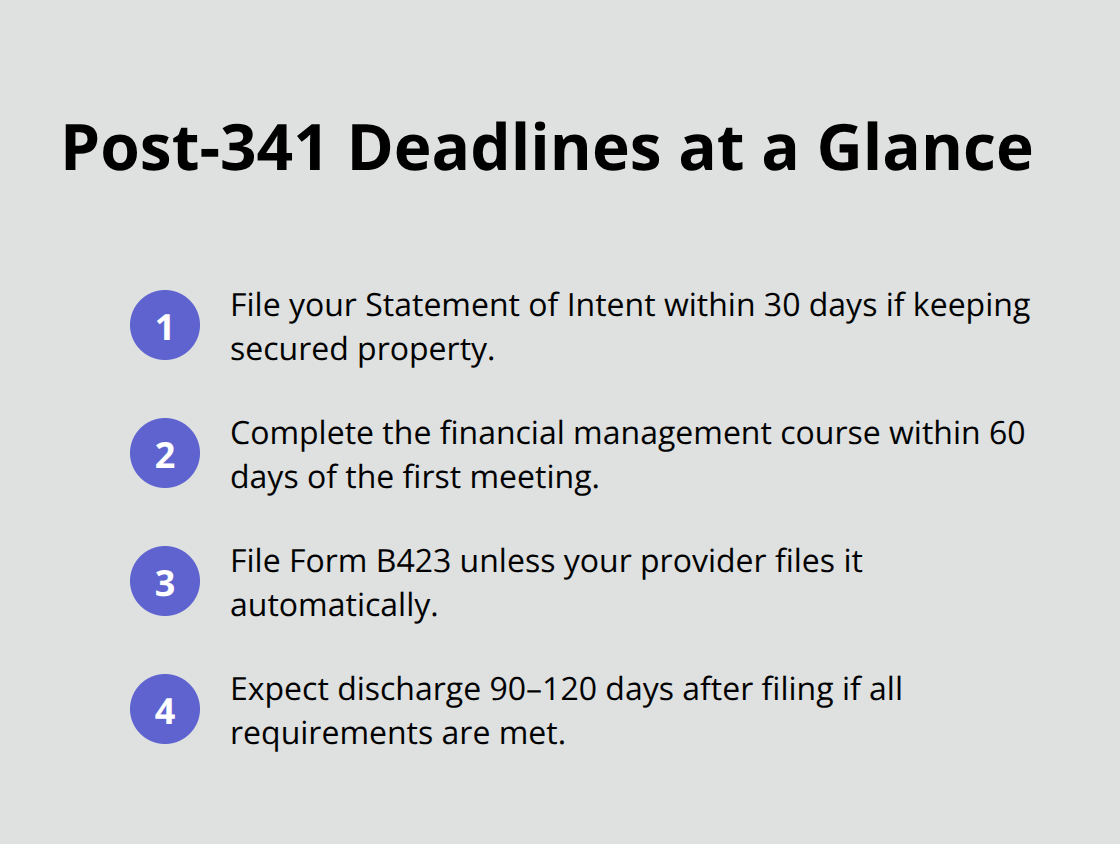
After the 341 meeting, you have 30 days to file your Statement of Intent if you’re keeping secured property like a car or home. You also must complete a financial management course within 60 days of the first meeting date and file Form B423 with the court unless your provider notifies the court automatically. Discharge typically arrives 90 to 120 days after you file, but only if you’ve completed both required credit counseling courses and responded to every trustee request.
Chapter 7 will discharge most of your debts, though you often want to keep some debts, like your car and your home.
How Creditor Objections Impact Your Timeline
Creditor objections can extend this timeline significantly. If any creditor files an objection to discharge, you may need to attend a court hearing to defend your eligibility. The fastest cases are straightforward situations with minimal assets, no creditor disputes, and complete documentation from day one. Understanding these potential obstacles helps you prepare for what comes next in your case.
What Actually Delays Your Chapter 7 Case in Florida
Incomplete Paperwork Stops Your Case Cold
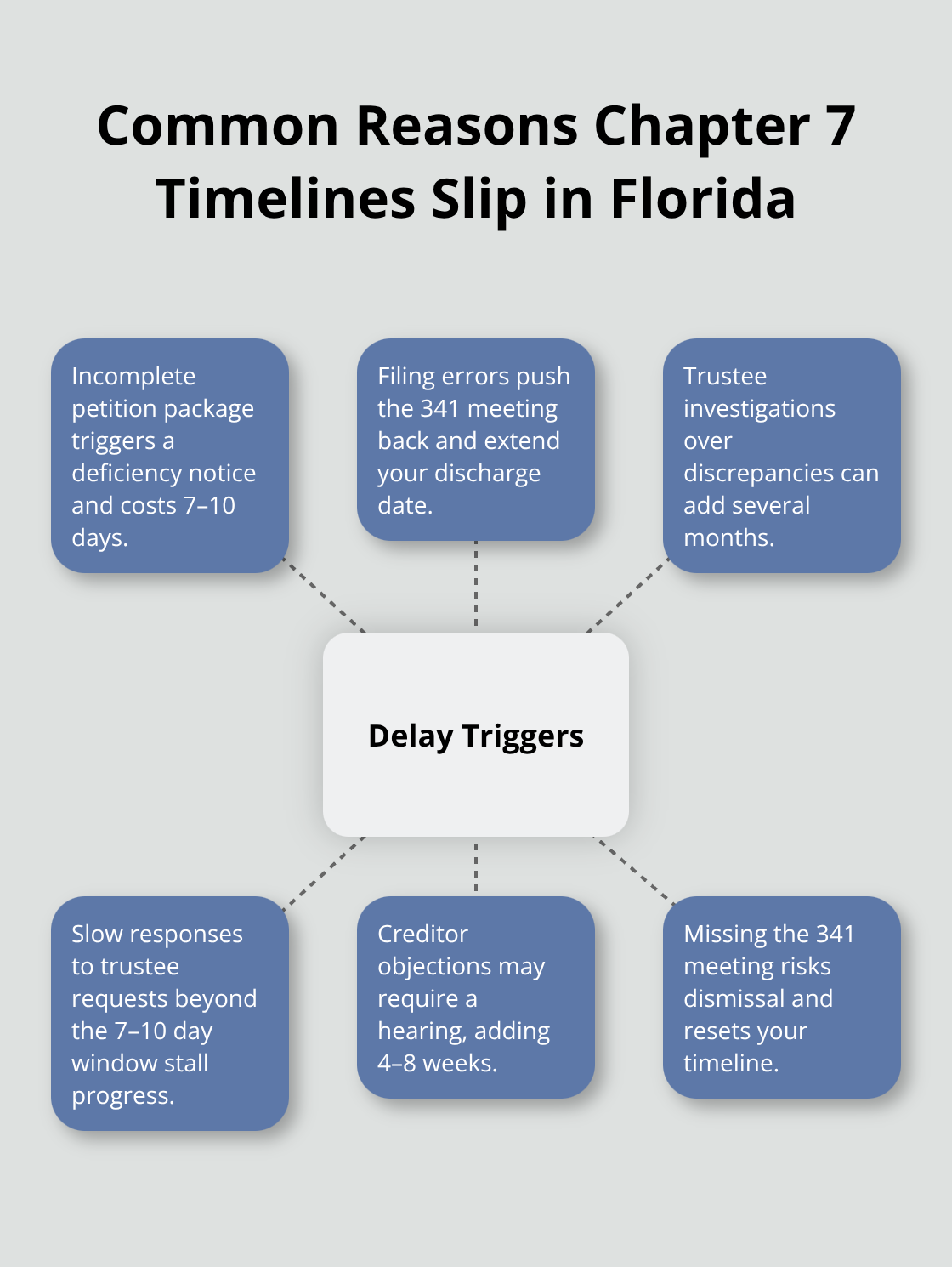
Incomplete paperwork is the single biggest reason Chapter 7 cases stall in Florida federal courts. You have 14 days after filing to submit your complete petition package, including your List of Creditors, Schedules of Assets and Liabilities, Schedule of Income and Expenditures, and Statement of Financial Affairs. Missing even one document forces the court to issue a notice of deficiency, and you’ll lose another 7 to 10 days just getting it corrected. The trustee cannot move forward until everything is filed correctly, which means your 341 meeting gets pushed back, your discharge date slips further away, and you remain under the automatic stay longer than necessary.
Creditors also file proofs of claim by the court deadline, and if your schedules contain errors about what you owe them, they’ll object during the claims process. Verify your documents before submitting them to avoid losing 30 to 60 days on cases that should have closed in four months.
Trustee Investigations Extend Your Timeline
The trustee investigation into your assets is another major timeline killer that most filers never anticipate. If the trustee finds non-exempt assets during the 341 meeting or discovers discrepancies between your filed schedules and your testimony, they will open an investigation that can extend your case by several months. The trustee has the authority to question whether property transfers you made within one year before filing were fraudulent attempts to hide assets from creditors, and if they suspect fraud, your discharge gets held up while they gather evidence.
Creditor Objections and Court Hearings
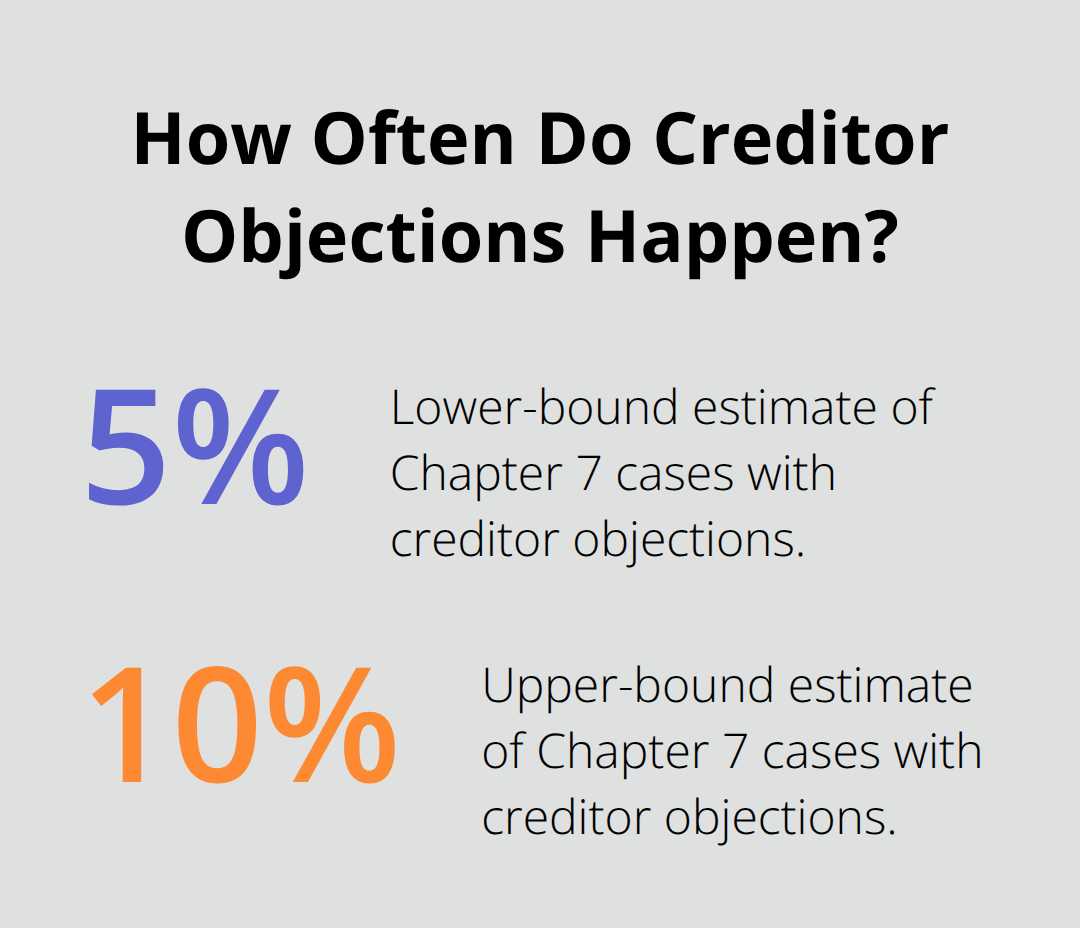
Creditor objections to discharge happen in roughly 5 to 10 percent of Chapter 7 cases and typically occur when a creditor believes you committed fraud, failed to maintain records, or hid assets. These objections require a court hearing where you must defend your eligibility, and the hearing alone adds 4 to 8 weeks to your timeline.
Honesty at your 341 meeting and accuracy on every line of your schedules prevent the vast majority of these delays, but even one small inconsistency can trigger a trustee request for additional documentation that throws off your entire discharge date.
The difference between a smooth four-month case and one that stretches into eight months often comes down to how carefully you prepare your initial filing and how transparently you answer questions from the trustee.
How to Stop Your Case From Stalling
Respond to Every Trustee Request Within 48 Hours
The difference between a four-month discharge and an eight-month nightmare comes down to execution. Your Chapter 7 case is not a passive process where things happen to you. The trustee will request documents, the court will set deadlines, and every single one of them matters more than you think. When the trustee asks for your federal tax return, bank statements, or proof of income, you have roughly 7 to 10 days to respond before they flag your file as non-compliant. Delays at this stage are not minor inconveniences-each week you miss pushes your 341 meeting back, extends the investigation period, and postpones your discharge date.
Set calendar reminders for every deadline the court issues. Respond within 48 hours of receiving any request from the trustee, not within the full 10-day window. This creates a buffer that protects you if you misunderstand something and need clarification. Keep copies of everything you submit to the court and the trustee.
Prepare Thoroughly for Your 341 Meeting
When you attend your 341 meeting, bring the same documents you filed with the court so you can reference them if questions arise about specific debts or assets. The trustee will ask about property transfers made within one year before filing, income sources, and whether you have non-exempt assets. Vague answers or inconsistencies between your schedules and your testimony trigger investigations that can extend your case by three to four months.
Your attendance at the 341 meeting is non-negotiable. Missing this meeting results in automatic dismissal of your case, which means you lose the automatic stay protection and creditors resume collection efforts immediately. The meeting occurs roughly 30 to 40 days after filing, giving you time to prepare. Bring your photo ID and your schedules. Dress professionally. Answer questions directly without elaborating on information the trustee did not ask for. If you do not understand a question, ask for clarification rather than guessing.
Complete Your Financial Management Course on Time
The financial management course required after your 341 meeting must be completed within 60 days of the first meeting date, and you must file Form B423 with the court unless your provider reports completion automatically. Check with your approved provider about whether they file automatically. Many filers assume the provider will handle it and miss the deadline because they did not confirm.
Work with a Bankruptcy Attorney Throughout Your Case
Your bankruptcy attorney should guide you through each step, answer questions about what documents to gather, and represent you at the 341 meeting. This is not the place to save money by handling the case yourself. An attorney costs far less than the months of delays you face when mistakes happen.
Final Thoughts
Understanding your Chapter 7 timeline in Florida shapes your financial decisions for the next several months. When you know what to expect at each stage, you stop worrying about surprises and start focusing on deadlines that actually matter. The difference between a four-month discharge and one that stretches into eight months comes down to preparation, responsiveness, and accuracy on your initial filing.
After your discharge arrives, your Chapter 7 case officially closes and most of your qualifying debts are eliminated. You receive discharge papers from the court that prove your debts have been legally wiped out, and creditors cannot pursue you for those discharged debts. The bankruptcy filing will remain on your credit report for up to 10 years, but your credit score begins recovering immediately after discharge as you demonstrate responsible financial behavior.
We at Harnage Law, PLLC help individuals and families overcome financial challenges by providing legal guidance and representation throughout the Chapter 7 process. We guide you through every step so you understand exactly what happens next and when it happens, and we help you obtain the chapter relief you need. Schedule a consultation with us to discuss your situation and learn whether Chapter 7 is the right path for your financial relief.