Self-employed workers in Florida face financial pressures that traditional employees rarely encounter. Income swings, mixed personal and business debts, and limited credit options create real hardship when money gets tight.
Chapter 7 bankruptcy offers a debt fresh start by stopping creditor calls, eliminating qualifying debts, and protecting your assets. We at Harnage Law, PLLC help self-employed Floridians navigate this process and rebuild stronger financial foundations.
Why Self-Employed Income Swings Create Bankruptcy Risk in Florida
Income Unpredictability Breaks the Debt Cycle
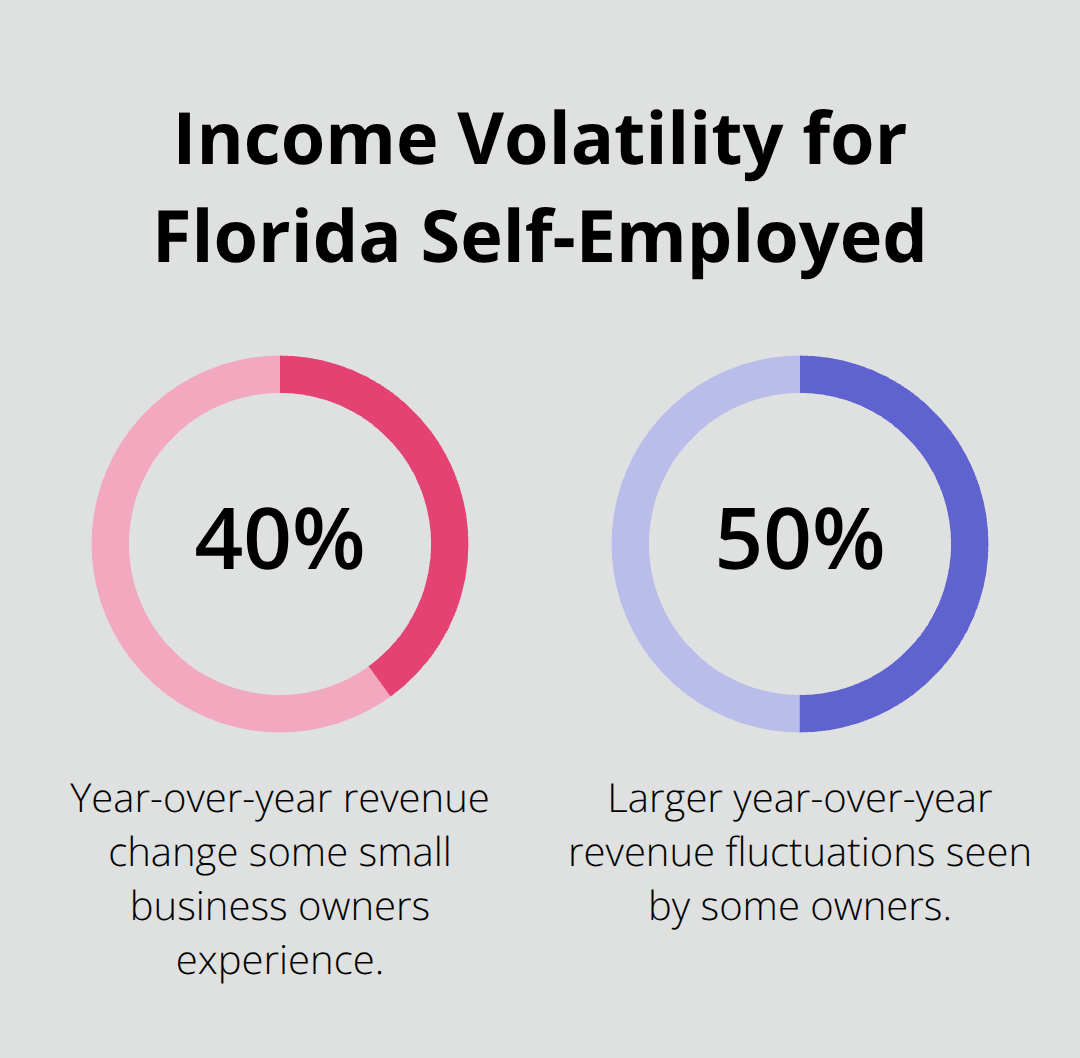
Self-employed workers in Florida experience income swings that salaried employees never face. A freelancer might earn $8,000 in January and $2,500 in February. A contractor’s projects end without warning. A small business owner watches revenue fluctuate by 40% or 50% year-over-year.
This volatility makes it nearly impossible to commit to fixed monthly debt payments that credit card companies and lenders demand. Traditional lenders know this; they often reject self-employed applicants or charge rates 2% to 5% higher than W-2 earners. When banks won’t lend, self-employed Floridians turn to high-interest credit cards, personal loans, and business lines of credit that spiral quickly.
The means test used in Chapter 7 bankruptcy considers your income over a six-month period, which actually works in your favor when income is uneven. If you average $5,500 per month over six months, you fall below Florida’s median income of approximately $68,000 annually for a single person, meaning you automatically qualify for Chapter 7 without further scrutiny. This six-month averaging method recognizes the reality of self-employed life in ways traditional creditors never do.
Commingled Money and Hidden Business Liability
Self-employed individuals in Florida almost always mix personal and business finances. You deposit client payments into the same account you use for rent and groceries. You pay business expenses and personal bills from one checking account. This commingling creates a nightmare for bankruptcy trustees, who must untangle which assets belong to the business and which are personal property. More importantly, it exposes your personal wealth to business liabilities.
If a client sues your business, or if you personally guaranteed a business loan, creditors can chase your personal assets. Florida has no tools-of-trade exemption, meaning business equipment like computers, vehicles, or machinery falls outside standard personal property protections. However, converting to an LLC before financial trouble hits shields business assets from personal creditors and vice versa. The problem is that most self-employed workers discover this too late, after debts have mounted.
How Trustees View Your Records
Trustees scrutinize commingled accounts heavily; they want to see separate business and personal bank statements going back at least six months. If you maintain clean records with distinct accounts, the trustee moves faster, your case closes sooner, and you reach discharge in three to five months instead of facing delays. Personal guarantees on business loans become dischargeable in Chapter 7, which eliminates your personal liability even though the business itself may have failed. This protection alone can save self-employed Floridians tens of thousands of dollars.
Understanding how Chapter 7 actually stops creditor actions and eliminates qualifying debts reveals why this path offers real relief for self-employed workers facing these exact pressures.
How Chapter 7 Stops Creditor Attacks and Erases Qualifying Debts
The Automatic Stay Halts All Creditor Actions Immediately
The moment you file Chapter 7 in Florida, the automatic stay activates immediately, halting nearly every creditor action against you. Wage garnishments stop. Collection calls cease. Lawsuits pause. Foreclosure proceedings freeze.
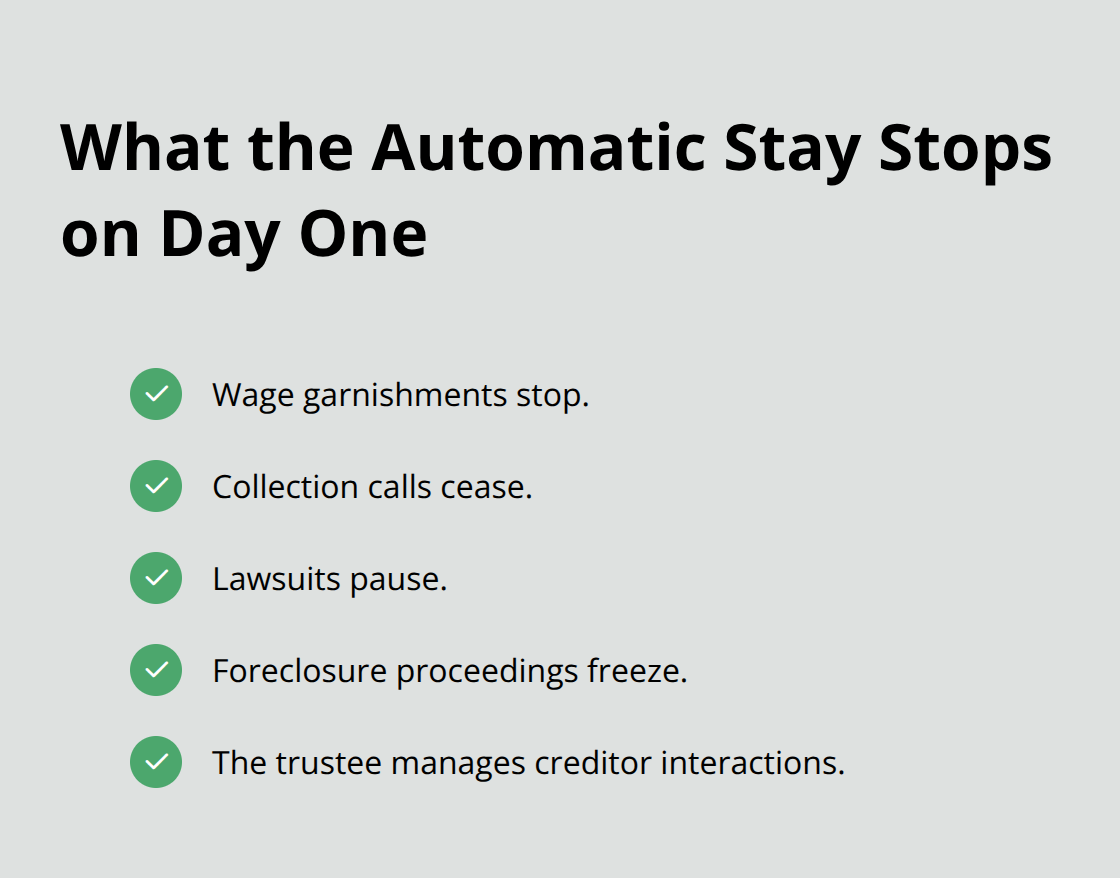
This legal shield, enforced under 11 U.S.C. § 362, operates automatically without requiring additional court orders. Self-employed Floridians facing multiple collection actions experience this as genuine relief. A contractor being sued by a materials supplier, a freelancer receiving daily collection calls, a business owner watching garnishment notices stack up-all of that stops the day you file the petition. The trustee assigned to your case manages creditor interactions from that point forward, not you.
For self-employed individuals juggling business and personal debt simultaneously, this pause provides the mental and financial space to assess what comes next. The stay remains in place throughout your case, typically three to five months in the Orlando Division of the Middle District of Florida, giving you uninterrupted breathing room to prepare for the 341 creditor meeting and eventual discharge.
Discharge Eliminates Most Unsecured Debts Permanently
Discharge represents where Chapter 7 delivers its core promise: elimination of qualifying unsecured debts. Credit card balances, medical bills, personal loans, and business debts unsecured by collateral vanish upon discharge. The U.S. Courts reports that discharge occurs in over 99 percent of Chapter 7 cases. Self-employed Floridians should understand what doesn’t disappear-self-employment taxes are non-dischargeable, as are alimony and child support obligations. Student loans typically survive discharge unless you prove undue hardship, a high bar in Florida courts.
Personal guarantees on business loans do discharge, eliminating your individual liability for debts you signed personally to support your business. This distinction matters enormously for sole proprietors. Your business may have failed, but your personal wealth is no longer tied to that failure.
Asset Protection Through Florida Exemptions
Florida’s exemption system protects additional assets beyond what discharge covers. Your primary residence qualifies under the homestead exemption. One vehicle with up to $1,000 of equity receives protection. You retain $1,000 in other personal property, or $4,000 if you claim no homestead. Most Chapter 7 cases in Florida become no-asset cases, meaning exemptions cover everything, so the trustee liquidates nothing and you lose no property.
Self-employed filers with documented business expenses, clean financial records, and organized tax filings move through discharge faster and face less trustee scrutiny. Accuracy on your Schedule C profit-and-loss statement and the six-month income calculation directly determines both your eligibility and how quickly your case closes. These financial records also influence how the trustee evaluates your case and whether complications arise during the process.
Understanding how to prepare these documents and what happens at the 341 creditor meeting helps you move confidently toward discharge and the financial fresh start Chapter 7 offers.
How Your Credit Recovers After Chapter 7 Discharge in Florida
Your credit score takes an immediate hit when you file Chapter 7, but the recovery timeline moves faster than most people expect. The bankruptcy notation remains on your credit report for ten years, yet your score can climb 100 to 150 points within the first year after discharge if you take deliberate action. U.S. Courts data shows that self-employed filers who maintain steady income post-discharge and establish new credit responsibly reach scores in the 620 to 680 range within 18 to 24 months. This matters because lenders begin offering mortgages, auto loans, and business credit cards at reasonable rates once you hit 650 or higher. Discharge itself is not the end of your financial rebuilding-it is the starting point.
Secured Cards and Rebuilding Loans Build Your Foundation
Immediately after discharge, secured credit cards become your primary tool. These cards require a cash deposit, typically $500 to $2,500, which becomes your credit limit. Capital One, Discover, and Chime each offer secured cards that report to all three credit bureaus. Use the card for small purchases-gas, groceries, a meal-then pay the full balance within days, not months. This pattern demonstrates payment reliability to lenders and builds your score month after month. After 12 to 18 months of perfect payments, issuers often convert your secured card to an unsecured account and return your deposit.
Local credit unions in the Melbourne and Brevard County area frequently offer rebuilding loans alongside secured cards, allowing you to borrow $1,000 to $3,000 at higher interest rates but with guaranteed approval. Make automatic monthly payments from your business or personal account; missing a single payment reverses months of progress.
Separate Business and Personal Credit Immediately
Self-employed individuals must separate business and personal credit entirely post-discharge, a lesson learned painfully during the bankruptcy process. Apply for an Employer Identification Number (EIN) if you operate as a sole proprietor, then establish business credit accounts under that EIN rather than your Social Security number. This separation protects personal credit from future business difficulties and allows you to rebuild business creditworthiness independently. Many credit unions offer business credit lines to self-employed members with deposits of $5,000 to $10,000, providing access to working capital without personal guarantees.
Strategic Timing for New Credit Applications
Secured cards and rebuilding loans form the foundation, but self-employed filers need additional strategies because lenders scrutinize business income heavily. After discharge, you must document six months of consistent income before applying for unsecured credit or business financing. Maintain separate business and personal bank accounts from day one, showing lenders clear profit-and-loss statements and tax returns.
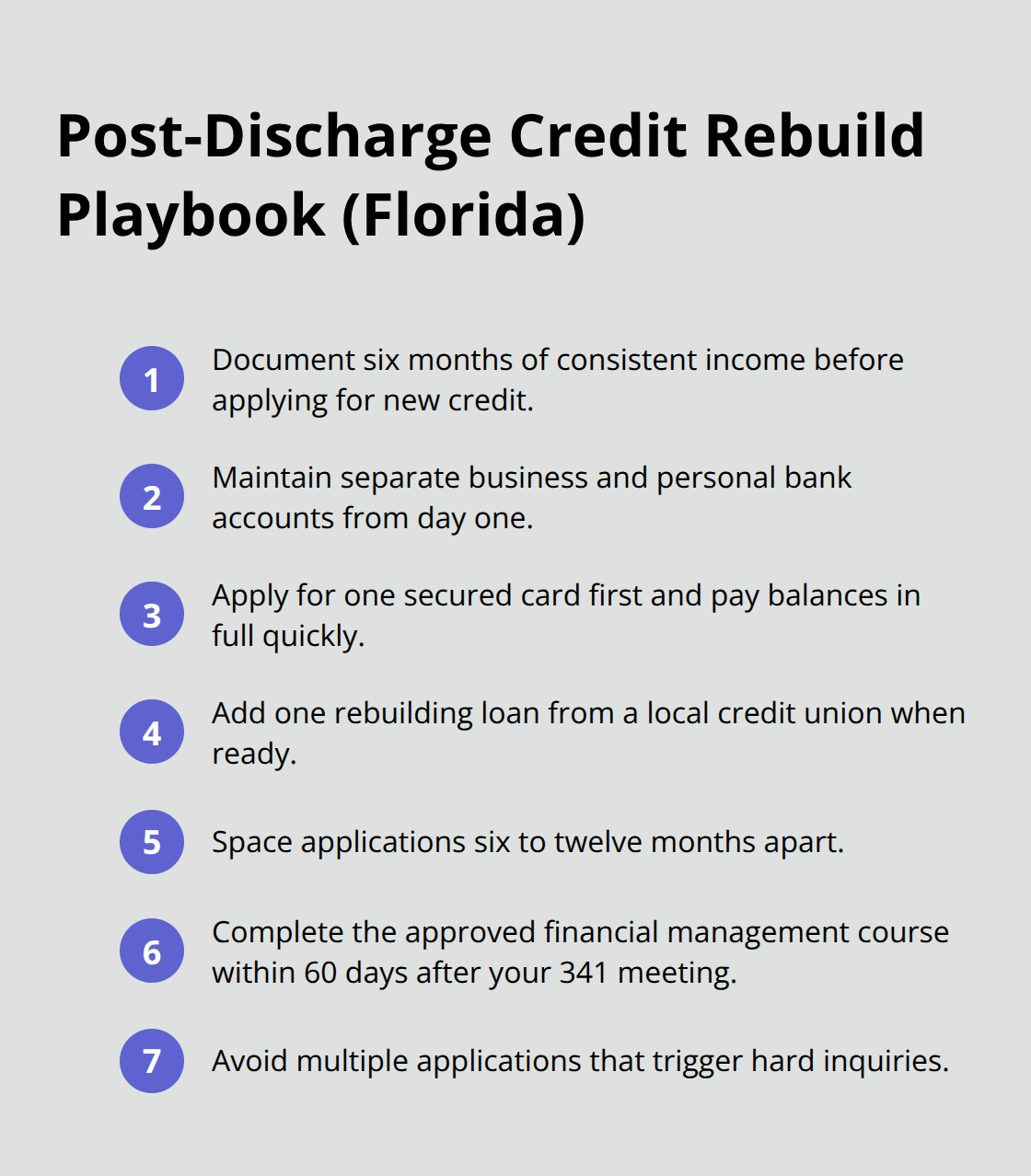
Avoid applying for multiple credit accounts simultaneously, as each application generates a hard inquiry that temporarily lowers your score by 5 to 10 points. Space applications six to twelve months apart, focusing on one secured card, then one rebuilding loan, then perhaps a store credit card, giving your score time to recover between inquiries. The U.S. Trustee’s website lists approved financial management courses that satisfy post-bankruptcy education requirements; completing one within 60 days after your 341 meeting accelerates your discharge and demonstrates financial commitment to future lenders.
Address Tax Obligations Before They Resurface
Self-employed filers often neglect tax obligations during financial stress, but addressing back taxes before discharge prevents complications. If you owe self-employment taxes, these are non-dischargeable, meaning you remain liable after bankruptcy. Negotiate a payment plan with the IRS immediately after discharge, or work with a tax professional to establish an installment agreement that fits your post-bankruptcy cash flow. This prevents future garnishments and keeps your fresh start intact.
Final Thoughts
Chapter 7 bankruptcy offers self-employed Floridians a genuine path to a debt fresh start when income volatility, commingled finances, and mounting obligations become unmanageable. The automatic stay stops creditor harassment immediately, discharge eliminates qualifying unsecured debts permanently, and Florida exemptions protect essential assets like your home and vehicle. Most cases close within three to five months, delivering relief faster than many self-employed workers expect.
Credit recovery begins within months of discharge when you take deliberate action with secured cards and rebuilding loans. Separating business and personal finances post-bankruptcy prevents future complications and allows you to rebuild creditworthiness independently. The process requires thorough documentation, accurate income calculations, and understanding how trustees evaluate self-employed finances-your six-month profit-and-loss statement, tax returns, and bank statements directly influence both your eligibility and how quickly your case progresses.
We at Harnage Law, PLLC guide self-employed Floridians through every stage of Chapter 7 bankruptcy, stopping creditor harassment and halting lawsuits while you focus on rebuilding. Gather your recent tax returns, profit-and-loss statements, and a list of creditors, then schedule a case review with us to assess your eligibility and outline your timeline for financial stability.