
Filing Chapter 7 bankruptcy alone while married creates a complicated situation for both spouses. Your spouse remains legally responsible for joint debts even though you’ve filed, and creditors can still pursue them for payment.
We at Harnage Law, PLLC help families navigate this challenge every day. Understanding your options before filing can protect your household from unnecessary financial stress.
What Happens to Your Spouse When You File Chapter 7 Alone in Florida
The Automatic Stay Protects You, Not Your Spouse
When you file Chapter 7 bankruptcy individually in Florida while married, the automatic stay under 11 U.S.C. § 362 immediately halts collection actions against you-but your spouse receives no such protection on joint debts. The moment the court accepts your filing, creditors must stop pursuing you through wage garnishments, lawsuits, and collection calls. However, if your spouse’s name appears on a shared credit card, mortgage, or car loan, creditors can continue their collection efforts against them without interruption.
Your Discharge Shifts Full Liability to Your Spouse
This distinction matters enormously. Your discharge wipes out your personal liability on those joint debts, meaning creditors cannot pursue you further after the case closes (typically 60 to 90 days after your creditors’ meeting). Your spouse, however, becomes solely responsible for the entire remaining balance. A joint credit card with a $15,000 balance, for example, shifts entirely to your spouse’s shoulders once your discharge is granted. Creditors view this as an opportunity rather than a setback-they now have one debtor instead of two, and that remaining debtor cannot claim bankruptcy protection if they already filed within the last eight years.
Credit Damage and Aggressive Collection Tactics Follow
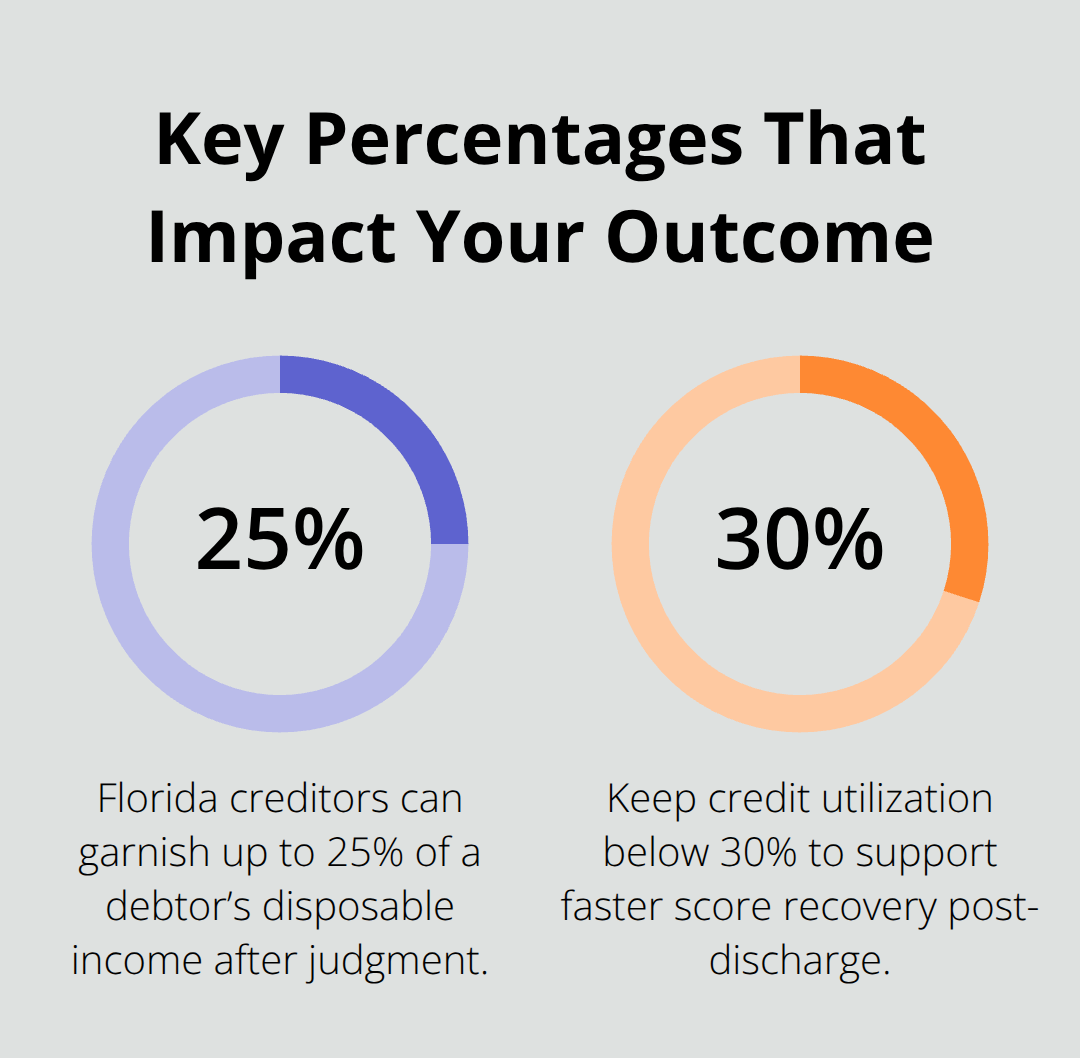
Your spouse’s credit score typically drops 130 to 200 points immediately when you discharge joint debts, according to credit reporting practices. This damage appears on their credit report for up to ten years, making it harder to qualify for new credit, refinance existing loans, or secure favorable terms on utilities and insurance. Creditors often become more aggressive with the remaining debtor because they know the other party is now judgment-proof. Your spouse may face wage garnishment, bank levies, or lawsuits that you successfully avoided. If your spouse earns $50,000 annually and creditors garnish 25 percent of disposable income, they could lose $400 to $500 monthly-a genuine hardship that filing alone created rather than prevented.
Joint Filing Eliminates the Co-Debtor Problem
The alternative-filing jointly-eliminates this risk entirely. When both spouses file together, you use one filing fee of $335 instead of two separate fees, and both of you receive discharge protection on the same joint debts. Joint filing also allows you to potentially double certain Florida exemptions, protecting more jointly owned property like your primary residence or vehicle.
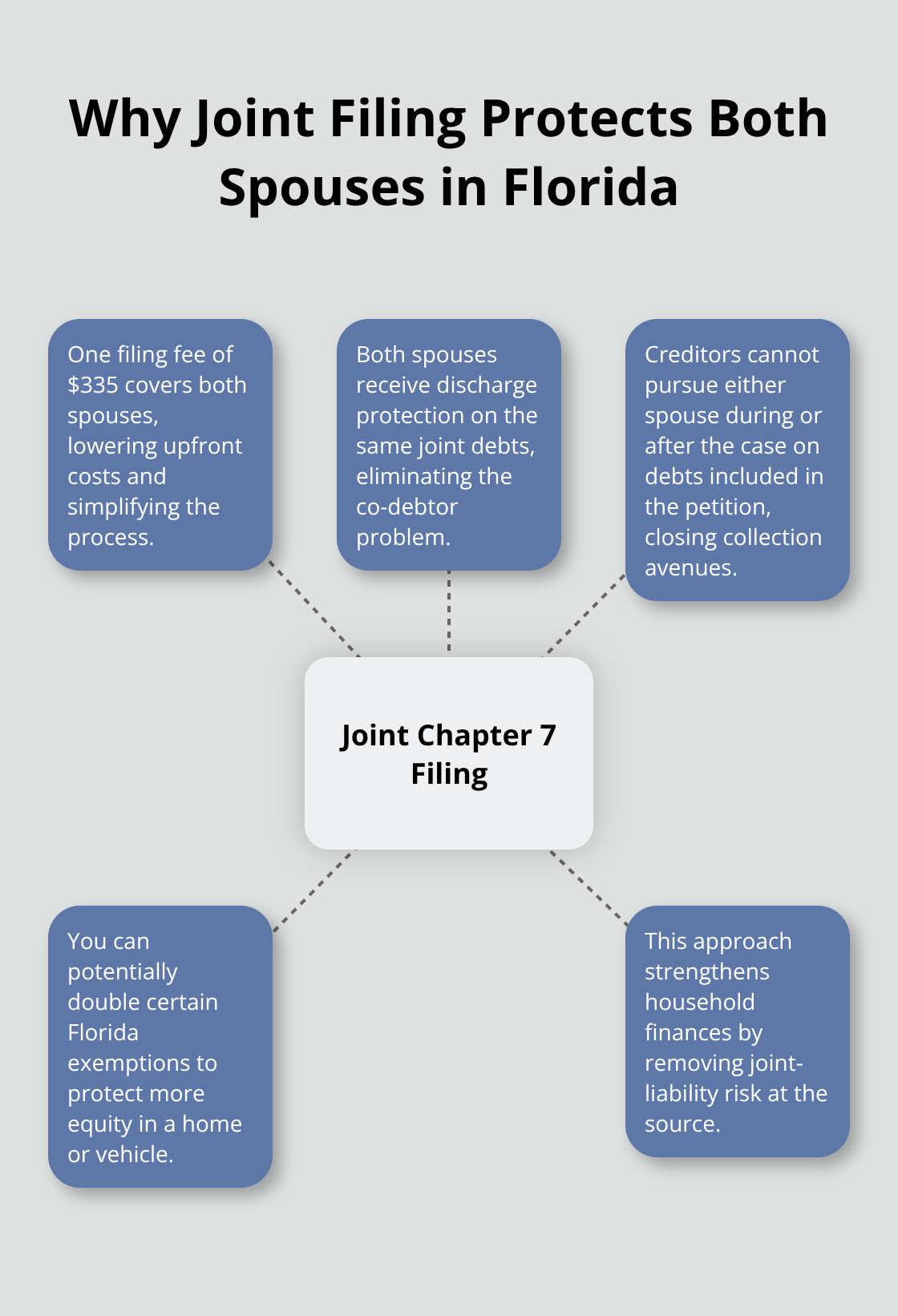
This approach costs less money upfront while providing substantially more protection for your household finances.
The decision to file alone or jointly shapes your family’s financial trajectory for years to come, which is why understanding how creditors pursue remaining debtors after one spouse’s discharge becomes critical before you submit your petition.
What Gets Discharged When You File Chapter 7 Alone in Florida
Your Discharge Eliminates Only Your Liability
Your discharge eliminates your personal liability on joint debts included in your bankruptcy petition, but this protection applies only to you. When the court grants your discharge 60 to 90 days after your creditors’ meeting, any joint debt you listed-whether a mortgage, car loan, or credit card-becomes wiped clean as far as your legal obligation goes. The creditor can no longer pursue you for payment, sue you for the balance, or attempt wage garnishment against your paycheck. However, the debt itself does not disappear; it simply transfers entirely to your co-debtor. If you and your spouse held a joint credit card with an $8,000 balance, that full amount now belongs to your spouse alone.
How Your Spouse’s Credit Takes the Hit
This shift damages your spouse’s credit score by 130 to 200 points immediately, and the account appears on their credit report as charged-off or in collections for up to seven years. The creditor views this as a favorable outcome because they still have a debtor to pursue-just one instead of two. Your spouse cannot claim the automatic stay protection that you received because they are not the bankruptcy filer, leaving them exposed to the full arsenal of collection tactics from day one.
Co-Signers Face Aggressive Collection Efforts
Co-signers and joint account holders face aggressive collection tactics once you discharge the debt. A co-signer who is not your spouse-perhaps a parent or sibling who co-signed a car loan-becomes fully liable for the entire remaining balance with no bankruptcy protection unless they file separately. Creditors often intensify collection efforts against co-debtors because bankruptcy law prohibits them from pursuing you further, making the remaining debtor their only recourse. If your spouse earns $55,000 annually and a creditor obtains a judgment, they can garnish up to 25 percent of disposable income under Florida law, potentially removing $300 to $400 monthly from household finances.
Collection Actions Escalate Quickly
Creditors may also freeze bank accounts or place liens on property titled in your spouse’s name alone. The timing matters significantly: creditors typically send notice of your discharge to all joint account holders within weeks, triggering collection letters and calls that can become relentless. Your spouse faces wage garnishment, bank levies, and lawsuits that you successfully avoided through your filing. Understanding these consequences before you file alone reveals why filing jointly often protects your household far more effectively than filing individually.
Should You File Jointly to Protect Your Spouse
Filing Alone Transfers Full Liability to Your Spouse
When you file Chapter 7 alone while married, you transfer the full weight of joint debts to your spouse’s shoulders. Creditors can no longer pursue you once your discharge is granted (typically 60 to 90 days after your creditors’ meeting), but they immediately shift their collection efforts to your spouse. Your spouse’s credit score drops 130 to 200 points the moment your discharge takes effect, and that damage persists on their credit report for up to ten years according to credit reporting practices. This is not a minor inconvenience-it is a deliberate transfer of liability that creates measurable financial harm.
Joint Filing Costs Less and Protects More
A joint filing costs one $335 filing fee instead of two separate filings, yet protects both spouses simultaneously. When both spouses file together, creditors cannot pursue either of you during or after the case on debts included in the petition. Your spouse avoids wage garnishment, bank levies, and collection lawsuits that would otherwise become inevitable once you discharge the debt. Joint filing also potentially doubles certain Florida exemptions on jointly owned property like your home or vehicle, protecting more assets for your household.
Identify Which Debts Are Actually Joint
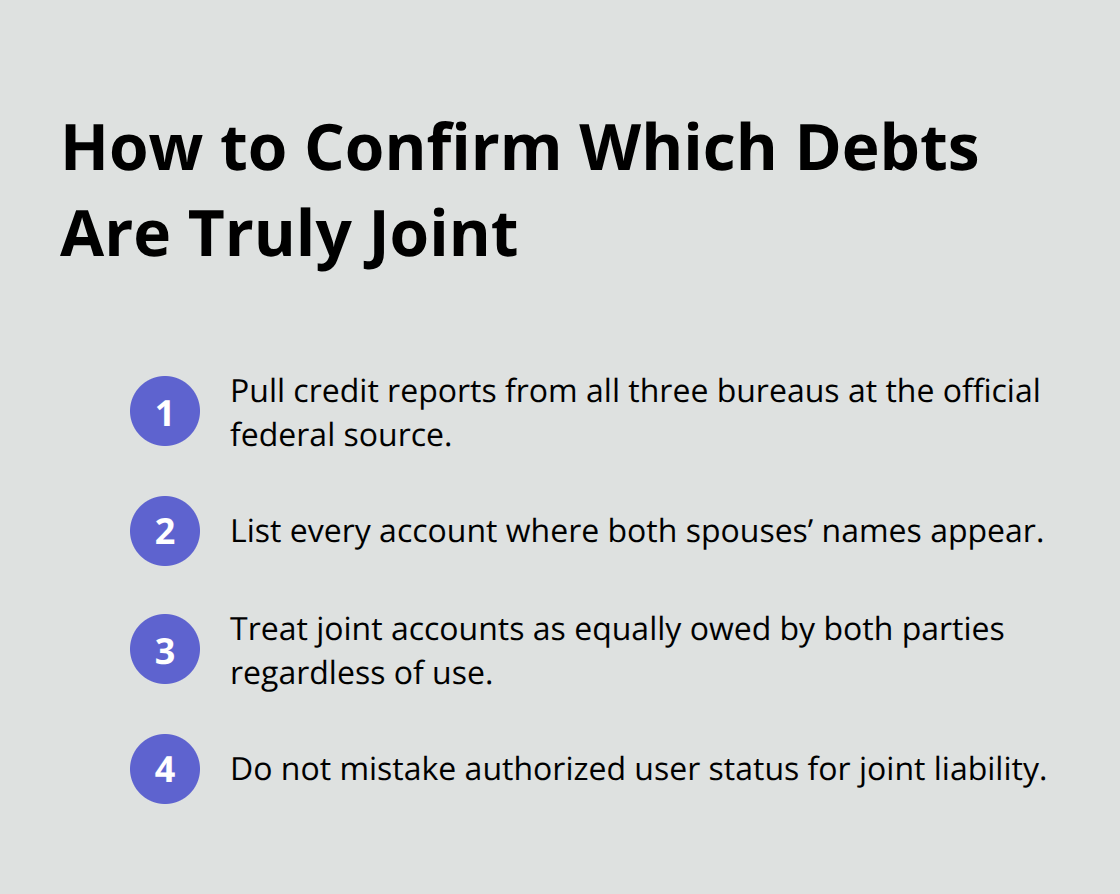
Before you file, have an explicit conversation with your spouse about which debts are truly joint and which belong to only one person. Pull your credit reports from all three bureaus at the federal government’s official source and identify every account where both names appear. A joint account means both parties are equally responsible for the full balance, regardless of who uses the card or whose name appears first on the bill. An authorized user account is different: the primary account holder remains solely responsible, so adding your spouse as an authorized user does not create joint liability.
Calculate the Real Impact on Your Household
If your household carries $50,000 in joint credit card debt and $30,000 in joint medical bills, filing alone shifts that entire $80,000 burden to your spouse’s shoulders alone. Filing jointly wipes that $80,000 clean for both of you. If you have $15,000 in joint credit card debt but $25,000 in debts under your name alone, filing jointly protects your spouse from the $15,000 joint obligation while discharging both your debts. If you file alone, your spouse becomes liable for that $15,000 while your $25,000 disappears-a lopsided outcome that harms your household.
When Filing Alone Makes Sense
The only scenario where filing alone makes sense is if your spouse has no joint debts with you and you want to avoid triggering their credit score impact. This situation is rare because most married couples accumulate joint obligations like mortgages, car loans, or shared credit accounts. Examine your complete financial picture before deciding whether to file alone or jointly, because this choice determines whether your spouse faces years of creditor harassment or receives the same fresh start you receive through bankruptcy.
Moving Forward After Chapter 7 Bankruptcy in Florida
Your discharge marks a beginning, not an ending. Once your Chapter 7 case closes and creditors stop pursuing you, the real work of rebuilding starts immediately. If you filed jointly with your spouse, both of you receive the same fresh start and can rebuild your credit together as a household, while filing alone leaves your spouse managing the joint debts you discharged for years to come.
Credit card companies begin offering secured credit cards within weeks of your discharge, allowing you to deposit $500 or $1,000 as collateral and build positive payment history. After 12 to 18 months of on-time payments, many issuers convert secured cards to unsecured accounts and return your deposit. Your credit score typically recovers 100 to 150 points within the first year post-discharge if you make all payments on time and keep credit utilization below 30 percent (a measurable improvement that positions you for better financial opportunities).
The financial decisions you make immediately after discharge determine whether your household stays stable or slides back into debt. If you filed jointly, you and your spouse should establish a budget that prevents the spending patterns that created your original debt, while couples who filed separately must decide whether to manage finances together or maintain individual accounts. Contact us at https://chapter7florida.com to discuss your specific circumstances and determine the filing strategy that protects your family most effectively.