
Receiving an inheritance while filing for Chapter 7 bankruptcy in Florida creates a complex situation that many people don’t anticipate. The timing of when you receive inherited assets, combined with bankruptcy filing deadlines, can dramatically affect what you keep and what the trustee claims.
We at Harnage Law, PLLC help Florida residents navigate these rules so they don’t lose inherited property unnecessarily. This guide walks you through how inheritances work in Chapter 7, practical strategies to protect what you receive, and the mistakes that cost people their debt relief opportunities.
How Inheritances Are Treated in Chapter 7 Bankruptcy in Florida
The bankruptcy court treats inherited property differently depending on when you become entitled to it relative to your filing date. Under federal law, any property you become entitled to within 180 days after filing Chapter 7 becomes part of your bankruptcy estate, meaning the trustee can claim it to pay your creditors. The 180-day clock starts from the date of the decedent’s death, not when you actually receive the funds. If your father dies on May 15 and you filed Chapter 7 on April 1, that inheritance is fair game for the trustee even if probate takes months to settle. Florida exemptions may shield some of the inherited assets, but only up to specific dollar limits that often fall short of protecting the full amount. This distinction separates those who keep inherited property from those who lose it.
The 180-Day Window Changes Everything
Timing matters more than most people realize. If the decedent dies after day 180 from your filing date, the inheritance stays entirely outside your bankruptcy estate. A death on October 10, when you filed on April 1, falls safely outside the window since that’s day 193. Conversely, a death on September 1 puts the inheritance squarely within the estate.
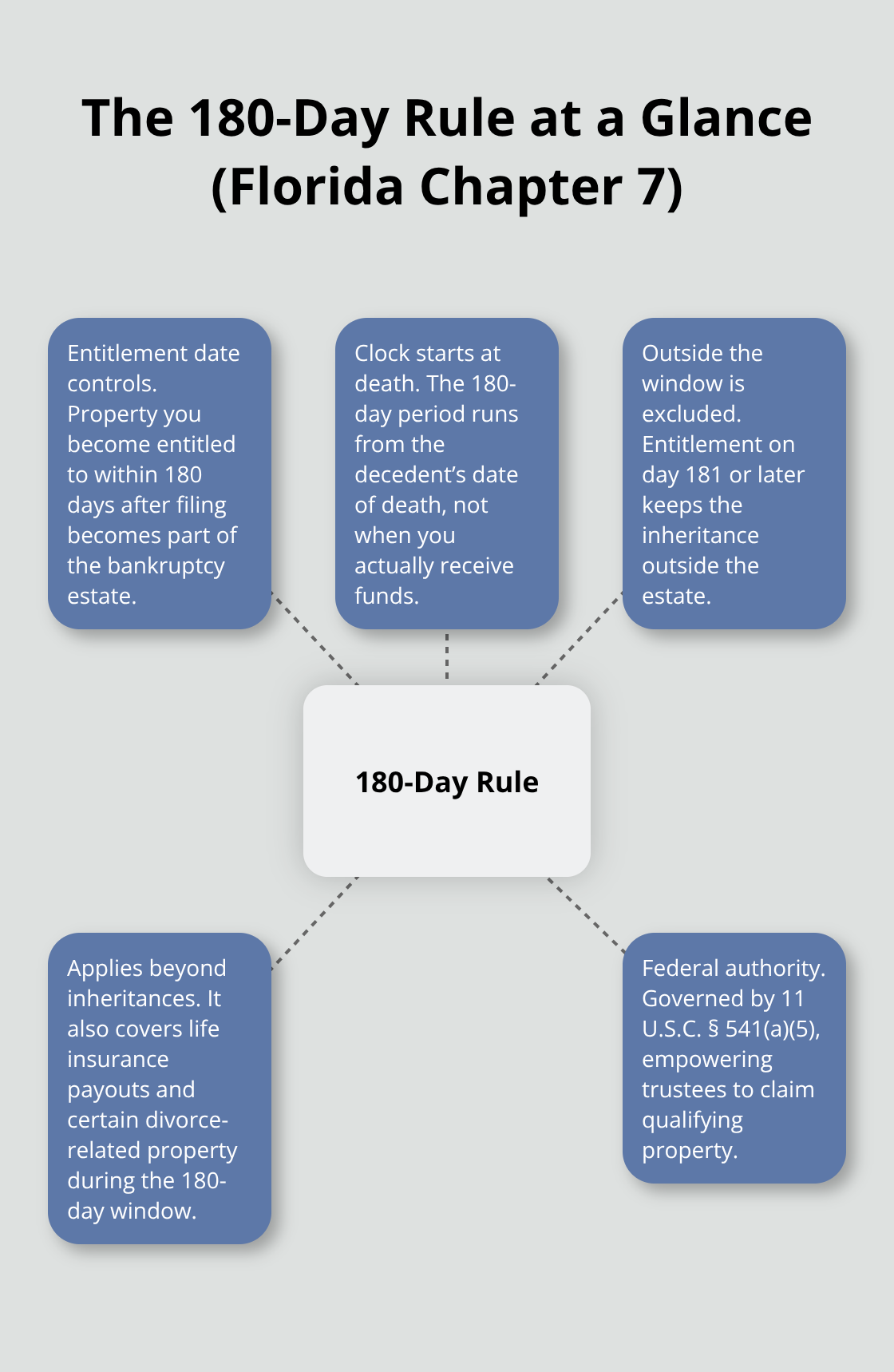
This is not a gray area or subject to negotiation with the trustee. The law under 11 U.S.C. Section 541(a)(5) is absolute: entitlement within 180 days means the estate includes it. The same rule applies to life insurance payouts, divorce settlements, and other property you become entitled to during this period. Many people attempt to time their filings around expected inheritances without legal guidance, which often backfires when the actual death date falls differently than anticipated.
Florida Exemptions Provide Limited Protection
Florida’s homestead exemption is famously generous for primary residences, but inherited real estate doesn’t automatically qualify for the same protection. If you inherit a home with significant equity, only the homestead exemption amount (unlimited for owner-occupied homes if owned 1,215 days before filing, otherwise capped around $214,000) shields the property. Inherited cash receives almost no protection under Florida law. The motor vehicle exemption covers $5,000 per vehicle, and the wildcard exemption adds $1,000 of personal property protection (rising to $4,000 if you don’t use the homestead exemption). These limits rarely cover substantial inheritances. If you inherit $75,000 in cash with no other exemptions available, the trustee can claim the full amount unless other exemptions apply.
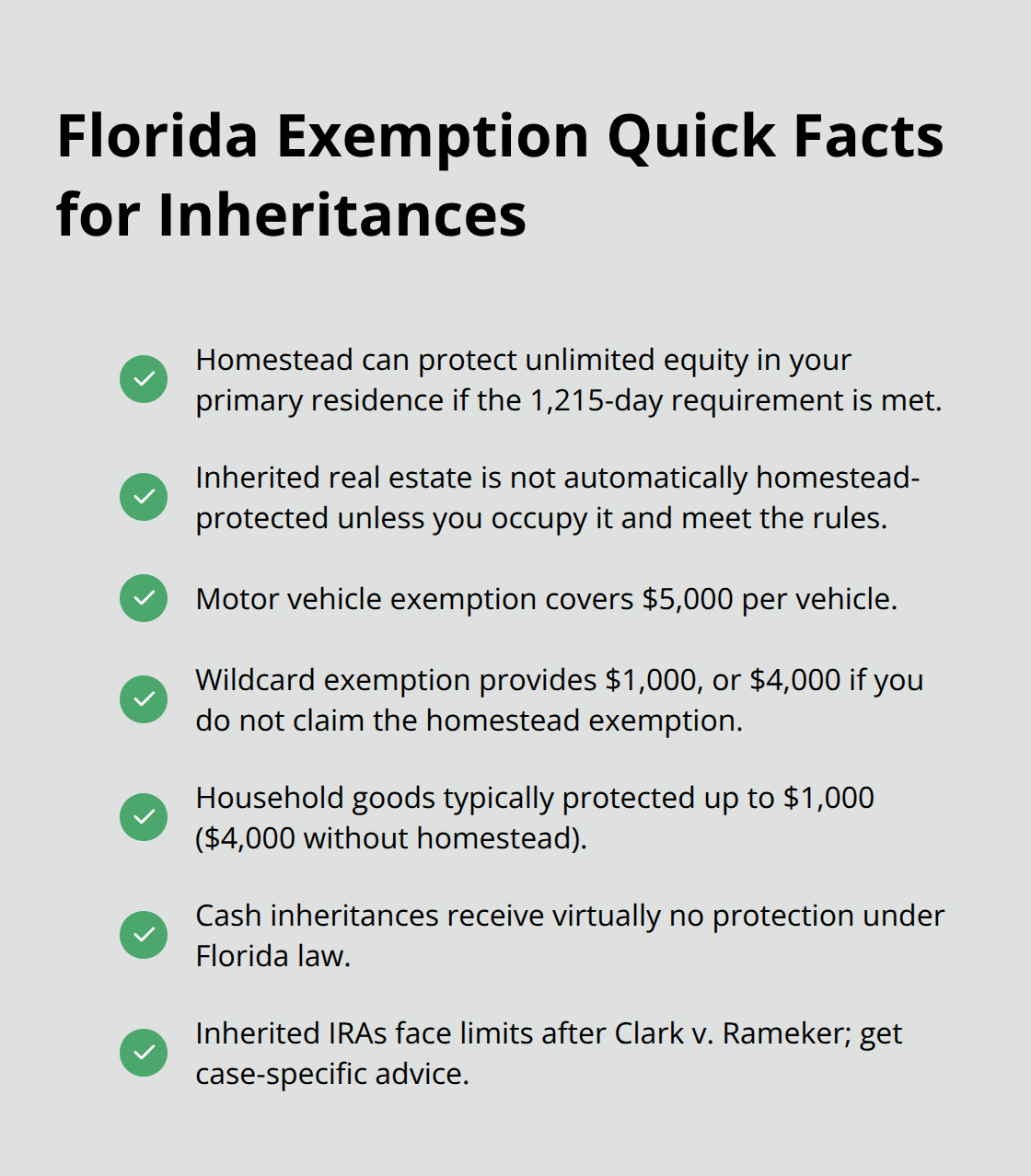
Retirement accounts inherited within the 180-day window receive federal protection under certain conditions, but inherited IRAs face restrictions following court decisions, so analysis varies case by case. Florida does not automatically adjust exemption amounts for inflation, so you should verify current figures before relying on them.
Strategic Planning Before Filing Protects Your Assets
The practical reality is that inherited assets beyond exemption limits become trustee property unless you plan strategically beforehand. If you expect an inheritance soon, discuss timing with a bankruptcy attorney before filing. An attorney can analyze whether you should delay your filing to move past the 180-day window, accelerate your filing before the death occurs, or pursue Chapter 13 instead of Chapter 7 (which treats inheritances differently). The decision depends on your specific circumstances-your current debt burden, creditor pressure, and the timing and size of the expected inheritance. Some situations call for filing immediately to stop wage garnishments or foreclosure, while others benefit from waiting. An attorney who understands Florida exemption law can identify which inherited assets you can protect and which ones face exposure. This analysis prevents costly mistakes that leave you without both debt relief and your inheritance.
Protecting Inherited Assets in Florida Chapter 7
Calculate Your Exemption Limits Before Filing
The most practical way to protect an inheritance in Florida Chapter 7 is understanding exactly which assets fall within exemption limits and which ones don’t. Florida’s exemption system is binary: either an asset qualifies for protection or it doesn’t. If you inherit $50,000 in cash, Florida law provides virtually no exemption for liquid funds, meaning the trustee claims the full amount unless it falls outside the 180-day window. If you inherit a home worth $300,000 with $250,000 equity and you own your primary residence, the homestead exemption shields unlimited equity in your own home but not inherited real estate unless you occupy it as your primary residence and meet the 1,215-day ownership requirement.
Start by identifying what you currently own and what exemptions apply to it. The motor vehicle exemption covers $5,000 per vehicle, household goods up to $1,000 (or $4,000 if you forgo the homestead exemption), and the wildcard exemption adds $1,000 for miscellaneous personal property. Retirement accounts receive federal protection under 11 U.S.C. Section 522(b)(3)(C), but inherited IRAs face restrictions following the Clark v. Rameker decision, so inherited retirement funds require individual analysis. Calculate the gap between the exemption amount and the inheritance size: a $100,000 inheritance with only $5,000 in available exemptions means $95,000 becomes trustee property unless you act strategically.
Time Your Filing Around the 180-Day Window
The timing decision separates people who keep inheritances from those who lose them. If a parent or relative is terminally ill or elderly, file Chapter 7 before the death occurs so the 180-day clock starts ticking while they’re still alive. If the death occurs after day 180, the inheritance stays outside your bankruptcy estate entirely, protected automatically by law. Conversely, if death is imminent and you haven’t filed, waiting may serve you better than rushing to file. A parent expected to die within 60 days should trigger a waiting strategy, not an immediate filing.
Consult with a bankruptcy attorney about your specific timeline because Chapter 13 repayment plans treat inheritances differently than Chapter 7 liquidation. In Chapter 13, an inheritance received during your three- to five-year repayment plan can trigger a plan modification, potentially increasing your monthly payments or extending your plan duration. Chapter 7 offers cleaner protection if you can time the inheritance outside the 180-day window.
Prioritize Immediate Financial Crises Over Inheritance Timing
Some situations demand immediate filing regardless of inheritance timing because wage garnishments, foreclosure threats, or creditor lawsuits create urgency that overrides inheritance considerations. A bankruptcy attorney evaluates whether your immediate financial crisis requires filing now or whether you have flexibility to wait. Florida law requires full disclosure of any inheritance you expect or have already received, so hiding anticipated inheritances from your attorney or the trustee creates fraud exposure that destroys your entire bankruptcy case.
The next section examines the mistakes that cost Floridians their inheritances and how to avoid them.
Common Mistakes That Cost Floridians Their Inheritance
Concealing Inheritances Destroys Your Entire Case
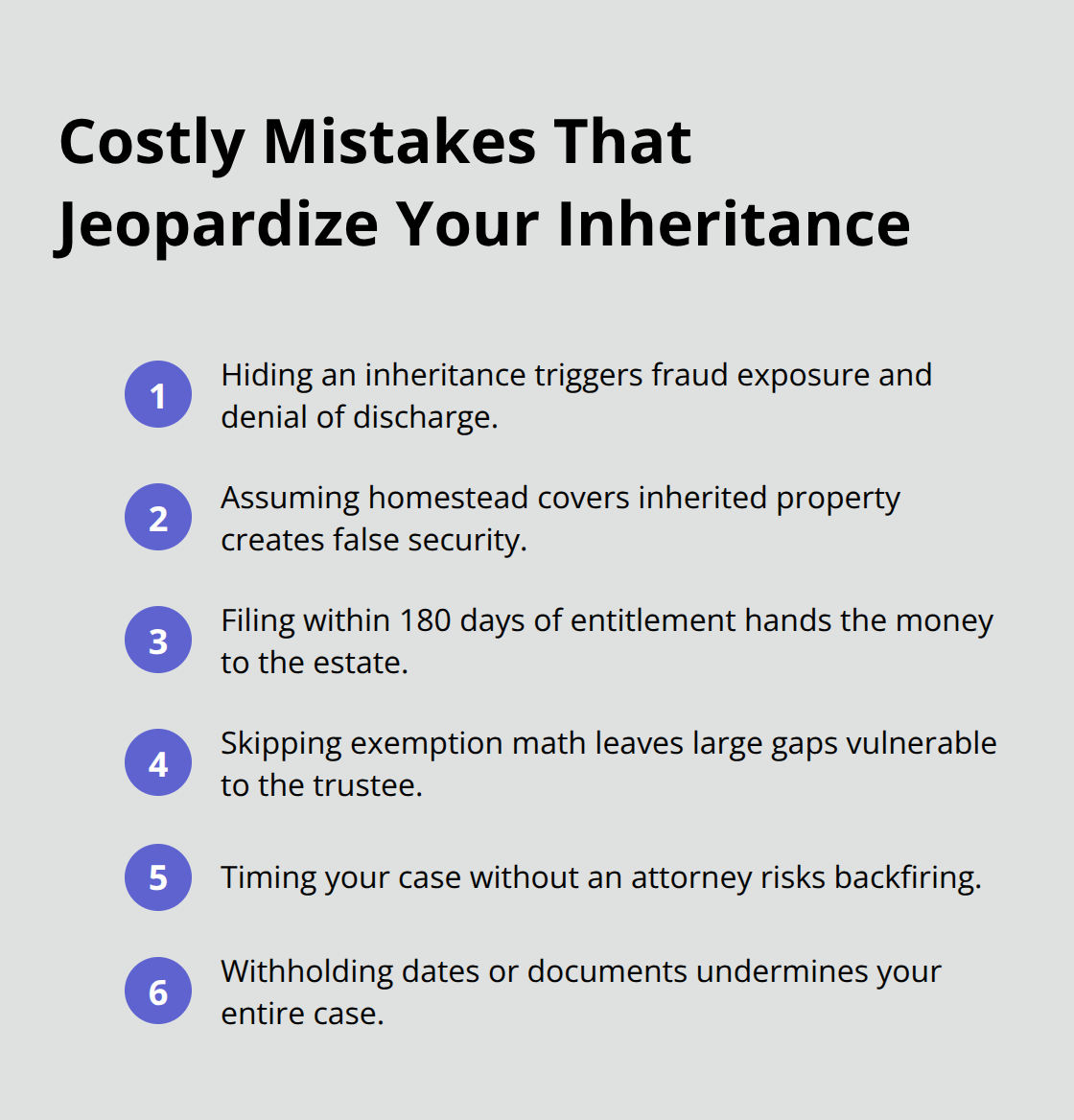
Concealing an inheritance from your bankruptcy trustee eliminates both the inheritance and your discharge. The trustee possesses legal authority under 11 U.S.C. Section 541 to claim any property you become entitled to within 180 days of filing, and concealing inherited assets constitutes bankruptcy fraud. If the trustee uncovers a hidden inheritance through probate records, bank deposits, or information from the executor or relatives, the court can deny your discharge entirely, leaving you liable for all your debts while the trustee still seizes the inheritance. The consequences extend beyond losing the money: bankruptcy fraud can result in criminal charges, fines up to $250,000, and imprisonment up to five years according to 18 U.S.C. Section 157. Your attorney must know about every inheritance you expect or have received, and you must list it accurately on your bankruptcy schedules. Concealing inherited assets creates exposure that no inheritance justifies.
Underestimating How Little Exemptions Actually Protect
Many people assume Florida’s generous homestead exemption means all inherited property receives similar protection, but that exemption applies only to your primary residence under specific conditions, not to inherited homes or other assets. If you inherit $85,000 in cash and file Chapter 7, Florida law provides virtually zero exemption for liquid funds, meaning the trustee claims the entire amount within the 180-day window. Inherited retirement accounts face restrictions that differ significantly from protecting your own IRA, particularly after the Clark v. Rameker decision limited inherited IRA protections in bankruptcy. Calculate your actual exemption coverage before filing to prevent the shock of discovering that an inheritance you counted on becomes trustee property. Work with a bankruptcy attorney to add up all available exemptions across your assets, then subtract that total from any inheritance you expect. The remaining gap represents what the trustee can claim.
Filing Too Soon After Receiving an Inheritance
Filing Chapter 7 too soon after receiving an inheritance locks in the loss unnecessarily. If you received a $60,000 inheritance three months ago and file bankruptcy now, that inheritance falls squarely within the 180-day window and becomes estate property. An attorney analyzing your situation would examine whether waiting an additional two or three months allows the inheritance to age beyond the 180-day cutoff, protecting it automatically. If your inheritance arrived very recently and creditor pressure allows any flexibility, delaying your filing can mean the difference between keeping the entire amount and losing it to the trustee. Conversely, some situations demand immediate filing despite recent inheritance because wage garnishments or foreclosure threats create urgency that overrides timing considerations. The critical step involves discussing the exact date you became entitled to the inheritance with a bankruptcy attorney before filing, not after your case starts.
Final Thoughts
The path to protecting your inheritance during Florida Chapter 7 bankruptcy requires understanding both the 180-day rule and your state’s exemption limits, then acting strategically before you file. Each situation presents unique timing challenges and asset protection opportunities that demand individualized analysis rather than generic advice. Your inheritance size, the expected death date, your current debt burden, and creditor pressure all factor into whether you should file immediately, wait, or pursue Chapter 13 instead.
We at Harnage Law, PLLC help Florida residents build a personalized strategy that accounts for your specific inheritance timeline and exemption eligibility. Rather than discovering after filing that your inherited assets fall within the trustee’s reach, we calculate your exemption coverage beforehand and identify which inherited property you can protect under Florida law. This analysis prevents costly surprises and positions you to maximize both your debt relief and asset protection.
If you expect an inheritance or have recently received one, contact Harnage Law, PLLC to discuss how timing and exemptions affect your Chapter 7 case. The decisions you make now determine whether you keep your inheritance or lose it to the bankruptcy estate.