
When creditors file lawsuits against you, the stress can feel overwhelming. Filing for Chapter 7 bankruptcy in Florida triggers an automatic stay that stops these legal actions immediately.
At Harnage Law, PLLC, we’ve seen how file protection through bankruptcy can transform a desperate situation into a path toward financial recovery. Understanding how this process works helps you make informed decisions about your future.
How the Automatic Stay Works in Florida Chapter 7
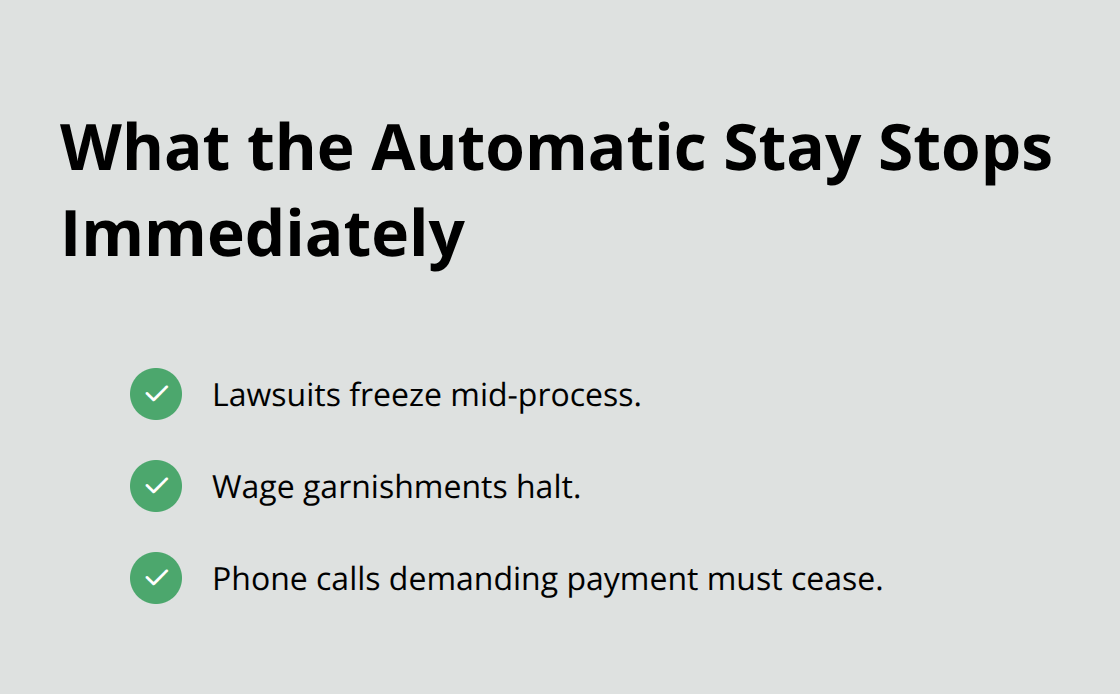
Filing a Chapter 7 bankruptcy petition in Florida activates the automatic stay under 11 U.S.C. § 362 the moment your case reaches the court. This stay is not a request or a favor-it is a federal mandate that stops creditors from pursuing collection actions immediately, without requiring any additional court hearing or judge approval. Lawsuits freeze mid-process. Wage garnishments halt. Phone calls demanding payment must cease. The automatic stay applies across all your debts and all your creditors simultaneously, which means a single bankruptcy filing protects you from multiple legal actions at once.
Creditors who violate this stay by continuing collection efforts face potential contempt of court charges and may owe you damages and attorney fees. The stay remains in effect throughout your bankruptcy case unless the court grants relief to a creditor, which is rare for unsecured debts like credit cards and medical bills. If you file before a judgment is entered against you, the automatic stay prevents that judgment entirely. If judgment already exists, the stay stops wage garnishment and bank levies that follow from that judgment.
Creditors Cannot Ignore the Stay
The law is absolute here: creditors must stop collection efforts immediately upon learning of your bankruptcy filing. A creditor who receives notice of your case and continues to call, sue, or garnish wages violates federal law. The notice of commencement issued by the bankruptcy court includes your case number, the trustee’s contact information, and critical deadlines-this document goes to all creditors on file. Unsecured creditors like credit card companies and medical providers almost never receive court permission to continue collection because they have no collateral to recover. A secured creditor holding a lien on your car or home can request relief from the stay to proceed with foreclosure or repossession, but this requires proving that the property is not necessary for your bankruptcy estate or that you lack equity. In Chapter 7, most creditors simply wait for discharge rather than fight the stay. If a creditor violates the stay after receiving notice, document the violation immediately-record dates, times, and contact details. Notify your bankruptcy attorney right away so they can file a motion to hold the creditor in contempt and seek damages on your behalf.
Multiple Debts, One Protection
The automatic stay covers every debt you owe, from credit card balances to medical bills to personal loans, in a single action. You do not need separate filings or multiple court orders to stop different creditors. This efficiency makes filing before multiple lawsuits are filed strategically smart. If creditors have already sued you in different courts, the automatic stay applies to all those cases simultaneously. The bankruptcy estate-a legal entity created when you file-becomes the temporary owner of your property, which reinforces the halt on collection actions against your assets. This means creditors cannot seize bank accounts, garnish wages, or place liens on exempt property during the stay. Florida exemptions protect significant assets, including your homestead property up to a certain value and personal property like household goods. The broader your exemption protection, the less incentive creditors have to fight the stay. When discharge occurs (typically 90 to 120 days after the meeting of creditors), most unsecured debts vanish entirely and the related lawsuits are dismissed permanently.
What Happens When Creditors Violate the Stay
Creditors who ignore the automatic stay face serious legal consequences. The bankruptcy court can hold them in contempt, which may result in fines or other sanctions. You can also file a motion against the creditor and potentially recover actual damages, court costs, and attorney fees under 11 U.S.C. § 362(k). This provision gives you a powerful tool to fight back against aggressive collection tactics. Many creditors stop all collection efforts the moment they receive notice of your bankruptcy filing because the cost of fighting the stay outweighs any potential recovery. If a creditor continues to contact you after you file, provide them with your case number and trustee information immediately. Keep records of every violation-dates, times, names of callers, and the content of messages. These records become evidence if you need to pursue damages against the creditor.
Timing Matters in Stopping Lawsuits
Filing before a judgment is entered gives you maximum protection. Once a judgment exists, creditors can garnish your wages and levy your bank accounts, which creates additional complications even though the automatic stay stops these actions. The stay halts ongoing garnishments and levies, but the underlying judgment remains on the court record unless the debt is discharged. If multiple creditors have already filed lawsuits against you, filing Chapter 7 stops all of them at once through the automatic stay. The bankruptcy court’s notice of commencement goes to every creditor with a claim, ensuring they all receive formal notification of the stay. This comprehensive protection across all your debts and creditors is why bankruptcy is such a powerful tool for those facing multiple lawsuits. Understanding your timeline and acting quickly can prevent judgments, garnishments, and liens that would otherwise complicate your financial recovery.
Chapter 7 Discharge: What Disappears and What Remains
Most Unsecured Debts Vanish Completely
Credit card balances, medical bills, personal loans, and collection accounts all disappear when your Chapter 7 discharge enters, typically 90 to 120 days after your meeting of creditors. Under 11 U.S.C. § 523 eligibility rules, these qualifying debts cease to exist as legal obligations. Once discharge occurs, creditors cannot pursue these debts through lawsuits, phone calls, or wage garnishments. Federal law prohibits creditors from attempting to collect discharged debts, making this protection absolute and permanent. Lawsuits related to discharged debts are dismissed and any pending collection actions terminate immediately. If a creditor ignores this prohibition and continues contact, they violate federal law and you can pursue damages against them. The power of discharge is why timing your bankruptcy filing matters strategically-filing before creditors obtain judgments prevents the additional complication of dealing with garnishments and liens.
Certain Debts Survive Discharge and Remain Collectible
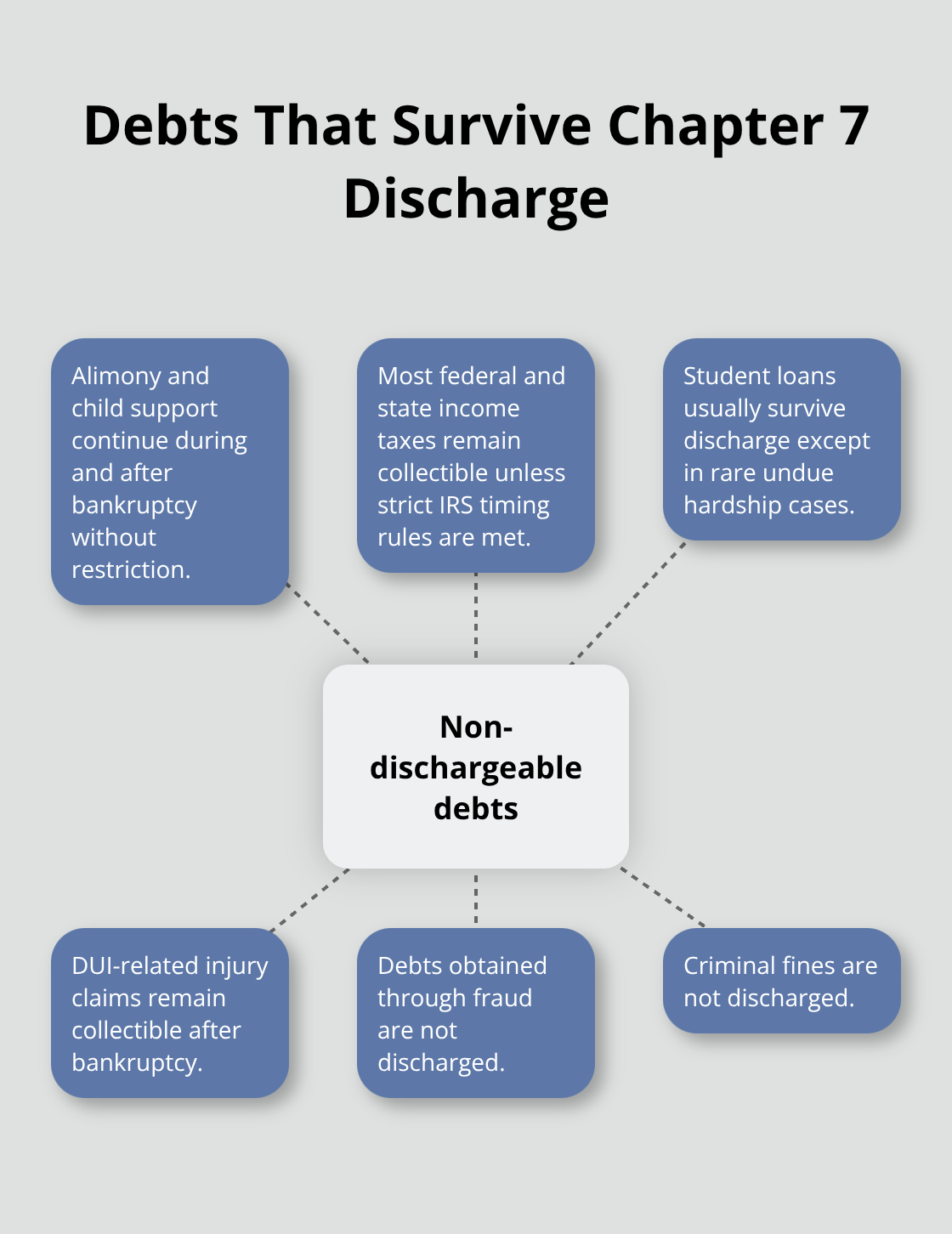
Some debts refuse to disappear, and creditors can pursue lawsuits for these obligations despite your bankruptcy filing. Alimony and child support obligations continue throughout bankruptcy without restriction. Most federal and state income taxes cannot be discharged unless they meet strict age and payment requirements set by the IRS. Student loans are generally non-dischargeable except in cases of undue hardship, a high legal bar that courts rarely find. DUI-related injury claims, debts obtained through fraud, and criminal fines also survive discharge.
Understanding which debts fall into this non-dischargeable category before filing prevents surprises later. If you owe back taxes or support obligations, bankruptcy stops creditor harassment on other debts but does not eliminate these priority obligations. The automatic stay halts collection efforts temporarily, but once your case concludes, creditors can resume pursuing non-dischargeable debts through lawsuits and wage garnishments.
Discharge Eliminates the Lawsuit Threat for Qualifying Debts
When discharge enters, lawsuits based on discharged debts must stop permanently. If a creditor filed suit before your bankruptcy, that lawsuit stays frozen during the case and gets dismissed when discharge occurs. If a creditor attempts to sue you after discharge for a debt included in your bankruptcy, you can file a motion to dismiss and potentially recover attorney fees and costs. Federal law explicitly prohibits creditor collection on discharged debts, making this post-discharge protection ironclad. Many creditors simply write off discharged debts rather than pursue collection because the cost exceeds any recovery. The Fair Credit Reporting Act requires credit reporting agencies to remove discharged debts from your credit report, though the bankruptcy itself remains for up to ten years. Within two to four years of discharge, you can rebuild credit significantly despite the bankruptcy notation. Filing Chapter 7 converts your legal position from defendant in multiple lawsuits to protected debtor with a fresh financial slate. The filing cost of approximately $335 in court fees plus attorney representation pales in comparison to the relief that discharge provides.
Non-Dischargeable Debts Require Different Strategies
Knowing your debt composition helps you plan which obligations will truly disappear and which require alternative resolution strategies. Priority debts like child support and alimony demand attention even after discharge because creditors can pursue these through wage garnishments and other collection methods. Tax debts may qualify for discharge if they meet specific criteria (the debt must be at least three years old, the return must have been filed at least two years before bankruptcy, and the assessment must have occurred at least 240 days before filing). Student loans present a unique challenge-private student loans may be dischargeable in some cases, while federal student loans almost never qualify unless you prove undue hardship. Understanding these distinctions before filing allows you to address non-dischargeable debts through alternative payment arrangements or negotiation strategies. Your bankruptcy attorney can review your specific debts and identify which ones survive discharge so you can plan accordingly.
Moving Forward After Discharge
The discharge order marks the end of your Chapter 7 case and the beginning of your financial recovery. Creditors must cease all collection efforts on discharged debts, and you gain the legal right to rebuild your credit and financial life. Some creditors may attempt to collect on discharged debts through deceptive tactics or outdated collection practices, but you have legal recourse through the Fair Debt Collection Practices Act and bankruptcy law itself. As you move forward, understanding which debts remain your responsibility helps you prioritize payments and plan your financial future strategically. The next phase of your recovery involves rebuilding credit and establishing new financial habits that prevent future debt accumulation.
Florida Chapter 7 Protection in Action
Creditors Lose Collection Rights After Discharge
Filing Chapter 7 bankruptcy in Florida stops creditors dead in their tracks. Once your discharge enters around 90 to 120 days after the meeting of creditors, creditors lose all legal right to pursue you for discharged debts. The Fair Credit Reporting Act requires credit agencies to remove these debts from your report, though the bankruptcy notation itself remains for up to ten years according to the FTC. Creditors cannot call, sue, garnish wages, or levy bank accounts for these obligations ever again. If a creditor ignores this prohibition and contacts you after discharge, they violate the Fair Debt Collection Practices Act and you can sue them for damages.
Credit Recovery Begins Within Months
Many Florida residents see their credit scores begin recovering within 18 to 24 months of discharge because the discharged debts now show zero balances to new lenders. You can rebuild credit responsibly by obtaining a secured credit card and making on-time payments. The strategic advantage of filing before creditors obtain judgments cannot be overstated-once a judgment exists, creditors can garnish your wages indefinitely, levy your bank accounts, and place liens on property. These complications persist even after the automatic stay halts these actions temporarily.
Florida Exemptions Protect Your Assets
Your assets receive substantial protection during the bankruptcy process through Florida exemptions that shield your homestead property, personal property up to specified amounts, and household goods from liquidation. Florida law provides one of the most generous homestead exemptions in the nation, protecting your primary residence regardless of equity value in many cases. The bankruptcy estate temporarily owns your property when you file, which reinforces the halt on collection actions against your assets. Creditors cannot seize bank accounts, garnish wages, or place liens on exempt property during the stay. When you file Chapter 7, the trustee liquidates only non-exempt assets, meaning robust exemption protection often results in no asset liquidation at all. This creates what creditors call a no-asset case, where unsecured creditors receive nothing and simply wait for discharge.
Timeline From Filing to Lawsuit Prevention
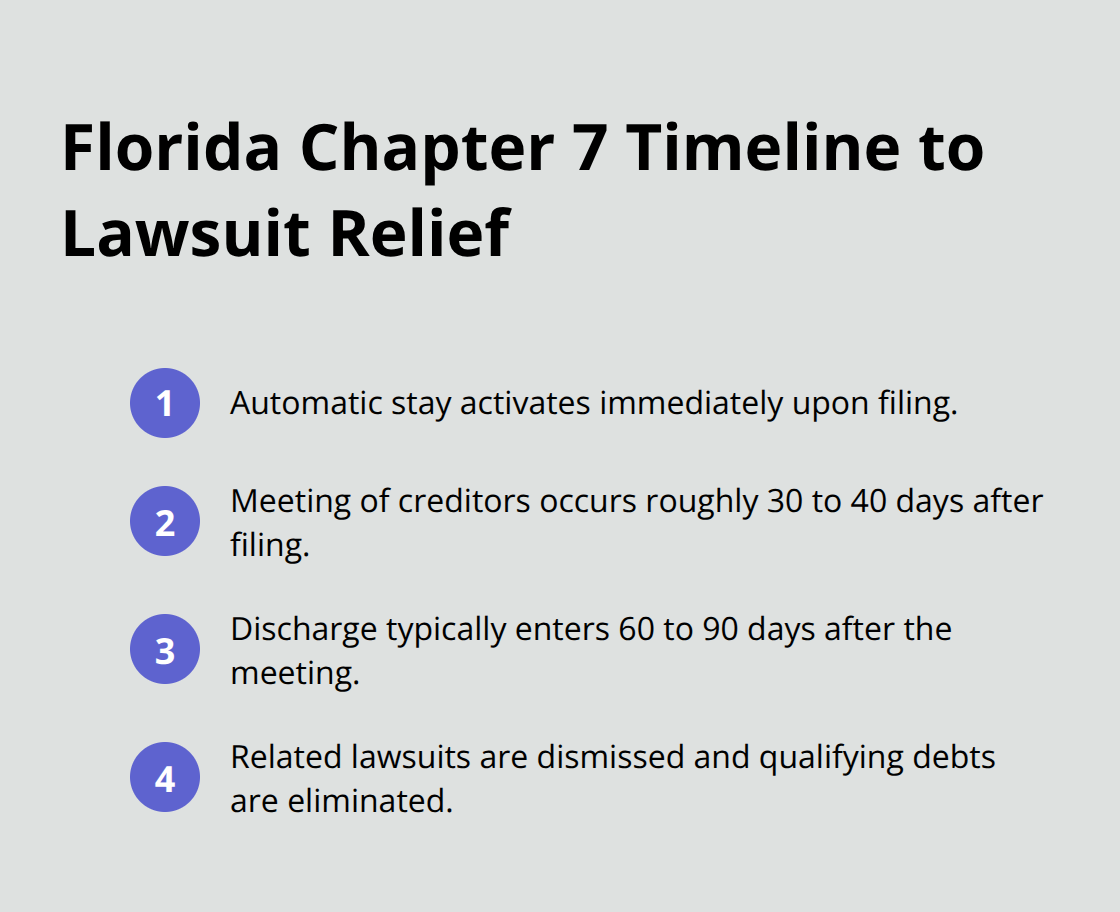
The timeline from filing to lawsuit prevention moves quickly. The automatic stay activates immediately when your petition reaches the court, freezing all lawsuits mid-process and halting wage garnishments the same day. Your meeting of creditors occurs roughly 30 to 40 days after filing, where the trustee reviews your debts and income while your attorney guides your responses. Discharge typically enters 60 to 90 days after that meeting, permanently dismissing all related lawsuits and eliminating your obligation to pay qualifying debts.
This compressed timeline means most filers experience relief from creditor pressure within months rather than years, allowing you to focus on rebuilding rather than defending against legal actions.
Final Thoughts
Filing Chapter 7 bankruptcy in Florida delivers immediate legal protection the moment your petition reaches the court. The automatic stay freezes lawsuits, halts wage garnishments, and stops creditor calls without delay. This file protection shields you from collection actions across all your debts simultaneously, giving you breathing room to stabilize your financial situation. Creditors cannot ignore this federal mandate, and those who violate it face contempt charges and potential liability for damages and attorney fees.
The discharge that follows transforms your legal position entirely. Within 90 to 120 days after your meeting of creditors, qualifying debts vanish permanently and related lawsuits terminate. Creditors lose all rights to pursue you for these obligations through any collection method. Your credit begins recovering within months as discharged debts show zero balances to new lenders, and you can rebuild responsibly through secured credit cards and on-time payments.
Florida exemptions protect substantial assets during this process, including your homestead property and household goods. The trustee liquidates only non-exempt assets, meaning many filers experience no asset loss at all. If you face multiple lawsuits or aggressive creditor collection, contact Harnage Law, PLLC to discuss how Chapter 7 bankruptcy can stop creditor harassment, prevent wage garnishments, and halt lawsuits while helping you discharge qualifying debts.