Filing Chapter 7 as a business owner in Florida requires careful planning and clear understanding of your options. The process can feel overwhelming, but knowing when and how to file makes a real difference in protecting your remaining assets and moving forward.
At Harnage Law, PLLC, we’ve guided business owners through Chapter 7 filings and understand the specific challenges you face. This guide walks you through the financial assessment, filing process, and rebuilding strategies that matter most.
When Chapter 7 Makes Sense for Your Business
Recognizing When Liquidation Is Your Best Path
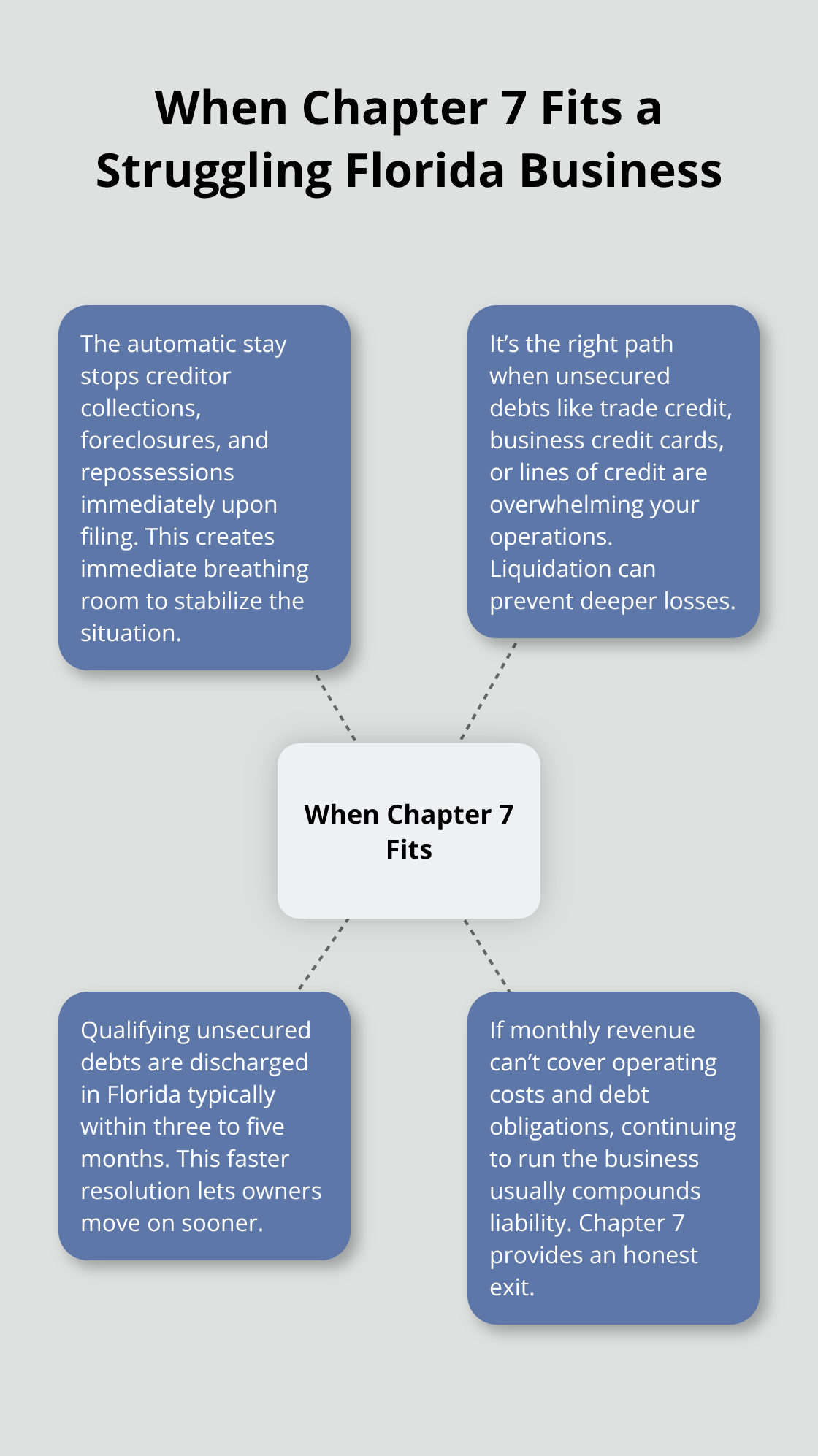
Chapter 7 bankruptcy works best when your business has reached a point where liquidation is the realistic path forward. If your monthly revenue cannot cover operational costs and debt obligations, continuing to operate typically means accumulating more liability. The automatic stay takes effect immediately upon filing, which stops creditor collection efforts, foreclosures, and repossessions. This breathing room matters most when you’re drowning in unsecured debt like trade credit, business credit cards, or lines of credit. Chapter 7 eliminates these debts entirely through discharge, usually within three to five months in Florida’s courts.
How Chapter 7 Differs From Chapter 11 and Chapter 13
The liquidation process works straightforwardly: a trustee sells your nonexempt business assets, uses the proceeds to pay creditors, and you walk away from personal liability on discharged debts. This approach works particularly well if your business operates as a sole proprietorship or if you’ve personally guaranteed business loans. Chapter 11 reorganization, by contrast, keeps your business operating while you restructure debts over up to six years, but it costs significantly more and demands ongoing court oversight and monthly reporting. Chapter 13 is designed for individuals with stable income who can afford a repayment plan, not business owners facing operational failure. If your business cannot generate enough income to fund a realistic repayment plan, Chapter 7 is the honest choice rather than dragging out years of payments you cannot sustain.
Comparing Costs and Timeline
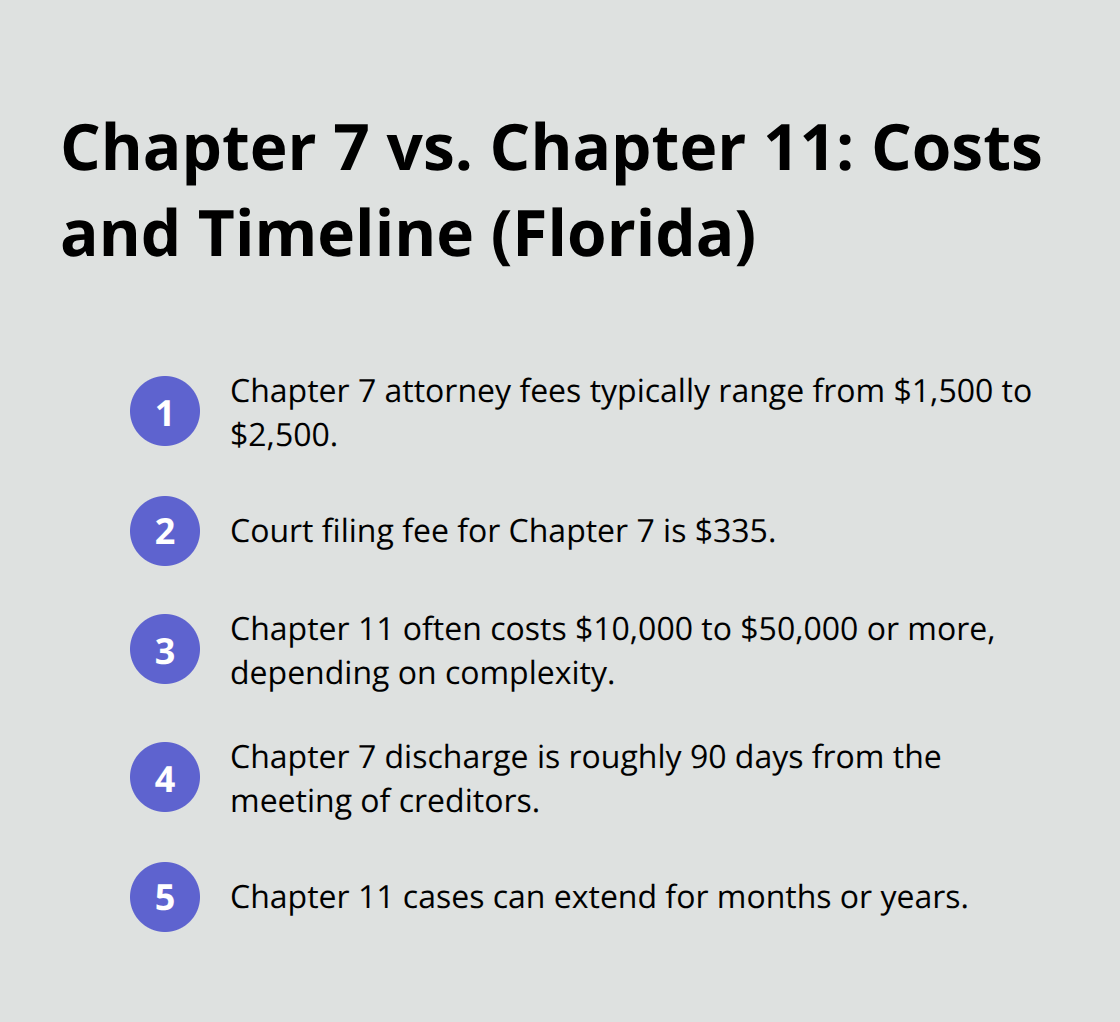
Financially, Chapter 7 filing in Florida costs between $1,500 and $2,500 in attorney fees, plus $335 in court filing fees. These expenses are paid upfront or sometimes financed through payment plans with your attorney. Chapter 11, by comparison, can cost $10,000 to $50,000 or more depending on case complexity and the size of your business. The timeline difference also matters: Chapter 7 reaches discharge in roughly 90 days from your meeting of creditors, while Chapter 11 cases drag on for months or years.
Understanding What You Keep Under Florida Exemptions
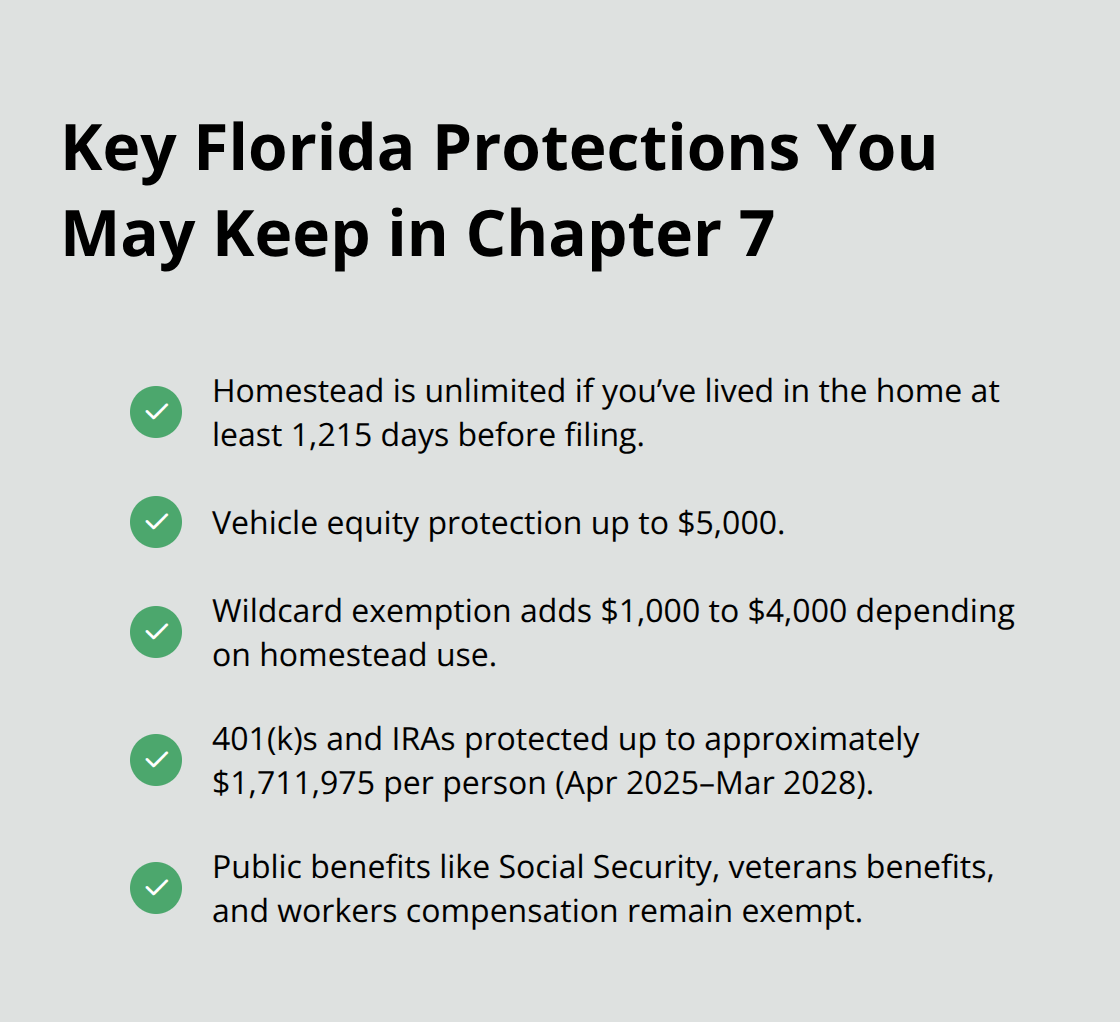
If you have a mortgage or vehicle financed through your business, Chapter 7 cannot cure delinquencies the way Chapter 13 can. However, if you own a home in Florida and meet the residency requirement of living there for at least 1,215 days before filing, Florida’s unlimited homestead exemption protects your primary residence regardless of equity. Your personal vehicle is protected up to $5,000 in equity, and retirement accounts like 401(k)s and IRAs are protected up to approximately $1,711,975 per person for cases filed between April 2025 and March 2028 under federal law. These protections mean you often keep far more than you expect.
Making the Strategic Decision
The decision hinges on this reality: if your business cannot be saved through restructuring, Chapter 7 offers a faster, cheaper, and cleaner exit than prolonging the pain through Chapter 11 or a Chapter 13 plan based on income you don’t have. Understanding your specific asset situation and which exemptions apply to your circumstances requires careful review of your financial records and business structure. The next section walks you through organizing those records and identifying which assets you can protect before you file.
Preparing Your Business for Chapter 7 Filing
Gather Six Months of Detailed Financial Records
Gathering six months of detailed financial records before you file separates a smooth filing from one that derails at the trustee meeting. The trustee will scrutinize your income, expenses, and asset values, so vague estimates or incomplete documentation trigger questions that delay your case. Pull bank statements for all business and personal accounts, profit-and-loss statements showing monthly gross revenue and net income for the past six months, tax returns for the past two years, client contracts or invoices that prove your income patterns, and a complete expense log broken down by category. If you are self-employed, the six-month P&L must show month-by-month figures, not just annual totals. Many bankruptcy attorneys provide fillable templates that align with trustee expectations, which makes the process faster and more accurate. Attach supporting documents like bank statements and invoices to back up your numbers.
Document Your Business Assets and Liabilities
For business owners with inventory or equipment, create a detailed list of what you own, its current market value, and whether it is financed. Document what you owe on each asset separately from what you own outright. This distinction matters because financed assets reduce your nonexempt property significantly. Knowing exactly which items carry liens and which sit free of debt shapes your filing strategy and determines what the trustee can liquidate.
Understand Florida’s Exemption Protections
Florida’s exemption rules protect far more than most business owners realize, but only if you structure your claims correctly before filing. If you own your home and have lived there at least 1,215 days before filing, Florida’s unlimited homestead exemption shields your primary residence from creditor claims regardless of equity, making this your strongest protection. Your vehicle receives protection up to $5,000 in equity, and the wildcard exemption gives you an additional $1,000 to $4,000 depending on whether you use the homestead exemption. Retirement accounts including 401(k)s and IRAs receive protection up to approximately $1,711,975 per person for cases filed between April 2025 and March 2028 under federal law, which means most business owners keep these accounts intact. Public benefits like Social Security, veterans benefits, and workers compensation also remain exempt.
Identify Nonexempt Assets and Plan Accordingly
The critical step involves identifying which assets fall outside these protections so you know what the trustee might sell. Business equipment and inventory typically lack a specific exemption in Florida unless they fit within the wildcard or personal property categories, so a sole proprietor’s tools and stock face liquidation risk. This reality makes it essential to work with a bankruptcy attorney before filing, not after. An attorney can review your business structure, asset composition, and exemption eligibility to identify whether converting to an LLC or other entity changes your exposure, whether you should liquidate certain assets before filing to reduce nonexempt property, and which exemptions maximize your protection under current law. Understanding these details now prevents costly surprises when the trustee reviews your petition at the meeting of creditors.
The Chapter 7 Process From Filing to Discharge
How the Automatic Stay Protects You Immediately
Filing your Chapter 7 petition triggers immediate legal protections that stop creditor collection the moment you file. The automatic stay halts wage garnishments, foreclosure proceedings, repossession attempts, and collection calls. This protection applies to your personal liability on business debts, though it does not eliminate liens on collateral like vehicles or equipment. The filing itself requires submitting official bankruptcy forms including your petition, schedules detailing assets and liabilities, a statement of financial affairs, and proof of income from the past six months. For self-employed business owners, this means providing detailed monthly revenue and expense figures, not annual summaries. Court filing fees total $335, and you must complete credit counseling from an approved agency within 180 days before filing.
Preparing Documents the Trustee Will Scrutinize
Many business owners underestimate how thoroughly the trustee reviews your submitted documents. Incomplete or inconsistent information creates delays and triggers additional questions at your meeting of creditors, which typically occurs 21 to 40 days after filing in the Middle District of Florida. Your organized financial records matter most at this stage. The trustee will examine every detail of your income calculations, business operations, asset valuations, and exemption claims. Sole proprietors face additional scrutiny about whether business assets were properly valued and whether any transfers occurred before filing that the trustee might challenge.
What Happens at Your 341 Meeting
The meeting of creditors, also called the 341 meeting, determines whether your case proceeds smoothly or encounters complications. In Florida’s Orlando Division, these meetings now occur via Zoom, which eliminates travel requirements but does not reduce the trustee’s scrutiny. The trustee will ask detailed questions about your income, business operations, asset values, and exemption claims. If you claim your six-month average income falls below Florida’s median of approximately $68,000 for a single-person household, you pass the means test automatically and avoid presumed abuse. If your income exceeds this threshold, the trustee applies deductible business expenses to determine whether you have disposable income available for a Chapter 13 plan instead. After the meeting concludes, the trustee has about ten days to report findings to the court.
The Path to Your Discharge Order
Assuming no objections are filed by creditors or the trustee, your discharge order typically issues within 60 to 90 days from the creditors’ meeting. This discharge releases you from personal liability on most debts, though certain obligations remain nondischargeable. Recent income taxes, student loans in most situations, child support and alimony, criminal restitution, and debts arising from fraud or willful injury cannot be discharged. Once discharge is final, you are legally protected from collection efforts on discharged debts, and creditors cannot pursue wage garnishment or asset seizure for those obligations.
Moving Forward After Chapter 7
Your Chapter 7 discharge marks a legal turning point, but rebuilding your business and financial life requires deliberate action. The discharge eliminates your personal liability on qualifying debts, yet creditors may still hold liens on collateral like vehicles or equipment. If you financed property through your business, you must decide whether to reaffirm those debts to keep the collateral or surrender the assets.
Restoring business credit starts immediately after discharge through secured credit cards designed for rebuilding and local credit union products that report to credit bureaus. Make every payment on time without exception, as consistent, timely payments over 12 to 24 months demonstrate creditworthiness to lenders and suppliers. Many business owners slow their recovery by avoiding credit entirely after Chapter 7, when strategic credit use actually accelerates your path back to normal lending terms.
If you plan to relaunch your business, structure it as a limited liability company rather than operating as a sole proprietor again (this separation prevents the personal guarantee trap that led to your Chapter 7 filing). Separate your personal and business finances completely using dedicated bank accounts, build an emergency fund covering three to six months of operating expenses, and monitor your credit reports regularly through free annual reports at annualcreditreport.com. Contact Harnage Law, PLLC for personalized legal support tailored to your business situation as you move forward.