
Creditors don’t wait around. Once they decide to sue, the clock starts ticking and your options shrink fast.
Filing for Chapter 7 bankruptcy before a lawsuit hits gives you immediate protection through what’s called the automatic stay. At Harnage Law, PLLC, we’ve seen how filing for relief at the right moment stops wage garnishment, protects your assets, and wipes out debt before judgments become final.
Warning Signs That a Lawsuit Is Coming
Final Demand Letters Signal the Last Stage Before Court
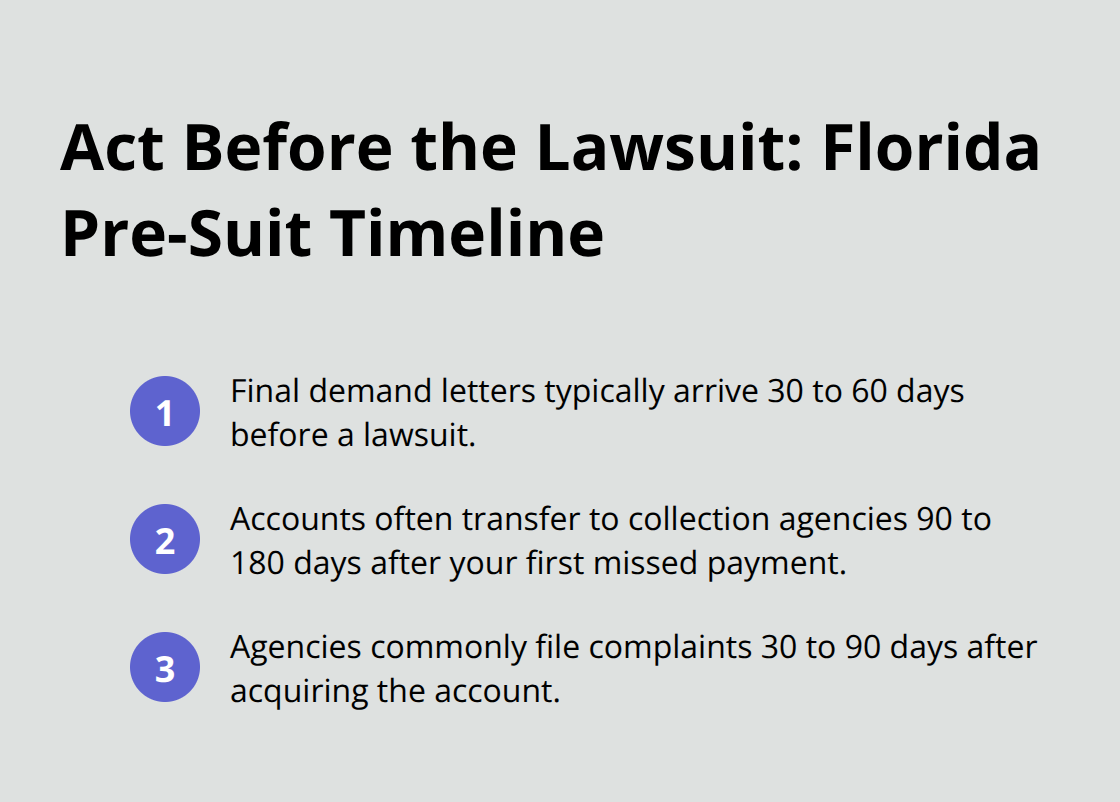
Final demand letters arrive with language that shifts tone dramatically. Instead of generic collection notices, these letters state specific amounts owed, reference contract terms, and often include phrases like “demand for payment” or “final notice before legal action.” The CFPB notes that creditors typically send these notices 30 to 60 days before filing suit, giving you a narrow window to act. When you see language about intent to pursue legal remedies or references to court proceedings, that’s not a bluff-it’s a timeline. Collection agencies escalate contact frequency and intensity at this stage, moving from monthly calls to multiple weekly attempts. They may reference specific court filing dates or mention retaining an attorney, which signals they’ve already decided to proceed.
In Florida, creditors must follow the Fair Debt Collection Practices Act, but aggressive contact during this pre-suit phase is legal and common.
Collection Agencies Accelerate the Path to Litigation
When your account transfers from the creditor’s internal team to a third-party collection agency, the urgency intensifies. Agencies operate on commission and face internal pressure to collect quickly, meaning they file lawsuits faster than original creditors do. This transition typically happens 90 to 180 days after your first missed payment. Agencies document every contact attempt and payment opportunity, building a record they’ll present to a court if litigation proceeds. The moment you see a collection agency’s name on correspondence instead of your original creditor, assume legal action is being seriously considered. Many agencies in Florida file complaints within 30 to 90 days of taking an account. This phase is when settlement negotiations become most effective-agencies still have flexibility, but once they file, their leverage shifts entirely to the courtroom.
Direct Threats of Legal Action Demand Immediate Action
Creditors or collectors may reference lawsuits directly during phone calls or in written notices. Statements like “we will sue,” “we’re filing in court,” or “we’ve retained counsel for legal proceedings” indicate active preparation. Under the FDCPA, collectors cannot threaten legal action they don’t intend to take, so these statements typically reflect genuine plans. The moment you receive such a threat, you have days or weeks at most before papers are filed. Ignoring these communications is the worst possible response. You need to contact a bankruptcy attorney immediately-not in a few weeks, but within days. Filing for Chapter 7 bankruptcy stops all collection activity the moment the petition is filed, triggering the automatic stay. This protection halts pending lawsuits, prevents new ones from being filed, and eliminates wage garnishment threats before they become reality. Understanding the timeline and process of how creditors actually sue in Florida helps you recognize exactly how much time remains before your situation becomes far more complicated.
Timeline and Process of Creditor Lawsuits in Florida
Florida Creditors Move Faster Than You Might Expect
Florida creditors move quickly, and understanding their timeline is critical to knowing when you must file for Chapter 7 bankruptcy. Most debts in Florida fall under a 5-year statute of limitations for written contracts, according to the CFPB, but this deadline only affects the creditor’s right to sue-not the debt itself. The statute of limitations clock starts from your last payment or, in some cases, from the date of your first missed payment, depending on the creditor’s contract terms and how Florida courts interpret your specific agreement. What matters most is that creditors do not wait until year five to take action. In reality, lawsuits typically arrive within 6 to 18 months after your first missed payment.
Collection Agencies File Complaints Rapidly
Collection agencies file complaints even faster, often within 30 to 90 days of acquiring your account. Once a creditor files a complaint in Florida court, you receive a summons that gives you approximately 20 days to respond. Ignore this deadline and the court will enter a default judgment against you without hearing your side of the story. A default judgment opens the door to wage garnishment, bank levies, and liens on your property-consequences that become nearly impossible to reverse. The creditor does not need to prove you owe the debt if you fail to show up in court. This is why filing for Chapter 7 bankruptcy before receiving a summons matters so much. The automatic stay halts collection efforts the moment your petition is filed, stopping lawsuits that have not yet been served and preventing new ones from being filed.
Court Proceedings Move Quickly Once Papers Are Served
Once a complaint is filed and you receive papers, Florida court proceedings move quickly. The creditor must prove ownership of the debt, the exact amount owed including any interest and fees, and their legal right to collect. Many creditors fail at this stage because they lack proper documentation, especially if the debt was sold multiple times between collection agencies. If the creditor cannot prove these elements, the case should be dismissed. However, you must raise this defense in your written response or during a pre-trial conference-the court will not dismiss a case on its own just because the creditor’s evidence is weak. A pre-trial conference typically occurs 30 to 60 days after you file your response, and a trial follows if the case is not settled. From complaint to judgment usually takes 3 to 6 months in Florida, though complex cases or crowded court dockets can extend this timeline.
Post-Judgment Remedies Create Lasting Financial Damage
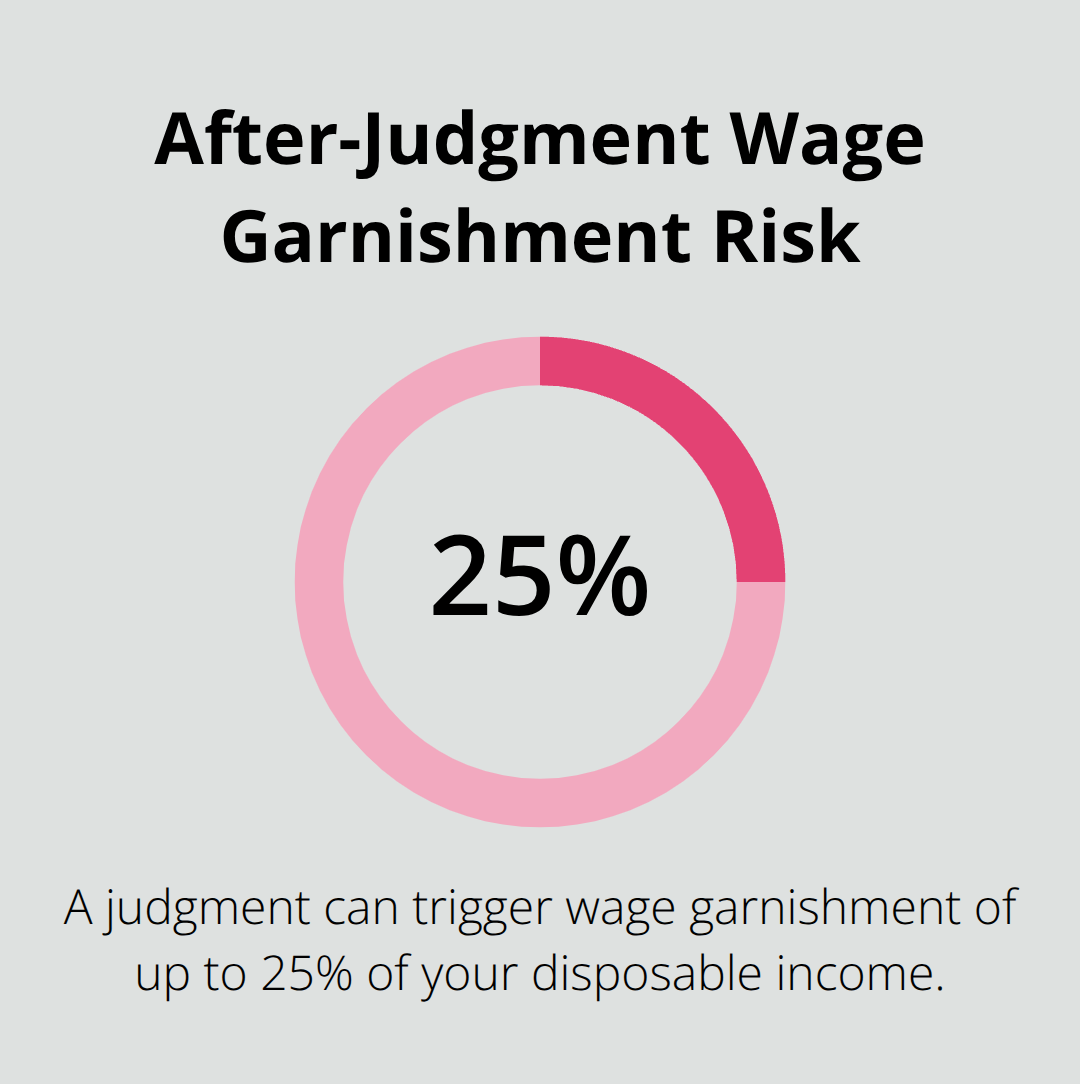
Once a judgment is entered, the creditor can immediately pursue post-judgment remedies like wage garnishment, which can take up to 25% of your disposable income, or bank account levies that freeze your funds. The creditor can also place a lien on your property, affecting your ability to sell or refinance.
Filing for Chapter 7 before judgment is entered gives you the strongest protection because bankruptcy eliminates unsecured debts entirely, whereas after judgment, you fight from a much weaker position with fewer options available. The window between receiving a final demand letter and facing a judgment is narrow-typically just weeks or a few months. Acting during this window transforms your outcome. Once judgment arrives, the creditor holds leverage that bankruptcy can still address, but the path becomes far more complicated and the consequences far more severe.
Filing Chapter 7 Stops Creditors Before Judgment
The Automatic Stay Halts All Collection Activity Instantly
The automatic stay is the single most powerful tool in bankruptcy law, and it activates the moment your Chapter 7 petition is filed with the court. According to 11 U.S.C. § 362, this automatic stay immediately halts all collection activity, pending lawsuits, wage garnishment attempts, and creditor contact. If a creditor has already filed a complaint against you, the automatic stay stops that lawsuit in its tracks. If they haven’t sued yet but plan to, filing Chapter 7 prevents them from ever filing. This protection is not optional or discretionary-it’s automatic and applies to nearly every creditor simultaneously.
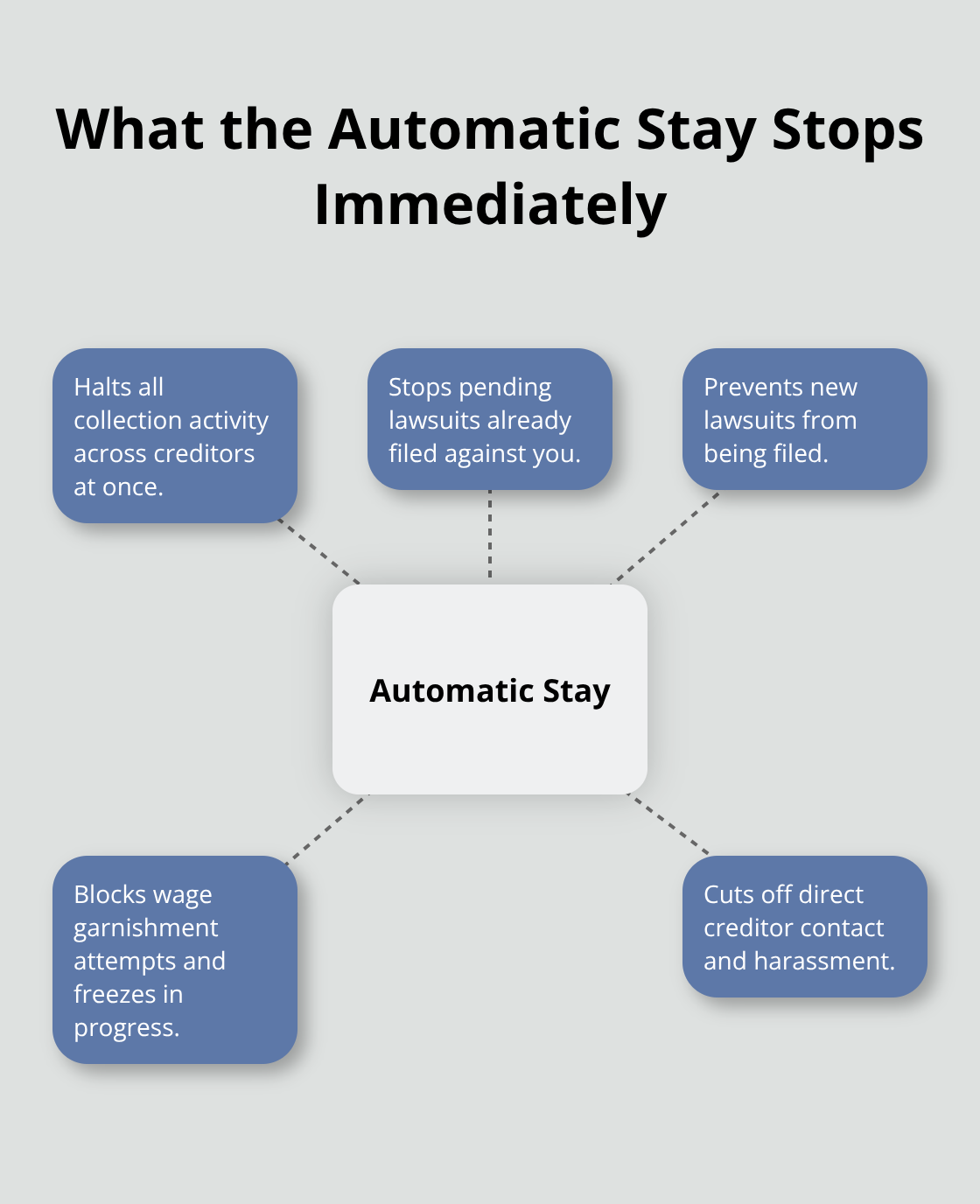
In Florida, where creditors move aggressively within 6 to 18 months of your first missed payment, filing before a complaint is served means you avoid the default judgment trap entirely. Once the petition is filed, creditors cannot legally contact you, cannot proceed with collection activities, and cannot garnish your wages. The Notice of Commencement issued by the court informs all creditors of the bankruptcy filing and the automatic stay’s effective date, typically within days of filing. This means the creditor’s attorney receives formal notice that their lawsuit is blocked, their collection calls must stop, and their post-judgment remedies are off the table.
Discharge Eliminates Your Personal Liability Permanently
Discharge through Chapter 7 eliminates your personal liability for unsecured debts like credit cards, medical bills, and personal loans entirely, meaning you owe nothing after the discharge is granted. Under 11 U.S.C. § 727, a discharge releases you from personal liability for discharged debts, and this protection is permanent. If you file before judgment, the creditor never obtains a judgment lien on your property, never establishes wage garnishment, and never freezes your bank accounts.
The difference between filing before and after judgment is enormous. A post-judgment creditor can garnish up to 25 percent of your disposable income indefinitely, place liens on your home or vehicle, and pursue bank levies that freeze your funds. Filing Chapter 7 before judgment eliminates all these consequences before they materialize.
Florida Exemptions Protect Your Essential Assets
Florida exemptions protect certain assets during the bankruptcy process, including your primary residence under homestead exemption rules, retirement accounts (401(k) and 403(b) plans), and motor vehicles up to $1,000 in value. To qualify for Florida exemptions, you must have lived in Florida continuously for at least 24 months before filing. The bankruptcy trustee reviews your property to determine what is exempt and what assets, if any, may be liquidated to pay creditors. Most individuals filing Chapter 7 retain their essential assets because Florida exemptions are generous compared to federal exemptions.
Filing before judgment preserves your ability to protect these assets because the creditor has not yet obtained a judgment lien. Once judgment arrives, the creditor’s lien attaches to non-exempt property, complicating asset protection significantly.
The Window for Action Is Narrow but Critical
From the moment you receive a final demand letter to the moment a complaint is filed typically spans 30 to 90 days. Filing your Chapter 7 petition during this window eliminates the creditor’s ability to obtain judgment and pursue post-judgment collection remedies, protecting your wages, assets, and financial stability far more effectively than fighting the lawsuit in court.
Final Thoughts
The timeline between a final demand letter and a court judgment in Florida is brutally short-creditors file complaints within weeks or months, not years. Once papers are served, you have roughly 20 days to respond or face a default judgment that opens the door to wage garnishment, bank levies, and property liens. These consequences happen to thousands of Floridians annually, and reversing them after judgment becomes nearly impossible.
Filing for Chapter 7 bankruptcy before a lawsuit arrives stops everything. The automatic stay halts all collection activity the moment your petition is filed, preventing lawsuits from being served and blocking new ones from being filed. Discharge eliminates your personal liability for unsecured debts entirely, so creditors cannot garnish your wages, freeze your bank accounts, or place liens on your property after the discharge is granted. Florida exemptions protect your primary residence, retirement accounts, and essential assets during the process, allowing you to rebuild without losing what matters most.
The difference between filing relief before judgment and after judgment determines whether you control your financial future or spend years fighting an uphill battle. If you’re facing collection calls, final demand letters, or threats of legal action, contact Harnage Law, PLLC today for a consultation. The window for action is narrow, but filing relief now prevents costly legal consequences that will follow you for years.
