Chapter 7 bankruptcy relief gives you a genuine second chance, but the real work starts after your discharge arrives. The months following your discharge order determine whether you build lasting financial stability or repeat old patterns.
We at Harnage Law, PLLC know that most people feel lost during this transition. This guide walks you through the concrete steps to rebuild your credit, manage money wisely, and protect your fresh start in Florida.
What Happens When Your Discharge Arrives in Florida
Your Discharge Order Is Final
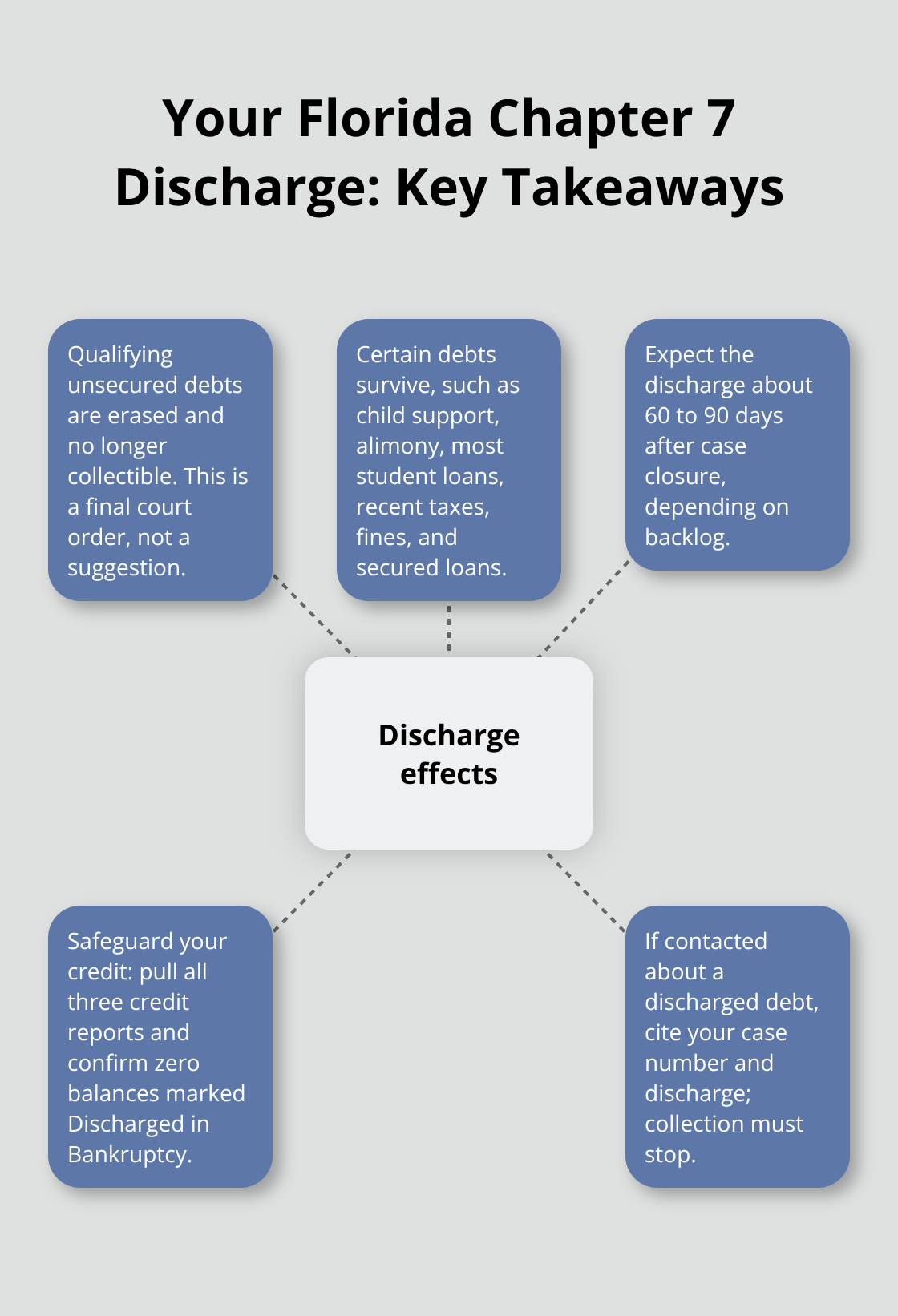
Your discharge order is the legal document that erases your qualifying debts. It’s not a suggestion or a preliminary step-it’s the final word from the court that certain obligations no longer exist. The discharge typically arrives 60 to 90 days after your Chapter 7 bankruptcy case closes, though timing varies depending on court backlogs in your district. When it arrives, you’ll receive an official notice from the bankruptcy court showing which debts have been eliminated and which ones survive the discharge. This moment marks when your fresh start becomes official, but many people don’t understand what the discharge actually covers or what comes next.
Which Debts Disappear and Which Remain
Your discharge eliminates unsecured debts like credit card balances, medical bills, personal loans, and payday loans. It does not eliminate child support, alimony, most student loans, recent tax debts, criminal fines, or secured debts like mortgages and car loans. The distinction matters enormously because creditors will still pursue you for non-discharged debts, and ignoring them creates new problems.
Verify Your Credit Reports Immediately
Once your discharge arrives, pull your free credit reports from Equifax, Experian, and TransUnion at AnnualCreditReport.com and verify that each discharged debt shows a zero balance with a Discharged in Bankruptcy notation. If any debt appears incorrectly, dispute it immediately-these errors are common and fixable. The discharge paperwork itself is straightforward: it lists your case number, the discharge date, and the types of debts eliminated. Keep multiple copies in a safe place because creditors sometimes ignore discharge orders and attempt collection years later. Having proof of your discharge stops these attempts cold.
Protect Your Discharge from Future Collection Attempts
Creditors occasionally test whether you remember your discharge rights. When a collector contacts you about a discharged debt, respond in writing and reference your discharge order and case number. Most collection activity stops immediately once you provide this documentation. Your discharge is permanent-no creditor can legally pursue you for debts listed on that order, regardless of how much time passes.
The financial habits that led to bankruptcy don’t disappear on their own, which is why the next step involves taking control of your credit report and understanding how to rebuild it from the ground up.
Rebuilding Credit After Discharge in Florida
Your discharge eliminates the debts, but your credit score remains damaged until you actively repair it. The months immediately following your discharge are when you build the foundation for better borrowing rates and financial opportunities.
Verify Your Credit Reports and Dispute Errors
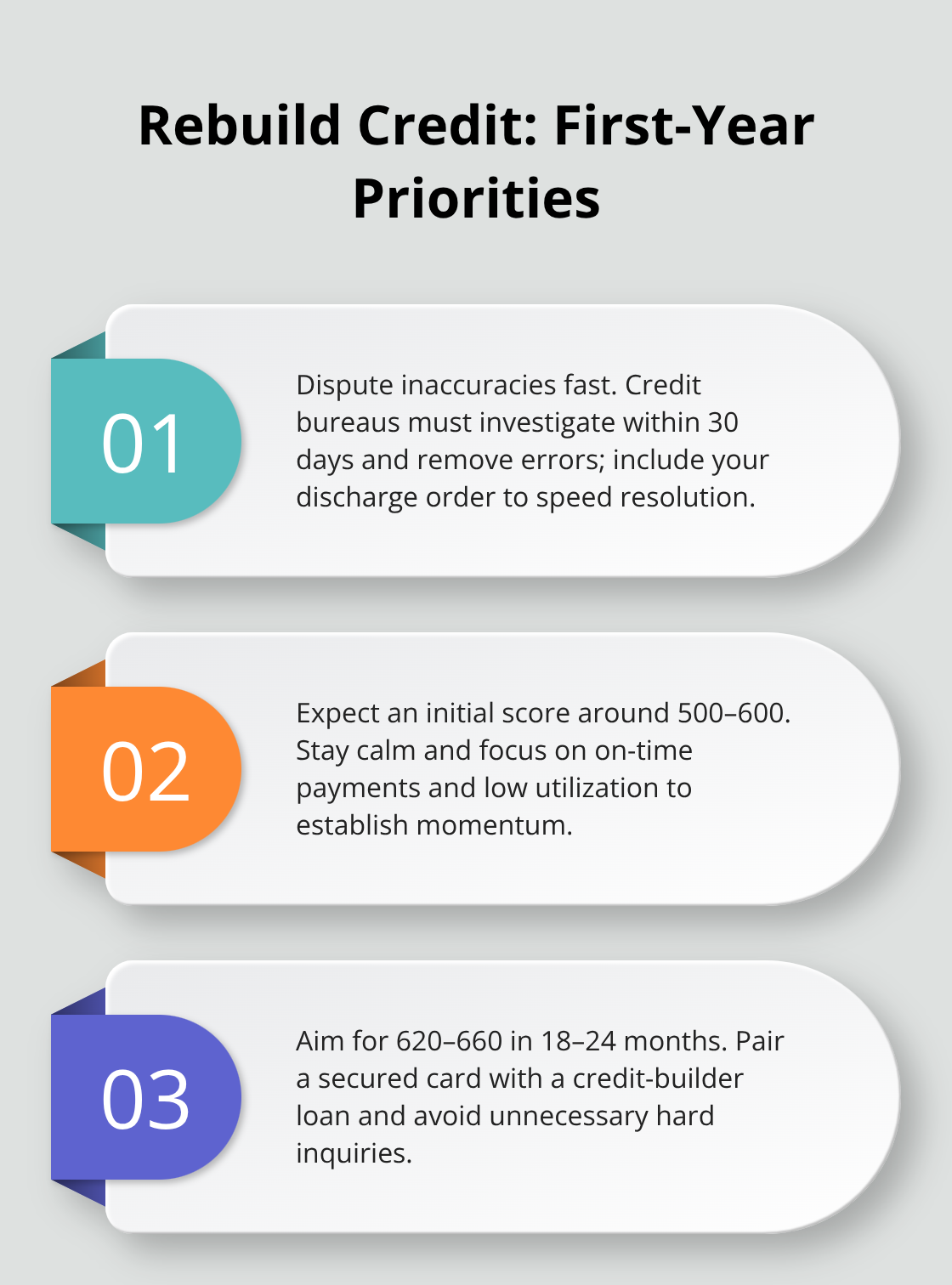
Pull your credit reports again within 30 days of discharge to confirm all eliminated debts now show zero balances with a Discharged in Bankruptcy status. Errors happen frequently, and disputing them immediately prevents false information from dragging down your score for years. If a creditor reports a discharged debt as still owed, send a written dispute to the credit bureau with a copy of your discharge order attached. Credit bureaus must investigate within 30 days and remove inaccurate information. Your credit score will likely fall between 500 and 600 immediately after discharge, but this is normal and recoverable. The Experian State of Credit report shows that consumers who actively rebuild after bankruptcy reach 620-660 scores within 18-24 months when they follow a structured plan.
Open a Secured Credit Card Within Two Months
A secured credit card is your most direct tool for rebuilding. Open one within two months of discharge by depositing $300 to $500 into a savings account held by the card issuer. That deposit becomes your credit limit, and you use the card for small recurring purchases like gas or groceries, then pay the full balance monthly. This demonstrates payment reliability to credit bureaus without the risk of carrying debt. After 12-18 months of perfect payments, many issuers convert your account to an unsecured card and return your deposit. Never carry a balance on a secured card; the goal is showing you can handle credit responsibly, not borrowing money.
Combine Your Secured Card with a Credit-Builder Loan
If you can qualify for a credit-builder loan through a credit union, that accelerates rebuilding significantly. These loans work differently than traditional ones: the lender holds your borrowed funds in a savings account while you make monthly payments reported to credit bureaus. Completing a $1,000 credit-builder loan over 12 months can boost your score by 60-80 points when combined with secured card activity. Avoid applying for multiple cards in your first year after discharge because each application creates a hard inquiry that temporarily lowers your score by 5-10 points. Focus intensity on two accounts maximum: your secured card and possibly one credit-builder product.
Reach 12 Months of Perfect Payment History
Your goal at month 12 is demonstrating 12 consecutive months of perfect payment history across all accounts, which positions you for better unsecured options and lower interest rates on future loans. This foundation matters because lenders view your post-discharge behavior as the strongest indicator of your financial reliability moving forward. Once you establish this track record, you’ll qualify for unsecured credit cards with no annual fees and access to better terms on auto loans and mortgages. The next phase of your recovery involves taking control of your monthly spending and building the financial discipline that prevents future debt accumulation.
Money Management Matters Most After Discharge
Track Your Spending Before You Budget
Your discharge eliminates debts, but it does not eliminate the spending patterns that created those debts in the first place. The real recovery happens when you take control of your monthly cash flow and stop the cycle that leads most people back into financial trouble. Track every dollar you spend for the next 30 days without changing anything. Write down groceries, gas, subscriptions, coffee, everything. Most people discover they spend $200 to $400 monthly on expenses they cannot name or justify. Once you see where money actually goes, you can build a realistic budget that accounts for your real life, not an imaginary version of yourself that never buys coffee or eats out.
Build a Budget You Can Actually Follow
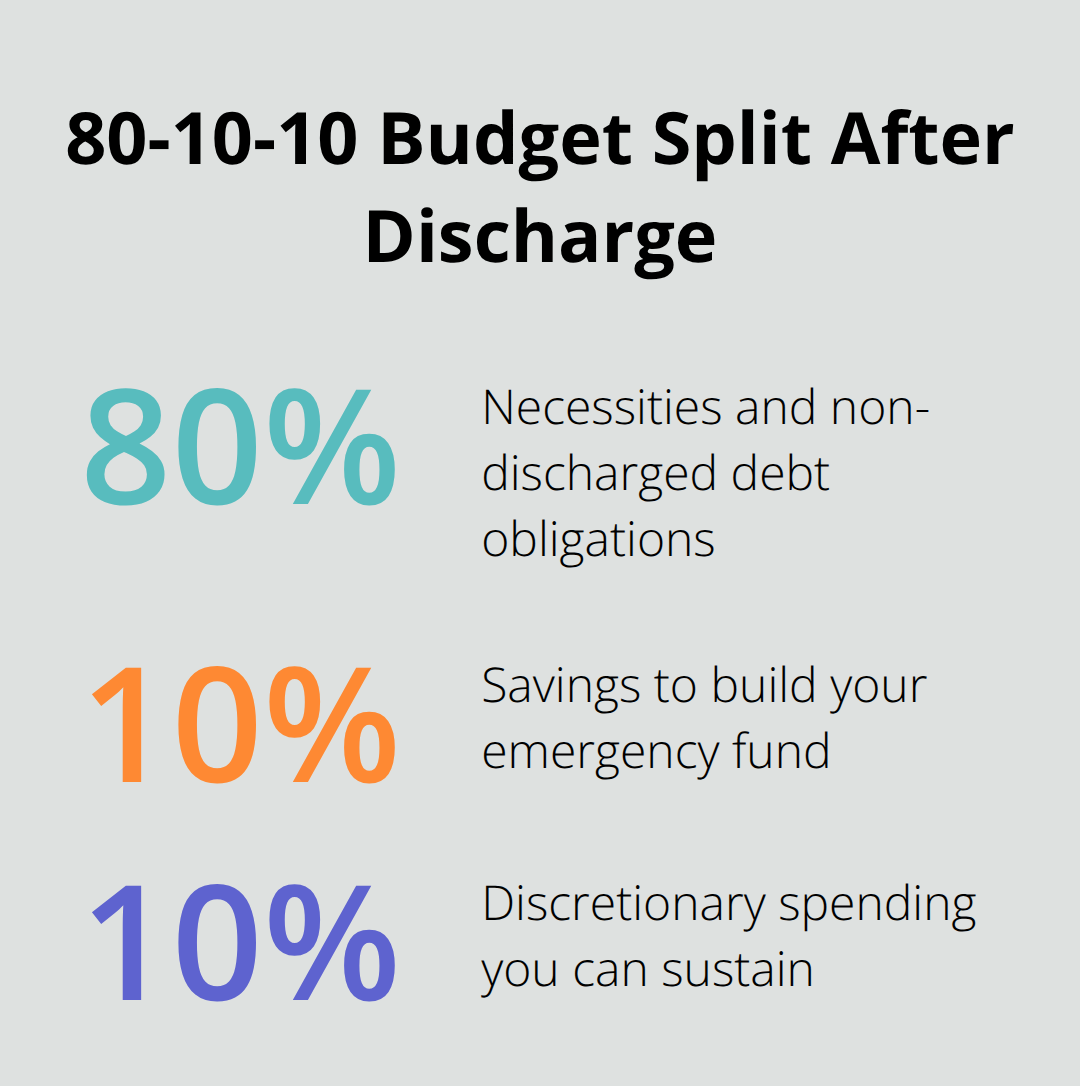
Your budget should allocate money to three categories: essentials like housing and utilities, debt repayment if you have non-discharged debts, and a small savings amount. The mistake most people make is creating budgets so tight they fail within weeks. Instead, allocate 80% of your income to necessities and debt obligations, 10% to savings, and 10% to discretionary spending. This 80-10-10 split works because it acknowledges that you will spend money on things beyond survival, and pretending otherwise guarantees failure.
The people who successfully rebuild after discharge live below their means and stick to their budget without exception. That discipline is not punishment; it is the foundation of the financial freedom your discharge created.
Start Your Emergency Fund Immediately
Your emergency fund prevents you from returning to credit cards when unexpected expenses hit. Open a separate savings account at a different bank than your checking account, which creates friction that discourages raiding it for non-emergencies. Deposit $25 to $50 monthly starting immediately after discharge, even if that feels small. After 12 months you will have $300 to $600, which covers most emergency car repairs or medical copays that derail people without savings.
Avoid the Pitfalls That Trap People in Debt Again
The common pitfalls that trap people in debt cycles again are carrying balances on newly opened secured credit cards, taking on new personal loans to consolidate old debts, and ignoring non-discharged obligations like tax debts or child support. These actions feel like progress but they replicate the original problem. Avoid applying for new credit beyond your secured card and credit-builder loan for at least 18 months after discharge. If a lender approaches you with a seemingly friendly offer to refinance or consolidate, decline it. Your focus during the first year is demonstrating stability and building a financial cushion, not accessing more credit.
Your Fresh Start Begins Now
Your Chapter 7 discharge is not the end of your financial recovery-it is the beginning. The legal protection your discharge provides extends far beyond the moment the court order arrives, and creditors cannot pursue you for discharged debts under any circumstances. This protection is permanent and enforceable, which means you rebuild without the constant threat of collection calls, lawsuits, or wage garnishments. Bankruptcy relief removes the weight that prevented you from moving forward, but your actions over the next 12 to 24 months determine whether you build lasting stability or repeat old patterns.
Your discharge protects your income and assets going forward, so every dollar you earn after discharge belongs to you, not creditors. This protection gives you breathing room to rebuild systematically without the panic that comes from constant collection pressure. Your local credit union offers credit-builder loans and financial counseling at low or no cost, while nonprofit credit counseling agencies provide budgeting assistance free of charge. The Consumer Financial Protection Bureau website offers free tools for tracking spending and building financial plans that fit your actual situation.
Long-term stability comes from three habits: living below your means consistently, maintaining perfect payment history on all accounts, and building savings that prevent future emergencies from becoming future debt. Within two to three years after discharge, you will qualify for auto loans and mortgages at reasonable rates if you follow this path. If you need guidance navigating your specific situation in Florida, contact Harnage Law, PLLC to discuss how we can support your financial recovery and protect your fresh start.