
Filing Chapter 7 bankruptcy offers a fresh start, but many people worry their retirement savings will vanish in the process. The good news is that federal law protects most retirement accounts from creditors during bankruptcy.
At Harnage Law, PLLC, we help Florida residents understand which retirement funds are safe and which ones remain at risk. This guide walks you through the protection rules and strategies that matter most.
What Happens to Your Retirement Accounts in Chapter 7
ERISA-Qualified Plans Receive Strong Federal Protection
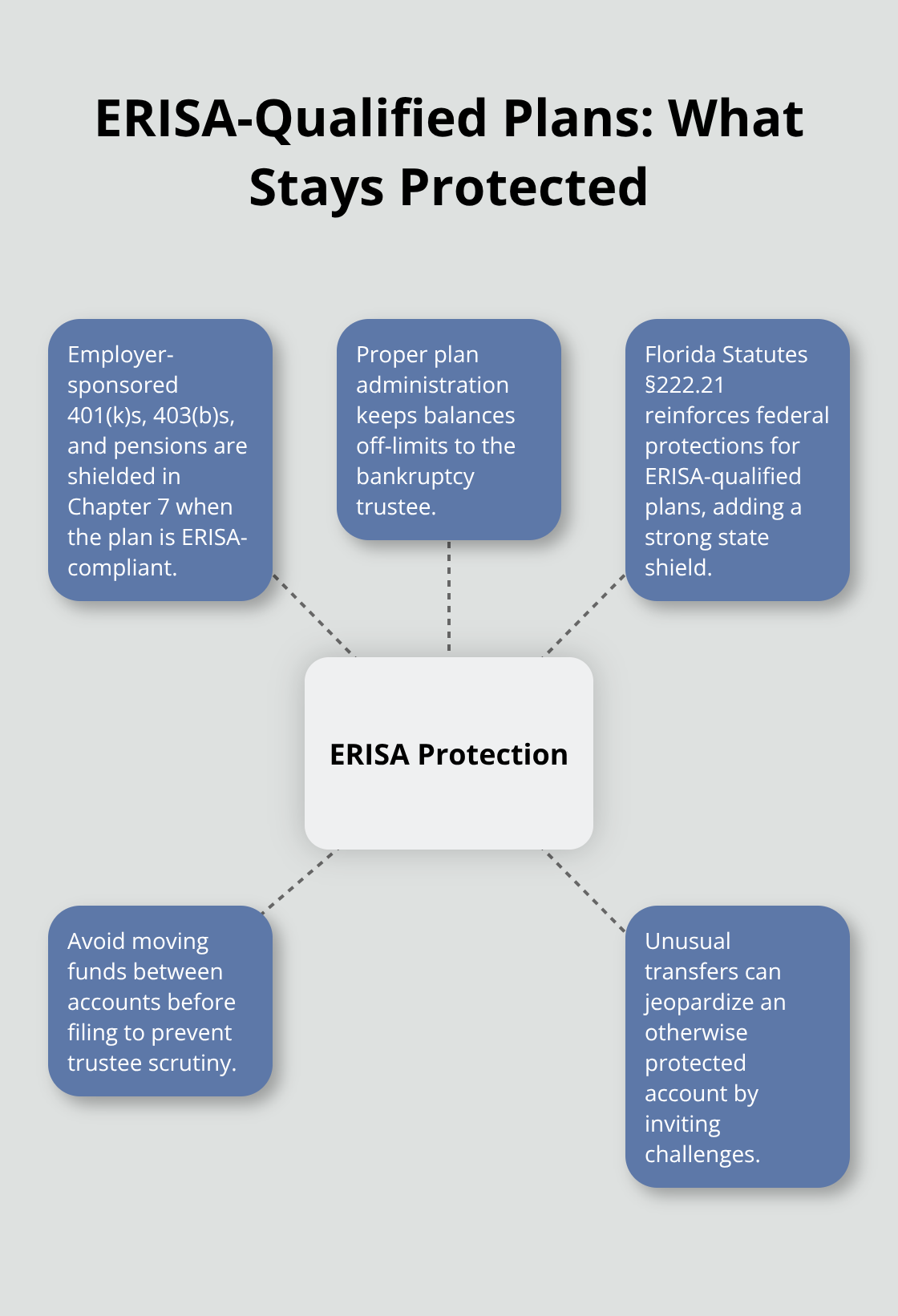
ERISA-qualified retirement plans like 401(k)s, 403(b)s, and employer pension plans receive strong federal protection in Chapter 7 bankruptcy. The Employee Retirement Income Security Act of 1974 shields these accounts from liquidation as long as the plan meets ERISA requirements. In Florida, this protection strengthens because the state does not allow filers to use federal exemptions under 11 U.S.C. § 522(d). Instead, Florida residents rely on state exemptions under Florida Statutes §222.21, which specifically protect ERISA-qualified plans from creditor claims.
Most 401(k) plans qualify for this protection because they include employer contributions, a key factor in maintaining exemption status. If your plan is ERISA-compliant and your employer administers it properly, your balance remains completely off-limits to the bankruptcy trustee. Avoid moving money between accounts before filing, as unusual transfers can trigger scrutiny from the trustee and potentially jeopardize protection.
IRAs Come With a Cap on Protection
Traditional IRAs and Roth IRAs receive exemption protection under Florida law, but with a significant cap. As of 2022, the combined IRA exemption limit across all IRAs is $1,512,350, according to Justia Bankruptcy Law Center. If your combined IRA balance exceeds this threshold, the excess amount becomes available to pay creditors. Most Florida filers never reach this cap, so their entire IRA balance stays protected.
Non-Qualified Accounts Offer No Special Shield
Non-qualified retirement accounts and savings held outside traditional retirement vehicles receive no special protection. Regular savings accounts, money market accounts, and brokerage accounts all become accessible to the bankruptcy trustee. This distinction matters enormously: a dollar in a 401(k) stays untouchable, but a dollar in a savings account becomes fair game for creditors.
Recent Withdrawals Create Tax and Eligibility Problems
Recent withdrawals from retirement accounts create complications that affect your bankruptcy filing. If you withdraw funds within 180 days before filing, the trustee may view those withdrawals as income available to pay debts, potentially affecting your Chapter 7 eligibility through the means test. Withdrawals also trigger tax consequences and reduce the protected balance in your account. The safest approach is to leave retirement funds untouched during the bankruptcy planning process.
Understanding which accounts stay protected and which ones remain vulnerable shapes your overall bankruptcy strategy. The next section examines the specific risks that threaten retirement savings outside of these protections and how creditors attempt to access unprotected funds.
What Stays Unprotected When You File Chapter 7
Unprotected Accounts Become Available to Creditors Immediately
Not all your money qualifies for bankruptcy protection, and this gap creates real danger for your financial recovery. Savings accounts, money market funds, brokerage accounts, and any cash sitting outside a qualified retirement plan become available to the bankruptcy trustee immediately upon filing. If you have $50,000 in a savings account and $50,000 in a 401(k), the trustee can seize the savings account while your 401(k) remains completely untouchable. This distinction explains why moving money into protected accounts before filing feels tempting but backfires badly.
Transfers Within 90 Days Trigger Trustee Scrutiny
The trustee scrutinizes all account transfers made within 90 days before your filing date, and suspicious transfers to retirement accounts trigger adversary proceedings that can result in the trustee clawing back those funds. Even if you genuinely need the money for living expenses, transferring it to a 401(k) or IRA appears fraudulent and invites legal challenges that cost time and money to defend. The bankruptcy system treats these transfers as potential fraud, regardless of your actual intent.
Withdrawals Before Filing Sabotage Your Case
Withdrawals from retirement accounts before filing create a different trap that catches many people off guard. If you pull $20,000 from your 401(k) to pay credit card bills in the months before filing, that withdrawal counts as income on your bankruptcy petition and affects your eligibility for Chapter 7 through the means test calculation. You lose the tax-deferred growth, pay income taxes on the withdrawal, face a potential 10% early withdrawal penalty if you are under age 59½, and still end up paying creditors anyway because Chapter 7 discharges unsecured debt.
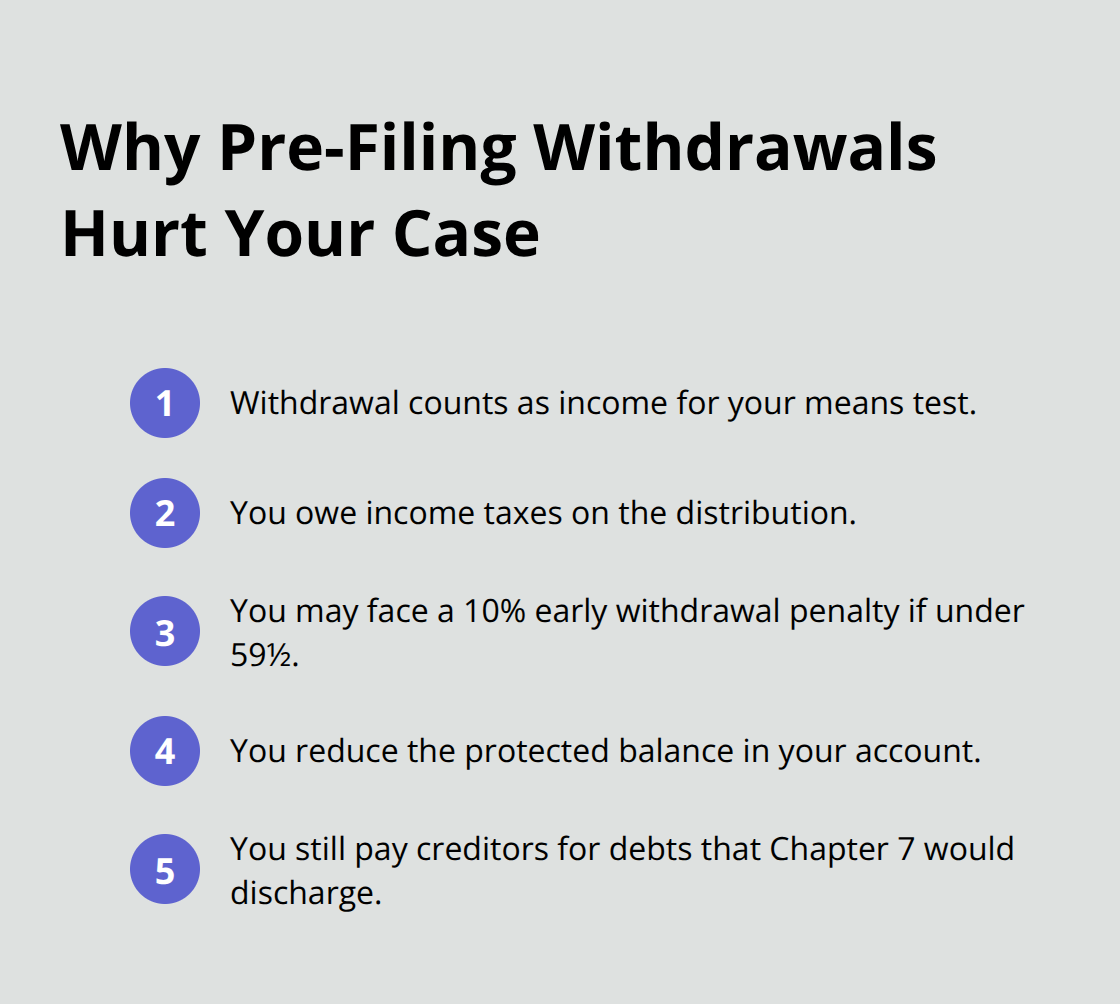
This sequence wastes protected money on debts that bankruptcy eliminates for free.
Creditors know this pattern and sometimes pressure debtors to drain retirement savings before filing, which is precisely why federal law protects these accounts in the first place. The $1,512,350 cap on combined IRA protection exists partly because the government recognizes that people sometimes make desperate financial decisions and need guardrails.
Non-ERISA Plans Receive No Special Protection
Non-ERISA retirement accounts, such as non-qualified annuities or individual retirement savings outside the standard plans, receive no special protection under Florida law and become fair game for creditors just like any other asset. These accounts lack the federal safeguards that shield ERISA-qualified plans, leaving them vulnerable to liquidation during bankruptcy proceedings.
Understanding which accounts remain vulnerable sets the stage for developing protection strategies that actually work. The next section examines how Florida exemption laws create opportunities to safeguard your retirement funds before and after filing.
How to Protect Your Retirement Before Filing Chapter 7
Florida law gives you real tools to maximize retirement protection, and the timing of your filing matters enormously. The state exemption under Florida Statutes §222.21 shields ERISA-qualified retirement accounts completely from creditors, which means your 401(k), 403(b), or employer pension plan stays off-limits no matter how much debt you carry. This protection applies whether you file Chapter 7 today or five years from now, but your actions in the months before filing can either strengthen or undermine that protection.
Avoid Transfers and Withdrawals Before Filing
The critical rule is simple: do not move money into retirement accounts within 90 days of filing, do not withdraw funds to pay creditors, and do not make unusual contributions that the trustee will question. The bankruptcy trustee has authority to claw back transfers that appear fraudulent, and moving cash into a 401(k) to shield it from creditors looks exactly like fraud even if your intention is legitimate. If you have a non-qualified savings account holding $30,000 and a 401(k) holding $200,000, resist the urge to transfer the savings into your retirement plan. The trustee will pursue that transfer aggressively, and you will spend thousands defending yourself in adversary proceedings that you will likely lose. Instead, keep your accounts in their current form and file when you are ready.
Stop Paying Debts That Chapter 7 Will Eliminate
The practical strategy is to stop spending money on debts that Chapter 7 will eliminate anyway and redirect that spending toward protecting unprotected assets or building a modest emergency fund outside retirement accounts. If you have $500 monthly going toward credit card payments that will be discharged in Chapter 7, that money currently flows to creditors who will receive nothing once you file. Chapter 7 discharges unsecured debts completely, meaning credit card companies, personal loans, and medical bills disappear. This discharge is the entire point of filing, so draining your 401(k) to pay these debts before filing guarantees you lose protected money twice: first through the withdrawal penalty and taxes, and second because the debt vanishes anyway.
Evaluate Chapter 7 Versus Chapter 13 for Your Situation
Evaluate your current asset position honestly before filing. If your retirement accounts are substantial and your non-retirement assets are minimal, Chapter 7 protects what matters most. If you have significant non-retirement savings that the trustee will seize, you may want to examine whether Chapter 13 serves your situation better, since Chapter 13 allows you to keep all assets while repaying debts over three to five years.
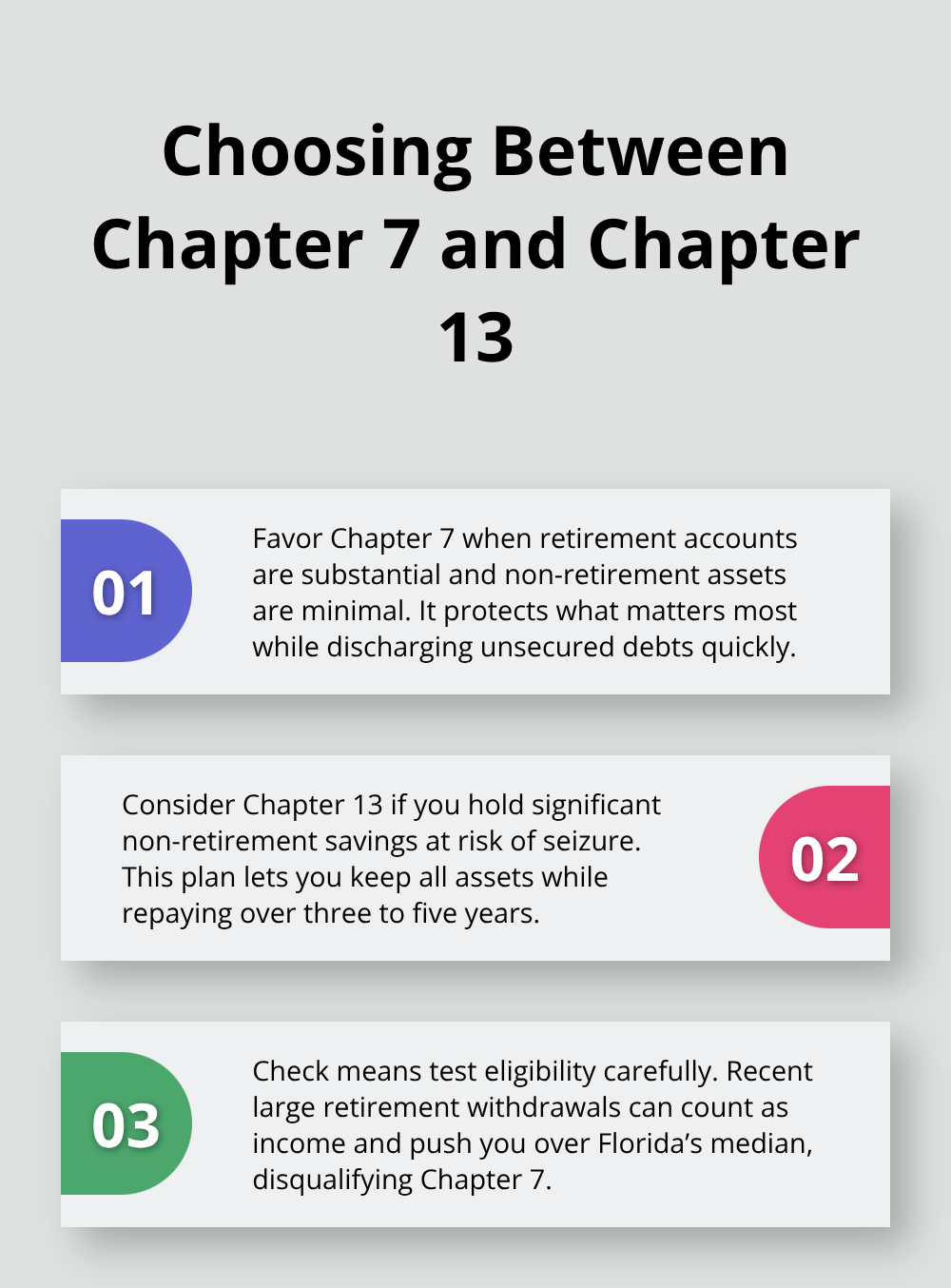
The means test calculation in Chapter 7 determines your eligibility, and recent large withdrawals from retirement accounts count as income that can push you above the median income threshold in Florida and disqualify you from filing Chapter 7 altogether.
Get a Case Review to Quantify Your Protection
The safest approach is to contact a bankruptcy attorney for a case review that quantifies exactly which retirement funds qualify for protection under Florida law, which non-retirement assets are at risk, and whether Chapter 7 or Chapter 13 better preserves your financial security.
Final Thoughts
Chapter 7 bankruptcy protects most retirement savings through federal ERISA safeguards and Florida state exemptions, but only if you understand the rules and avoid costly mistakes before filing. ERISA-qualified plans like 401(k)s and 403(b)s stay completely off-limits to creditors, while IRAs receive protection up to $1,512,350 in combined balances. Non-qualified savings accounts, recent withdrawals, and transfers made within 90 days of filing create serious vulnerabilities that can undermine your bankruptcy fresh start.
Your specific situation depends on factors that require careful analysis: the composition of your retirement accounts, the amount of non-retirement assets you hold, your income relative to Florida’s median, and whether Chapter 7 or Chapter 13 better serves your goals. A case review with a bankruptcy attorney quantifies exactly which funds stay protected and which ones remain at risk, preventing the emotional and irreversible financial mistakes that many people make when facing creditor pressure. The difference between protected and unprotected accounts determines whether you rebuild your financial life with your retirement intact or watch years of savings disappear to pay debts that Chapter 7 would eliminate anyway.
Contact Harnage Law, PLLC for a personalized case review that maps your path forward through Chapter 7 bankruptcy and asset protection. We help Florida residents navigate the process by providing clear guidance on debt discharge and the steps needed to stop creditor harassment and wage garnishments. If you are considering bankruptcy and want to understand how your retirement savings fit into your overall strategy, we are ready to help.