
Ignoring a bankruptcy notice in Florida isn’t a problem that goes away on its own. The moment you receive official court paperwork, your legal obligations begin immediately.
At Harnage Law, PLLC, we’ve seen firsthand how quickly situations escalate when people delay responding to these notices. Whether you’re facing Chapter 7 bankruptcy or another form, understanding what happens next can protect your wages, assets, and financial future.
What Really Happens When You Ignore Bankruptcy Notices
The Automatic Stay Trap
Ignoring a bankruptcy notice triggers a cascade of legal consequences that compounds rapidly. The automatic stay, which halts all collection activity the moment a bankruptcy petition is filed under 11 U.S.C. § 362, only protects you if creditors know about the filing. When you fail to respond or acknowledge the notice, creditors often continue collection efforts-calling, sending letters, and pursuing wage garnishments-because they remain unaware that an automatic stay is in effect. Violating the automatic stay is a federal law violation that exposes creditors to actual damages, punitive damages, attorney fees, and court costs. If multiple creditors make these violations, you could face a class action lawsuit. Your inaction creates the conditions for these violations to occur. Courts take automatic stay violations seriously. In Florida bankruptcy proceedings, creditors who receive proper notice and continue collection anyway face significant liability, but your failure to communicate the filing information to them leaves the door open for continued harassment.
Default Judgments and Wage Garnishment
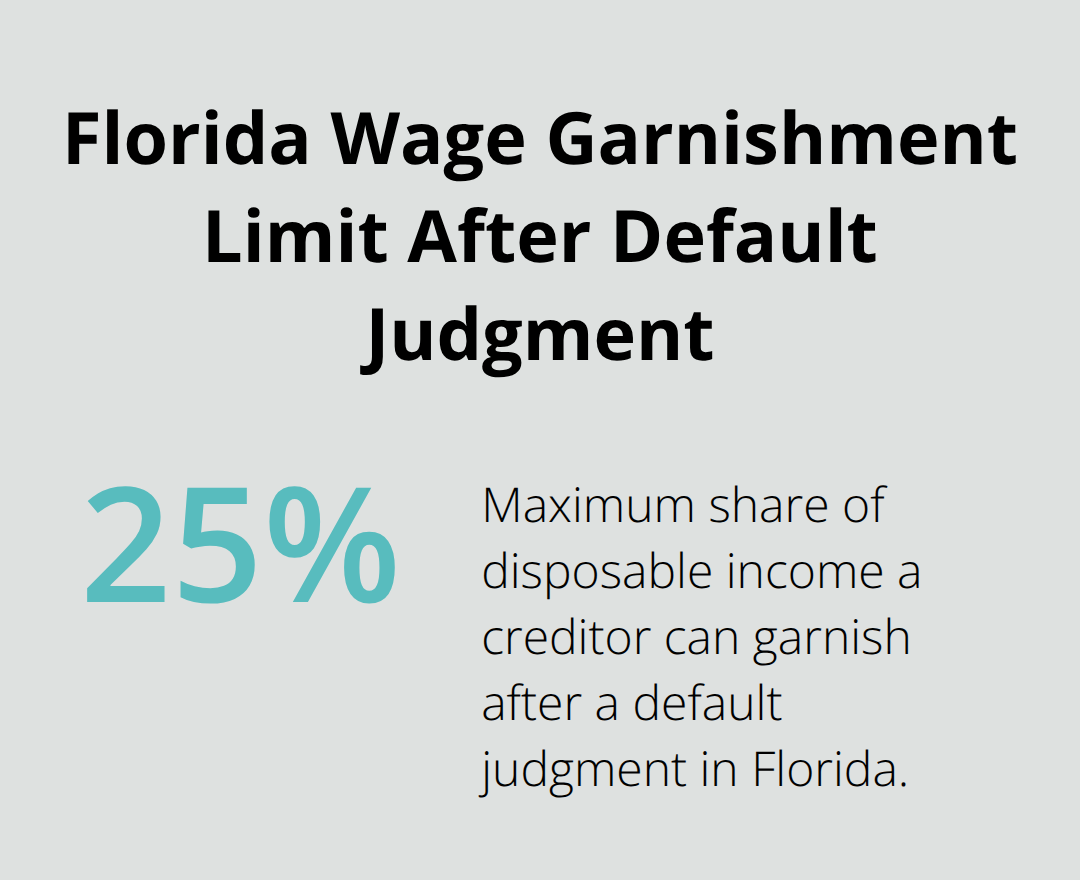
Default judgments represent another critical risk when you ignore bankruptcy notices. If a creditor files a lawsuit and you fail to respond within the required timeframe, the court enters a default judgment against you without hearing your side. This judgment allows wage garnishment up to 25% of your disposable income under Florida law, bank account levies, and liens against your property.
Missing a 503(b)(9) deadline in Chapter 7 proceedings converts an administrative expense claim-which receives priority payment-into a general unsecured claim with far lower recovery rates. The U.S. Bankruptcy Court for the District of Massachusetts case In re Interra Innovation, Inc. reinforced that courts view deadline ignorance as inexcusable, regardless of your familiarity with bankruptcy procedure.
Missed Deadlines and Permanent Loss
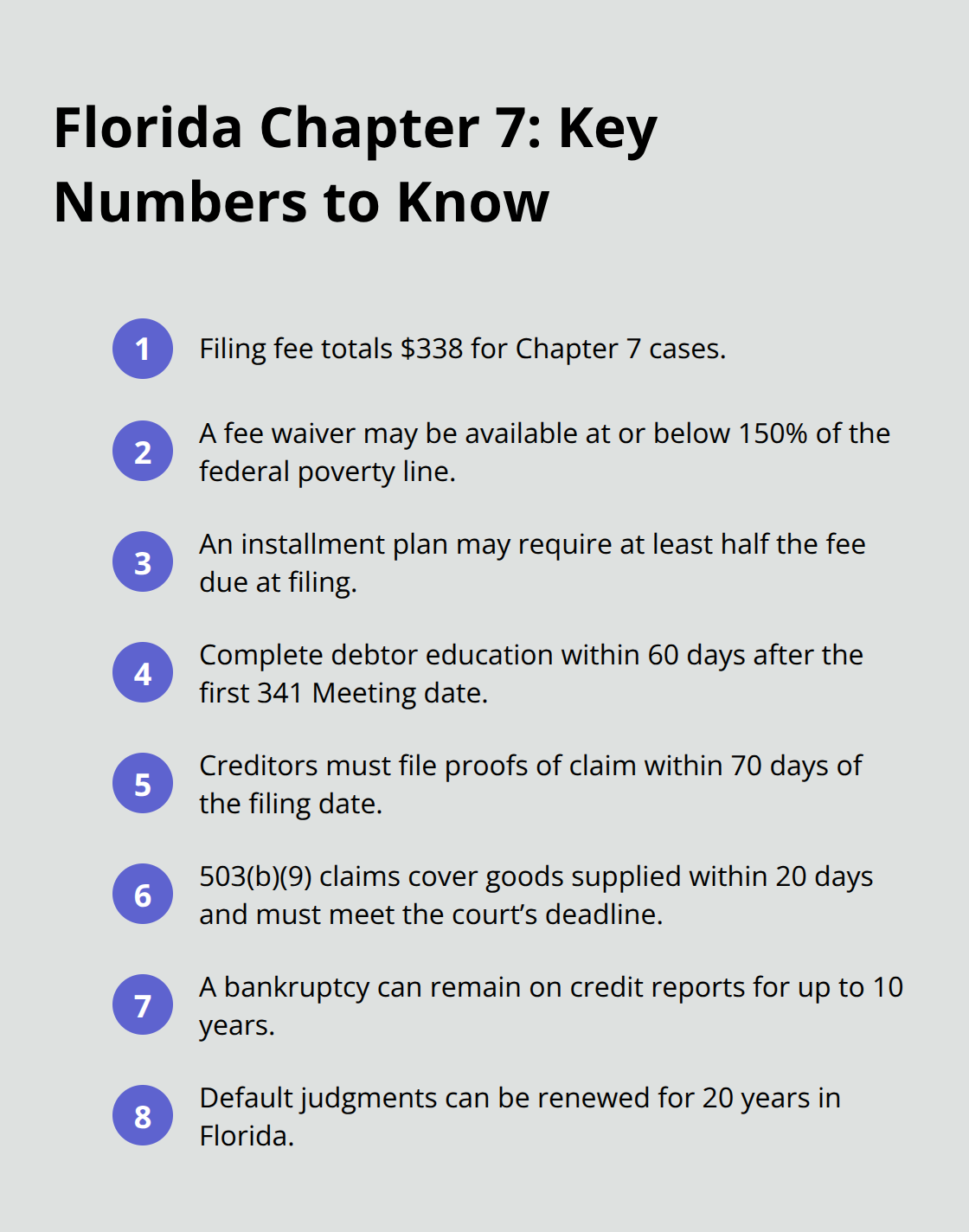
Creditors have 70 days from the bankruptcy filing date to file proofs of claim; missing this window eliminates their ability to receive distributions entirely. Each missed deadline permanently forecloses your options. The cost of prevention through timely responses is negligible compared to the cost of correcting violations or defending against judgments. In Florida Chapter 7 cases, the stakes escalate quickly because creditors actively monitor bankruptcy filings and act within tight windows to protect their interests. Understanding how to respond properly to these notices becomes your first line of defense against financial devastation.
What Ignoring Notices Costs You Financially
Wage Garnishment and Escalating Debt
Ignoring a bankruptcy notice transforms your financial situation from manageable to catastrophic within weeks. When you fail to respond, creditors interpret silence as permission to escalate collection efforts. Under Florida law, wage garnishment can reach 25% of your disposable income, meaning a $2,000 monthly paycheck loses $500 every pay period before you see it. Bank levies follow quickly after judgments, freezing accounts and making it impossible to pay rent or utilities. Default judgments-entered because you ignored court deadlines-become permanent records that creditors use to justify aggressive collection tactics. These judgments do not expire; creditors can renew them in Florida for 20 years, giving them decades to pursue your wages and assets.
Court filing fees, attorney costs for creditors pursuing judgments, and collection agency commissions all compound the original debt you owed. A debt that started at $5,000 balloons to $8,000 or $10,000 through judgment costs and interest before you realize what happened. Missing a proof of claim deadline means creditors lose their right to receive distributions from your bankruptcy estate, but ignoring other notices keeps collection actions alive and growing.
Credit Damage That Extends for Decades
Your credit suffers permanent damage that extends far beyond the bankruptcy filing itself. Default judgments create separate negative entries on your credit report, and creditors report missed payments to all three major bureaus-Equifax, Experian, and TransUnion-creating a compounding damage effect. A bankruptcy filing typically remains on credit reports for up to 10 years under the Fair Credit Reporting Act, but a default judgment haunts you for 20 years in Florida.
This extended timeline means rebuilding credit becomes significantly harder because lenders see not just bankruptcy, but also your failure to respond to legal obligations. Future borrowing becomes either impossible or comes at predatory interest rates; mortgage lenders reject applications with unresolved judgments, and auto lenders charge rates 8-12% higher than standard market rates for borrowers with judgment histories.
Employment and Housing Rejection
Rental applications face rejection because landlords routinely screen for judgments and unpaid debts. Employment opportunities narrow as well, since certain industries and positions require credit checks. The financial consequences of ignoring notices extend into every major life decision for years. These cascading effects demonstrate why responding immediately to bankruptcy notices prevents escalating costs and protects your ability to rebuild financially. Understanding what happens next when you receive a notice-and how to respond properly-becomes your critical next step.
How to Respond to Bankruptcy Notices in Florida
Identify Deadlines Immediately
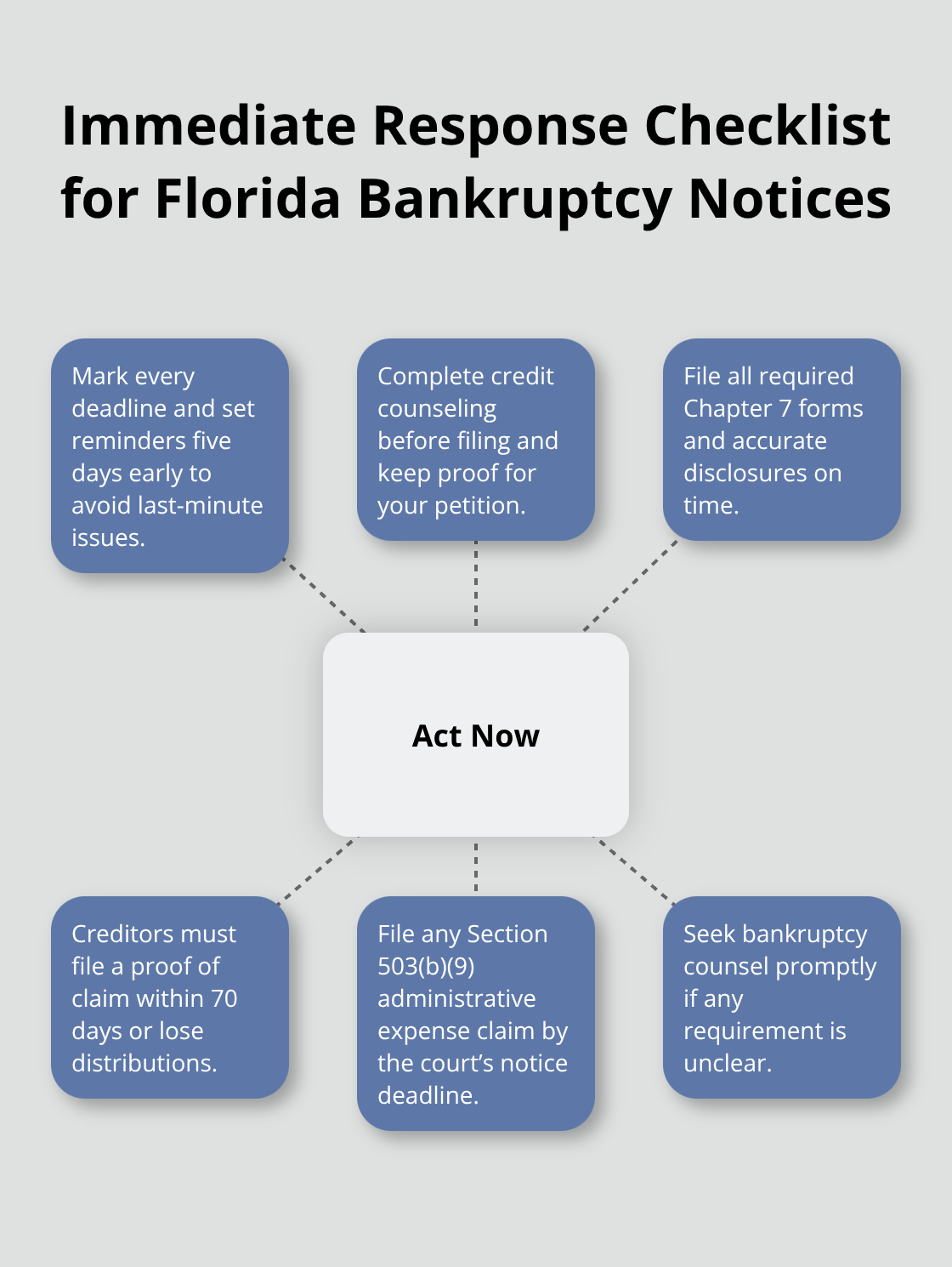
Responding to a bankruptcy notice requires immediate action, not contemplation. The moment you receive official court paperwork, a clock starts running, and missing even one deadline can cost you thousands in lost protections or unnecessary payments. Florida bankruptcy notices typically include specific filing deadlines printed prominently on the cover page, but courts have found that creditors and debtors alike miss these windows through inattention rather than confusion. The U.S. Bankruptcy Court for the District of Massachusetts case In re Interra Innovation, Inc. made clear that ignorance of bankruptcy procedure provides no legal excuse for missing a deadline, and Florida courts apply the same standard.
Your first action should involve marking every deadline listed on the notice on a physical calendar or digital reminder system set for five days before each date. This five-day buffer gives you time to prepare documentation, contact an attorney if needed, and avoid the trap of filing on the deadline itself, when court systems may experience delays or technical issues.
Chapter 7 Debtor Obligations
If you are the debtor filing Chapter 7 bankruptcy, you must complete a credit counseling course from an agency approved by the U.S. Trustee before filing, then file your petition with schedules, means test calculations, and proof of completing the counseling within the required timeframe. The Official Form 106Sum and Official Form 106Dec are mandatory for Chapter 7 filings, along with accurate disclosure of all income, assets, debts, and financial transactions from the past four years.
Filing fees total $338 for Chapter 7 cases, payable by certified check or money order made to the Clerk of Court with your case number included. If you cannot afford the full fee, you may request a waiver using Official Bankruptcy Form 103B if your income falls at or below 150% of the federal poverty line, or you may request an installment plan with a minimum payment of half the fee due at filing. You must also complete a personal financial management course within 60 days after the first date set for your 341 Meeting of Creditors to obtain a discharge.
Creditor Proof of Claim Requirements
If you are a creditor receiving notice of a Chapter 7 filing, your obligations differ sharply. You have 70 days from the bankruptcy filing date to file a proof of claim, or you lose all rights to receive distributions from the bankruptcy estate. The proof of claim must be filed in the specific bankruptcy court handling the case, using the official proof of claim form, and must include documentation supporting the amount owed. Missing this 70-day window is permanent and nonrecoverable; creditors cannot cure this deadline through a late filing or request for extension.
Administrative Expense Claims Under Section 503(b)(9)
If you supplied goods to the debtor within 20 days before the bankruptcy filing, you may have rights under Section 503(b)(9) to file an administrative expense claim that receives priority payment ahead of general unsecured creditors, but this claim requires a separate filing within the notice deadline specified by the court. This priority status means you receive payment in full before general unsecured creditors obtain any distribution, making timely action essential to preserve your recovery position.
Seeking Legal Guidance When Uncertain
Court systems in Florida process thousands of bankruptcy cases annually, and staff cannot provide legal guidance to individuals or creditors about what forms to file or how to respond to notices. If the deadline’s significance is unclear or the notice is difficult to interpret, seeking counsel with bankruptcy knowledge promptly prevents irreversible mistakes. The difference between filing correctly and filing incorrectly often determines whether you receive a discharge, preserve your rights to payment, or lose protection entirely.
Final Thoughts
Bankruptcy notices demand immediate action because every missed deadline costs you money, protection, or both. The 70-day window for creditors to file proofs of claim, the 20-day window for Section 503(b)(9) administrative expense claims, and the specific response deadlines listed on your notice are not suggestions-they are legal requirements with permanent consequences when ignored. A single missed deadline can convert a priority claim into a general unsecured claim, eliminate your right to receive any distribution, or result in a default judgment that creditors can renew for 20 years in Florida.
If you have received a bankruptcy notice, identify every deadline printed on the document and mark them on a calendar with a five-day buffer before each date. Read the notice carefully to determine whether you are a debtor, creditor, or party with other obligations. When the notice is unclear or you are uncertain about your obligations, contact an attorney with bankruptcy knowledge rather than guessing, since the cost of legal guidance is negligible compared to the cost of missing a deadline or filing incorrectly.
We at Harnage Law, PLLC help individuals and families overcome financial challenges by providing legal guidance and representation through the Chapter bankruptcy process in Florida. We stop creditor harassment, prevent wage garnishments, and halt lawsuits while helping you discharge qualifying debts and protect your assets. If you have received a bankruptcy notice and need immediate assistance, contact Harnage Law, PLLC to discuss your situation and protect your rights.