Eviction notices arrive fast, and your options narrow quickly. Filing bankruptcy can stop an eviction in its tracks through a legal protection called the automatic stay.
We at Harnage Law, PLLC know that timing matters when your housing is at risk. This guide walks you through how bankruptcy works in Florida and what steps to take right now.
How Bankruptcy Stops Eviction in Florida
The Automatic Stay Halts Eviction Immediately
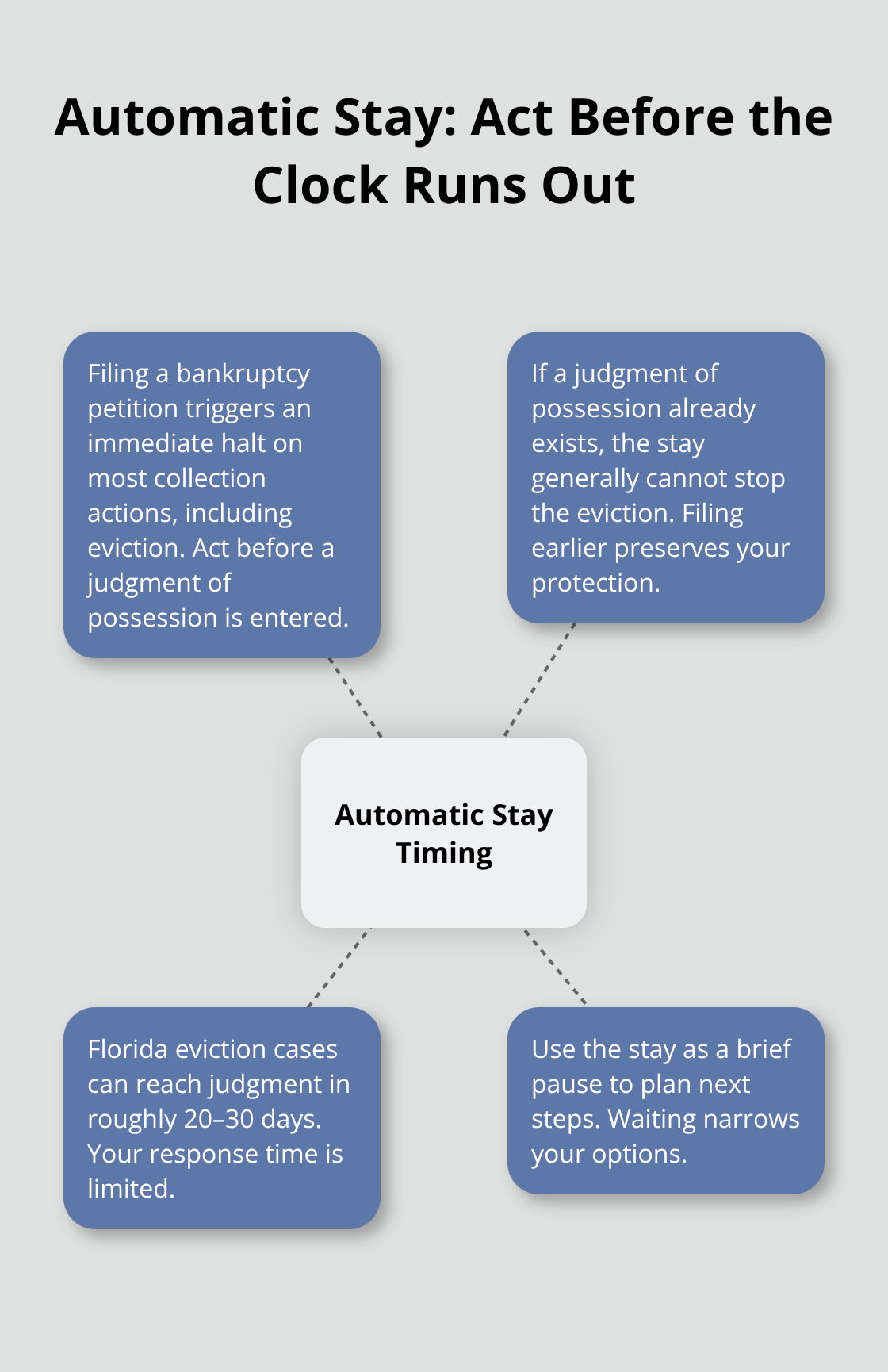
The automatic stay stands as your most powerful legal tool when eviction threatens your housing. The moment you file for bankruptcy with the court, federal law triggers an immediate pause on almost all collection actions, including eviction proceedings. This stay halts the landlord’s ability to continue with court filings, serve notices, or move toward removing you from the property. However, this protection has real limits you need to understand. If your landlord already obtained a judgment of possession before you file, the automatic stay typically cannot stop the eviction from proceeding. A judgment of possession is the final court order that terminates your lease rights, and once a judge signs it, the stay loses its blocking power. This timing distinction makes filing before that judgment arrives absolutely critical. Florida eviction cases move through the court system in roughly 20 to 30 days from initial filing to judgment, depending on whether you contest the case. If you receive an eviction notice, you have a narrow window to act.
Landlords Can File to Lift the Stay
The stay remains active only while your bankruptcy case continues, but landlords can file a motion to lift it, which removes your protection and allows eviction to resume. Courts typically grant relief from the stay if you fail to pay rent after filing (post-petition rent), if you damage the property, or if you engage in illegal activity within 30 days before filing. You must respond to any motion within roughly three weeks, and if you don’t respond, judges often grant the motion without a hearing. This three-week window gives you time to negotiate with your landlord or arrange alternative housing if the stay lifts.
Chapter 7 Gives You 60 Days to Decide Your Lease
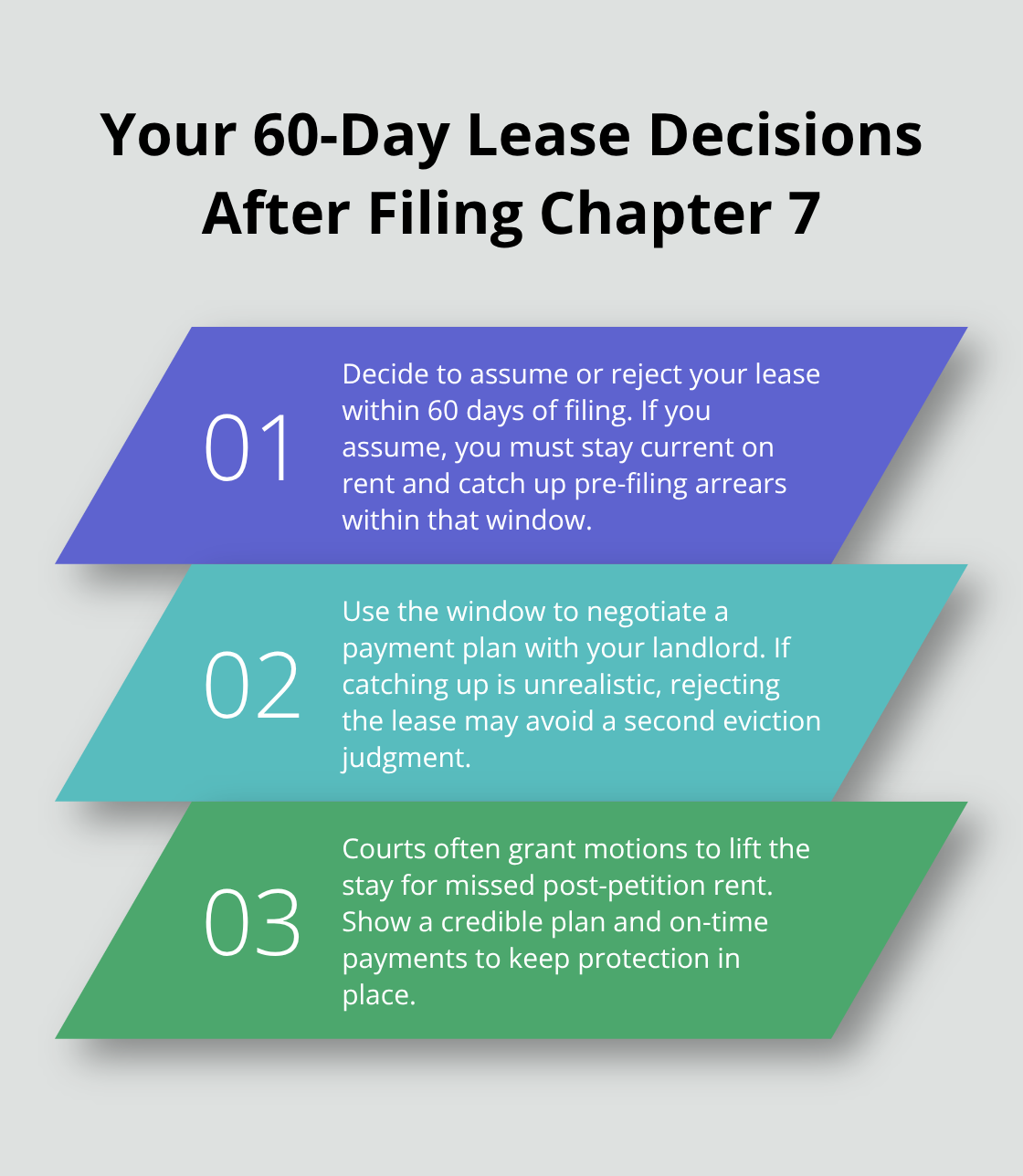
In Chapter 7 bankruptcy, you have 60 days from filing to decide whether to keep your lease by assuming it or reject it. If you assume the lease, you must stay current on all rent payments going forward and catch up any pre-filing arrears within that 60-day window. This is the practical reality: the stay buys you breathing room, but only if you use it to either negotiate with your landlord or stabilize your rent payments immediately. The clock starts the moment you file, so every day counts toward that deadline.
Contact an attorney the moment you receive an eviction notice, because waiting even a few days can mean the difference between stopping the eviction and watching it proceed unchecked through the Florida court system. The next section walks you through the specific steps to file for bankruptcy before eviction takes hold.
Moving Fast: Getting Your Bankruptcy Filed Before the Judgment
Gather Documents While Contacting an Attorney
Speed determines whether you stop the eviction or watch it proceed. Florida courts issue judgments of possession within 20 to 30 days, so every moment counts. Start gathering your financial documents immediately while simultaneously contacting a bankruptcy attorney. You need recent tax returns from the past two years, recent pay stubs covering the last 60 days, bank statements from the past two months, a list of all debts with creditor names and account numbers, and mortgage or lease documents. If you own a vehicle, locate the registration and current loan statement.
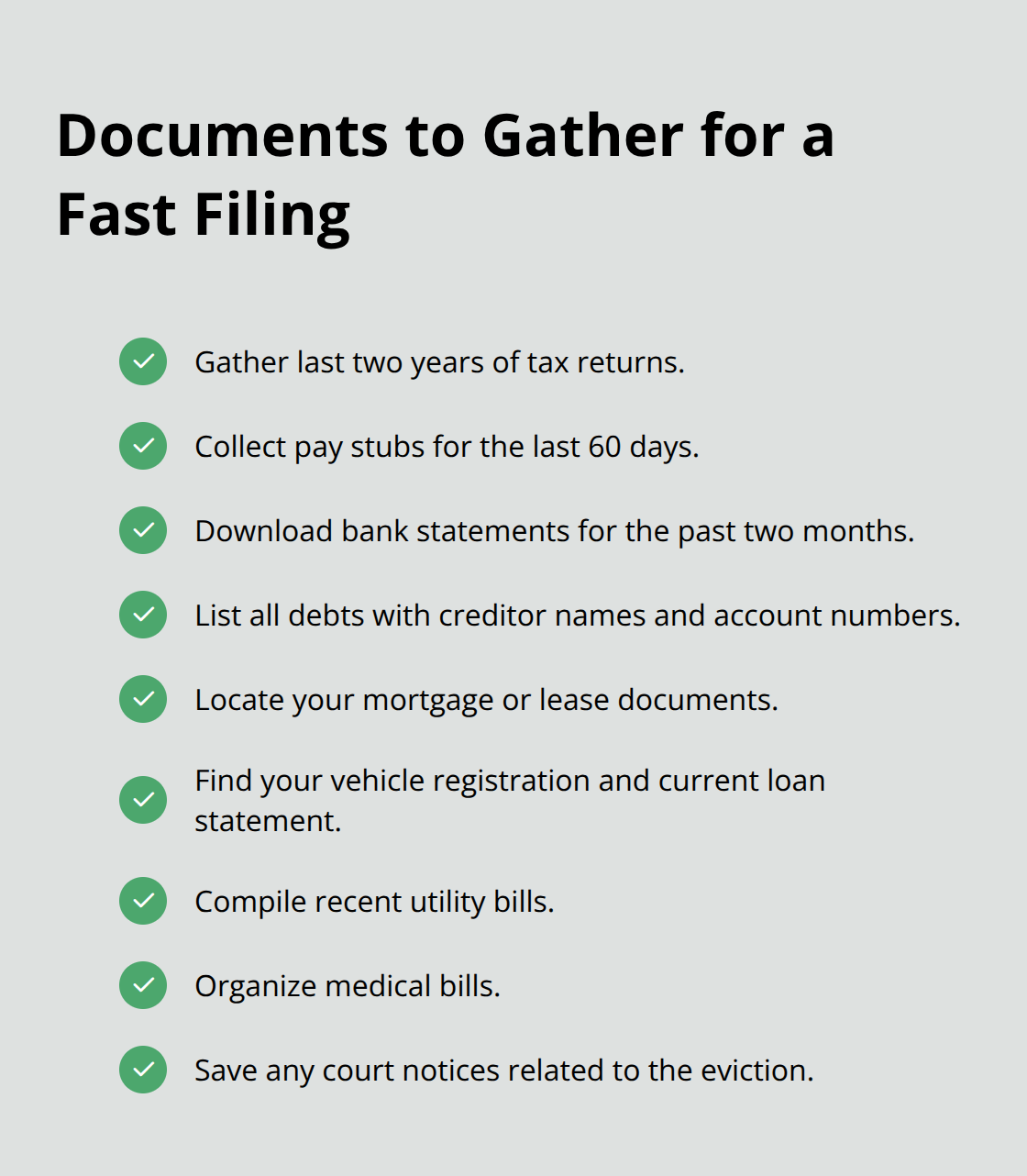
Collect utility bills, medical bills, and any court notices related to the eviction. This documentation allows your attorney to file quickly without delays that could push your case past that critical judgment date. Do not wait for perfect paperwork; incomplete filings can be amended, but missing the judgment deadline cannot be recovered.
Contact an Attorney on Day One
Contact a bankruptcy attorney the same day you receive the eviction notice, not tomorrow or next week. Many attorneys in Florida offer free initial consultations and can assess whether Chapter 7 fits your situation within hours. During that call, explain your eviction timeline explicitly so the attorney understands the urgency. Ask directly about their filing speed and whether they can submit your petition within days, not weeks. Some firms prioritize emergency filings and maintain staffing to handle rapid document review and court submission.
File Your Petition Immediately
Once your attorney agrees to represent you, they will prepare your bankruptcy petition and file it with the federal bankruptcy court serving your Florida county. The petition triggers the automatic stay the moment the court receives it, not when you sign documents or when the court approves your case. This immediate protection is why filing speed matters so intensely. Your attorney will handle all court filings, but you must provide accurate information about your income, expenses, debts, and assets. Providing false information on bankruptcy documents carries criminal penalties, so honesty is non-negotiable.
Understand What Happens After Filing
After filing, the court assigns a bankruptcy trustee who will contact you and your creditors. You will receive a notice of filing that your attorney must serve on your landlord within days of submission. That notice officially informs your landlord that the automatic stay is in effect and collection efforts must cease. If your landlord attempts to proceed with eviction after receiving notice, they violate federal law and face sanctions. The bankruptcy filing process itself takes only hours or days once your attorney has your documents, but the preparation phase demands your immediate action.
With your petition filed and the automatic stay now protecting you from eviction, the next critical phase involves understanding what Chapter 7 bankruptcy means for your lease and your housing situation going forward.
What Chapter 7 Bankruptcy Means for Your Lease and Housing
The 60-Day Decision Window Controls Your Tenancy
The automatic stay freezes your eviction the moment your petition reaches the bankruptcy court, but that freeze only lasts as long as you take action to address your lease obligations. In Chapter 7, you control whether your tenancy continues or ends through a decision you must make within 60 days of filing. If you assume the lease, you commit to paying all rent going forward without interruption and catching up any pre-filing arrears within that 60-day window. This is not theoretical-landlords will resume eviction if you miss a single post-petition rent payment after filing.
Negotiate or Reject: Your Practical Options
The stay gives you a brief window to either negotiate a reduced payment arrangement with your landlord or establish a clear payment schedule that demonstrates you can sustain the lease going forward. Many landlords will negotiate during this period because they prefer receiving partial back rent and ongoing payments to the cost and delay of eviction court proceedings. If you cannot realistically catch up arrears within 60 days while maintaining current rent, rejecting the lease makes more sense than assuming it and defaulting again. Rejection means the lease terminates, the stay lifts, and you must vacate, but it also prevents a second eviction judgment from appearing on your record.
Housing Protection Limits in Chapter 7
Your primary residence receives no special protection in Chapter 7 beyond the automatic stay itself. Florida homestead exemptions protect a home’s equity from creditors, but that protection applies only to mortgages and creditor claims, not to landlord eviction rights based on lease violations or nonpayment. If you own your home and face foreclosure rather than eviction, the situation differs significantly, but as a renter, your housing security depends entirely on your ability to pay rent during and after bankruptcy.
Courts Scrutinize Landlord Motions to Lift the Stay
The 60-day decision window is your leverage point-use it to contact your landlord directly, propose a payment plan that covers both arrears and ongoing rent, or arrange alternative housing if continuing the lease is unrealistic. Courts scrutinize landlord motions to lift the stay based on nonpayment of post-petition rent, and judges grant those motions regularly when tenants fail to demonstrate a credible ability to pay going forward. Do not assume your landlord will automatically lift the stay or that the stay will buy you months of free housing. The automatic stay stops the immediate eviction threat, but your actions during those 60 days determine whether you keep the housing or face a lifted stay and resumed eviction within weeks.
Final Thoughts
Speed separates those who stop eviction from those who lose their housing. The moment you receive an eviction notice, your window to file bankruptcy narrows daily as Florida courts move toward that judgment of possession. Contact a bankruptcy attorney on day one because every delay costs you protection and pushes you closer to a final judgment that the automatic stay cannot stop.
Filing bankruptcy triggers the automatic stay immediately, but that protection only works if you act before your landlord obtains a final judgment. The 60-day decision window after filing gives you real time to negotiate with your landlord, arrange a payment plan that covers both arrears and ongoing rent, or make a clear choice about whether to assume or reject your lease. This window is your leverage-use it to stabilize your housing or transition to alternative arrangements before the stay lifts.
Contact Harnage Law, PLLC to discuss your eviction timeline and whether filing bankruptcy protects your housing right now. We help individuals and families overcome financial challenges through Chapter 7 bankruptcy and guide you through every step of the process. The next step is your call-make it today.