Unsecured debt discharge in Florida can wipe out thousands of dollars in credit card balances, medical bills, and personal loans through Chapter 7 bankruptcy. But not all debts disappear-student loans, child support, and certain tax obligations remain your responsibility.
We at Harnage Law, PLLC help Florida residents understand exactly which debts qualify for discharge and which ones don’t. This guide breaks down the discharge process so you know what to expect.
What Gets Wiped Out in Chapter 7 in Florida
Credit Card Debt Disappears Completely
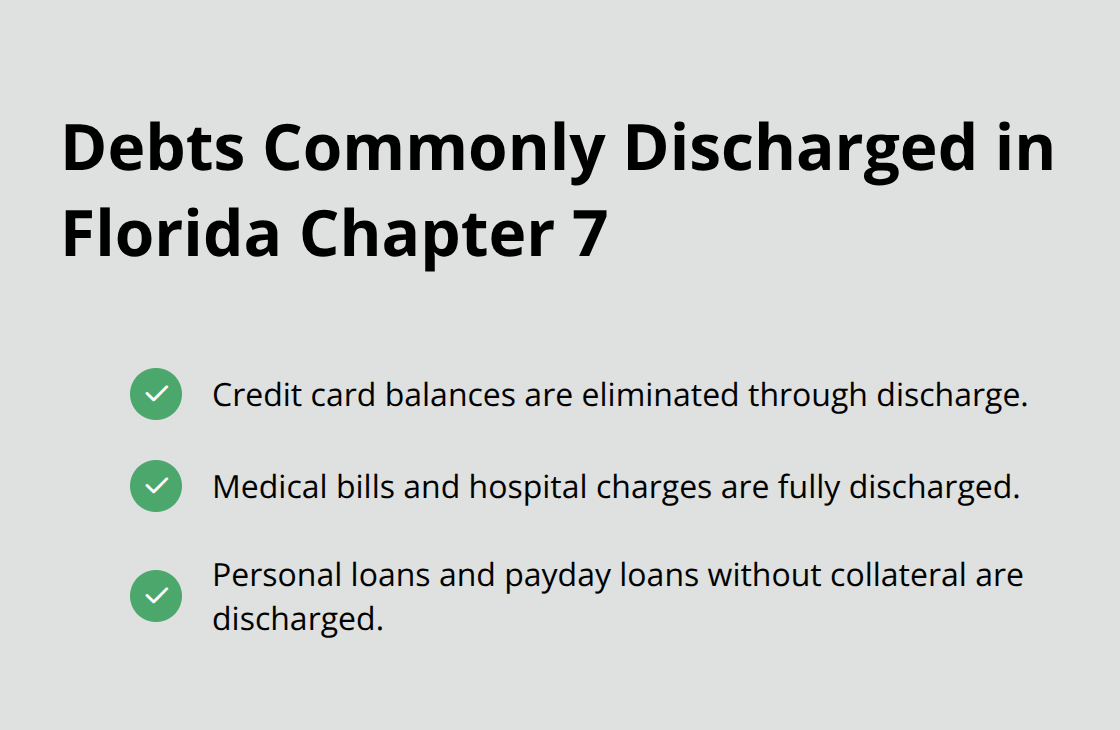
Credit card debt is the primary target of Chapter 7 discharge in Florida, and the numbers make clear why this matters. The average American household carries over $6,000 in credit card debt according to recent Federal Reserve data. When you file Chapter 7, this entire balance vanishes, including all accrued interest and late fees. You don’t negotiate; you don’t pay a settlement. The debt simply ceases to exist.
Medical Bills and Hospital Costs
Medical bills follow the same path as credit card debt. Hospital stays, emergency room visits, surgical procedures, and ongoing treatment costs pile up quickly. The Kaiser Family Foundation reports that medical debt is the leading cause of personal bankruptcy filings in the United States. Chapter 7 wipes these clean without exception.
Personal and Payday Loans
Personal loans and payday loans also qualify for discharge. That $3,000 payday loan charging 400% annual interest disappears. The unsecured personal loan from your bank gets discharged. These debts have no collateral attached, which is why they’re vulnerable to discharge. The trustee cannot come after your house, car, or bank account to pay them because nothing secures the obligation.
Why Unsecured Debts Matter in Your Case
The practical reality is that unsecured debts dominate most Chapter 7 cases in Florida. If your financial crisis stems from credit cards, medical emergencies, or personal borrowing, Chapter 7 offers a genuine path to elimination. The discharge typically arrives three to six months after filing, assuming no creditor challenges your case. The key distinction is that unsecured debts have no collateral backing them, making them far easier to discharge than secured obligations like mortgages or car loans.
When calculating whether Chapter 7 makes sense for your situation, tally up your unsecured balances first. If credit cards, medical bills, and personal loans comprise the bulk of your debt, you’ve identified the debts that Chapter 7 can eliminate. However, not all debts vanish in Chapter 7-some obligations survive the discharge process and remain your responsibility.
Debts That Survive Chapter 7 Discharge in Florida
Student Loans Rarely Qualify for Discharge
Student loans represent one of the most persistent non-dischargeable debts in Chapter 7 bankruptcy. The Department of Education reports that the average federal student loan borrower carries $37,574 in debt, and Chapter 7 discharge does nothing to reduce this obligation. Federal student loans, private student loans, and Parent PLUS loans all survive the bankruptcy process. The only exception occurs when you prove undue hardship to the court-a standard so demanding that fewer than 1% of borrowers successfully discharge student loans through Chapter 7. You must demonstrate that repaying the loans would prevent you from maintaining a minimal standard of living, that your financial situation is likely to persist, and that you made good-faith efforts to repay before filing.
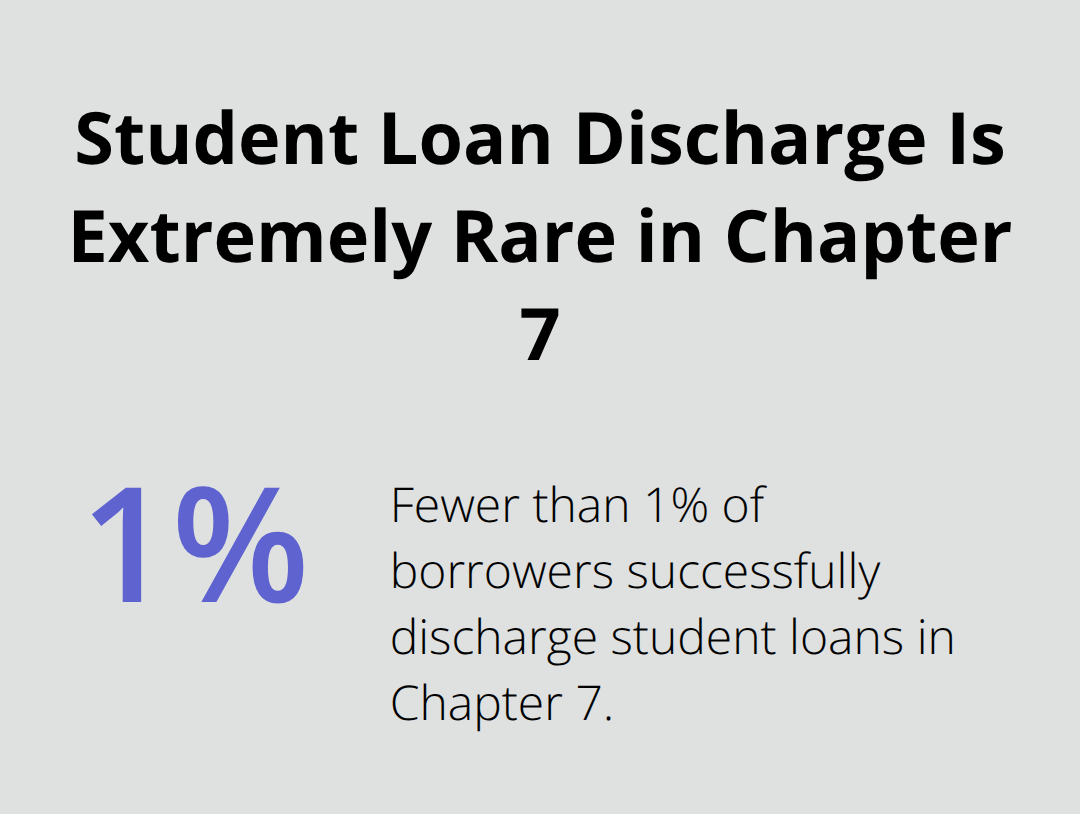
Courts rarely grant this relief, making student loan discharge a theoretical possibility rather than a practical one.
Child Support and Alimony Remain Your Responsibility
Child support and alimony obligations cannot be discharged under any circumstances in Chapter 7. These debts rank as priority claims, meaning the court treats them differently than unsecured debts like credit cards. If you owe $15,000 in back child support or $8,000 in unpaid alimony, that full amount remains your responsibility after discharge. The Florida Department of Revenue actively pursues collection on child support arrears, and bankruptcy provides no shield against these efforts. The automatic stay that halts most creditor actions does not stop child support enforcement. Your wages can still be garnished, tax refunds intercepted, and licenses suspended for non-payment. Many Florida residents discover too late that filing Chapter 7 to eliminate credit card debt leaves their family support obligations completely intact.
Tax Debts Follow Strict Age Requirements
Recent tax debts cannot be discharged, but older ones may qualify under specific conditions. The IRS allows discharge of income tax debts that meet three criteria: the tax return was due more than three years ago, you filed the return more than two years ago, and the tax was assessed more than 240 days ago. A tax debt from 2020 filed in 2021 might qualify for discharge in 2024, while a 2023 tax debt will not. Payroll taxes, fraud-related tax debts, and willfully unpaid taxes never qualify for discharge regardless of age. Florida state taxes follow similar rules. If you owe $12,000 in back taxes from 2019 and meet all three timing requirements, Chapter 7 can eliminate it. However, $5,000 owed from 2024 remains your obligation after discharge. The distinction matters enormously when evaluating whether Chapter 7 solves your debt problem or merely addresses part of it.
Understanding which debts survive discharge shapes your entire bankruptcy strategy. Some filers discover that their non-dischargeable obligations (student loans, child support, and recent taxes) actually exceed their dischargeable debts, making Chapter 7 less beneficial than initially expected. Others find that eliminating credit cards and medical bills frees up enough monthly income to handle the surviving obligations. The next section walks through how the discharge process actually unfolds in Florida, from the moment you file your petition through the final discharge order.
What Happens From Filing to Discharge in Florida
The Automatic Stay Stops Collection Immediately
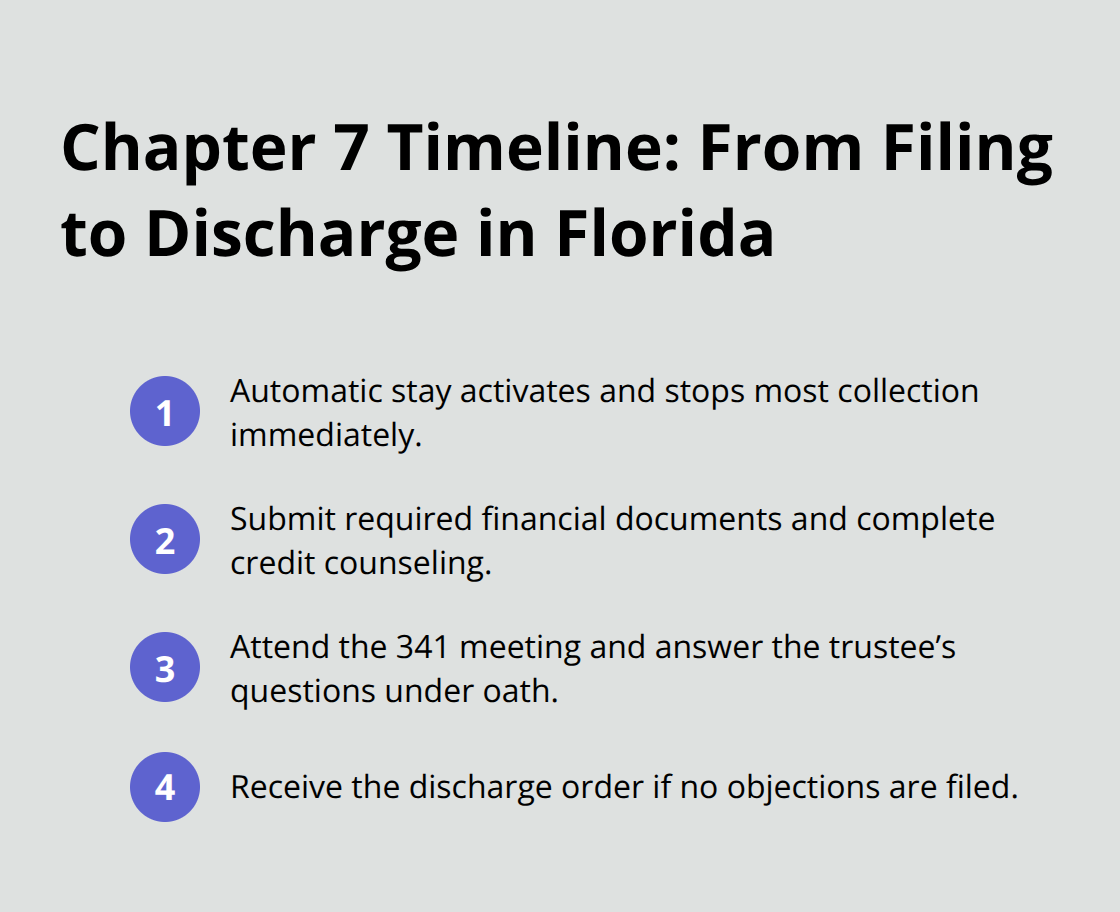
The moment you file your Chapter 7 petition with the Florida bankruptcy court, the automatic stay takes effect immediately. This is not a suggestion or a courtesy notice-it is a court order that stops nearly all creditor collection activities within seconds. Credit card companies cannot call. Medical debt collectors must cease contact. Wage garnishments halt. Lawsuits freeze. The only debts the automatic stay does not protect you from are child support, alimony, and certain criminal restitution obligations, which continue despite your filing. You receive formal notice of the stay, and your creditors receive it too through the court’s electronic notification system. The practical benefit arrives instantly: the constant phone calls and threatening letters stop, giving you breathing room to move through the process without the psychological weight of active collection pressure.
Required Documents and Filing Fees
Your Chapter 7 case requires you to complete mandatory credit counseling from an approved agency within 180 days before filing. You must also file detailed financial documents with the court, including your income, expenses, property list, and creditor information. The filing fees total $335, which you can pay in up to four installments with the final payment due within 180 days of filing. Gathering these documents takes time, but accuracy matters-incomplete or misleading information can result in discharge denial or even fraud charges.
The 341 Meeting of Creditors
Within 21 to 40 days after filing (up to 60 days if you live far from the courthouse), you attend the 341 meeting of creditors. You sit under oath and answer questions from the trustee and potentially your creditors about your financial situation and assets. Most creditors do not attend these meetings. The trustee’s role is to identify any nonexempt assets that can be liquidated to pay your unsecured creditors, though in the vast majority of Florida Chapter 7 cases, no assets are available for distribution because your property qualifies for exemption under Florida’s generous exemption laws.
The Discharge Order and Permanent Protection
After the 341 meeting concludes and assuming no creditor or trustee objects to your discharge, the court enters a discharge order typically 60 to 90 days later. This discharge order is permanent and legally prohibits creditors from attempting to collect any discharged debt. If a creditor violates the discharge (by calling, sending collection letters, or pursuing legal action after discharge), you can file a motion to enforce the discharge injunction, and the creditor faces contempt penalties.
Final Thoughts
Chapter 7 bankruptcy in Florida creates a clear dividing line between debts that vanish and debts that remain. Credit card balances, medical bills, and personal loans disappear through discharge, typically within three to six months of filing. Student loans, child support, alimony, and recent tax debts survive the process and stay your responsibility, making the distinction between dischargeable and non-dischargeable obligations essential before you file.
The unsecured debt discharge Florida process moves quickly once you file your petition. The automatic stay stops collection calls and lawsuits immediately, you attend one meeting with the trustee, and the court enters a discharge order that permanently prohibits creditors from collecting discharged debts. After discharge, your financial slate is wiped clean for the debts that qualify, giving you genuine breathing room to rebuild your financial life.
We at Harnage Law, PLLC help Florida residents understand which debts qualify for discharge and whether Chapter 7 or Chapter 13 makes sense for your specific circumstances. Contact us to discuss your situation and explore your options with confidence.